

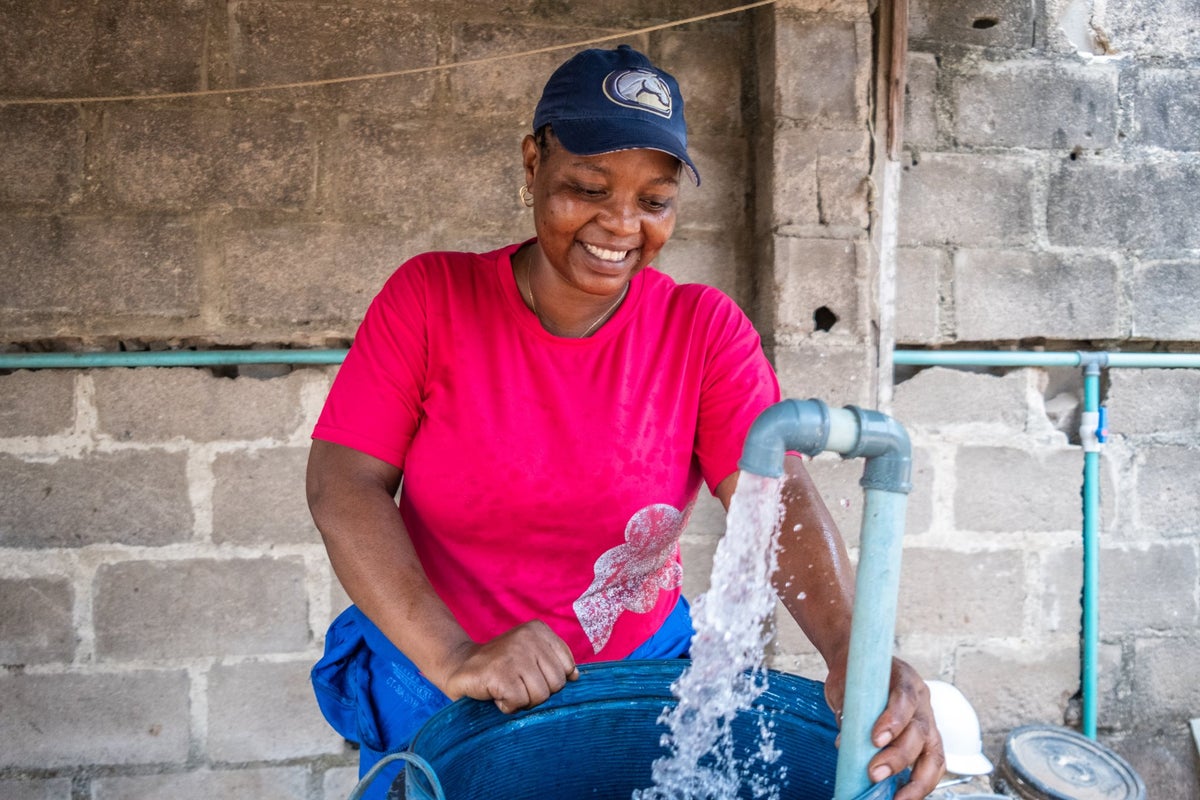
A landmark commitment to provide an additional one billion people with sustainable access to safe water by 2030 has been announced by the World Bank.
The new initiative, called Water Forward, will be supported by partners including the international NGO WaterAid, the Children’s Investment Fund Foundation (CIFF) and nations including the Netherlands and the United Arab Emirates (UAE). Around 400 million people are projected to be supported directly through programmes supported by the World Bank Group, with another 600 million being helped by investment from development banks, philanthropy and private finance.
According to the UN, close to two billion around the world still lack access to safely-managed water, with a lack of clean water contributing to the spread of disease and unnecessary deaths, particularly among the young. Each year more than a million women and babies die from infections linked to childbirth – tragedies that health workers say could often be avoided with the most basic infrastructure such as water to wash hands and clean instruments in hospitals and health centres.
“Water is foundational to how economies function. When water systems work, farmers produce, businesses operate, and cities attract investment,” said Ajay Banga, president of the World Bank Group at the launch event in Washington DC. “Our task now is… to deliver reliable water services at scale”.
The Water Forward campaign come against a backdrop of cuts to aid funding from Donald Trump in the US, the UK and across Europe – devastating overseas aid cuts that are impacting swathes of Africa and other nations across the globe.
Speaking at the Water Forward launch event, Tim Wainwright, the chief executive of WaterAid UK, said that help provide water security at an “unprecedented scale” – something that is required given the lack of political will in recent times, and the growing impacts of the climate crisis.
“Water underpins heath, education, gender equality, economies and jobs,” Mr Wainwright said. “Progress has been too slow – and weather extremes are taking us backwards…. Water is the foundation of everything, none of us can live without it.”

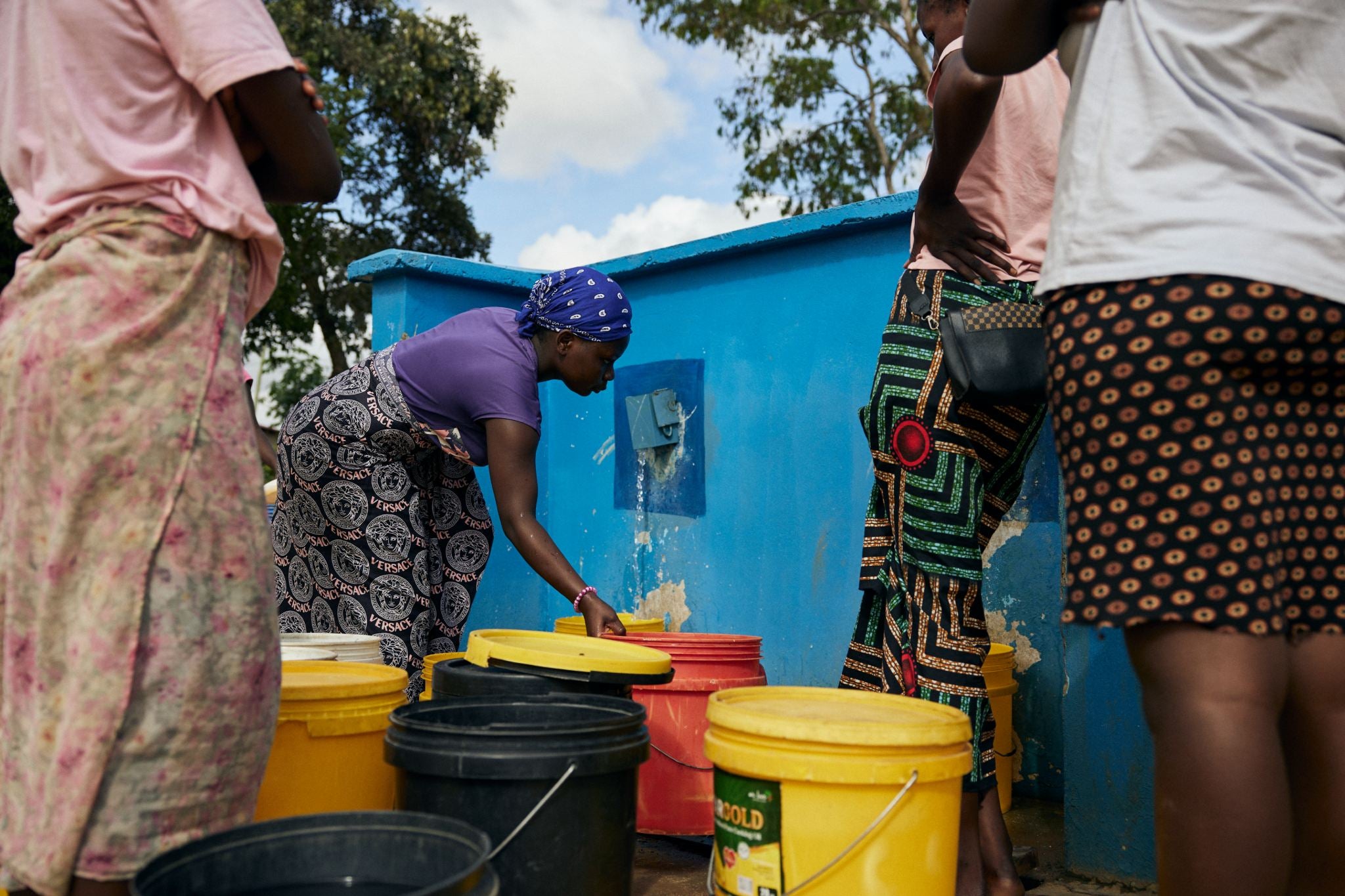
“But, the solutions are often simple! What has been missing, is political will and finance, at scale and quality… Water Forward brings exactly those two ingredients for change,” he added.
The World Bank will be focusing on three pillars: water for people, water for food and water for planet, with WaterAid saying they will backing government-led and locally driven action with expertise and supporting partnerships on-the-ground.
“WaterAid is 100 per cent behind Water Forward to deliver for the poorest, especially women and girls,” Mr Wainwright said.
Last month, WaterAid published analysis that showed women who develop maternal sepsis in sub-Saharan Africa are almost 150 times more likely to die than mothers in Britain, Europe and North America, according to new research – with a lack of clean water and sanitation contributing to 36 deaths a day.
Across sub-Saharan Africa, an estimated 4.7 million women develop maternal sepsis each year, equivalent to around one in every nine births. The condition occurs when the body develops a life-threatening reaction to infection, often caused by bacteria entering the bloodstream during or after childbirth. Across maternity wards studied in Africa, 78 per cent lacked a functioning toilet, two-thirds did not have clean water and soap for staff to wash their hands and 65 per cent did not meet basic standards for environmental cleaning.
The findings are part of WaterAid’s own global campaign, Time to Deliver, calling for greater international investment in water, sanitation and hygiene in healthcare facilities.
With world leaders also set to gather for the UN Water Conference at the end of the year, WaterAid have said the world is in “a crucial window to secure the momentum, finance and political will required to tackle the global water crisis at scale”.
This article has been produced as part of The Independent’s Rethinking Global Aid project