
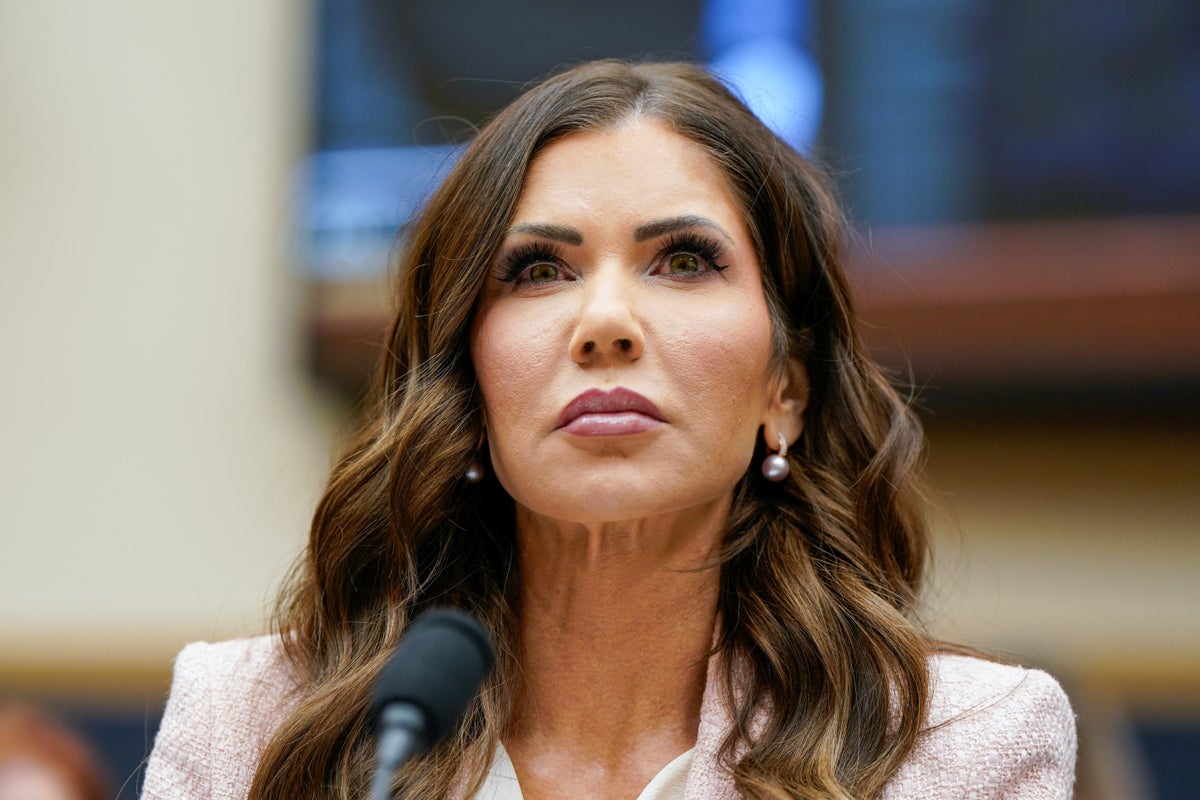
Former Trump official Kristi Noem granted early release to 19 South Dakota prison inmates without parole board approval during her time as state governor, 12 of whom have gone on to be charged with new crimes, according to a report.
Noem – fired by President Donald Trump in March after her stewardship of the Department of Homeland Security ended with two protesters being killed by federal immigration agents in Minneapolis – is now serving as Special Envoy for the Shield of the Americas.
Before joining the Trump administration, she was South Dakota governor from 2019 to 2025 and issued 19 commutations without their being reviewed by the state Board of Pardons and Paroles, which is customary before they are presented for consideration as clemency orders.

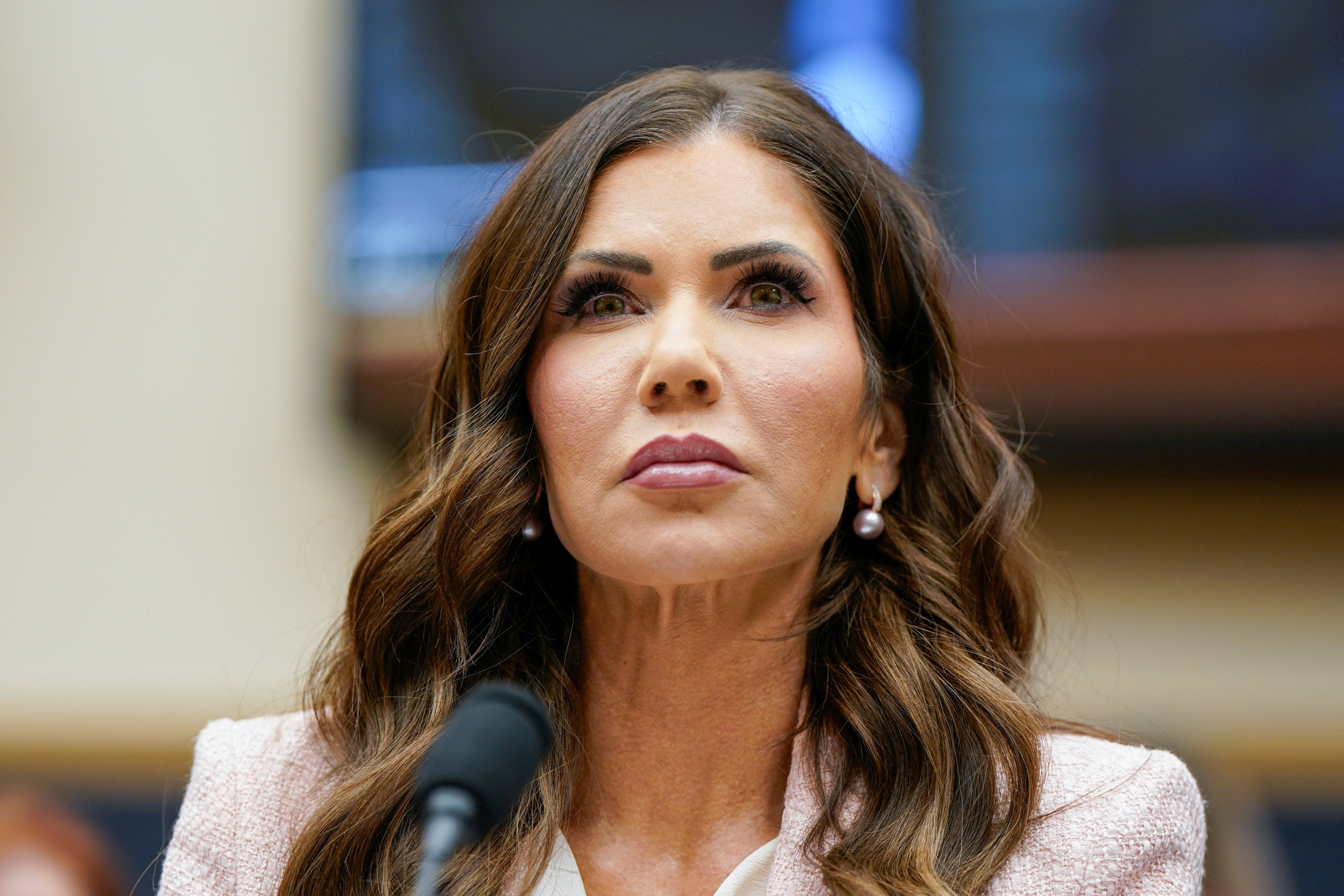
Noem issued the orders in two tranches, seven at Christmas 2022 and a further 12 the following year.
The South Dakota Searchlight reports that three of the 2022 group have gone on to plead guilty to new charges: one for drug possession, another for misdemeanor domestic violence, and another for driving under the influence.
Of the 2023 group, nine have subsequently been accused of reoffending: six charged with drug possession, two with drug distribution, and one with domestic violence, although the latter charge was later dropped.
Noem also issued a further eight clemency orders for prisoners that were reviewed by the board during her tenure, five of whom went on to be released and one of whom has been charged with a new crime, the Searchlight reports.
The former DHS secretary has not responded to requests for comment on her decision-making and it is not clear how the names of the prisoners involved first landed on her desk.

In South Dakota, the governor has the exclusive authority to issue commutations and pardons, which scrub prior convictions from an individual’s criminal record. In addition to the commutations, Noem also granted 348 pardons during her time in the governor’s mansion.
Typically, the commutation process begins with an application being made to the Board of Pardons and Paroles, not the governor directly.
The applicants are then expected to clear a two-person screening panel before they can earn a recommendation from the full board, consisting of nine members.
Those screenings review the applicant’s record of conduct in and out of jail and incorporate interviews with their inmate and their sponsors and opponents.
If a majority of the nine board members agree that they should be released early from their sentence, the matter is then passed on to the governor’s office for their consideration.
Noem’s successor, Gov. Larry Rhoden, has issued two commutations so far, having received approval from the board in both instances, as well as 90 pardons.
South Dakota Rep. Dusty Johnson, one of three people running against Rhoden in the Republican primary for governor on June 2, has pledged to create a public safety task force if he wins and promised to “reform the clemency process” and “help ensure violent criminals are prevented from repeatedly harming the public.”
Rhoden, for his part, told the Searchlight that the system “is not broken, and I do not support changing it.”