




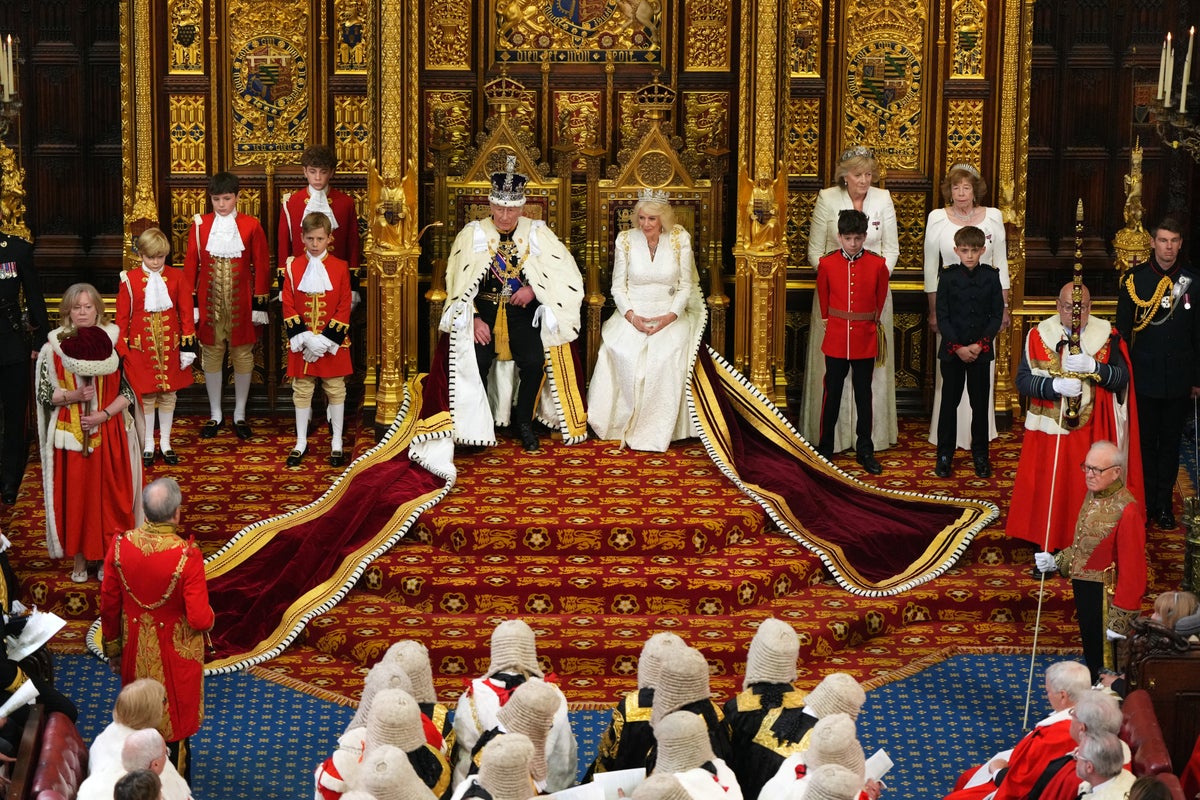
King Charles III today delivered his third King’s Speech as monarch, marking the 2026 state opening of parliament.
The speech marks the beginning of a new parliamentary session, and is both historically symbolic and an important moment where the government’s legislative plans for the year ahead are set out.
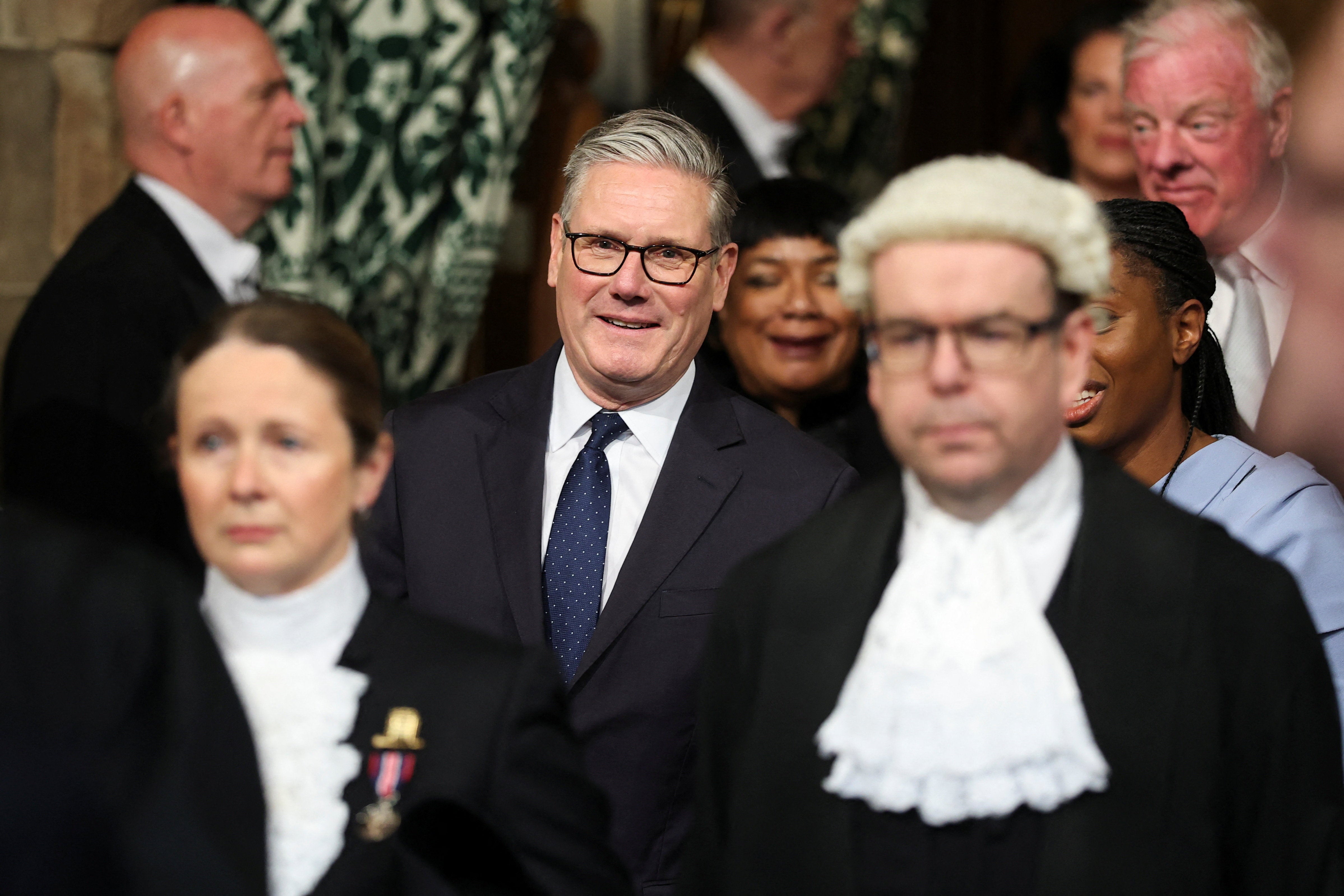
It comes as Sir Keir Starmer faces the biggest challenge to his premiership to date, with nearly 100 of his own MPs calling for him to step down in the wake of disastrous local election results.
Seated on a throne in the House of Lords, King Charles said: “An increasingly dangerous and volatile world threatens the United Kingdom, with the conflict in the Middle East only the most recent example. Every element of the nation’s energy, defence and economic security will be tested.
“My government will respond to this world with strength and aim to create a country that is fair for all.”
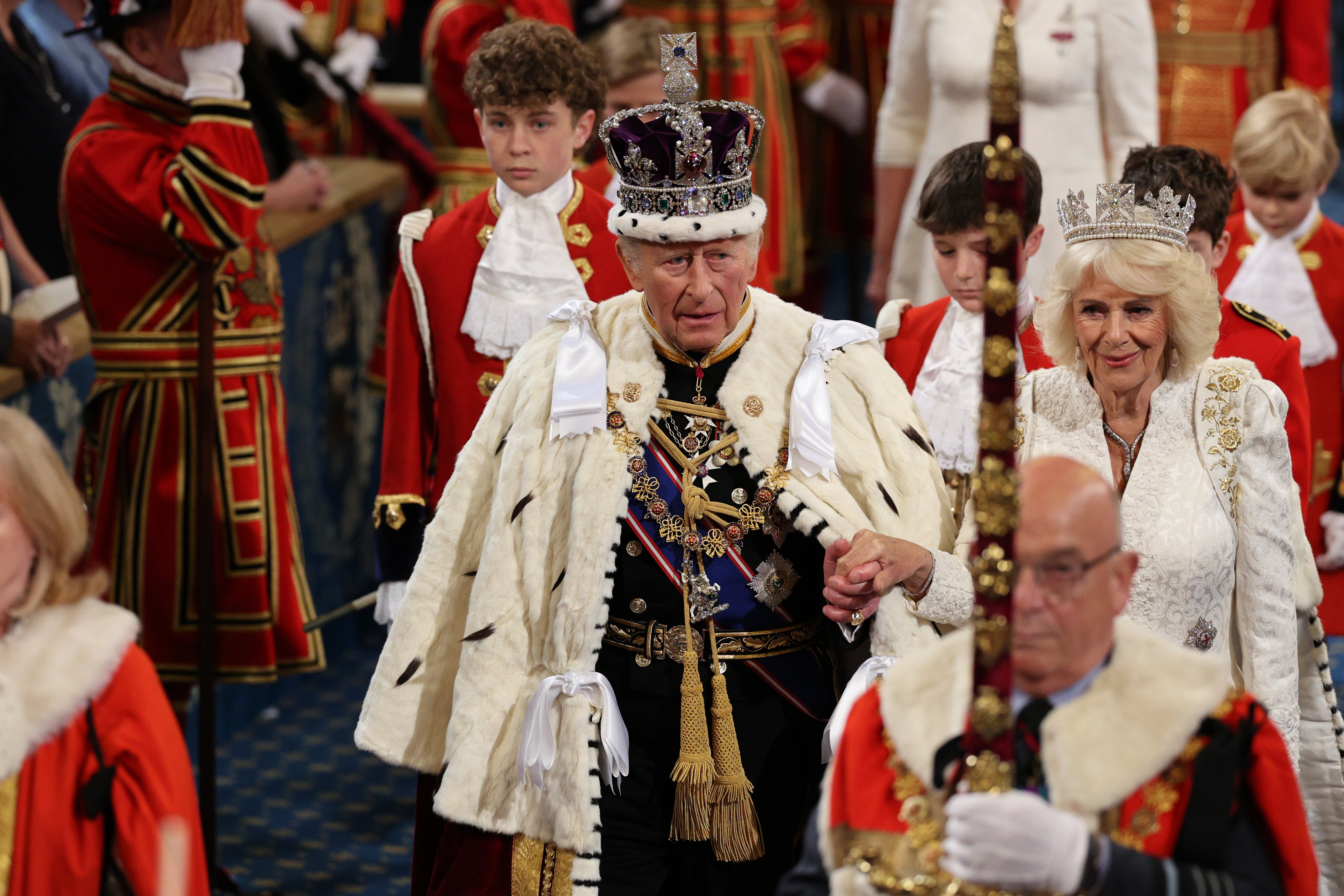
There were a total of 35 bills announced as part of the speech, outlining the focus of the government’s work during the next parliamentary session.
These spanned from national security and defence to housing and business. Several government policies, which were unconfirmed or had an unclear timeline, have also been confirmed, such as the introduction of a digital ID and the long-awaited Hillsborough Law.
Here, The Independent gives an overview of some of the key policies announced (scroll down to see the list in full):
European Partnership Bill
Described by the King as a bill to “strengthen ties with the European Union”, this announcement confirms Labour’s intention to press ahead with laws that would align certain parts of UK law with that of the European bloc.
This could include sectors such as “food standards, carbon emissions trading and electricity trading”, a briefing from the House of Lords library explains.
Earlier this week, the embattled prime minister said his government would be “defined by rebuilding our relationship with Europe, by putting Britain at the heart of Europe, so that we are stronger on the economy, stronger on trade, stronger on defence”.
His words come after Britain and the EU both received harsh criticism from US President Donald Trump over their reluctance to assist in his military campaign against Iran, which was launched in February.
While Sir Keir’s plans are popular with Labour members, pro-Brexit critics have argued he threatens to override the mandate set by the 2016 referendum.
Removal of peerages
This bill continues the government’s work in reforming the House of Lords. It follows the hereditary peers bill, which was passed in April, that removed the right of all remaining hereditary peers to sit and vote in the House.
The straightforwardly named Removal of Peerages Bill will now introduce powers to remove peers from the House of Lords. It was first announced earlier this year by the prime minister in response to new revelations about Lord Mandelson’s relationship with convicted paedophile Jeffrey Epstein.
Planes, trains, and roads
Several bills focusing on transport infrastructure were mentioned by the King. These included the Civil Aviation Bill, which will deliver more airport expansion and the Highways (Financing) Bill, which will help to deliver the long-awaited Lower Thames Crossing.
Also mentioned was the Northern Powerhouse Rail Bill, which encompasses long-delayed plans to improve East-West transport in the North of England, through a planned line that connects Liverpool to Hull with connections to Manchester, Sheffield, York, Leeds and Newcastle.
Housing
Two bills focusing on housing were announced as part of the speech: the Social Housing Renewal Bill and the Commonhold and Leasehold Reform Bill.
The first will “increase long-term investment in social housing”, the King explained. At present, Labour has pledged to build 180,000 social homes by 2036 – a target campaigners say falls short of what is needed. More details about this bill may reveal more funding to change this target.
The second bill delivers on Labour’s pledge to reform the leasehold system and introduce a cap on ground rents. Ground rents will be capped at £250-a-year under the plans, while new leasehold flats will be banned and existing leaseholders given the right to switch to commonhold.
Welfare reform
While no bill focusing on benefits was announced by King Charles, he was asked by the government to mention in his speech its continued focus on making changes to the welfare system.
The monarch said that Labour will “respond to the Milburn Review and the Timms Review and continue to reform the welfare system to support both young and disabled people to flourish in work as the basis for long-term economic security”.
The review, led by former health secretary Alan Milburn, is looking into young people and work, with an aim to tackle the rising number who are not in employment, education or training (Neet).
Meanwhile, disability minister Sir Stephen Timms’ review focuses on PIP – the disability benefit at the heart of Labour’s scrapped welfare reforms – to ensure it is ”fair and fit for the future”.
The choice to mention these reviews in the King’s Speech indicates that the government could revisit plans to reform the welfare system after both have reported by autumn.
Full list of bills:
Steel Industry (Nationalisation) Bill: Will give the government powers to nationalise British Steel.
High Speed Rail (Crewe – Manchester) Bill: The plan for Northern Powerhouse Rail is intended to deliver faster, more frequent services between cities in northern England. The Bill will outline a “foundational” element for the scheme from Manchester to Millington in Cheshire, via Manchester Airport.
European Partnership Bill: The legislation will provide a framework to adopt EU rules where the government strikes deals with Brussels.
Small Business Protections (Late Payments) Bill: The law is intended to protect small and medium-sized enterprises (SMEs) with powers including maximum payment terms of 60 days, and mandatory interest rates 8 per cent above the Bank of England base rate for late payments.
Clean Water Bill: Creates a new regulator for the industry and a new water ombudsman to provide stronger consumer protections.
Competition Reform Bill: Will make the Competition and Markets Authority’s investigations faster and more predictable and reduce burdens on businesses.
Regulating for Growth Bill: Includes measures aimed at tackling a system the government views as complex, risk-averse and poorly suited to modern technologies and business models.
Enhancing Financial Services Bill: Will modernise how lenders are regulated and update consumer protection arrangements.
Highways (Financing) Bill: Will introduce a new funding model to get greater levels of private capital investment into road schemes.
Overnight Visitor Levy Bill: Will allow mayors and potentially other leaders of large authorities in England to introduce a tourist tax in their areas.
Social Housing Renewal Bill: Will prioritise the building of new social rented homes and tighten eligibility for the Right to Buy to protect existing social housing stock.
Commonhold and Leasehold Reform Bill: Marks the beginning of the end for what Sir Keir Starmer called the “unfair feudal system” of leasehold properties. It will ban the use of leasehold for new flats, cap ground rents at £250 a year and implement a new process for converting to commonhold.
Education for All Bill: Will reform the system in England for children with special educational needs or disabilities (SEND).
Representation of the People Bill: Will lower the voting age to 16 in all UK elections, along with other reforms.
Remediation Bill: Boosts powers for regulators and closes loopholes to accelerate the removal of unsafe cladding from buildings.
Draft Conversion Practices Bill: Will protect people from “harmful and abusive” attempts to change their sexual orientation or transgender identity.
Draft Ticket Tout Bill: Will make it illegal to resell a ticket at more than its original cost, cap the service fees charged by resale platforms and allow regulators to impose fines of up to 10 per cent of global turnover on firms breaking the new laws.
Sporting Events Bill: Will put in place measures to support the delivery of the Euro 2028 football tournament and position the UK as an attractive bidder for other events such as the Women’s World Cup in 2035.
Police Reform Bill: Scraps police and crime commissioners and includes other reforms including a new legal framework for the use of facial recognition technology.
NHS Modernisation Bill: Abolishes NHS England and puts in place reforms including a new single patient record that people can view on their NHS app.
Railways and Passenger Benefits Bill: Establishes Great British Railways, the new state-owned company in charge of both track and trains, and creates a new passenger watchdog.
Digital Access to Services Bill: Creates a new voluntary digital ID system for use across public services and the wider economy.
Public Office (Accountability) Bill: The long-running wrangle over the Hillsborough Law’s application to the security services prevented the legislation being passed before the end of the last parliamentary session.
Removal of Peerages Bill: Creates a mechanism to strip titles from disgraced peers without the need for a new law to be passed in each individual case. The PM promised the legislation in the wake of the Lord Peter Mandelson scandal.
Courts Modernisation Bill: Includes the government’s controversial plan to restrict trial by jury to the most serious cases.
Northern Ireland Troubles Bill: Another piece of legislation that has been carried over from the previous session, it is an attempt to deal with the complicated and controversial legacy of the Troubles.
Draft Taxi and Private Hire Vehicle Bill: Modernises Victorian-era rules and addresses licensing vulnerabilities which have been exploited by grooming gangs.
Civil Aviation Bill: Will strengthen consumer rights and protections for passengers and change the regulation of airport slots to support the expansion of airports.
Sovereign Grant Bill: Will enable the amount of money paid to support the King’s official duties to fall once work to update the plumbing and wiring of Buckingham Palace is completed.
Energy Independence Bill: Legislates for a series of reforms to upgrade homes, speed up the construction of infrastructure and the deployment of renewable power.
Nuclear Regulation Bill: Modernises the way nuclear projects are regulated to support the quicker delivery of new power stations.
Electricity Generator Levy Bill: Will break the link between electricity and gas prices and increase the windfall tax from 45% to 55% to drive low-carbon generators currently benefiting from high market prices set by gas onto fixed-price contracts.
Tackling State Threats Bill: Will allow the government to ban foreign state-backed organisations engaged in espionage, sabotage and interference in the UK, like Iran’s revolutionary guard.
Armed Forces Bill: Will ensure the UK continues to have an army, a commitment which must be renewed for constitutional reasons every five years. It will also enshrine the Armed Forces Covenant in law.
National Security Bill: Will criminalise a range of harmful online content, and criminalise planning mass attacks, to clamp down on extremist threats to the country.
Immigration and Asylum Bill: Will take steps to clamp down on small boat crossings, and tighten up the asylum appeals system.
Cyber Security and Resilience Bill: Will aim to bolster online protections for businesses and services across the country, to make sure they are protected from cyber attacks.

