


Sir Keir Starmer has called for unrestricted transit through the Strait of Hormuz, following Donald Trump’s suggestion of a 20 per cent toll on shipping for safe passage through the vital waterway. The American president’s controversial proposal comes amidst escalating tensions in the region.
The outgoing British Prime Minister also urged an immediate end to hostilities and a return to diplomatic negotiations, as the US launched its third consecutive night of strikes against Iran over the contested strategic sea route.
Mr Trump defended his proposed fee on cargo using the Gulf channel as a “matter of fairness” to cover the costs of providing security.
This move has drawn sharp criticism in the UK, with the Liberal Democrats condemning it as “state-backed highway robbery”, “an act of economic extortion” and “a flagrant violation of international law”.
Senior White House figures have previously voiced strong opposition to tolls being imposed by Iran in the same strait.
The vital sea route had been open before the conflict launched by the US and Israel on February 28.
Mr Trump also announced a blockade of Iranian ports would resume, having been lifted last month as part of the interim ceasefire deal he has declared over following renewed hostilities.
The US military said it will come back into force on July 14 at 9pm UK time.
The president later announced he would be making an address to the nation on Thursday evening, but gave no further details.
He also described the Tehran regime as “sleazebags”.
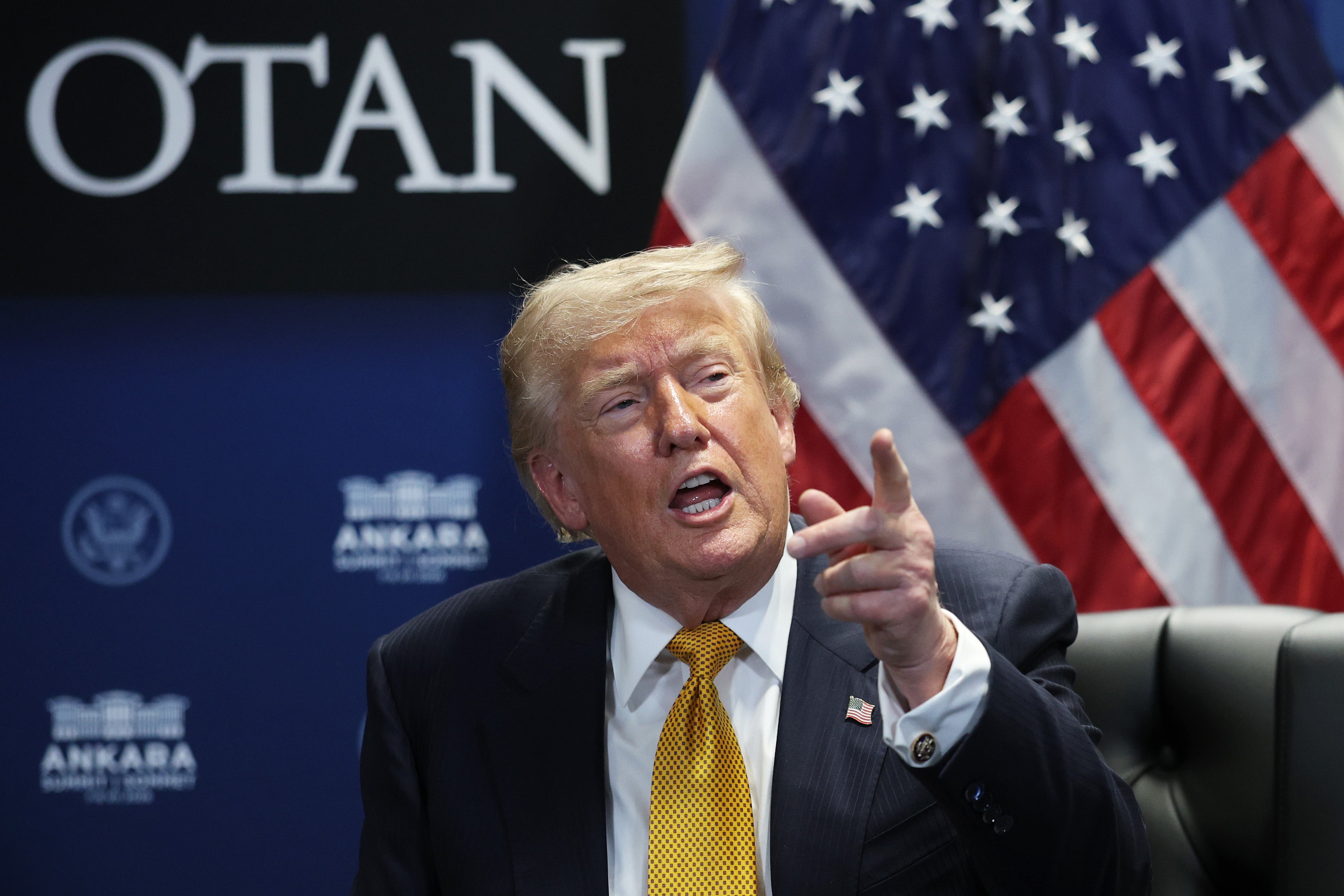
The action by the White House comes amid an escalating struggle between Washington and Tehran over the strait, which has seen both sides exchange fire.
The latest clash came after Iran attacked a container ship on Sunday in the strait.
Iran claims it controls the waterway, while this is disputed by the US and other countries, which cite international law on freedom of navigation.
Writing on his Truth Social platform, Mr Trump said: “The Hormuz Strait is OPEN, and will remain OPEN, with or without Iran.
“We are reinstating the THE IRANIAN BLOCKADE, so named because it is only stopping Iran’s ships or customers from entering or leaving.
“All other countries will have fair and open use of the Strait.”
He added: “The USA will be, from this point forward, known as ‘THE GUARDIAN OF THE HORMUZ STRAIT’, but as such, and as a matter of FAIRNESS, will be reimbursed, at the rate of 20% on all cargo shipped, for any and all costs necessary to do the job of providing safety and security to this very volatile section of the World.
“The process and formation will begin immediately.”
But speaking at a meeting in Paris during his final days in office, Sir Keir said: “These attacks must stop.
“We urgently need to see a resumption of the ceasefire and negotiations on the remaining issues, alongside unrestricted freedom of navigation in the straits.
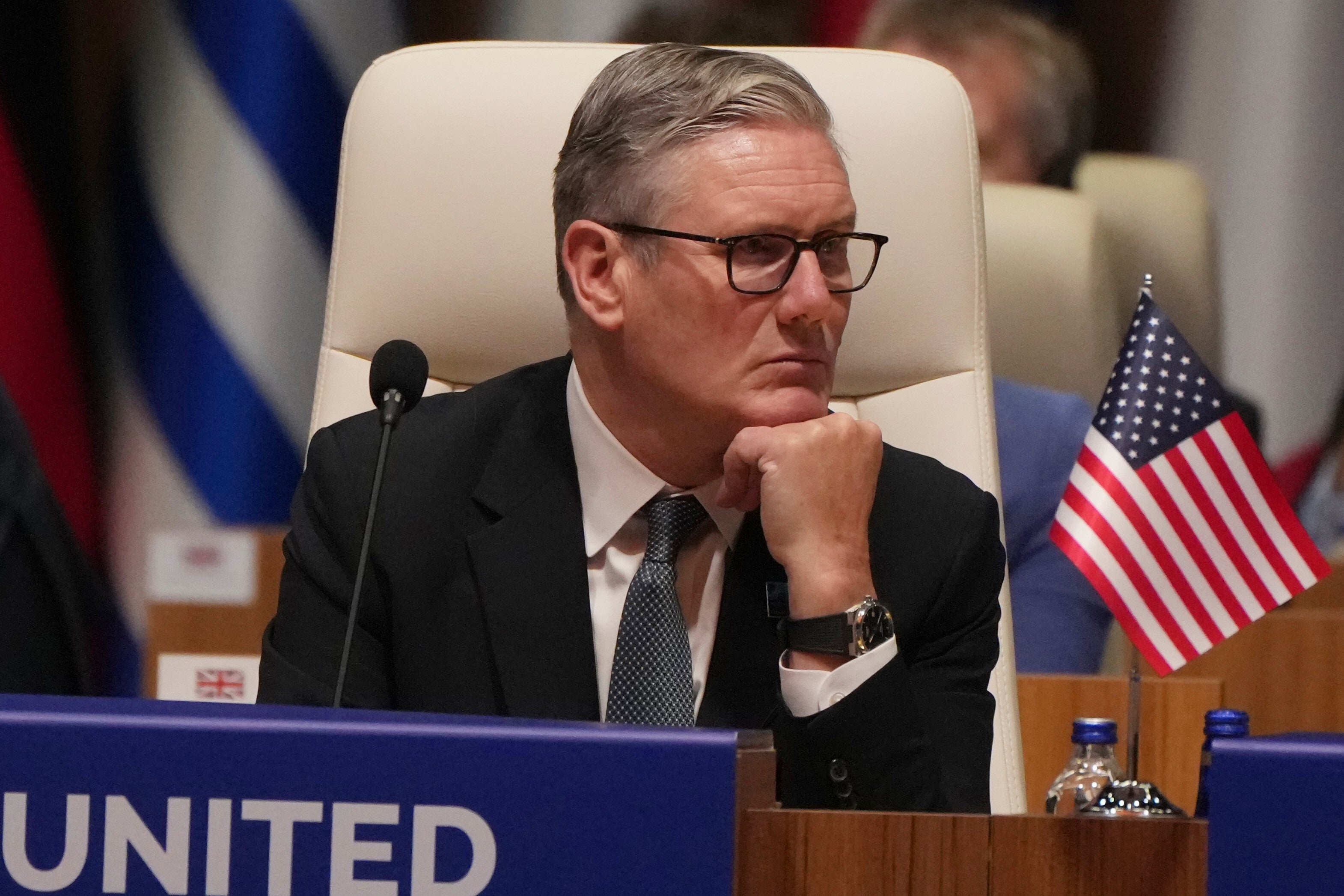
“We are united in support of this process. And we are ready to deploy assets to help get ships moving again.”
Liberal Democrat foreign affairs spokesman Calum Miller MP said: “Donald Trump’s plan to slap a 20% tax on shipping through the Strait of Hormuz is nothing short of state-backed highway robbery. Ambushing global trade at one of the world’s most vital chokepoints is an act of economic extortion.
“Extracting tolls like this is a flagrant violation of international law.
“The UK Government cannot afford to be a passive bystander while a volatile White House tears up the rules of global trade and regional stability, or while the Iranian regime continues to attack vessels in the Strait.
“Both Donald Trump and Tehran are once again holding the global economy to ransom.
“Keir Starmer must immediately co-ordinate with our international allies to reject this lawless toll, protect freedom of navigation, and work urgently to de-escalate this rapidly expanding conflict.”
The International Maritime Organisation, the United Nations agency which oversees safety and security in international shipping, said: “There is no legal basis through which to introduce mandatory tolls simply to transit through a strait.”
Only last month, US secretary of state Marco Rubio stressed the US was against Iran charging fees for ships to use the international waterway.
Mr Trump recently joined other world leaders at the G7 summit in France, including Sir Keir, to confirm that “the right of transit passage without restrictions or tolls is the bedrock of international trade”.
Meanwhile, US central command (Centcom), which oversees US military operations in the Middle East, revealed it had used one-way “kamikaze” surface drones for the first time in its latest attacks on Iran to strike a submarine and ship maintenance facility.
The number of US military personnel to die in the conflict currently stands at 14, with a total of 414 wounded.
Ending Tehran’s stranglehold on the sea route, which disrupted global oil and gas supplies and drove up fuel and food prices, had been a key demand in previous negotiations.
However, the initial deal reached between the US and Iran only provides for safe, toll-free passage through the waterway for 60 days, pending the outcome of a final agreement on Tehran’s disputed nuclear plans.
The pact also leaves it to Iran and Oman, in conjunction with other Gulf states, to “define the future administration and maritime services in the Strait of Hormuz”.
Iran has continued to try to exert leverage over the channel, including demanding ships seek permission to transit and raising the spectre of future charges.