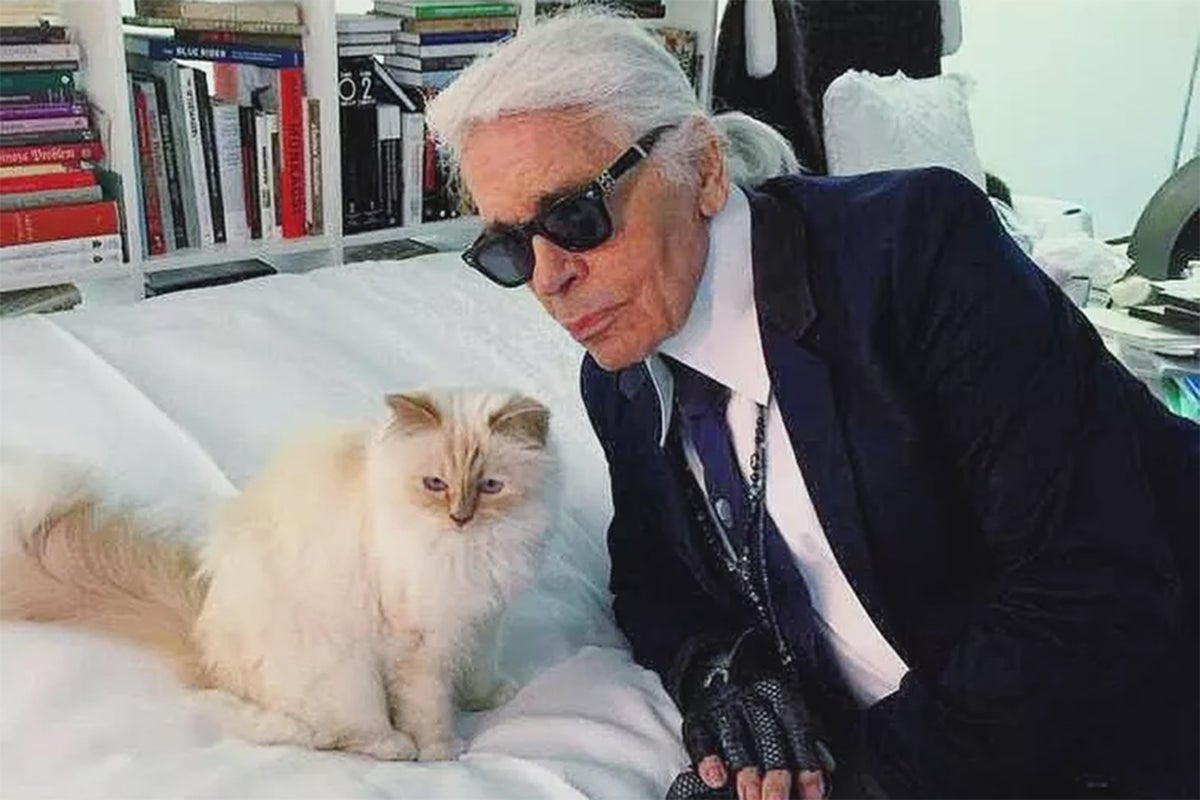
Seven years after Karl Lagerfeld’s death, his famously pampered cat Choupette has reportedly received none of the inheritance that once fuelled headlines claiming she would become the “world’s richest cat”.
Françoise Caçote, Lagerfeld’s former housekeeper and the woman entrusted with caring for Choupette after the designer’s death in February 2019, told The Atlantic: “I want to be completely transparent: today, we have received absolutely nothing.”
Choupette now lives in a Paris apartment with Caçote, her husband and their teenage son.
Caçote said she had “had to hire expensive lawyers to claim the inheritance in my name and ensure that Karl’s wishes are properly respected”, while continuing to work part-time to support the 14-year-old blue-cream Birman cat.
“While things are being sorted out, I’m doing my best to honour his wishes, especially that Choupette wants for nothing. That’s my top priority,” she said. “The most important thing is that she’s happy, surrounded by love and affection, and protected as Karl would have wanted. We remain hopeful that the situation will one day be resolved peacefully.”
Choupette entered Lagerfeld’s life in 2011 after the French model Baptiste Giabiconi left her in the designer’s care while travelling for Christmas. Lagerfeld took to Choupette almost immediately, and persuaded Giabiconi to let him keep her permanently. “I never thought that I could fall in love with an animal like this. If you saw her, you would understand,” he once said.
Lagerfeld described her as “the centre of the world” and “my only great love”, while claiming she travelled by private jet, ate chef-prepared meals from fine china, and employed two maids who documented her daily routines in handwritten journals.
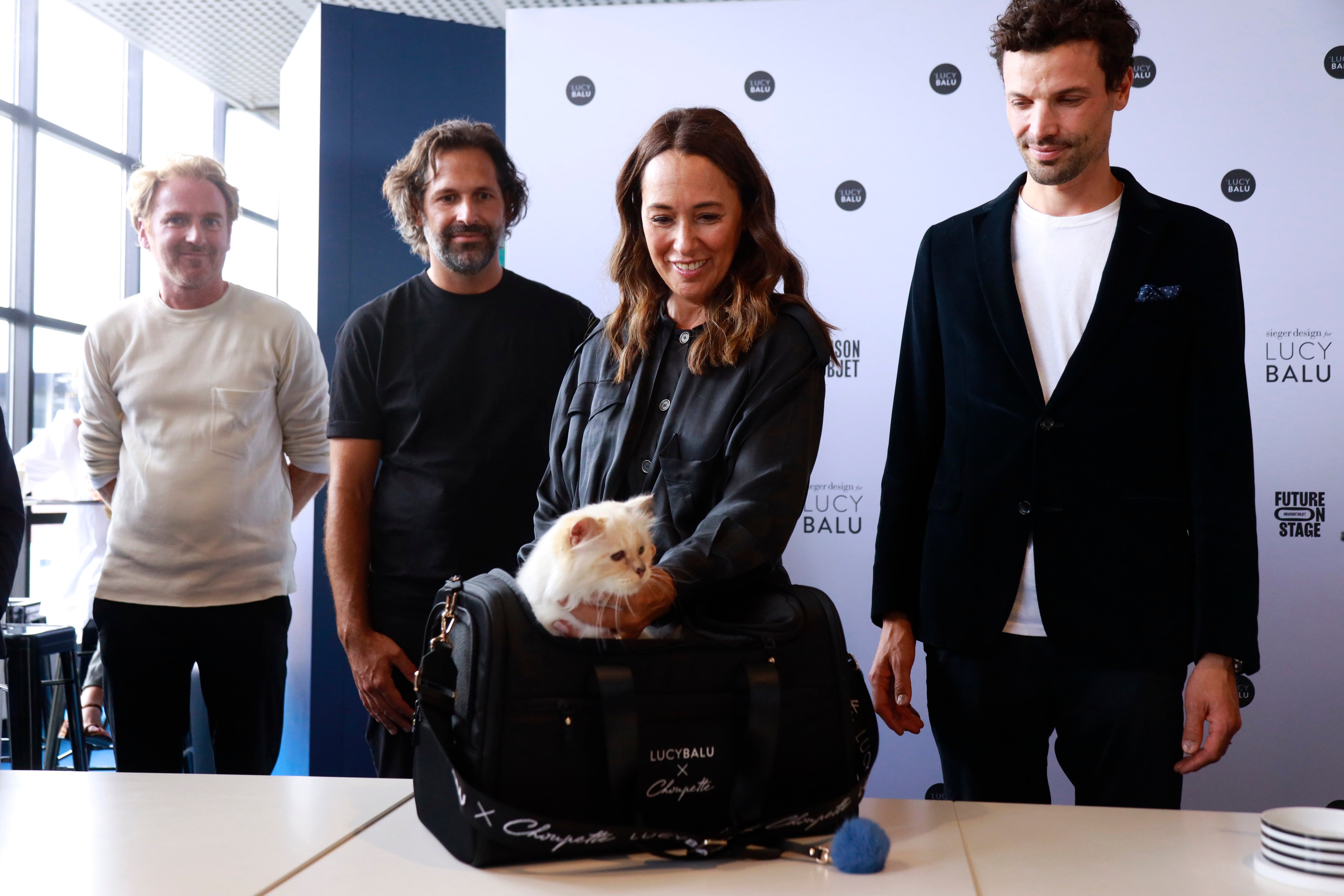
Since Lagerfeld’s death in 2019, Choupette has lived in Paris with Caçote while continuing occasional commercial work through the Paris-based talent company My Pet Agency, run by her manager Lucas Bérullier. Her personal Instagram account now boasts more than 279,000 followers.
Bérullier told The Atlantic that brands still approach Choupette for collaborations, though under strict rules designed around the cat’s welfare, including two-hour shoot limits and the use of stand-in cats when she refuses to cooperate.
“Let’s be honest, we can’t ask millions for a post or a shoot,” he told the magazine, adding that the multimillion-dollar sums associated with Choupette during Lagerfeld’s lifetime reflected the fact that “clients were largely paying for Lagerfeld’s name, and also for Lagerfeld being the photographer, designer, and art director”.
Speculation over Lagerfeld’s estate began almost immediately after the German designer died from prostate cancer at the age of 85 in February 2019. The longtime Chanel and Fendi creative director’s fortune was widely estimated at more than $200m, and his will allegedly left most of his fortune to his longtime assistant Sébastien Jondeau, his godson Hudson Kroenig, and models Brad Kroenig and Giabiconi.
Reports after Lagerfeld’s death claimed that about $1.5m had been set aside for Choupette’s care, with some outlets suggesting she could also inherit part of the estate itself.
But more than seven years later, the precise value of Lagerfeld’s fortune, the contents of his will and the amount ultimately intended for Choupette remain unclear, as French inheritance documents are not public and the estate has become entangled in tax disputes and legal challenges.
An unnamed plaintiff is now contesting the validity of Lagerfeld’s will, according to German media reports. If the will were annulled under French inheritance law, portions of Lagerfeld’s fortune could instead pass to surviving nieces and nephews in the US, largely absent from the designer’s public life.
Lagerfeld told The New York Times Magazine in 2015 that he had “no family at all”, saying he had not seen his sister Christiane, who lived in the US, in 40 years.
However, his niece Caroline Wilcox later told The Atlantic that the family had remained in occasional contact, and recalled how Lagerfeld designed her wedding dress in 1992 and flew it to Connecticut aboard Concorde the day before the ceremony.
Under French law, animals cannot directly inherit money or property because they are treated as property rather than legal persons. Any money intended for Choupette would instead have had to pass through a human intermediary, and Caçote has been widely understood to be the intended caretaker beneficiary.