


UK TimesUK Times
  • Home
  • News
  • TV & Showbiz
  • Money
  • Health
  • Science
  • Sports
  • Travel
  • More
    • Web Stories
    • Trending
    • Press Release
What's Hot

A31 westbound at a minor junction between A338 near Ringwood (west) and A347 | Westbound | Road Works

4 April 2026
Why senior AFL coach is being praised for PUNCHING one of his young players on the field during tense match

Why senior AFL coach is being praised for PUNCHING one of his young players on the field during tense match

4 April 2026
Dallas Stars’ arena investigating 4 fans for apparently celebrating with a Nazi salute – UK Times

Dallas Stars’ arena investigating 4 fans for apparently celebrating with a Nazi salute – UK Times

4 April 2026
Facebook X (Twitter) Instagram
UK TimesUK Times
Subscribe
  • Home
  • News
  • TV & Showbiz
  • Money
  • Health
  • Science
  • Sports
  • Travel
  • More
    • Web Stories
    • Trending
    • Press Release
UK TimesUK Times
Home » Japan’s lost ‘tigers’ were actually a different big cat species, study reveals – UK Times
News

Japan’s lost ‘tigers’ were actually a different big cat species, study reveals – UK Times

By uk-times.com17 February 2026No Comments3 Mins Read
Facebook Twitter LinkedIn Telegram Pinterest Tumblr Reddit WhatsApp Email
Japan’s lost ‘tigers’ were actually a different big cat species, study reveals – UK Times
Share
Facebook Twitter LinkedIn Pinterest Email

Sign up for our free Health Check email to receive exclusive analysis on the week in health

Get our free Health Check email

Get our free Health Check email

Health Check

Fossils uncovered in Japan, thought to be from the archipelago’s lost tiger population, have now been revealed to be of an ancient species of lion.

While there are no native lion or tiger populations in Japan today, this was not always the case.

Fossils indicate that at least one species of large cat roamed the archipelago during the Late Pleistocene period, lasting from approximately 129,000 to 11,700 years ago.

Previous research suggested these fossils belonged to ancient tigers, but a new DNA analysis of the specimen reveals these were actually an ancient species of lion, upending what was known about the region’s biodiversity history.

Lions spread out of Africa around a million years ago and began expanding their range across Eurasia. They stayed in the more northern regions of Eurasia, while tigers were typically found farther south.

During the Late Pleistocene, their ranges often overlapped in a region known as the “lion-tiger transition belt” that stretched across Eurasia, from the Middle East through Central Asia to the Russian Far East.

Some animals also crossed into Japan from mainland Asia when land bridges formed during periods of low sea levels.

“Periodic land connections between the archipelago and the Asian mainland, resulting from lowered sea levels during glacial periods, enabled the migration of continental fauna to Japan,” explain scientists in a new study published in the journal PNAS.
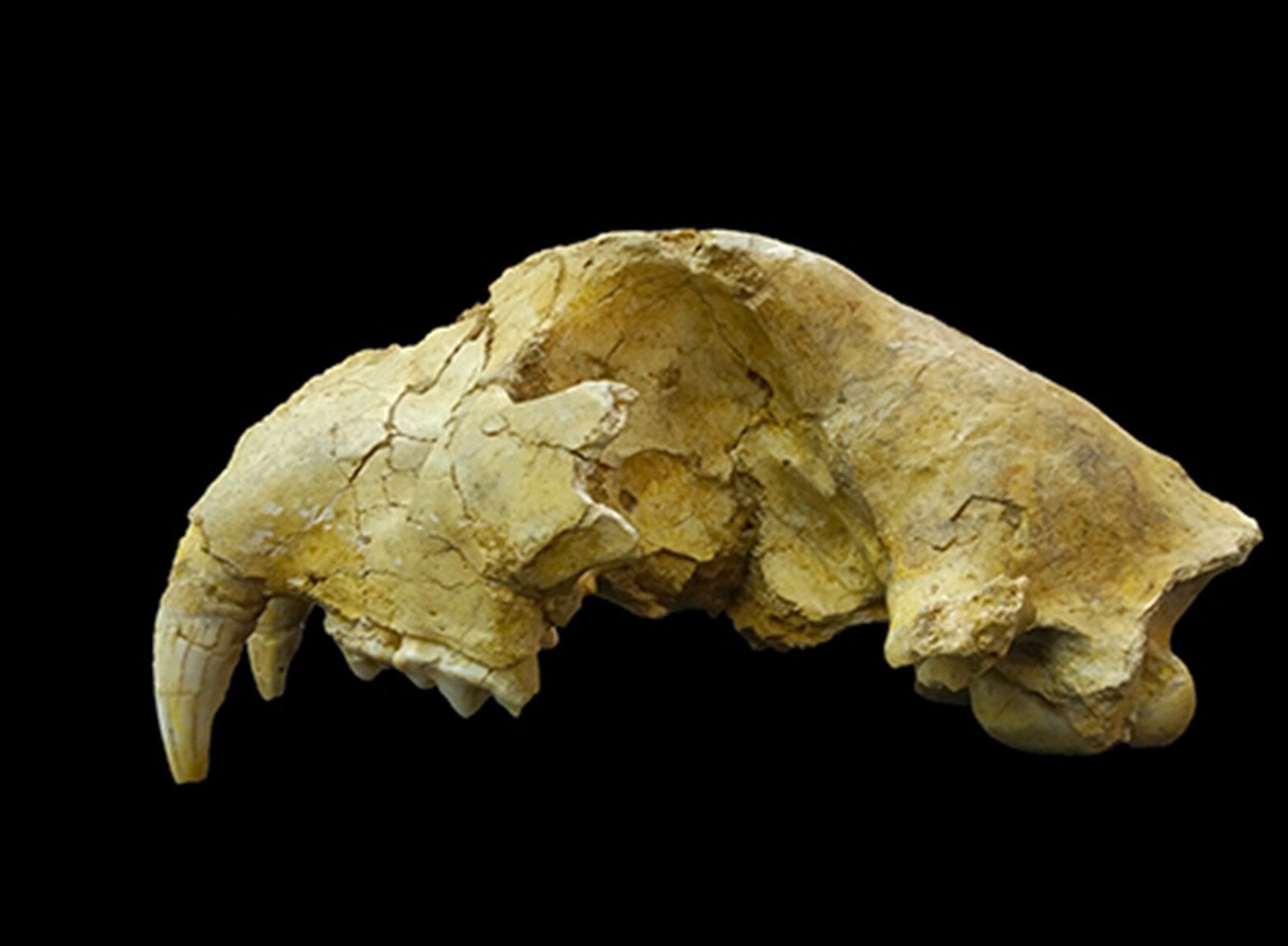
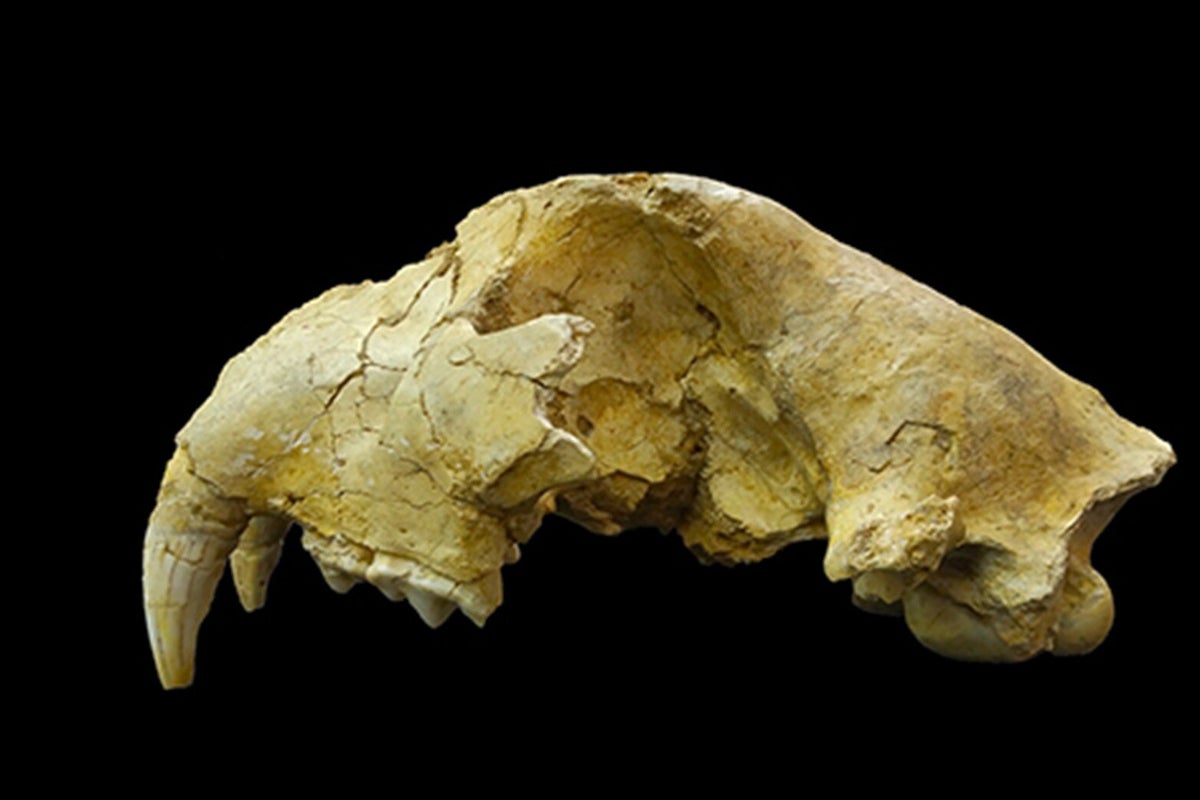
Cave lion skull excavated from Shizuoka Prefecture, central Japan
Cave lion skull excavated from Shizuoka Prefecture, central Japan (Nobuyuki Yamaguchi via Phys.org)

Researchers previously uncovered fossils belonging to the genus Panthera in Japan from soil layers corresponding to the Middle and Late Pleistocene periods.

These were initially attributed to tigers based on physical features of the remains, as well as habitat studies suggesting that southwestern Japan was more suitable for tigers, especially during cooler periods.

Other research has shown that cave lions were present in the southeast Russian Far East, northeastern China, and the northern Korean Peninsula during the Late Pleistocene.

This raised questions about which species the Japanese fossils came from. Now, a more thorough DNA analysis provides reliable proof that all of the ancient Japanese “tiger” remains were actually a now extinct lion species, referred to as cave lions.

The specimens were found to be from around 31,060 years ago.

Based on these findings, researchers theorise that cave lions most likely colonised Japan between about 72,700 and 37,500 years ago, likely via the northern land bridge during glacial periods.

They suspect cave lions persisted in Japan for at least 20,000 years after their extinction elsewhere in Eurasia.

“Periods of relative isolation, punctuated by episodic land connections to the continent, have historically enabled the persistence of relict populations, such as the Japanese wolf, which survived well into the Holocene, after their continental counterpart population went extinct,” scientists wrote.

“Our findings challenge the long-held view that tigers once took refuge in Japan, showing instead that cave lions were widespread in northeast Asia during this period and were the Panthera lineage that colonized Japan, reaching even its southwestern regions despite habitats previously thought to favor tigers,” they concluded.


Share. Facebook Twitter Pinterest LinkedIn Tumblr Telegram Email

Related News

A31 westbound at a minor junction between A338 near Ringwood (west) and A347 | Westbound | Road Works

4 April 2026
Dallas Stars’ arena investigating 4 fans for apparently celebrating with a Nazi salute – UK Times

Dallas Stars’ arena investigating 4 fans for apparently celebrating with a Nazi salute – UK Times

4 April 2026

A31 eastbound between A347 and A338 near Ringwood (west) | Eastbound | Road Works

4 April 2026
Fox host cuts off Trump’s top economic adviser when he tries to blame Biden for gas price spike amid Iran war – UK Times

Fox host cuts off Trump’s top economic adviser when he tries to blame Biden for gas price spike amid Iran war – UK Times

4 April 2026

M5 northbound between J5 and J4A | Northbound | Road Works

4 April 2026

M1 southbound within J32 | Southbound | Road Works

4 April 2026
Top News

A31 westbound at a minor junction between A338 near Ringwood (west) and A347 | Westbound | Road Works

4 April 2026
Why senior AFL coach is being praised for PUNCHING one of his young players on the field during tense match

Why senior AFL coach is being praised for PUNCHING one of his young players on the field during tense match

4 April 2026
Dallas Stars’ arena investigating 4 fans for apparently celebrating with a Nazi salute – UK Times

Dallas Stars’ arena investigating 4 fans for apparently celebrating with a Nazi salute – UK Times

4 April 2026

Subscribe to Updates

Get the latest UK news and updates directly to your inbox.

Recent Posts

  • A31 westbound at a minor junction between A338 near Ringwood (west) and A347 | Westbound | Road Works
  • Why senior AFL coach is being praised for PUNCHING one of his young players on the field during tense match
  • Dallas Stars’ arena investigating 4 fans for apparently celebrating with a Nazi salute – UK Times
  • A31 eastbound between A347 and A338 near Ringwood (west) | Eastbound | Road Works
  • Fox host cuts off Trump’s top economic adviser when he tries to blame Biden for gas price spike amid Iran war – UK Times

Recent Comments

No comments to show.
© 2026 UK Times. All Rights Reserved.
  • Privacy Policy
  • Terms of use
  • Advertise
  • Contact Us

Type above and press Enter to search. Press Esc to cancel.

Go to mobile version