Israel’s request to access the text of the interim Iran agreement was rejected by the U.S., according to reports, as tensions between Benjamin Netanyahu and Donald Trump have become more prominent since the ceasefire in hostilities with Iran.
The original text of the memorandum of understanding reached between the U.S. and Iran to end the war in the Middle East has remained elusive, as Trump said the final version would be made public in a formal setting in a few days.
The interim deal reached Sunday would extend a tenuous ceasefire announced in April by another 60 days and reopen the Strait of Hormuz, which Iran has effectively blocked since the U.S. and Israel attacked the country in February.
The Israeli request to see the text of the agreement reached between Iran and the U.S. was denied as the Trump administration feared Netanyahu would leak the document before it was officially released, CNN reported, citing Israeli officials.
Israel’s i24 News first reported that the U.S. administration rejected the request, citing US officials. The news outlet said in a report that it was “a remarkable and highly unusual development between close allies on an issue of such critical national security importance”.

However, a U.S. official said the report was “not accurate” adding that “the United States has remained in close coordination with our regional partners, including Israel, throughout the negotiations.”
The Independent has reached out to Netanyahu’s office and the White House for comment.
Vice President JD Vance, who was part of the negotiations with Iran, has said that Washington has not released the text because officials needed to “sequence this in the right way”.
“There are sensitivities that exist in the Arab and Muslim world that we’re trying to be responsive to.”
The signing ceremony of the MoU is expected Friday in Switzerland to formalise the deal between the U.S. and Iran, leading the two countries to a second phase of direct talks on details of the deal, including the future of Iran’s nuclear program and uranium enrichment.
Under the deal, the U.S. will end its blockage of the Iranian ports while Tehran will restore the passage of oil tankers and other maritime traffic through the Strait of Hormuz, the key waterway that was effectively blocked since the U.S. and Israel launched strikes on February 18.
The rift between Netanyahu and Trump has been becoming more evident in recent days, with the Israeli President acknowledging that him and Trump “do not always see eye to eye” during a news conference Monday after the announcement of the deal.
He also said, “We still do not know what the agreement will be”.
Trump has expressed his frustrations over Israel’s refusal to constrain its pursuit of Hezbollah in Lebanon, where a cessation of hostilities is a key Iranian demand. Trump and other U.S. Presidents do not often criticise Israel’s military tactics.
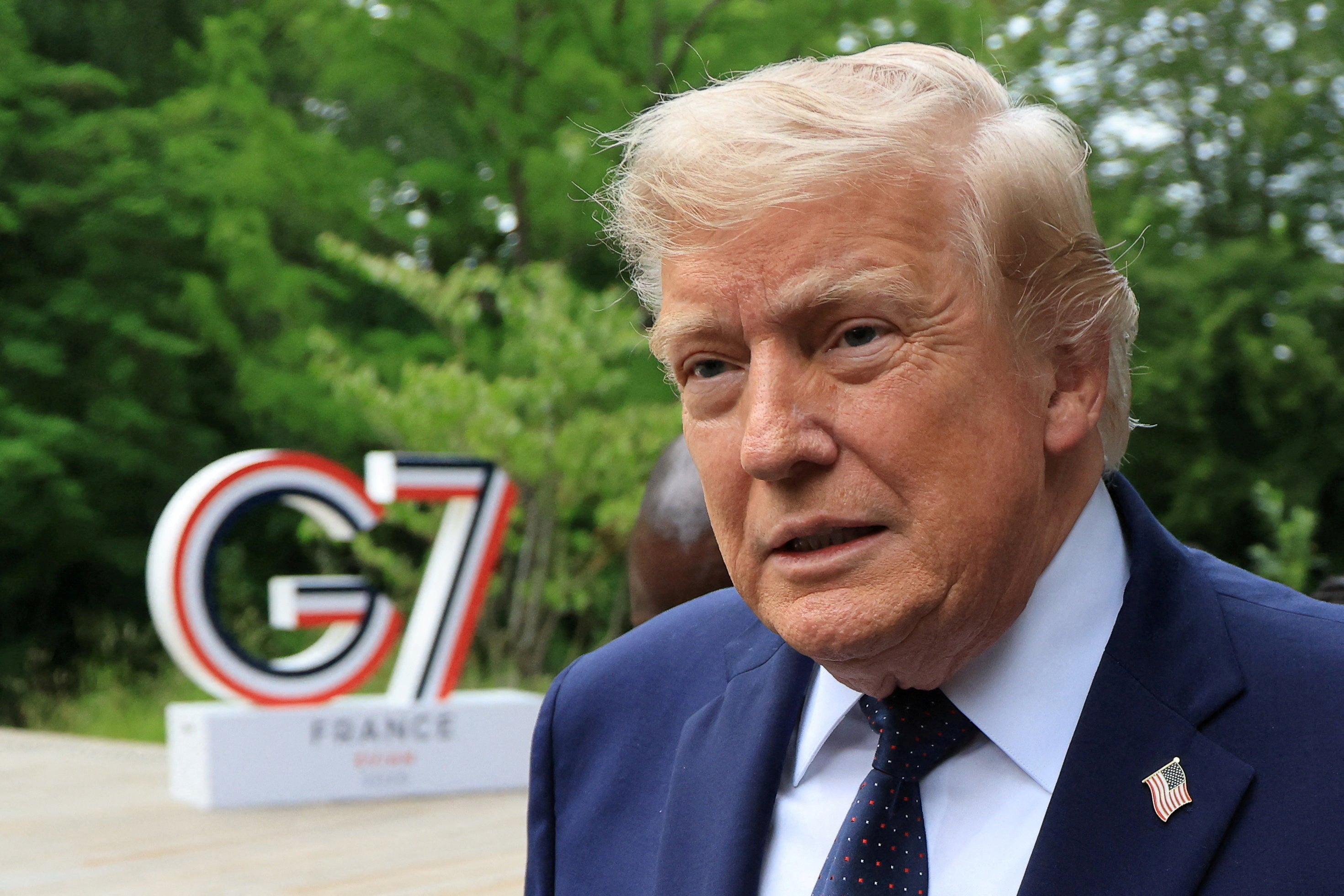
At the G7 summit in France, Trump issued a rare public rebuke of Israeli forces in Lebanon targeting Hezbollah militants, saying it was unnecessary to bomb entire apartment buildings to hunt militants.
He said Israel has been fighting Hezbollah, the Iran-aligned Lebanese militia, for “too long”.
“Too many people have been killed. You don’t have to knock down an apartment house every time you’re looking for somebody, because there are a lot of people in those apartment houses, and they’re not all Hezbollah,” Trump said at the G7 summit in France.
He went on to stress that he has a “great relationship” with Netanyahu but added in the same breath that he should be “more responsible” with Lebanon.
“Without us, without the United States, there would be no Israel. Without me, there would be no Israel, because no other president was willing to do what I did.”