
This article first appeared on our partner site, Independent Persian
As the US-Israeli war in the Middle East enters its second month, reports from multiple cities in Iran indicate the atmosphere inside the country is approaching a de facto state of martial law.
Residents say increased checkpoints, the presence of armed forces in residential neighbourhoods, intensified security crackdowns, and raids on homes have severely disrupted daily life.
According to accounts received by Independent Persian, in many neighbourhoods in Tehran, forces belonging to the Islamic Revolutionary Guard Corps (IRGC) and its subsidiary Basij militia have effectively turned residential areas into security zones by stationing heavy vehicles, numerous motorcycles and military equipment outside apartment complexes.

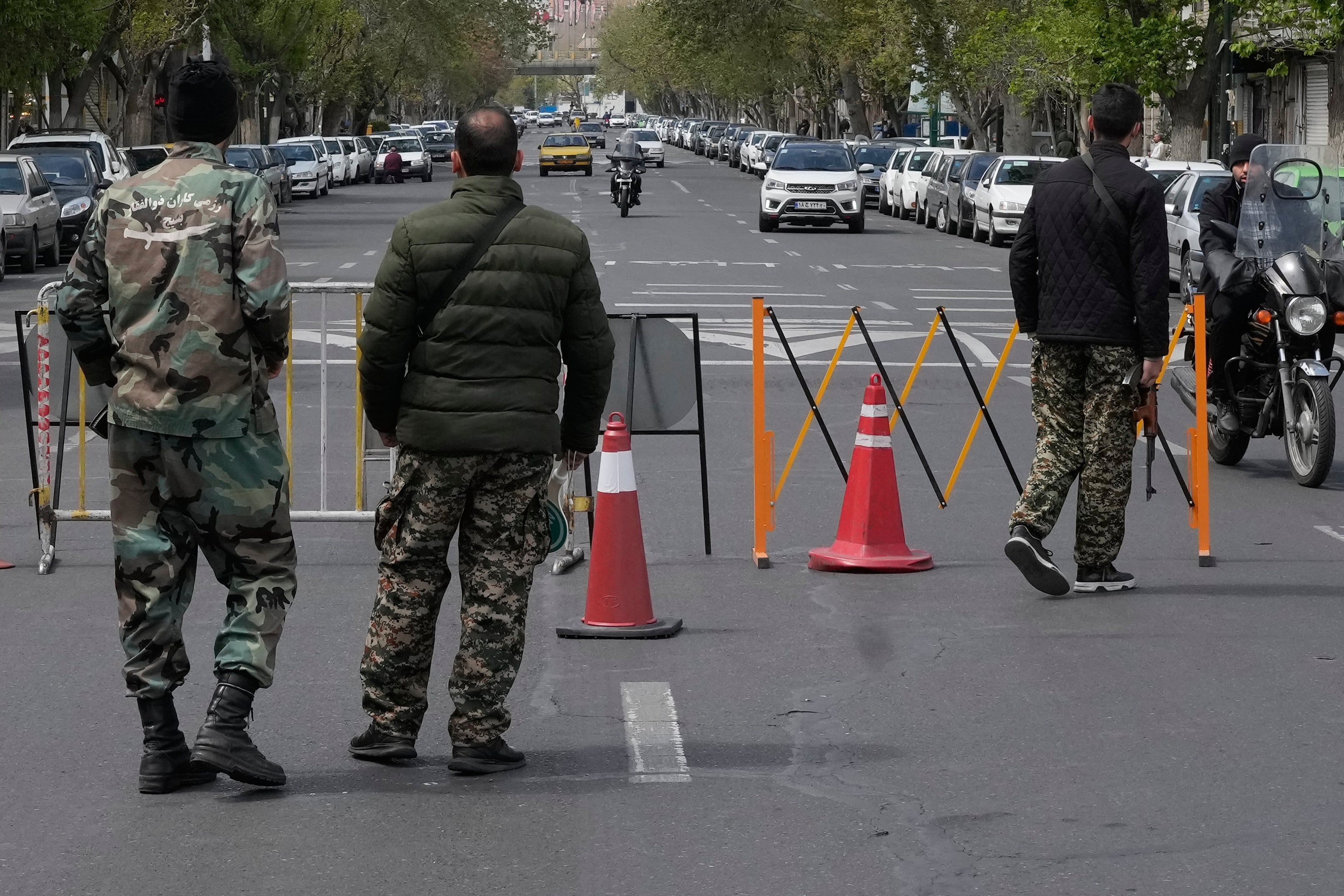
One resident of Tehran’s Saadat Abad district said: “They’ve set up a checkpoint in front of our building for a few days now.
“From morning to night, they blast mourning chants at high volume. It’s not just noise pollution; it also makes this place a potential target.”
The fear that residential areas are being turned into military targets appears in multiple accounts.
Residents in several northern Tehran districts told Independent Persian the presence of these forces near homes, combined with constant drone surveillance, has created a strong sense of insecurity.
Many families fear that if these locations are targeted, civilians could be put at risk.
At the same time, reports point to a sharp increase in checkpoints on major roads and intercity routes.

A driver from Tehran said: “From the airport entrance all the way to the Tehran-Qom highway, there are multiple checkpoints, right in the middle of the road. Military vehicles and armed forces stop every car.”
He added that these checkpoints have not only caused heavy traffic but also created an atmosphere of fear, leading many drivers to avoid travelling at night.
Several accounts report a sharp rise in the inspection of mobile phones.
Dozens of individuals from across Iran told Independent Persian that security forces are checking phones in the streets, at checkpoints, and even during raids on cafes and homes.
A resident of Karaj said: “They take your phone and search it to see if you have photos or videos of the attacks or sensitive locations. If they find anything, they arrest you on the spot.”
This was echoed by a resident of eastern Tehran, who said: “I’ve seen them stop people in the street, take their phones, and even check messages and social media. One of our neighbours was taken for this reason, and we still have no news about him.”
In some cases, these inspections are even more extensive and aggressive. According to a witness in the northeastern city of Mashhad, forces raided cafes and used portable modems to connect people’s phones to the internet, then checked their social media activity.
Recounting one encounter, he stated: “They gathered everyone together, took their phones, and arrested anyone who had something suspicious.”
Independent Persian has also learned that the Islamic Republic’s security forces in Borujen in the southwest Chaharmahal and Bakhtiari province, arrested 44-year-old mountaineer Kianoush Amini Borujeni along with his two sisters and their husbands.
According to the information received, Amini was arrested on 19 March after being beaten for protesting against Basij forces who had blocked the streets of Borujen to hold mourning ceremonies marking the death of former Supreme Leader Ali Khamenei.
Later, his sisters, Golnoush and Mehrnoush Amini who had been following up on his case along with their husbands were also arrested on 27 March, after being physically assaulted by plainclothes agents and taken to an undisclosed location.
Other reports also point to repeated raids on residential homes. A resident of Tehran said: “On the night of the [Persian] New Year, they stormed into homes.

Even next to the Haft-Seen table, they searched phones. If they found anything, they would beat the person and take them away on the spot.”
These accounts suggest that the scope of security action has extended beyond public spaces and into people’s private lives.
At the same time, reports indicate an increase in physical violence in these encounters. Several accounts mention beatings, threats with weapons, and even gunfire during inspections.
A resident of Mashhad said: “If you resist or protest, they beat you with fists and kicks. They even shoot. There is no law.”
Alongside this, some reports point to extortion at checkpoints.
A resident of Qeshm Island told Independent Persian: “To pass through certain routes, you basically have to pay. Without paying, they won’t let you through.”
Changes in the behaviour of security forces have also been noted.
Several people told Independent Persian that to avoid identification, forces have removed number plates from official vehicles and are driving around in unmarked cars. The use of masks and face coverings has also increased among security forces.
One person remarked sarcastically: “Before, we wore masks so we wouldn’t be recognised – now they wear masks so we can’t recognise them.”
Reports also indicate a significant expansion in the arming of Basij forces, including at the neighbourhood level.
According to some accounts, unlike before when these forces were only armed for specific missions, they now carry weapons permanently and even move around with them in their daily routines. There are also reports of armed women among these forces.
In the seminary city of Qom, locals describe a noticeable shift in the city’s atmosphere.
According to one resident, many clerics are avoiding appearing in public, while cars displaying Iranian flags circulate through the streets: “The atmosphere is completely securitised, but at the same time, there is also a hidden fear among those in power.”
Another aspect of the situation is the sharp rise in arrests in recent days. Multiple sources have told Independent Persian that the number of arrests, particularly for sharing or sending images and videos related to Israeli and US strikes, has increased significantly.
At the same time, some legal sources say many lawyers have lost internet access, severely limiting their ability to follow up on detainees’ cases.
What emerges from these accounts is a picture of simultaneous external pressure and intensified internal control.
In handling wartime conditions, the Islamic Republic has increased its security presence across cities and imposed broader restrictions.
However, according to many residents, the result has not been greater security but rather heightened fear, distrust and serious disruption to daily life – a reality that is more visible than ever.
The near-total internet blackout in Iran, which began at the start of the war, has added further psychological strain.
Many people tell Independent Persian that the lack of access to information, the inability to communicate with family, and the difficulty of following news have created a deep sense of confusion and anxiety.
With widespread security presence on the streets and most people unable to record or share images and reports, this communication blackout has effectively left many in a state of isolation and uncertainty, and, as they describe it, has “intensified the psychological pressure of the war.”
Reviewed by Tooba Khokhar and Celine Assaf