
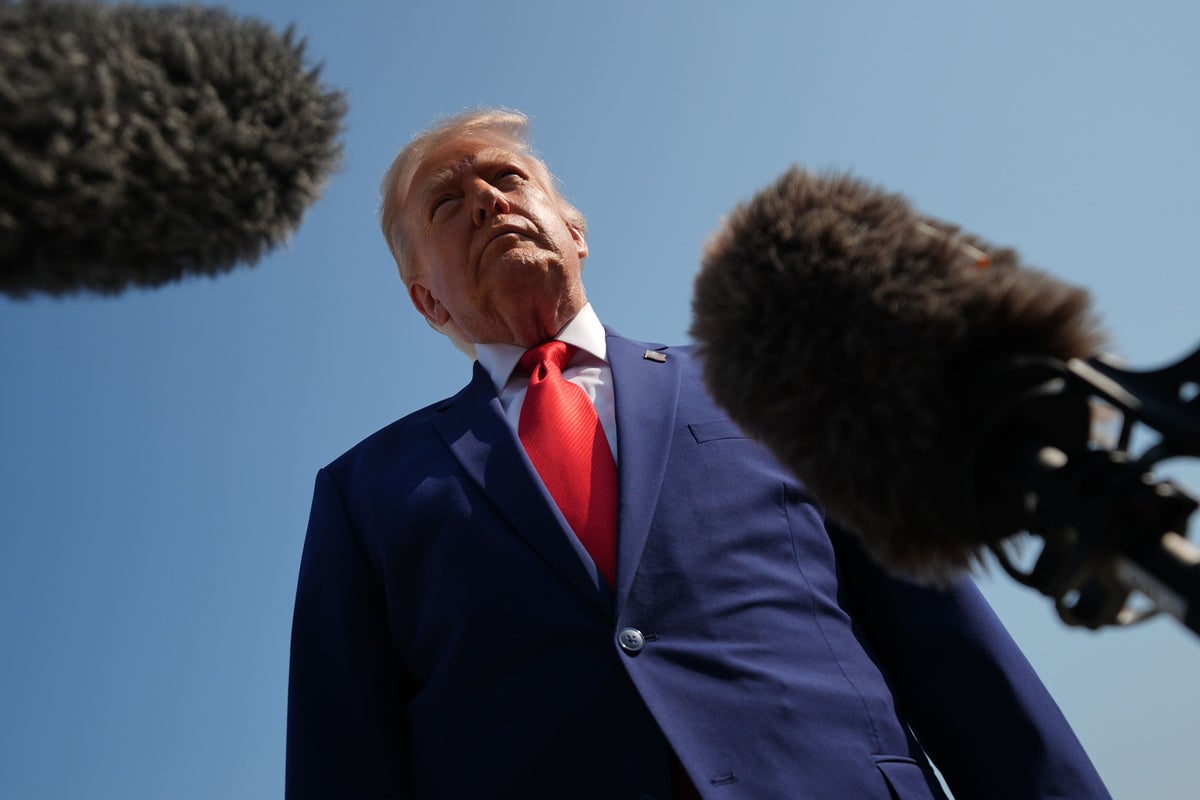

The war that President Donald Trump unilaterally started with Iran is sending oil prices through the stratosphere with no end in sight — and Americans are paying record-high gasoline prices just as the summer travel season comes into view. Unsurprisingly, his approval ratings are lower than they’ve ever been, and the giant ballroom that is Trump’s passion project is deeply unpopular.
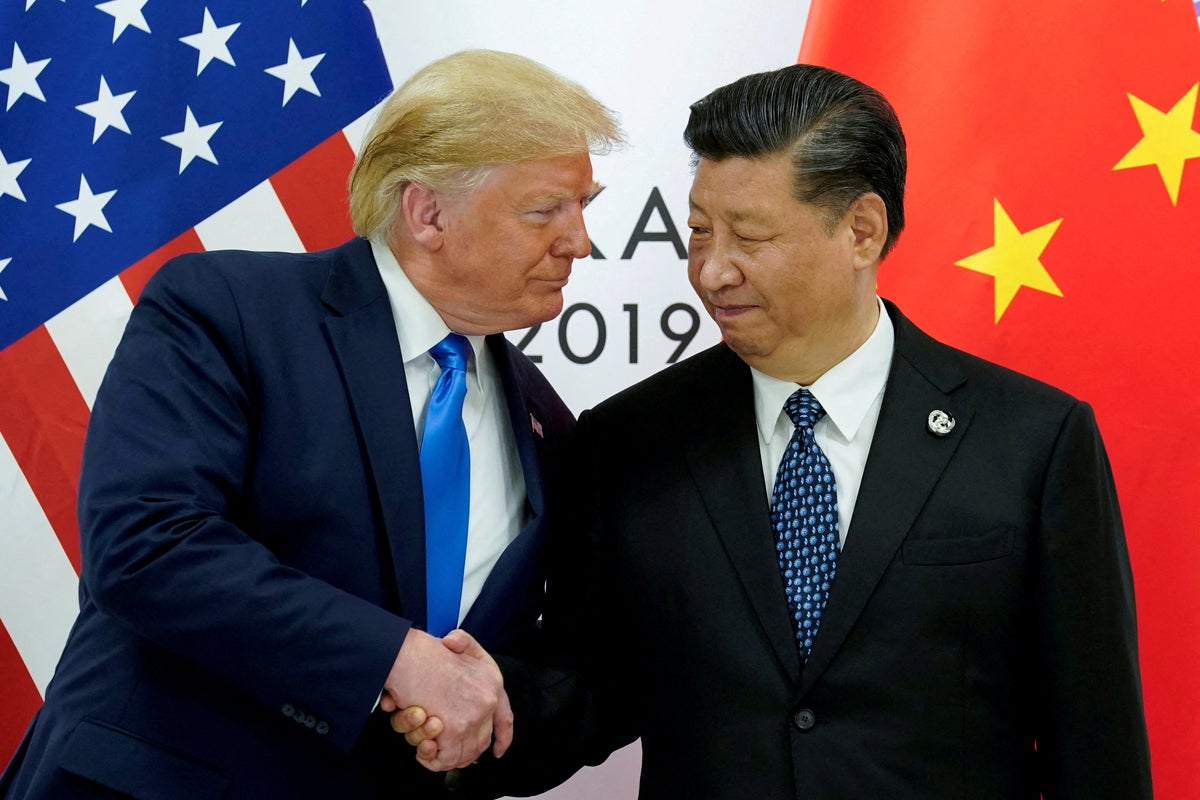
So what is the leader of the free world up to this week? He’s jetting off to Beijing to be feted in a lavish state visit — including a sumptuous banquet in a golden ballroom that dwarfs the controversial monstrosity he’s building where the White House’s East Wing stood before he, wait for it, unilaterally demolished it.
Trump’s two-day sojourn in China — he actually leaves Tuesday and arrives late Wednesday before returning Friday — comes as the president and his administration remain locked in the economic malaise brought on by his own decision to launch a war against Iran without regard for decades of strategic analyses which had calculated that Tehran would retaliate by blocking the Strait of Hormuz, wreaking havoc on global markets by choking off a key maritime route for approximately a fifth of the world’s petroleum supply.
Trump will spend several hours Thursday in bilateral meetings with Chinese leader Xi Jinping at the Great Hall of the People, before later returning there for dinner in the State Banquet Hall, a cavernous and lavishly decorated space that can hold up to 5,000 dinner guests, dwarfing the estimate of several hundred to 1,000 for the one he wants to build as a national necessity. On Friday, he’ll meet Xi again for tea and lunch before boarding Air Force One for the return trip to Washington.
It wasn’t supposed to be this way.
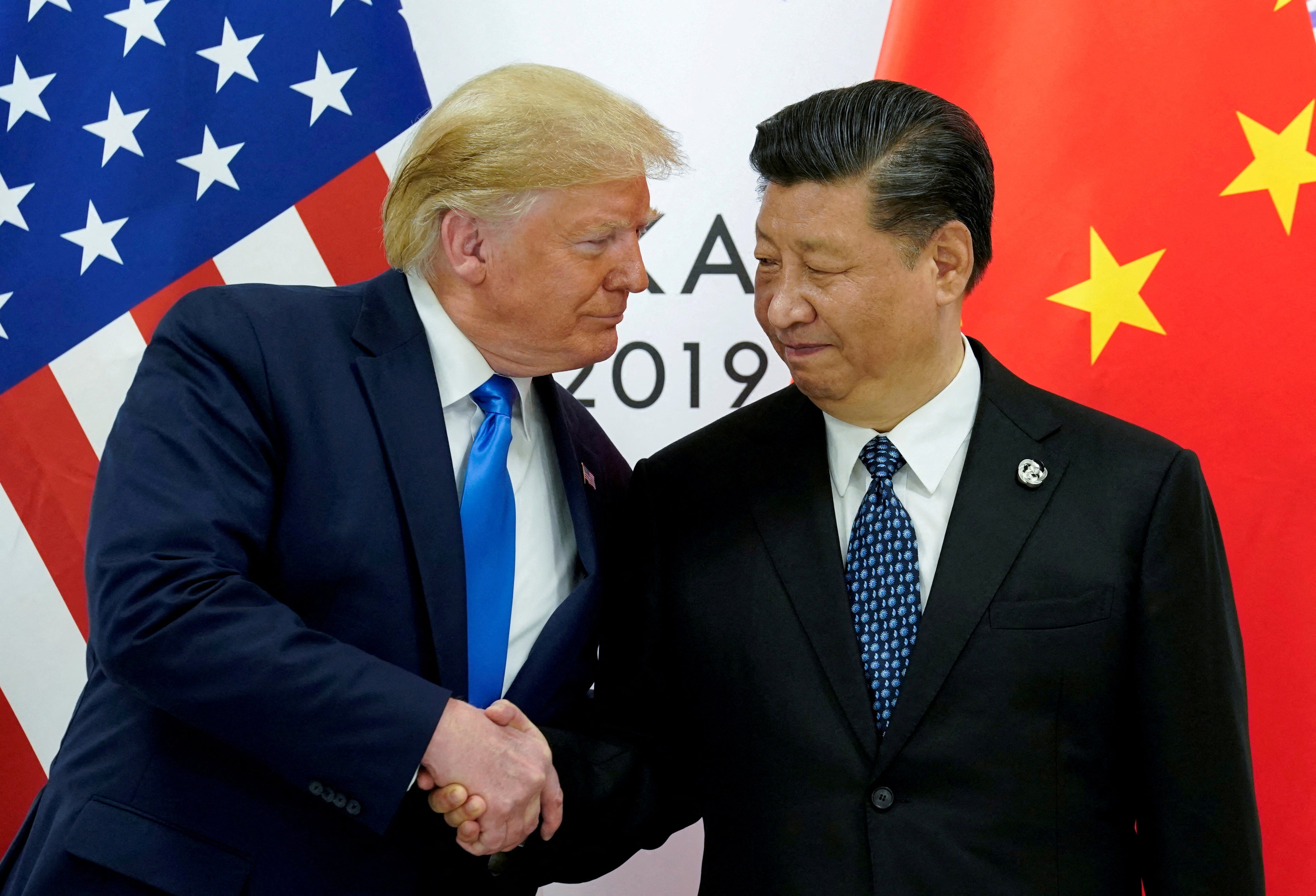
When Trump and Xi announced that they’d be hosting each other for reciprocal state visits this year, it was meant as a sign that despite Trump’s years of harsh rhetoric towards Beijing, there was hope that the Chinese strongman and the aspiring American one could keep tensions down by virtue of their mutual autocratic chumminess.
Privately, people close to the White House say Trump’s ambitions for the trip were once as grandiose as his vision of the oversize ballroom he’s attempting to build. Armed with the unbridled tariff power he’d arrogated to himself and fresh off what were supposed to be quick and easy military successes in Venezuela and Iran, he was meant to waltz into China to strike “deals” that would cement the U.S. as the dominant power in the Sino-American relationship.
That’s not happening now. Not only has the Supreme Court effectively neutered Trump’s ability to tax imports (with tariffs that are paid by American importers and passed on to consumers) but Iran’s failure to capitulate to American air power has, at least in this instance, highlighted glaring weaknesses that were once only theoretical.
To be sure, the White House is still operating with the usual Trumpian braggadocio ahead of his travel this week. Principal Deputy Press Secretary Anna Kelly told reporters on Sunday that the visit to Beijing is meant to aid his “rebuilding the safety, security and prosperity of Americans” by “rebalancing the relationship with China and prioritizing reciprocity and fairness to restore American economic independence” with what she described as a “clear eyed view of the economic and security realities of today.”
Kelly also said Trump will “deliver more good deals on behalf of our country” with agreements that will “further rebalance trade with China while putting American workers, farmers and families first and safeguarding US economic strength and national security,” including discussions on what she called a “US-China Board of Trade” and a similar “Board of Investment.”
“The two sides will also discuss additional agreements on industry, spanning aerospace, agriculture and energy,” she added.
So what does this mean?
It doesn’t mean either “board” will be spun up after this week. One senior administration official told reporters that even if they are announced, both will require “both the US and China to go home and do stuff” because “whatever the forward leaning nature of the announcement is, either way, we have to come back to America and, you know, essentially, you know, set it up.”
And as far as the “additional agreements” Kelly spoke of go, don’t expect anything groundbreaking.
What’s most likely is that Trump will announce that he and Xi have agreed that China will purchase American agricultural products and Boeing airplanes. That’s easy for Xi to agree to because China’s autocratic command economy gives him and his government the ability to order purchases of American goods, either for a genuine need or as a sop to Trump, or both.
Trump likes these sorts of “deals” because they let him crow to American voters — farmers or aircraft factory workers in non-union South Carolina — about how he brought home the bacon for them.
But without the leverage his massive tariff schemes gave him before the Supreme Court declared them illegal, he doesn’t have much of a stick to threaten Xi with, making it more likely that getting those big Chinese state-owned purchases will require him to give up things, be it Taiwan’s longstanding U.S. defense relationship or more next-generation AI chips that defense experts desperately want to keep out of Beijing’s hands.
Xi may well push him harder on bringing the Iran war to a close on terms favorable to Tehran. But no matter what comes out of this visit, one thing is clear. The “cards” Trump once thought he held before Feb. 28 have turned out to be jokers.