




Inflation hedging is back on top of the agenda for investors as conflict in the Middle East drives up energy prices globally, but the FIS Singapore heard that many portfolios are not well-prepared for the broad ways through which inflation can creep through. The new era of significant trade and capital flow shifts driven by modern mercantilism is also throwing out TAA opportunities.
Central banks around the world are again confronting the spectre of inflation as conflict in the Middle East pushes up energy prices.
In March, the OECD raised its inflation forecast for the US economy to 4.2 per cent in 2026. An increase of 1.2 per cent compared to its previous prediction last December. The average inflation rate for the G20 countries sits at 4 per cent which is also a 1.2 per cent jump.
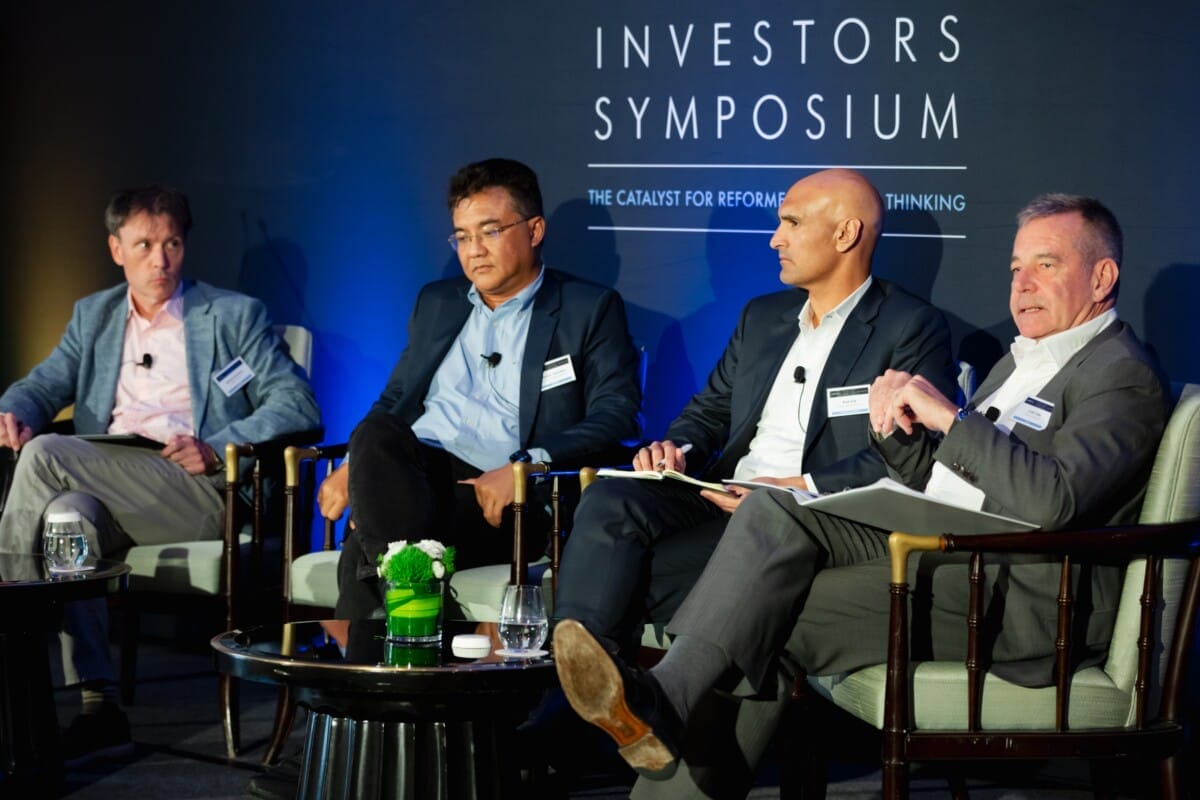
For asset owners, this means inflation-protection investments are back on top of the agenda, but Bridgewater Associates head of the portfolio strategist group Atul Lele said most investors are not well-hedged for the broad ways through which inflation can creep through.
“Most portfolios around the world do not have the inflation protection they need going into the type of environment we’re talking about, [and] not positioned for 5-6 per cent inflation, let alone even 3-4 per cent. We’ve been wrestling with what this means from our own portfolio positioning perspective” Lele told the Top1000funds.com Fiduciary Investors Symposium.
“Many portfolios are positioned for a continuation of inflation staying within a 2-3 per cent band, which hasn’t happened for years, incidentally.”
The first type is demand-pull inflation which Lele said can climb up due to price shocks and is managed by policymakers through fiscal policies. This can be hedged through assets like inflation-link bonds.
“Something that we haven’t seen since the 1970s is cost-push inflation, and we’ve been wrestling with how to gain protection against this, which is really just having good commodities exposure, be it in energy or be it in other industrial metals,” he said.
“The third is monetary inflation, and that is something we have not had to contend with for a very long time. It connects to the idea of having a plan around what your strategic FX allocation will be, and going into a period of monetary debasement, what does that look like? How we’re going to be protected against that?
A snap poll of delegates sentiment conducted at the end of the symposium showed that 46 per cent of attendees, made up of asset owners, managers and academics, plan to increase their allocation to inflation-protection investments. More than half (54 per cent) plan to maintain the same level of investment, and no one is willing to cut exposures.
Investors also reported to being more confident of their funds’ ability to be resilient to different macroeconomic conditions following the two-day symposium.
Lele flagged three mega themes of the new economic regime investors operate in: modern mercantilism, artificial intelligence and portfolio concentration.
Modern mercantilism in particular is throwing out many tactical investment opportunities, which has brought significant trade and capital flow shifts around the world.
“When we look at FX volatility, when we look at rates volatility, when we look at single stock correlations and cross sector correlations within the equity market, they’re all presenting a ton of opportunities,” Lele said.
But from an allocator’s perspective, CPP Investments head of global tactical asset allocation Alistair McGiven said identifying risks is the “easy bit” while designing a framework to manage them is a really difficult task.
“One thing you can do is think about trying to remove risks that you don’t think are going to be compensated in particular scenarios, and then you can redeploy that risk to somewhere where it is going to get compensated,” he said.
Asset owners are now treating a risk budget as a “scarce resource”, McGiven said.
“Part of what we can do is – rather than try to predict which scenario is likely to play out and it is really hard coming up with probabilities around these things – more of a risk management exercise,” he said. “You can identify your exposure to some of these scenarios where you don’t have a view or you’re agnostic.”
“Remove the risks in the portfolio related to that, and then you can redeploy that risk somewhere you think it will be compensated.
“So just being really efficient about how you’re managing exposures at the top of the house and spending the risk budget wisely.”
Almost all of the attendees (92 per cent) are somewhat confident or confident in their ability to understand the impact of geopolitical risks and opportunities in their portfolios. This ability is essential for asset owners like Malaysian sovereign wealth fund Khazanah, which is an ASEAN-based investor with significant allocations in both China and the US.
“Whatever Trump does, it will impact our return, and however China is reacting, it will impact our return. It’s even more complicated, and you have to worry about the domestic economy,” Khazanah chief investment officer Hisham Hamdan said.
The investor also has a Temasek-like investment mandate of helping domestic companies improve fundamentals, as well as driving domestic economic growth. Over half of its portfolio (50.7 per cent) is invested in Malaysian public markets.
The issue with being this exposed to the emerging markets is that there is a lot of “value creation” in companies, but not a lot of “value capture”, Hamdan said. For example, emerging markets may house some of the world’s largest semiconductor manufacturers, but the profit they capture is not comparable to US companies which controls the product designs and R&D.
“We get some return on the land. We get some return on the labour. But the capital and FDI are still owned by US or Europe,” he said.
“It’s really much more difficult than just sitting there and saying allocate here and allocate there. The problem is the risk that we take in this [emerging markets] part of the world has not been rewarded.”
“Emerging market or Asia largely is 50 per cent of the world GDP, and it will be higher because two thirds of the growth comes from Asia, but… emerging markets is only 10 per cent of ACWI and much less in the private assets [markets].
“The Asian companies need to capture more value – that needs to happen.”

