Owen Edward Snaith is a Scottish multidisciplinary designer working across fashion, textile and mixed media. Growing up in a remote fishing village in Scotland he would follow his grandad down to the harbour watching him knit nets, exploring, seeing different materials, rusty metal, brightly coloured crates all wrapped in nature.
“A lot of inspiration comes from that,” he says. “I think from a young age I felt alienated because it was a very masculine dominated space. Through my work I rewrote my childhood, creating story behind the collections.”
“There’s a misconception that because these are heritage crafts that some people bask in tradition, that they’re not open minded or accepting and I definitely felt that going into that space,” he explains. “When I was in my final year of uni, I really started building my local community. I thought maybe they wouldn’t accept the fact that I’m doing really queer led textiles or through that lens but everyone’s been really open. I’ve worked with kilt makers in their 20’s all the way to people in their 70’s”
It’s his love of craftsmanship, collaboration and community that lead him to Interweaving Threads: Scotland and Norway Through Dress, a year-long residency led by Cove Park in partnership with various Norwegian cultural organisations. Bringing together artists, designers and makers from Scotland and Norway, the programme explores how traditional textile knowledge, regional identity and heritage craft can inform contemporary fashion. Rather than looking backwards through nostalgia, it asks an important question for a warming world: could the future of fashion depend on rediscovering the skills, relationships and slower ways of making that we have allowed to disappear?
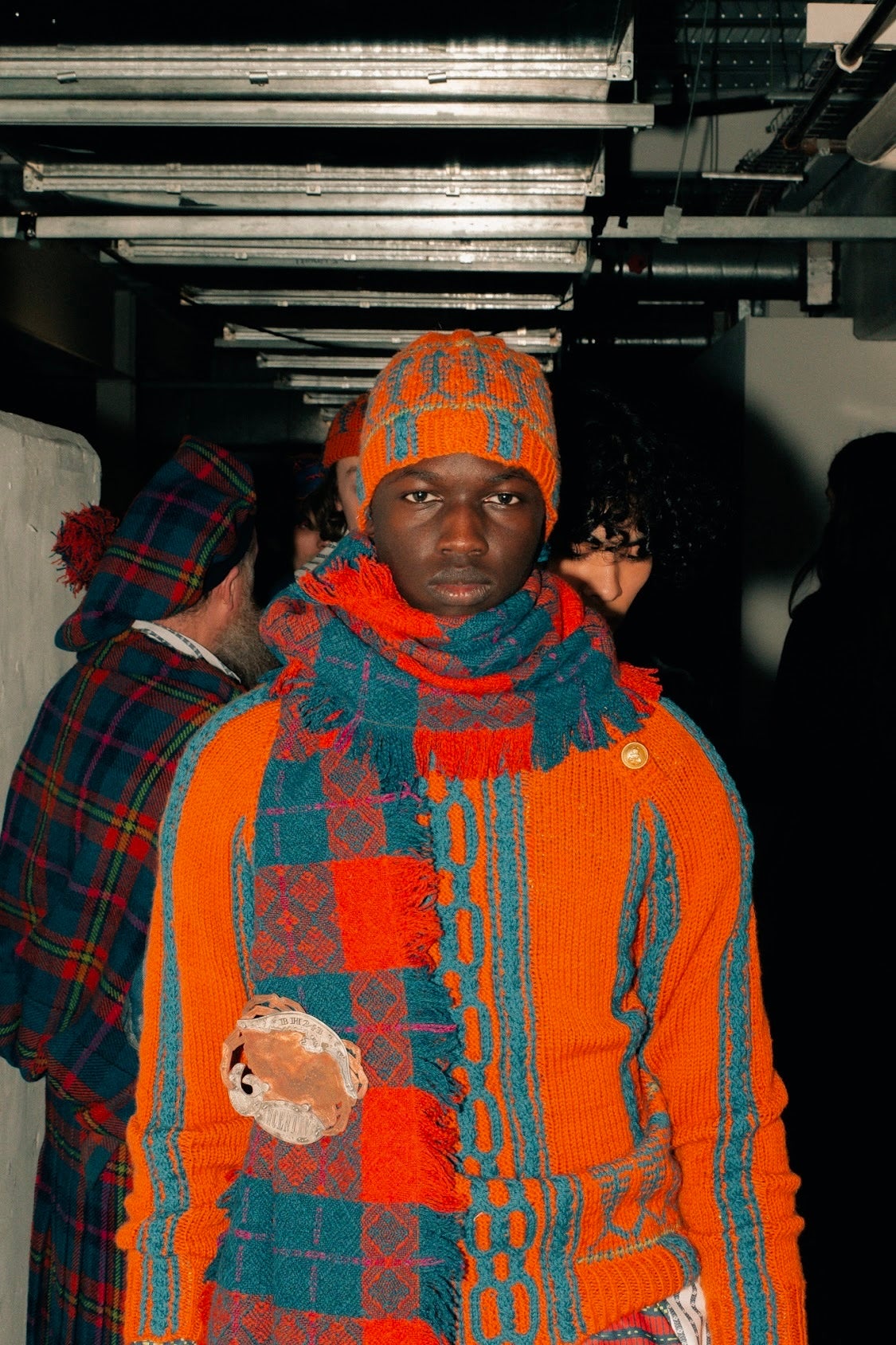
For Snaith, the answer to this question is an emphatic yes. His saysthat climate-conscious fashion is about far more than the finished garment. It is about the communities that produce it, the landscapes that sustain it and the conversations that keep centuries of craft knowledge alive.
“When I was in Norway, it was interesting because it was just me and my fellow artist, Ingrid. We were both on the residency, but separately. We were living in the same house and working in the same room,” he says. “The island was really unpopulated, it was just us together, which was amazing, I learnt so much from Ingrid, it was such a cultural exchange.”
“The Norwegians definitely appeared to have a bigger connection to nature,” he says of his experience during the collaboration. “You see that in people’s demeanor. Nothing feels rushed.”
Snaith also references Norway’s substantial oil reserves, which provide big profits for the country. “They’re a big oil country and even though they really celebrate the land, there’s a big conversation happening there around how can they turn the oil into something that feels more sustainable for the land,” he says.
He found the experience of the rxchange very fulfilling. “Where I was staying was incredible. Lyga, which is a heathland centre, part of the Museum Centres of Hordaland. They farm the island the same way it’s been farmed for hundreds of years.,” he says. “They fertilise the land with the fish that they catch, peat and the wool from the sheep. We were looking at the sheep, I could buy the wool from the sheep. It’s so inspiring to see everyone hand knitting, people on the train, people on the ferry between the islands.”
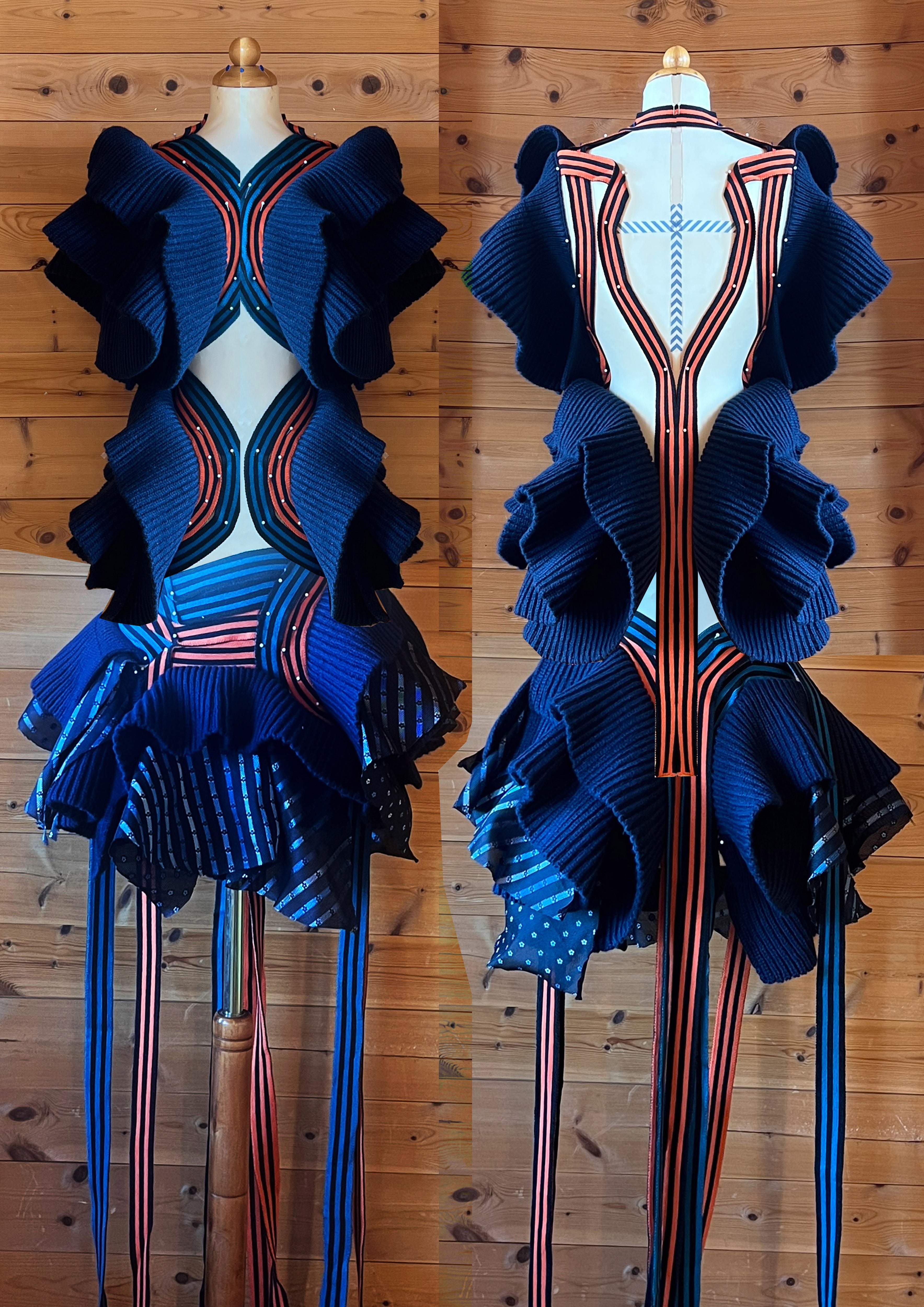
In contrast, the residency programme in Cove Park (Roseneth Peninusal in Argyll) was a community of 12 artists from different disciplines. Snaith explains: “ Artists, writers, dancers, musicians, textile artists sharing a communal space, where we would have dinners together, talking about our practices and reflect. The art of conversation and passing on knowledge, not just being inspired by textiles, but also being inspired by people that work in dance, or theatre, how do they approach their work? I do think that fashion has an element of theatre, it has an element of story, well, it is storytelling and it’s got writing and narrative to it, and movement. Fashion is unique in that aspect because it absorbs all those creative disciplines”.
At a time when public discourse can feel increasingly divided, there is something powerful about this model of creative exchange. Interweaving Threads suggests that innovation doesn’t flourish through isolation or by drawing lines between “us” and “them”, but through curiosity, generosity and a willingness to learn from one another. As the fashion industry searches for climate solutions, it is a timely reminder that collaboration across disciplines, cultures and borders may be one of our greatest strengths.
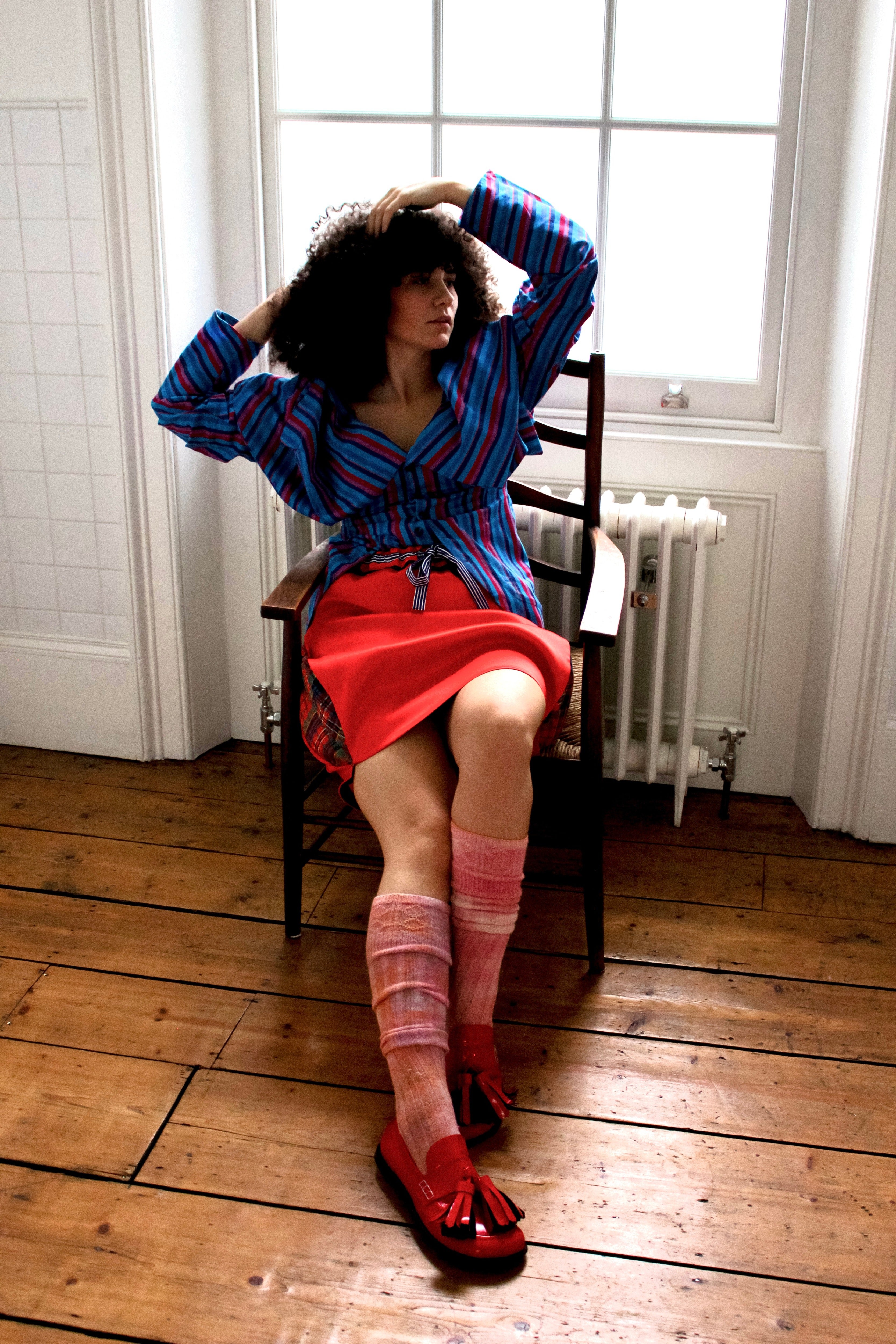
Snaith reflects on the value of slowing down and the research that goes into every collection. “There’s a lot to be learned from how we work through the process and how we work with people and how we can present garments and clothing in a different way so that it doesn’t just show the outcome, that it shows the whole process,” he says. “That is something that people working in heritage skills, crafts people understand they care about that process and they take time to work through something, it’s not always just about the end product.”
“Fashion is such an iceberg, you see this tip that everyone loves, but there’s so much going on underneath,” Snaith says. “Any designer you talk to that’s successful, or that has something to say, will have a huge body of research for every project they do. It’s not just going to be one image or six images of something that they’re copying. It is going to written research, photographic documentation, textile development, poetry. On this project, I allowed myself, to have the time to touch on all those bases. A wider goal with the project is to create a physical manifesto for why culture and heritage crafts should be invested in”
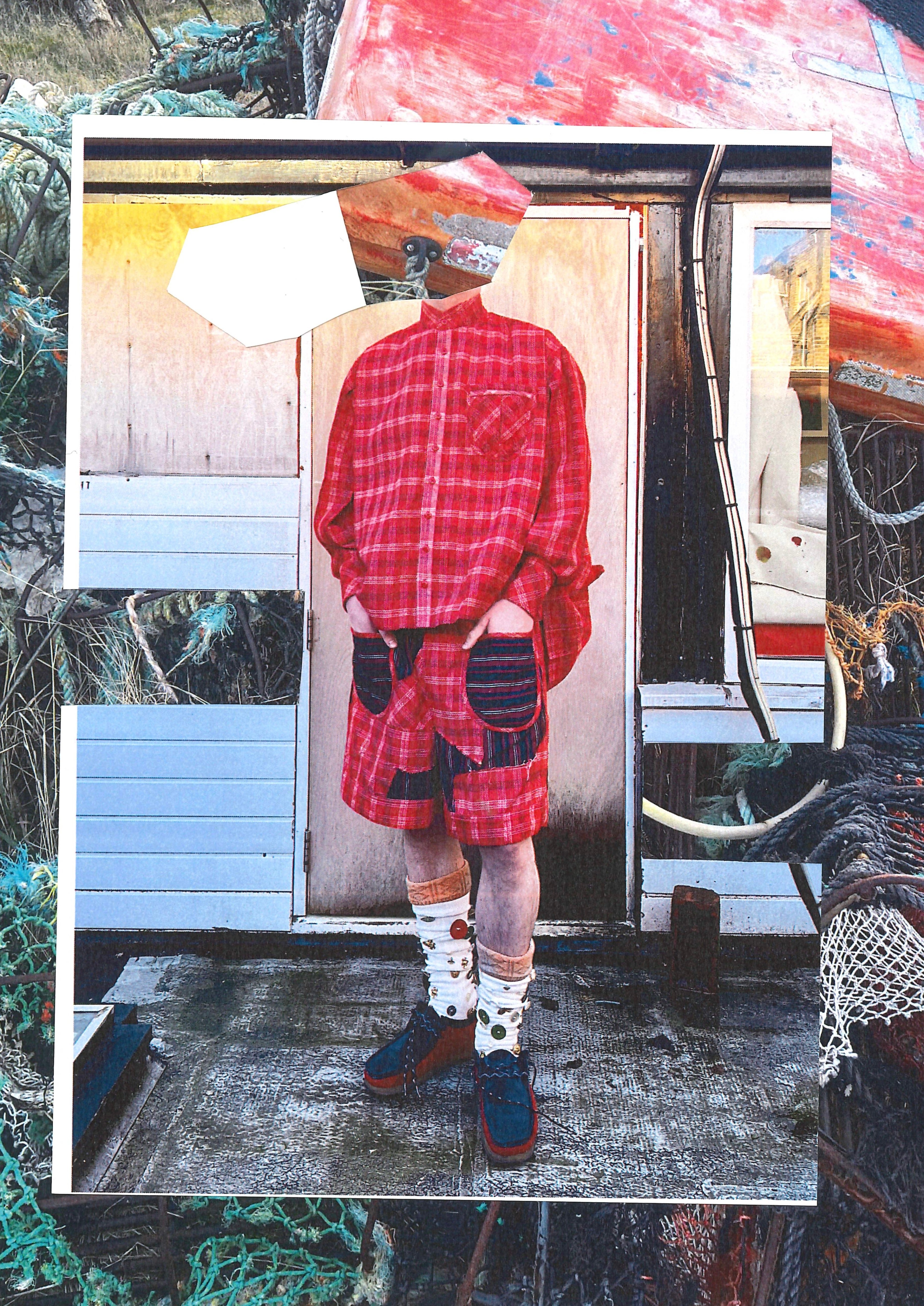
As fashion faces its environmental impact, perhaps the greatest lesson from Interweaving Threads is that the industry’s future may depend less on finding the next revolutionary material and more on rediscovering the relationships that have always sustained it. Between people and place, maker and material, tradition and innovation, there is a wealth of knowledge waiting to be shared by Snaith and other young creatives exploring what craft looks like in a digital age.
If we begin to value not just the finished garment, but the time, skill and human connection. In a world searching for climate solutions, a shift in mindset, sharing ideas across disciplines, cultures and generations and inspiring one another through creativity, we create not only better fashion, but stronger communities and a more hopeful future for the planet.
Owen Edward Snaith available online or at Light House, Berwick Street, London