

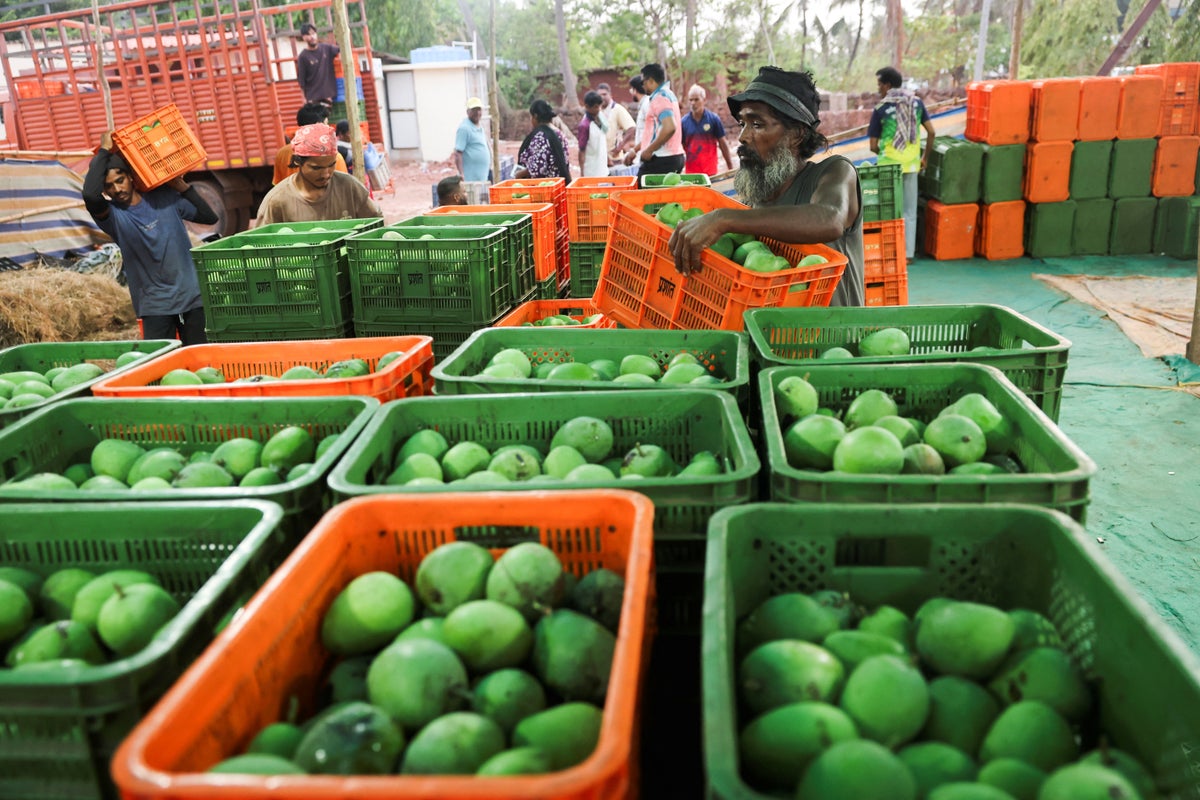
Komal Walke is scrambling to meet orders from online grocers after her family’s three-acre orchard in the western Indian state of Maharashtra produced almost no Alphonso mangoes this year.
Walke, 26, a horticulturist in the coastal town of Devgad, is forced to buy the fruit from larger farms to keep the business afloat.
“If we do not deliver on our orders, the big clients will not return next year,” she said.
India is the world’s largest mango-grower. The South Asian nation produced 28m metric tonnes of the fruit in 2024-25, according to data from research and rating agency CRISIL.
Maharashtra is renowned for the Alphonso variety – called the “king of mangoes” – but the crop is ruined this year because of extreme weather.
A sharp difference in day and night temperatures in December and January hurt flowering and fruit setting, while hotter than usual weather in April and May, probably due to the El Nino phenomenon, spoiled the fruit, Bapusaheb Manikrao Lambade, a government agriculture officer in Devgad, one of Maharashtra’s top Alphonso-growing areas, said.
El Nino is a climate pattern that alters global weather and can trigger extreme conditions. A strong El Nino this year is forecast to adversely effect crops across Asia, South America and Africa.
A government-backed survey from earlier this year estimates crop losses in Devgad at 85-90 per cent.
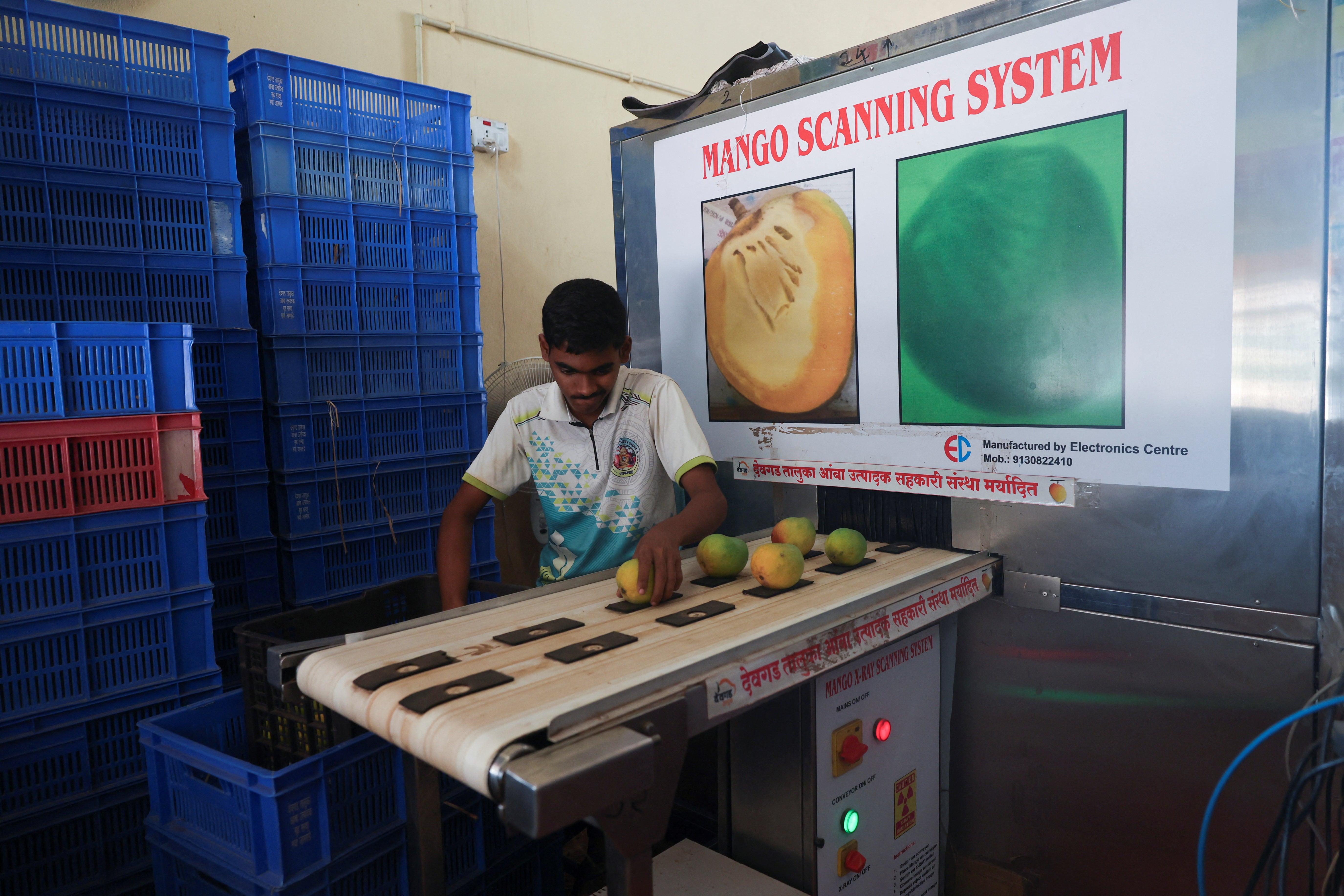
The weather also caused losses in mango-growing areas elsewhere in the state. India’s entire mango crop was worth around $2.3 billion last year, according to the research firm Mordor Intelligence, and was expected to grow to $3.4 billion by 2031.
While much of the fruit stayed in India – mangoes are popular during the summer – about $56 million worth of mangoes and $80 million worth of mango pulp were exported in 2025.
More than a dozen farmers in Maharashtra as well as traders, exporters and government officials said losses had been severe and production volume among the lowest in decades.
The weather damage coincided with a slump in exports due to the US-Israeli war against Iran. India is one of the world’s biggest exporters of mangoes, competing with Mexico, Thailand, and Vietnam, and most of its fresh produce is exported to the UAE, US, UK, Kuwait, and Qatar.
Shridhar Pathak, co-founder of mango exporter Shreevali Agro, said freight charges had more than doubled and delays or cancellations to consignments for the Gulf had cut his shipments by nearly 40 per cent this year. Mangoes originally earmarked for export were going to local markets instead, driving prices down despite the El Nino-linked shortages, he said.
The disruption is rippling across the supply chain, hurting businesses linked to the seasonal mango trade as well.
Sanjay Nare, a 52-year-old manufacturer of mango cartons in Malvan, about 50km from Devgad, said he had unsold inventory of nearly 100,000 boxes in his factory this year. “The economy in this region is sustained by mangoes and fishes,” the trader said. “Without our seasonal mangoes in summer, we have very little else.”