



Political content has been redacted from this transcript
Madam Deputy Speaker, I beg to move that the Bill be read a second time.
Two years ago, when this Government took office, we inherited an asylum system in chaos.
[political content redacted]
And as a result, between January 2021 and June 2024, 110,000 people arrived here by small boat…
While a further 175,000 claimed asylum by other routes.
As numbers soared, so did the cost to the taxpayer.
In just a single year, spending on asylum support was £4.7bn…
Including £9 million spent daily on housing people in 400 asylum hotels.
In the last two years, this Government has begun the work of restoring order to our borders.
That starts by taking the fight to the criminal gangs.
In the last year, arrests of people smugglers were up 55%.
Since taking office, we have disrupted organised immigration crime on 3,700 occasions, up by 46%.
And in partnership with French law enforcement…
We have stopped 46,000 attempted channel crossings.
We are now taking that partnership further with a new deal, signed in April.
This will fund increased patrols and intelligence operations…
With a 53% increase in personnel on the French coast.
This is already bearing fruit.
In May, nearly two-thirds of attempted small boat crossings were thwarted.
Meanwhile, we have rebuilt a shattered asylum system.
Decision-making ground to a halt under the last Government.
Now, decisions are at a 24-year high.
As a result, removals are now at their highest level in nearly a decade…
Up 41% on the same period prior to our taking office…
And we have now deported and removed nearly 10,000 foreign criminals…
36% more than the last Government achieved.
Madam Deputy Speaker, we are also beginning to lighten the burden on local communities.
This Government committed to ending the use of asylum hotels within this parliament.
Two years in, we have already emptied one in five…
Reducing the hotel population by 29%…
And cutting asylum costs by £1bn.
Madam Deputy speaker, this government has taken some considerable steps forward.
But we must do more.
Around 94,000 people remain in asylum accommodation…
At a total cost of £3.7bn per year.
While asylum claims fell by 12% last year…
They remain close to historic highs.
And with the criminal gangs still at work…
People continue to die in the channel…
With over 100 deaths since the start of 2024…
Including women and young children.
Madam Deputy Speaker, this country has always provided sanctuary to those fleeing war and persecution.
And I am proud of that fact.
But we must accept that public consent for our asylum system is fraying.
Unless we restore control, we will lose the British public’s support entirely.
My goal as Home Secretary is to rebuild the public’s confidence…
And thereby ensure we can continue providing protection to those in need…
Today and for generations to come.
To do so, I believe we must restore fairness to our asylum system
Fairness both to those who are fleeing war and persecution…
And also fairness towards those communities, already here…
Who bear the burden of supporting them.
Madam Deputy Speaker, there is nothing fair about a system that is based upon uncontrolled, unsafe and illegal routes into this country.
The only people who it serves are the people smugglers.
Instead, a fair asylum system must be grounded in controlled, safe and legal asylum.
For that reason, in the last few weeks, I announced new routes for genuine refugees to build a new life here.
These capped, safe and legal routes will soon allow communities, universities and businesses to sponsor refugees.
This approach means those in need of protection arrive with the consent of communities…
And with the financial support of their sponsor and not the taxpayer.
It is an approach to asylum that promotes integration within, and contribution to, this country.
Madam Deputy Speaker, we know that in Canada, local communities have long sponsored refugees.
There, 70% of sponsored refugees have found work within a year.
Here, the story is very different.
In the first year after being granted asylum, just a quarter of refugees are in work.
This leaves them unable to contribute and build a life here…
Relying instead on the support of British taxpayers.
So, this Autumn, we will begin to take applications for our new community-sponsored and study routes.
The first refugees will arrive in Autumn 2027.
And while the numbers will start relatively small…
It is my intention that they grow in scale as we restore order to our asylum system…
By reducing the numbers arriving by unsafe, illegal routes.
Madam Deputy Speaker, the Bill we debate today is focused on how we reduce the numbers arriving unsafely and illegally in this country…
And on reducing the burden placed on local communities.
It is a Bill that is designed to be fair to genuine refugees…
And fair also to British citizens.
It ensures asylum claims are fair and fast…
With legitimate claimants not stuck in limbo…
And the swift removal of those with no right to be here.
It ensures that human rights protections remain robust where they must be…
But are also tightened where they need to be, to eradicate the abuse that has crept into our system.
Finally, the measures in this Bill ensure we support those in their hour of need…
While making clear that this may be a right, but it comes with responsibilities.
When the recipients of public support are in a position to contribute to their costs…
They should.
With those goals in mind, Madam Speaker, I will take the House through the detail of this Bill.
That begins with measures to make asylum decisions fast and fair.
Today, the backlog in appeals hearings is a major barrier to this.
While this Government has slashed the backlog in initial decisions…
The vast majority of failed asylum seekers then lodge an appeal.
There are now more than 150,000 people waiting for an appeal decision…
With average wait times of well over a year.
We must be honest about the nature of this appeals queue.
Some are genuine appeals…
But others have been made simply to delay a legitimate removal from this country.
By placing themselves last in the long queue for a hearing…
They delay the date of their removal…
Continue to receive taxpayer-funded support…
And use the time to accrue rights which could strengthen their appeal.
The best way to prevent this gaming of the system is to speed up decision making…
While ensuring claims are heard fully and fairly.
As many here will know, appeals are currently heard by judges in the First-Tier Tribunal Immigration and Asylum Chamber.
This model – reliant on judicial availability – simply does not have the capacity to meet the scale of demand…
Nor does it have the flexibility to respond to sudden surges in cases.
In Part 1 of this Bill, we therefore establish a new, Independent Immigration Appeals Authority…
Staffed by independent adjudicators, not judges.
This will allow us to recruit from a far wider pool of candidates…
And therefore respond more rapidly to increasing and changing demand.
To those who say such decisions can only be taken by a judge…
I need point only to the complex and weighty decisions taken, each and every day, by those without law degrees…
Such as magistrates, parole board members, ombudsman, planning inspectors, and many others.
You don’t have to be a judge to have good judgement.
Madam Deputy Speaker, as anyone who knows these tribunals can attest…
Most immigration and asylum appeals turn on the facts.
That requires careful, impartial and well-trained decision-makers.
Our adjudicators will be paid professionals…
Trained to make robust, defensible decisions.
Where specific legal expertise is required, we will have Senior Adjudicators on hand.
This will be a smaller cohort of legally trained adjudicators…
Who must have been a barrister, solicitor, or have similar legal experience.
Decisions taken in the new Authority will be appealable to the Upper Tribunal…
Which will continue to sit before a judge.
As today, these appeals will only be on a point of law…
Not as an opportunity to rehear full cases.
As clause 1 makes clear, its decisions will be entirely independent of government…
With every Minister of the Crown compelled to uphold the independence of the Authority.
As is often the case with establishing a new body…
The first Chief Executive and Chief Appeals Officer will be appointed by the Home Secretary.
However, thereafter, appointments will be made by the Chair of the Authority, as set out in clause 2…
These will be made on merit on the basis of fair and open competition.
The Authority’s operations and performance will also be subject to external scrutiny…
And it will be placed under the remit of the Independent Chief Inspector of Borders and Immigration.
Madam Deputy Speaker, within this new system, a single, faster appeal route will be established…
Addressed in clauses 11 and 12 of this Bill.
Today, too many claimants make multiple claims…
At different stages of the process…
Including at the last possible moment…
Often to thwart their legitimate removal from this country.
They include, to give just one illustrative and eye-opening case…
A convicted rapist, who was due to be sent home after serving eight years in jail.
Despite not challenging his deportation at first…
He went on to make a series of late claims…
Including a judicial review on the eve of being removed from this country.
And while we eventually managed to remove him…
It took more than four years to get this criminal out of the country.
For that reason, alongside the new Authority, we will create a single appeal route.
This will require claimants to raise all relevant matters up front.
Where late claims are raised…
Particularly in the run-up to removal…
They will be dealt with through an expedited process.
This means genuine issues will still be considered…
But tactical claims can no longer be used to frustrate a removal.
As is already the case, claimants may access advice and legal representation…
With legal aid available to those who are eligible.
This advice and support is vital to ensuring appeals progress fairly…
Without delay or disruption.
Madam Deputy Speaker, in Part 3, clause 21 of this Bill…
We introduce further measures to ensure decision making is fast and fair.
Today, there are two separate types of protection refugee status and humanitarian protection.
Both carry near identical entitlements and eligibility for settlement.
This creates near-duplicate claims…
And unnecessary complexity…
Which slows down our asylum system.
This Bill therefore replaces those two forms of protection with one the “core protection model”.
This means each claim will be assessed once, with one outcome.
A right of appeal will only be available to those refused protection…
Not those who wish to seek protection under a different status.
This is a clearer, simpler process.
It will make no difference to those lodging genuine claims…
But will cut the inefficiency in the system…
And ensure those with genuine appeals get a faster, fairer decision.
An effective asylum system is one in which claims are heard…
Fast and fairly.
Those who have a legitimate claim receive the protection they need…
While those who do not are removed from this country…
Without turning the bureaucracy against us.
That is what the measures in this Bill seek to achieve.
Madam Deputy Speaker, it is vital that we provide protection to those who are truly in need.
Following the devastation of the Second World War…
This country led the world in promoting human rights…
To ensure we learned from the horrors of the past.
This Government will always be committed to that internationalist ideal…
And to the robust human rights laws that underpin it.
However, we are also realists.
And so we admit where noble intentions have been misused and abused.
Today, too often, we see well-meaning laws used not to defend a human right…
But as a way to frustrate the removal of someone with no right to be in this country…
Including failed asylum seekers…
Visa abusers…
And even foreign criminals.
The British people have a natural sense of fairness
They believe those who require protection should receive it…
But no one should be able to abuse that protection.
The abuse of human rights law does not just erode the public’s support for our immigration system…
It erodes their support for the very idea of such laws at all.
So, for those who believe that these laws matter…
It is essential that we reform them to end their abuse.
In clauses 17 to 20 of this Bill, we reform the domestic application of Article 8 of the European Convention on Human Rights the right to a family and private life.
Article 8 is, undoubtedly, a vital protection.
But it is also a qualified right.
This means the rights of individuals must be weighed against the public interest.
Over time, the balance between an individual’s family rights…
And the rights of the wider community…
Has shifted.
Without a clear definition from Parliament of how that balance should be struck…
The interpretation of Article 8 in our domestic courts…
Has expanded beyond the original Convention…
And what Strasbourg case law requires.
To understand how far the balance has shifted, consider just one example.
In 2025, an Albanian man jailed for growing cannabis escaped deportation…
Not because he had any right to be here…
But because it was deemed “unduly harsh” on his partner to deport him.
She was not his wife, or life partner.
Instead, this was a relationship which began only after a deportation order had been served.
And the reason deportation was deemed to be “unduly harsh”?
The partner spoke no Albanian…
And had never visited the country before.
While this is just one example…
Article 8’s expansion is clear throughout the system.
Over half of those who stayed in the UK for family reasons last year did not meet our own rules…
Relying instead on their Article 8 rights.
And 71% of those who stay in the UK because of Article 8 rights…
Arrived here illegally or overstayed their visa.
This Bill addresses both the definition of family life…
And the public interest test.
–
At clause 19, the Bill tightly defines the public interest.
This includes clarification that judges must consider the economic impact on the taxpayer of allowing people to remain in the UK…
Including whether they are able to support their family.
And that no weight should be given to an Article 8 claim when someone is here illegally.
–
At clause 20, the Bill strengthens the public interest test to more easily remove foreign criminals.
It states that the more serious the offending, the greater the public interest in removing them from this country.
It also specifically addresses those facing deportation, but who may be appealing on Article 8 grounds.
The Bill makes clear that a deportation should go ahead…
Outside of a limited number of truly exceptional circumstances, set out in clause 20.
On the subject of deporting foreign criminals, the Government intends to bring forward an amendment to this Bill…
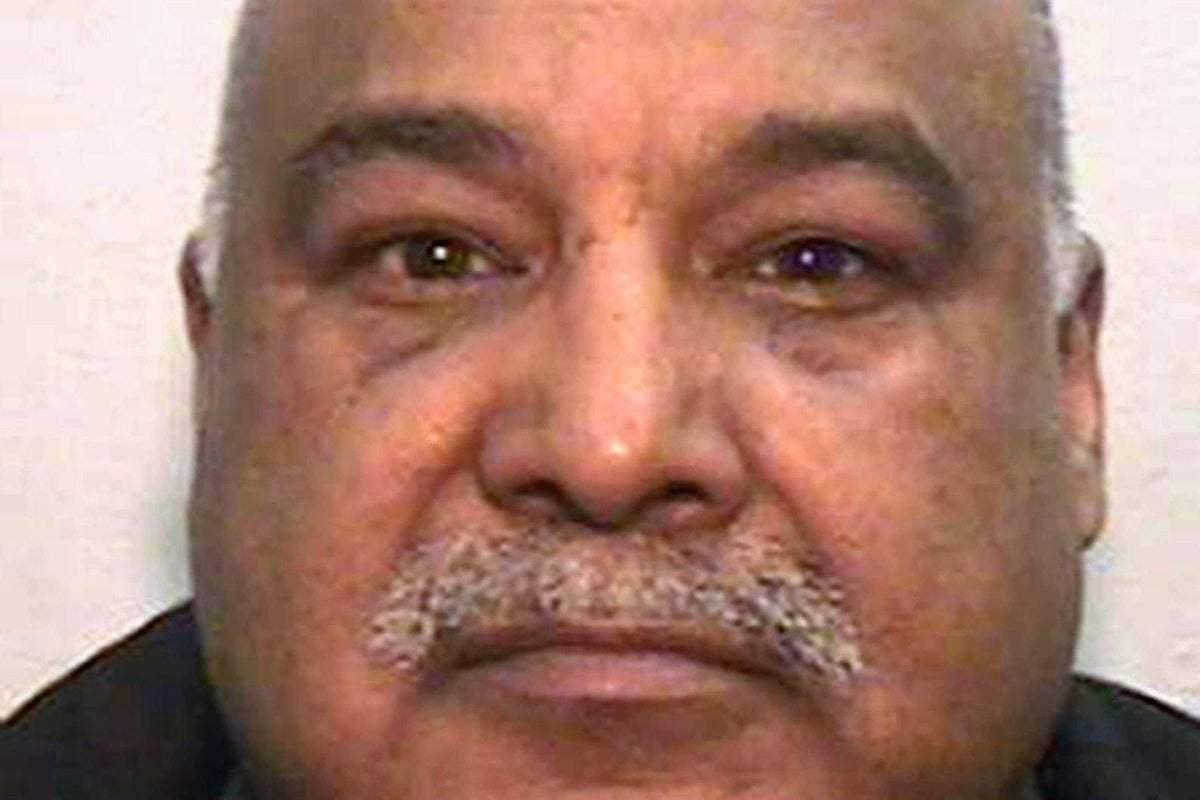
In response to the widely reported case of the vile grooming gang leader Shabir Ahmed.
Our amendment will provide the Home Secretary with a new power to disapply Section 7 of the Immigration Act 1971 for serious criminals.
This provides protections for long-term UK residents…
But, clearly, should not be acting as a bar against removal in cases like that of Shabir Ahmed.
The threshold for this power would be tied to the power to deprive citizenship, which applies only in cases of exceptional severity.
It is important to note this does not guarantee his removal from this country…
As those opposite know all too well from their own experience.
The Foreign Secretary and I continue to work all avenues to pursue a deportation.
I know the thoughts of everyone here are with the victims and survivors of this vile criminal.
Madam Deputy Speaker, I return to the Bill as it is currently drafted…
And our reforms to the definition of “family life” in domestic law.
–
At clause 18, the Bill tightens the definition of “family life”.
For immigration purposes, a “family” will now normally mean relationships within the immediate family unit.
This means a spouse or partner, parent, or a child under 18…
Apart from in truly exceptional circumstances…
Such as an incapacitated adult who lives with, and is entirely dependent upon, their sibling.
–
At clause 19, the Bill makes it clear that judges must consider when Article 8 rights were established…
And, in particular, whether this happened after someone entered this country illegally or overstayed their visa.
–
And at clause 17, we clarify whose Article 8 rights should be considered.
This makes it clear that for someone overseas to come to the UK on Article 8 grounds…
A “family life” claim must be made by a UK-based sponsor…
And cannot be made by family member overseas.
This is because our obligations, under the ECHR, are rightly to those who are living in the UK.
In clause 19, as part of our reforms to Article 8…
We set out where it is unreasonable to expect a child to leave the UK…
When a member of their family is being removed.
Specifically
If the child won’t receive an education in that country…
Won’t be able to integrate into that country…
Or where relocation would have very significant and long-lasting adverse effect of them.
This brings us into line with the case law in the European court.
We also set out the limited circumstances in which it may be reasonable to remove a parent…
Where they do not have a genuine and subsisting relationship with the child.
In doing so, we once again bring UK law in line with existing Strasbourg case law.
We do so with legitimate cause.
As the interpretation of Article 8 has widened…
We have seen shocking examples of the abuse of parental relationships.
These include a paedophile, who was allowed to stay in this country…
Because his deportation to Pakistan was considered, under Article 8, “unduly harsh” on his children.
That was despite the fact his contact with those very same children…
Is restricted by law to protect them from their father.
The Home Office appealed the case…
And eventually won…
But only after a lengthy legal battle…
Necessitated by the lack of clear definition in the law…
Which this Bill rectifies.
Madam Deputy Speaker, just as Article 8 has been exploited by those facing legitimate removal from our country…
So has our modern slavery system.
Human trafficking is an abhorrent crime.
And we will always provide the support victims need, especially vulnerable children.
And for that reason, within this Bill we strengthen a number of those protections.
Especially in relation to Child Trafficking Guardians being placed .
on a statutory footing…
And to make sure that modern slavery decisions about children are devolved to local authorities so those closest to the child…
Who are best placed to make decisions about the support they need are made properly.
And we also strengthen trafficking prevention and risk orders…
Ensuring law enforcement can restrict offenders’ movements and work.
–
And at clauses 44 to 49, we raise standards within businesses and public bodies…
Who must report on their actions to identify and tackle abuse in their supply chains or face potential fines of up to £1 million.
But we also know we must also address the growing misuse and abuse of these protections.
In 2025, modern slavery claims by arrivals on small boats reached an all-time high.
Over half now relate to alleged exploitation overseas…
Rather than here in the United Kingdom.
We are also seeing claims increasingly used to frustrate legitimate removals from this country.
Last year, over a third of charter flight returns failed to go ahead because of a modern slavery referral, lodged at the last minute.
Foreign criminals have seen the opportunity.
In recent years, last minute claims have been made by a convicted rapist.
A gangster jailed for possession of a firearm.
And an attempted murderer.
In every case, those claims successfully delayed their removal from this country.
And for that reason in part 5 of this Bill we introduce measures to address abuse in the system.
In particular making clear that anyone who poses a threat to public order or national security…
Will not receive modern slavery protection and support.
This includes any foreign national who has received a custodial sentence…
Including if that sentence was suspended.
At clause 36, we make clear that delayed disclosures have a damaging effect on a person’s credibility, unless there are good reasons.
In doing so, we further reduce the incentive to make claims as late as possible.
–
At clause 37, we close another significant loophole.
As it stands, those whose claims turn out to be unfounded can continue to receive taxpayer-funded support for a 30-day recovery period.
This Bill ensures we stop providing protection for those that we know do not need it.
–
Madam Deputy Speaker, this Government is committed to the protections provided by human rights law.
But those protections must be applied fairly
That means ensuring they are always given to those truly in need…
And it means ending the abuse that runs contrary to their spirit and intention.
The measures in this Bill are realistic and proportionate…
Designed to protect those who are genuinely deserving…
While bearing down on abuse that erodes public support for the very existence of protections like these.
A fair asylum system is one in which claims are heard fast and fairly…
Where protections are upheld for those who need them…
But not for those who seek to abuse them.
It is also one in which we provide support…
But expect that those who are in a position to contribute, do so.
Every day, we ask our constituents to bear the burden of funding our asylum system…
And as that asylum system has spiralled out of control, the weight on their shoulders has grown.
That is not fair.
It was also never foreseen.
The original drafters of the Refugee Convention could never have imagined that the British people would spend billions each year on asylum support.
To continue their legacy…
Providing protection to those in need, while retaining public support…
We therefore need to adapt to our new reality.
We need a fair way of addressing the challenges of the world as it is.
To that end, Part 4 of this Bill creates a new contributory principle within our asylum regime.
It does so, at clause 23, by introducing a power that requires those who have received taxpayer-funded support…
To pay back a portion when they can.
This measure reflects a principle that most people would recognise as fair
Once you are able to contribute…
You should.
Refugees have immediate access to the labour market and housing.
Many go on to work, build successful lives and contribute enormously to our society.
Payments under our new system will be proportionate and made over time.
No one will be asked to contribute more than they can afford to do so.
But payments will not be optional for those who can.
And those who have received support but have been removed from the country…
Will not be able to return until their debt is repaid.
There are some to whom this will not apply, including…
Children, and anyone who came here via a safe and legal route.
In clause 23 of this Bill, Madam Deputy Speaker we introduce this new power.
However, the precise design of the payment programme will be set out in draft regulations,
Which I will share these during the Bill’s passage through Parliament..
So there will be ample opportunity for full Parliamentary scrutiny of these changes.
Madam Deputy Speaker, this brings me to the end of this Bill.
It must be read in light of the inheritance that this Government received
Borders out of control…
An asylum system in crisis…
A burden placed on the British people that was simply too great.
This country has long provided support to those fleeing war and persecution…
And proudly so.
[political content redacted]
This Government has already done much already to restore order at our borders…
And bring control back to our asylum system.
But there is more and that is the goal of this Bill
To ensure decisions and appeals are fast and fair…
To provide protection to genuine refugees…
To offer protections, under human rights laws, for those who are in genuine need…
While closing loopholes that have too often been abused.
And, finally, to ensure the generosity of the British people is not forgotten…
And that people can contribute when they are in a position to do so.
This is a Bill that will provide fairness for genuine refugees and fairness for local communities as well and thereby make sure that we secure our asylum system for generations to come.
ENDS