.jpeg?trim=0,0,0,0&width=1200&height=800&crop=1200:800 "Meteorologists issue new wildfire smoke forecast for World Cup final – UK Times")



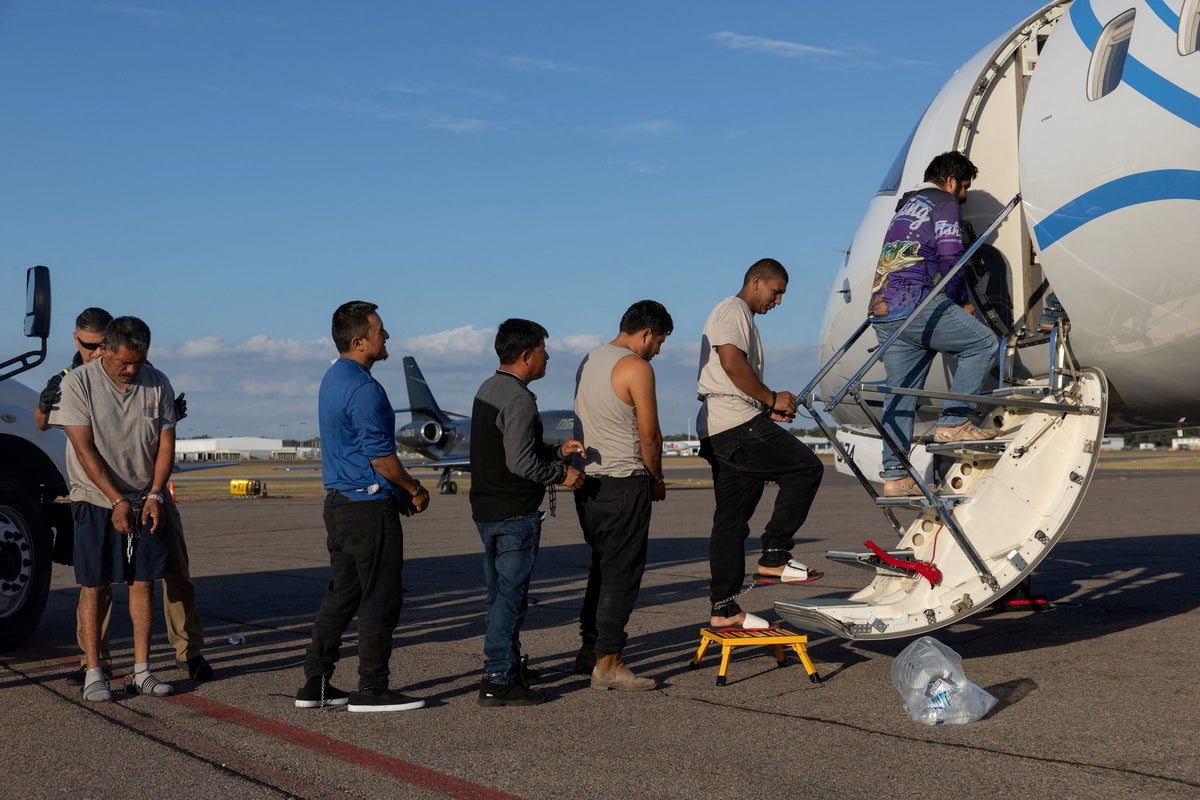
A planeload of immigrants were reportedly strapped down with physical restraints during a 51-hour journey that dropped detainees in six countries last month, marking one of the longest-ever deportation flights under President Donald Trump in a record-breaking month for removals.
Immigration and Customs Enforcement performed at least 245 removal flights in April — a monthly record since independent monitors began tracking the planes in 2020, according to Thursday’s report from Human Rights Watch.
That spike was largely driven by a surge of deportation flights to Mexico, which accounted for at least 68 flights last month. But the administration also accelerated so-called third-country removals, in which immigrants are forcibly transferred to nations where they don’t have any claims of citizenship, family connections, clear legal protections or a path to getting out.
The number of third-country removal flights more than doubled from March to April with first-time flights to at least nine countries.
“These ICE flights represent a system operating in darkness,” according to Savi Arvey, director of research and analysis for Refugee and Immigrant Rights at Human Rights First. “People are disappearing, deported to countries where they face persecution, or sent to places they’ve never lived — all without transparency or due process.”
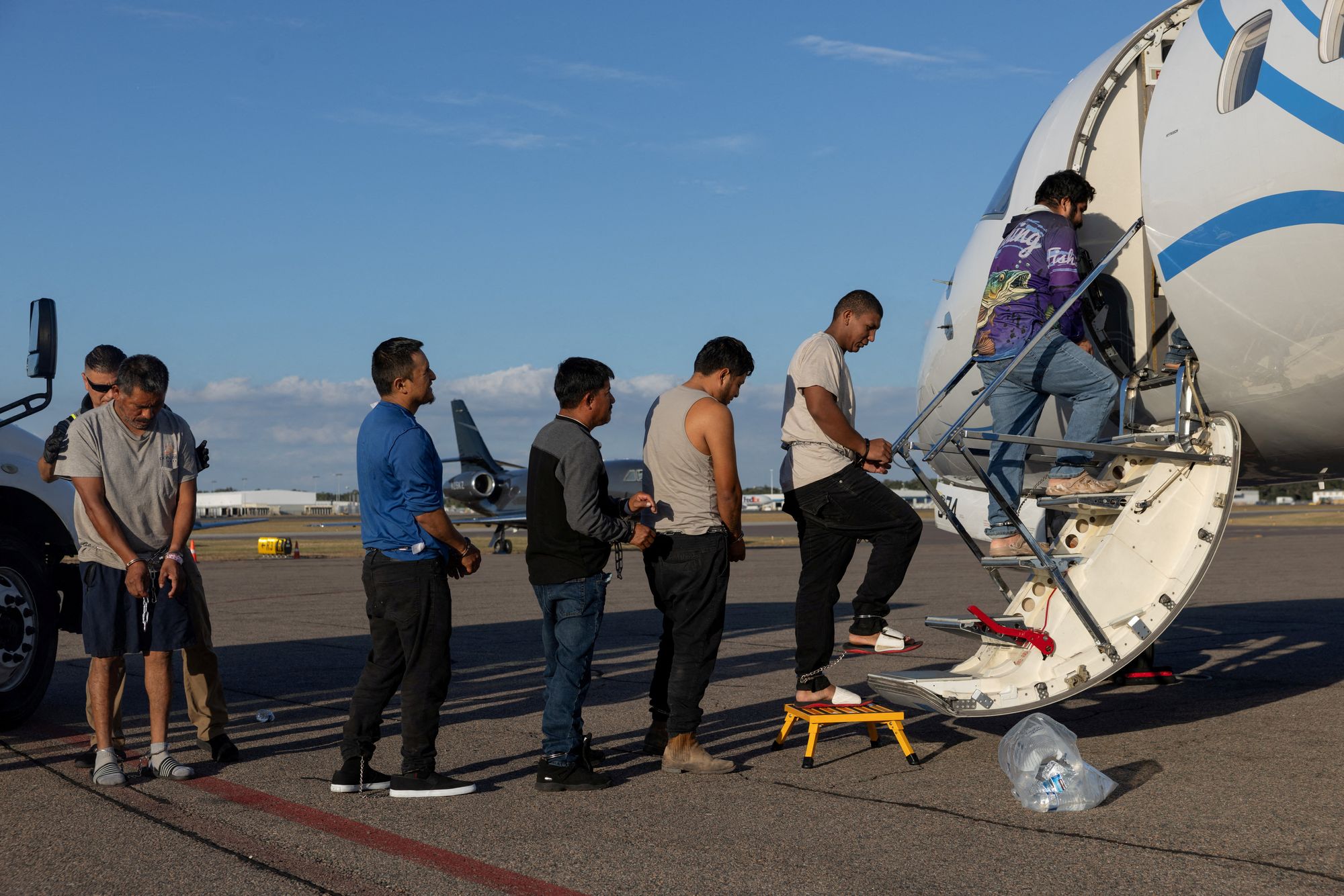
The vast majority of deportation flights are carried out by ICE Air Operations, the agency’s air transport arm. The agency doesn’t own planes but contracts with a broker, CSI Aviation, which in turn hires flights from several small airlines.
One ICE Air flight to Poland and Moldova on an Omni charter plane also dropped people in Armenia, Georgia, Pakistan and Uzbekistan — a journey that lasted a grueling 51 hours, during which deportees were physically restrained the entire flight, including at layovers and fuel stops, according to the report.
Deportees on ICE flights are frequently restrained by handcuffs, waist chains and leg irons for the duration of their journeys. The agency has also used a full-body restraint suit that has come under intense scrutiny after it was linked to at least a dozen deaths involving local law enforcement agencies over the last decade.
The Independent has requested comment from the Department of Homeland Security, which oversees ICE.
It’s unclear how many people were deported on ICE Air flights last month — the agency has not provided monthly totals for removals — but deportees were sent to at least 38 countries.
Those 245 flights marked a 94 percent increase from April 2025.
Removal flights to far-flung cities in Mexico began to ramp up by mid-April, averaging 23 flights a week. Those flights marked a 113 percent increase from the same point last year.
That spike follows a decision to freeze deportations of Mexican nationals by land in an apparent effort to make it more difficult for them to make the journey back to the U.S.-Mexico border.
The administration’s increasing reliance on third-country agreements to take U.S. deportees has emerged as a critical tool in the president’s mass deportation campaign.

More than 17,500 immigrants have been deported to least 21 third countries since Trump took office, according recent reporting from Human Rights First and Refugees International.
They frequently end up in hotels, shelters and prisons, while cash-strapped foreign governments — including countries with records of human rights abuses — are handed millions of dollars through secret agreements with the administration in what critics have called a legally dubious “outsourcing” of immigration enforcement.
The administration has pledged at least $44 million to more than 30 countries who have agreed to take deportees from the U.S., the report found.
It’s a “cruel and lawless foreign policy that treats human lives as bargaining chips,” according to Uzra Zeya, president of Human Rights First and the former U.S. Under Secretary of State for Civilian Security, Democracy, and Human Rights.
The policy exposes deportees to arbitrary and indefinite detention and other harms, including refoulement, where foreign governments can end up deporting people back to the countries and conditions they fled in the first place, critics have warned.
“The more than 30 countries pressured into these deals are not merely complicit — they are active partners in violating international law and eroding the norms that uphold it,” Zeya said.