

For British widow Lynda Leach, 76, her trip to Abu Dhabi last week was a promise to her late husband, Peter Leach – to donate to the government 200 rare photographs of the emirate he took in the 1960s when Abu Dhabi was still a British Trucial State.
Instead, military escalation in the Middle East and flight disruptions across the Gulf have left her stranded in the emirate, waiting for services to fully resume and for the opportunity to hand over the collection to the newly opened Zayed National Museum.
“My husband always wanted to come back to Abu Dhabi and donate these pictures he took but somehow did not manage. So, I decided to do it,” Mrs Leach told The Independent.
A Cyprus resident for many years, Mrs Leach travelled to the United Arab Emirates on 19 March with her friend Linda Buckland, 76, also a British citizen in Cyprus, for what was meant to be a week-long cruise.
“We could have flown out on Friday, but we decided to extend our stay so that I could hand over the slides to the museum on Monday,” she said. “Now we are stranded in Abu Dhabi and our flights have been rescheduled to this weekend.”


After completing their cruise on Friday, the two women decided they were too tired to travel and chose to extend their stay at the Crowne Plaza Abu Dhabi in Yas Island, a popular tourist destination in the emirate.
Air traffic across several Gulf states came to a halt from Saturday leaving thousands of travellers stuck in the UAE, as Iran mounted retaliatory attacks across the region that hosts several US military bases. The UK government has since launched a major evacuation effort.
Around 200,000 British nationals are believed to be in the wider Middle East, many as residents or tourists, according to the Foreign Office. Limited flights have resumed in Dubai and Abu Dhabi since Monday, but disruptions continue.
While the travel plans have shifted, the purpose of Mrs Leach visit has not.
“I have handed over the slides to a British citizen living in Abu Dhabi and he has promised to hand them over to the museum on my behalf,” she said.
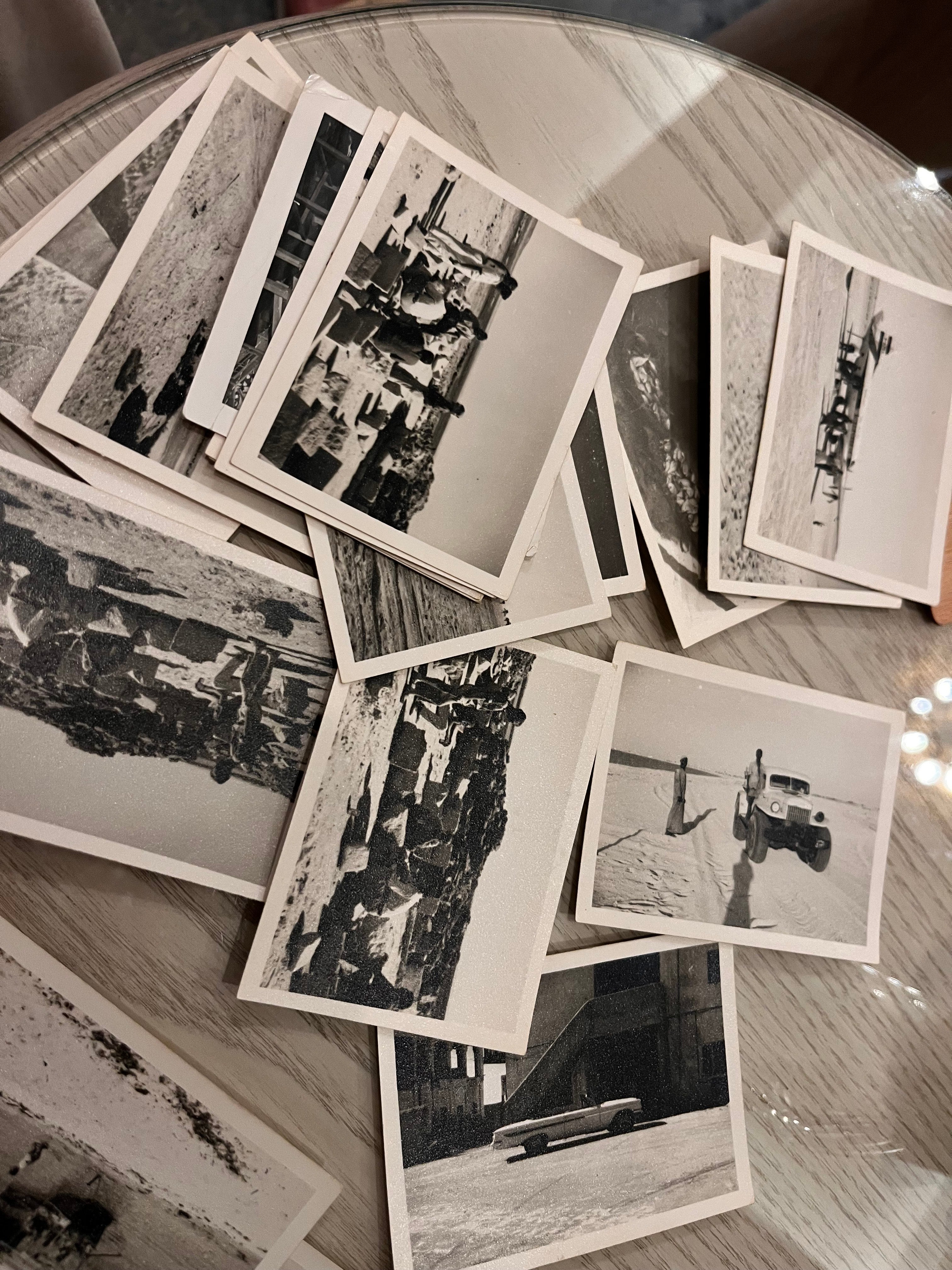
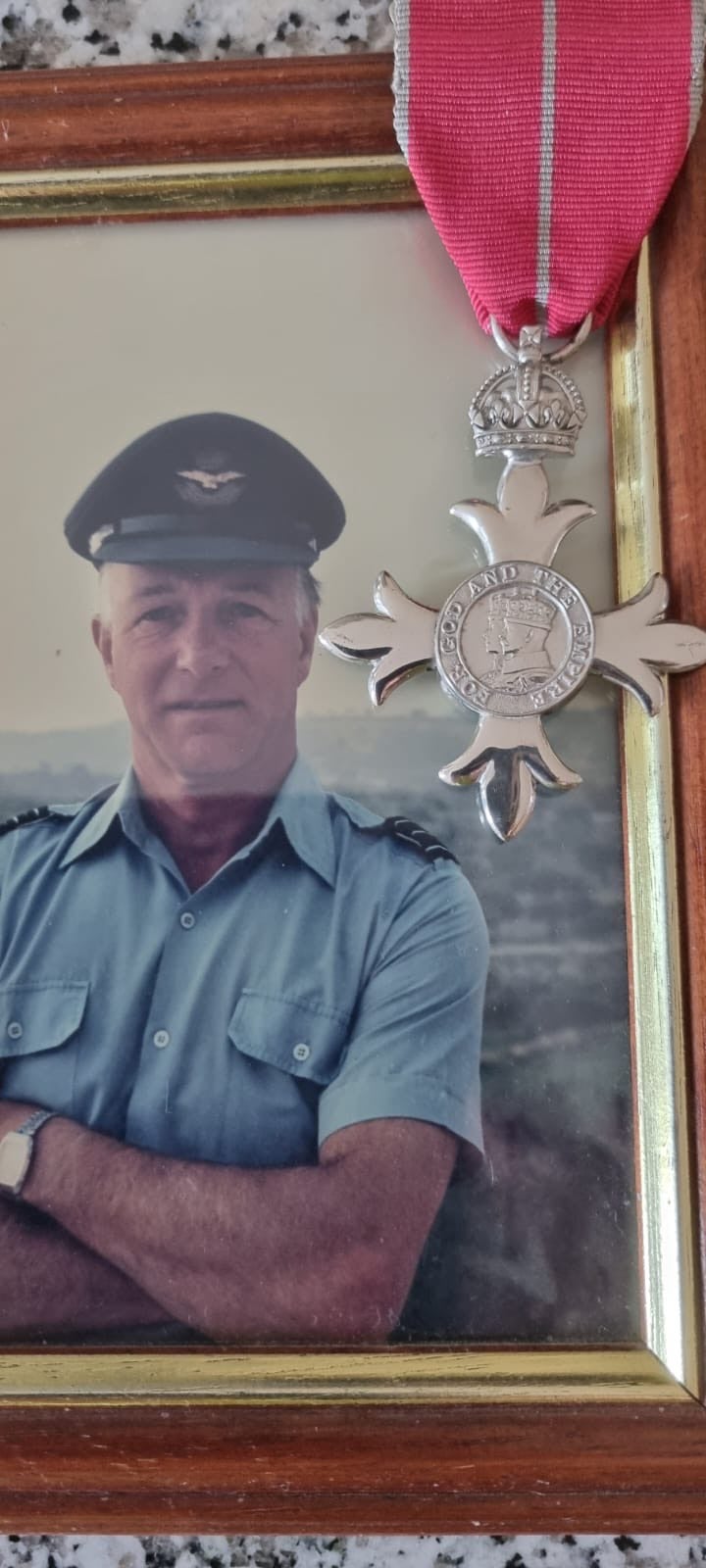
Mr Leach took the photographs in 1960, when he was posted as an electronic engineer with the British firm Decca Navigator Ltd, which manufactured radio navigation systems for ships and aircraft.
“Peter was only 21 when he came to Abu Dhabi in the 1960s. It was a different world out here.
“There were not many people who owned cameras in this part of the world. And he loved taking these pictures,” said Mrs Leach, who was married to Mr Leach for 30 years.
After spending about a year and a half in Abu Dhabi, he returned to the UK, joined the Royal Air Force and retired in 1995. He died four years ago in Cyprus.
The pictures, preserved as slides along with a few disks of scanned images, offers a black-and-white record of a very different Abu Dhabi, when the emirate was still a small fishing settlement.
The grainy images Mr Leach captured include the old Abu Dhabi jetty jutting into the sea with small wooden ‘dhows’ (boats), a traditional ‘bazaar’ where burqa-clad women selling fresh catch, a basic airstrip etched into the desert with a mud-brick structure, a Gulf Aviation plane unloading an ice box with meat and other food items, and an old truck bringing gallons of fresh water, among others.

Some pictures also show Mr Leach in a modest shed that served as Decca’s operating base and also him posing with what appeared to be a first-generation Land Rover on his way to the airport through a vast expanse of pristine desert. Many of the small prints also carry Peter’s handwritten notes and captions.
“I had heard so much about Abu Dhabi from him, about sharing meals with the sheikhs and how he once ate the eye of a lamb.
“The most fascinating story he told me was that the British representative of that time would visit Qasr Al Hosn fort, where the Ruler lived, to spray the stacks of cash the government paid in oil concessions, so they would not grow mould.
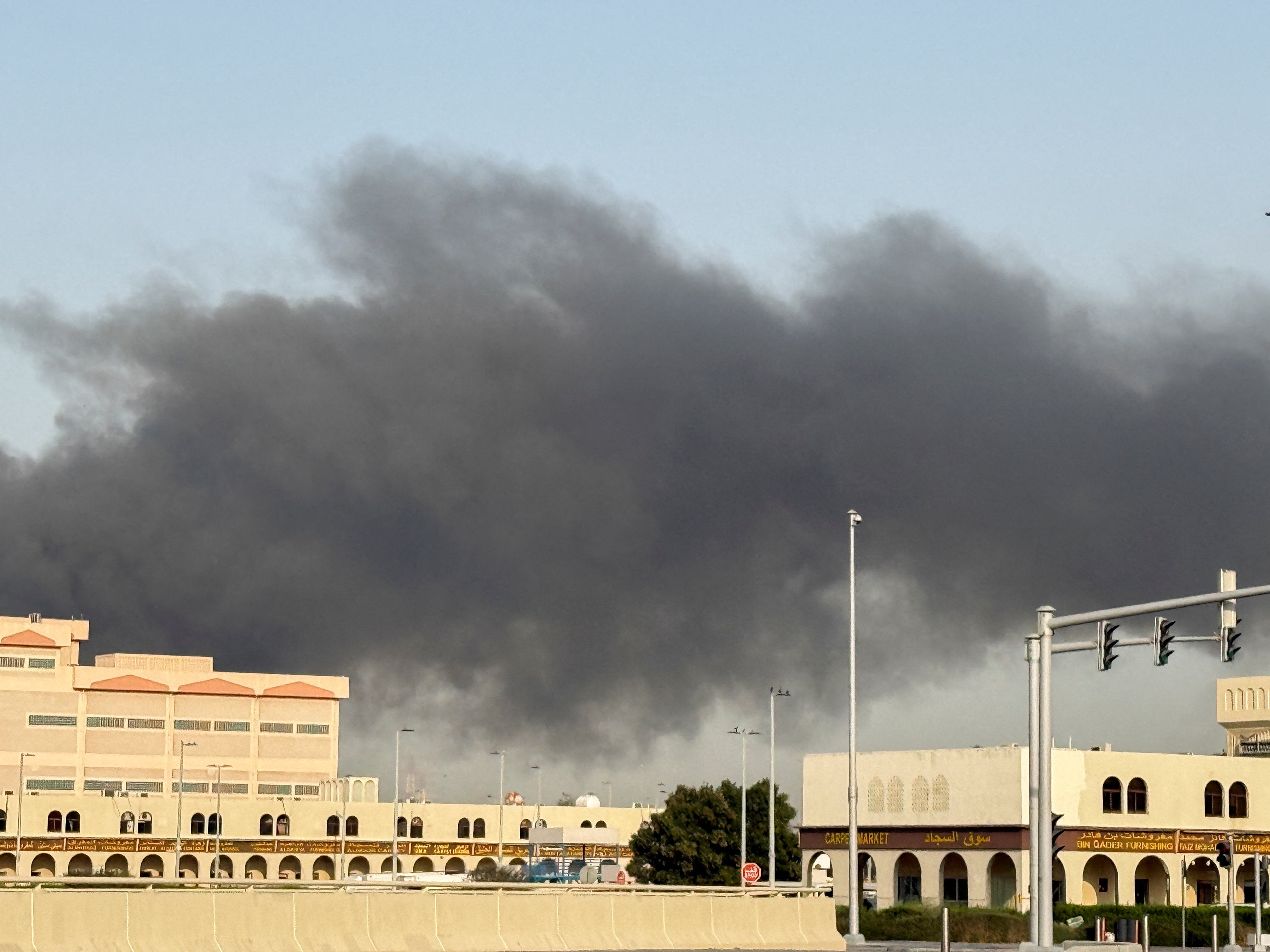
“If Peter were here, he would have been mesmerised by how Abu Dhabi has transformed. And he would not have definitely expected missiles and drones.”

Although the sound of explosions caused by interceptions has been unsettling, she said they feel generally safe. “Peter used to say, ‘There is a world out there we don’t know. We can only speculate about this conflict, but there is no need to panic.”
Mrs Buckland who is travelling with Mrs Leach admitted she has been anxious about the missile alerts. “My family is watching this unfold and they are really worried,” she said, adding that her brother messages her several times a day to check if she is safe.
“Sometimes what we see on television is worse than it is. I tell him not to believe everything he sees on TV.”
At the same time, she said she has been impressed by how authorities have handled the disruption. “We thought this would cost us an extra 1,000 euros,” she said. “We are very impressed that the government is taking care of everyone and even covering the costs for passengers.
“If we have to stay a little longer, we don’t mind.”