


I just didn’t fancy undergoing a $100,000 facelift like Kris Jenner, 70, who reportedly had the “deep plane” last year – the A-list surgical facelift du jour. It knocked the years off so efficiently that she was mistaken for her daughter Kim Kardashian – and is now reportedly “raging” because it’s already “fading”.
Nor did I want one of those “mini facelifts” that are popular among celebrities in their twenties and thirties who want a “snatched” look, offering lower-scarring results compared to traditional lifts, with celebrities like Emma Stone, Anne Hathaway and Kylie Jenner fuelling speculation they’ve had one.
But I knew I wanted to do something. I’d been feeling a bit tired-looking as I approached my late forties, and although I would not go as far as to say I had a full-on “Ozempic face”, I had a slight drawn look after losing nearly 3st on weight-loss drugs last summer and returning to my pre-pregnancy weight. And that’s why facelifts are booming – with GPL-1 users complaining of a gaunt, sagging or aged facial appearance after rapid weight loss.
The British Association of Aesthetic Plastic Surgeons (BAAPS) reported in 2025 an 8 per cent rise in facelifts over 12 months in the UK, while a survey by the American Academy of Facial Plastic and Reconstructive Surgery found that there is a rise in younger facelift patients, with 32 per cent of facelifts now performed on patients aged 35 to 55. Nora Nugent, president of BAAPS, believes there are a host of reasons for the change – including the rise in weight-loss medication use.
But others are looking for subtler, more natural outcomes that don’t scream “surgical” – including me. It’s all about looking like oneself – but rested – and fresher: How you’d look a few years ago if you’d slept for 12 hours non-stop and woken up with absolutely no stress in a wonderfully sunny garden, having won the lottery. Looking fresher despite the constant and exhausting juggle of being a working single mum seemed an impossible dream.
I wanted dewy, youthful, plump-yet-taut new visage – without the knife and the downtime. I also didn’t want to freeze my face with tons of Botox – or filler – and look like I’d been pulled through a wind tunnel.
Dr David Jack is a former plastic surgeon turned non-surgical aesthetics doctor who has A-listers and the fashion crowd queuing up for his less-is-more approach to skin rejuvenation at his clinic in London’s Belgravia, which is where I went for a non-surgical facelift. It’s called the UltraClear Lift, costing from £4,000: A cold ablative fractional laser that I’m promised will have shockingly good results with little downtime – only a few days of redness. It boosts collagen and elastin deep within the skin, creating a firmer, smoother, and more youthful complexion with improved hydration and natural-looking results.
The regenerative effects can take up to six months post-treatment to fully show, with skin continuing to improve for up to a year, with results lasting one to five years.
I was a little nervous – it is only about 15 years since I got burnt by IPL laser resurfacing on my face and décolletage and my chest has never recovered and still goes stripy in the sun because the setting was too strong. It triggered post-traumatic stress, which is why I was glad to be in safe hands with a qualified doctor.
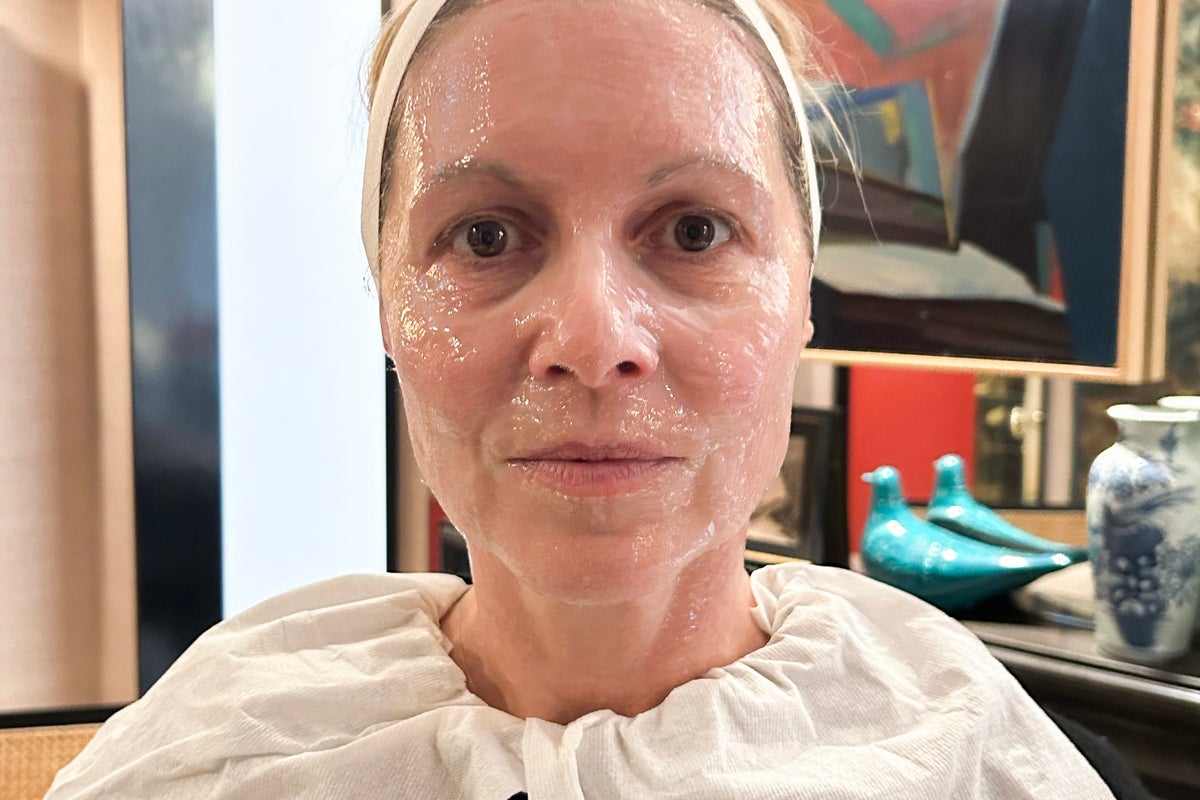
First, a numbing cream was applied to my face, neck and eyelids in thick dollops for 90-minutes pre-treatment so that I felt no pain at all. Then I was ushered into a room to lie down for the 45-minute procedure – where some goggles were put over my eyes before Dr Jack used a hand piece to deliver rapid, precise, fractionated laser energy to the skin to create tiny, microscopic channels (micro-injuries) in the skin’s surface. I didn’t feel anything at all – but it felt a little stressful as although I was numb, I could tell that my face, neck and chest were going through trauma.
“These trigger the body’s natural wound-healing response and act as a signal to the body to produce new collagen, elastin, and hyaluronic acid,” Dr Jack explained as I heard a little zap sound when the hand piece touched my skin. “The surrounding tissue remains largely intact, which allows skin to repair itself efficiently.”
He explained that, over the weeks and months following the treatment, fibroblasts would increase collagen and elastin synthesis and the surface of the skin would become smoother and clearer while the deeper layers gradually become tighter
Until recently, CO2 laser resurfacing was the gold standard in skin rejuvenation techniques available for tightening facial skin without resorting to a knife – but the downtime of the traditional treatments can involve one to two weeks of visible downtime and several months of redness.
UltraClear uses a “cold fibre” laser to resurface and rejuvenate the skin without the intense thermal heat associated with traditional CO2 lasers and, in most cases, the same results can be achieved with only a few days of redness and peeling rather than the extended downtime historically associated with aggressive resurfacing lasers.
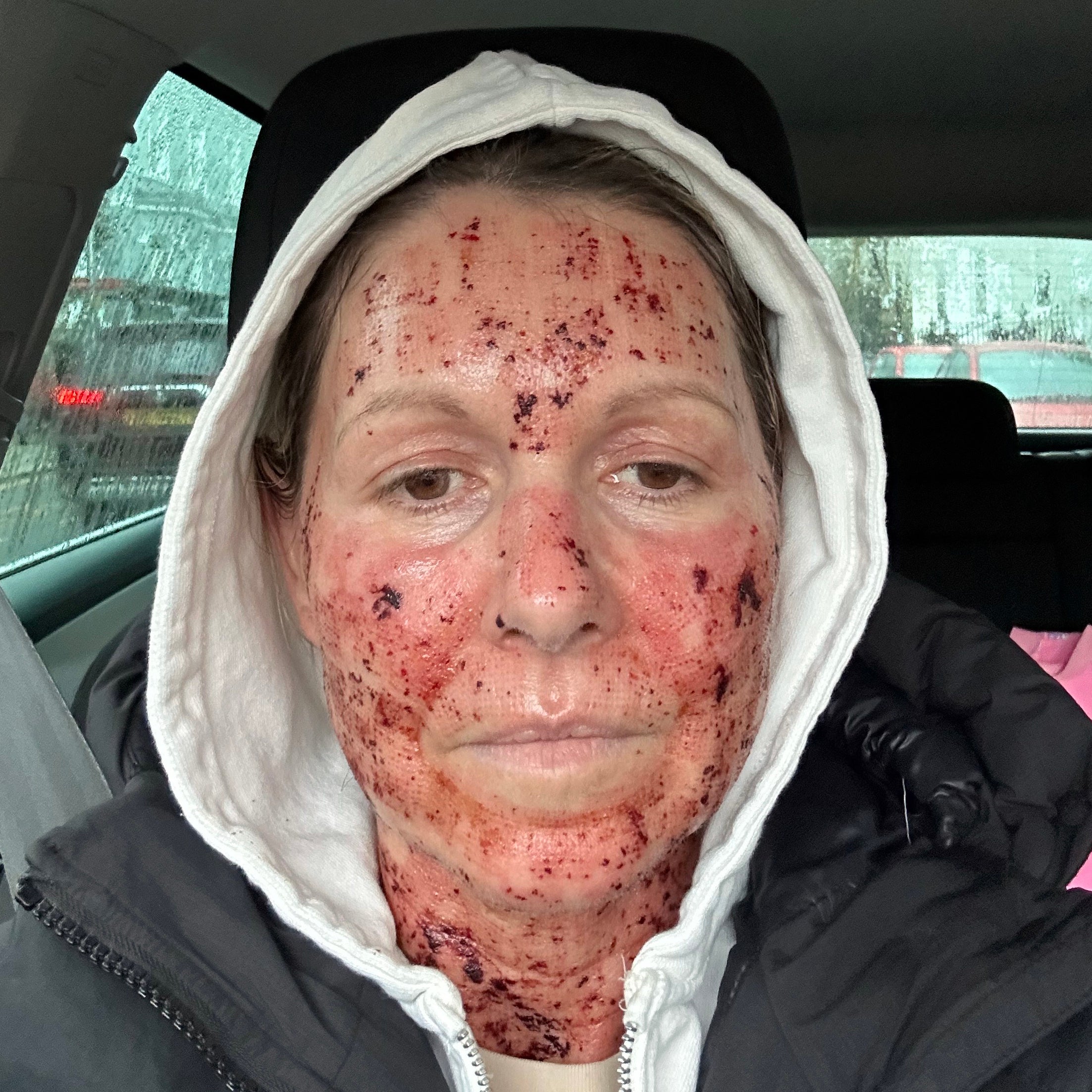
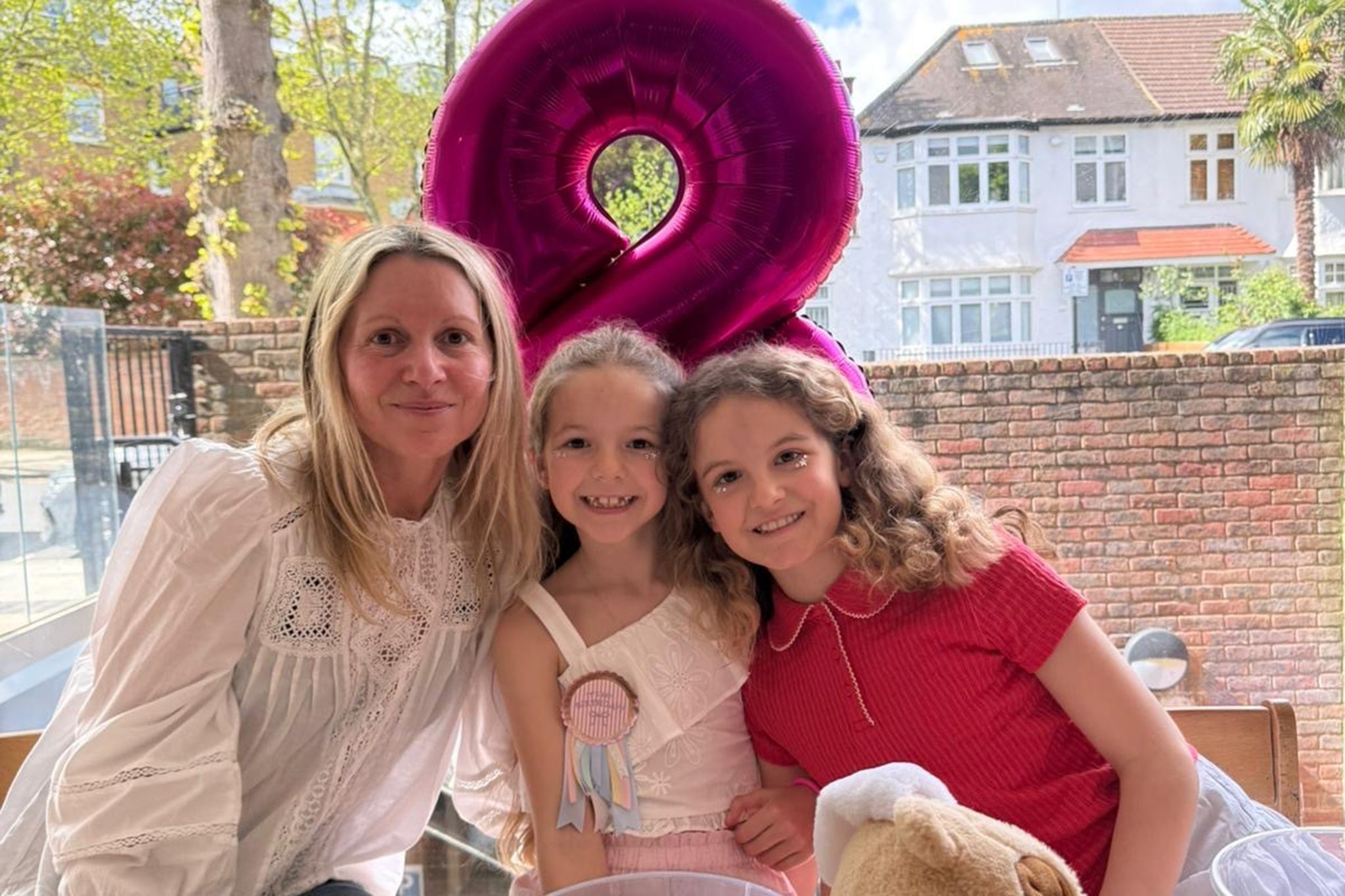
I left the clinic covered in dried red blood and was aware that I looked shocking when I went to collect my children, Lola, 10 and Liberty, seven, from their primary school. I’d warned them in advance that I might look a little odd, but this was off the scale and in the realm of a horror film. I wore a hoodie to try to cover up but I looked like I’d been attacked by a bird or had a nasty accident.
“There is absolutely nothing to worry about. I’ve just had a beauty treatment,” I said to the other parents who were shuddering in horror.
The next day, I managed to cleanse my skin with an antimicrobial cleansing spray and once my skin was clean, it already looked glowing, with a healthy pinkness. By day three, I was able to go out as normal with absolutely no makeup on.
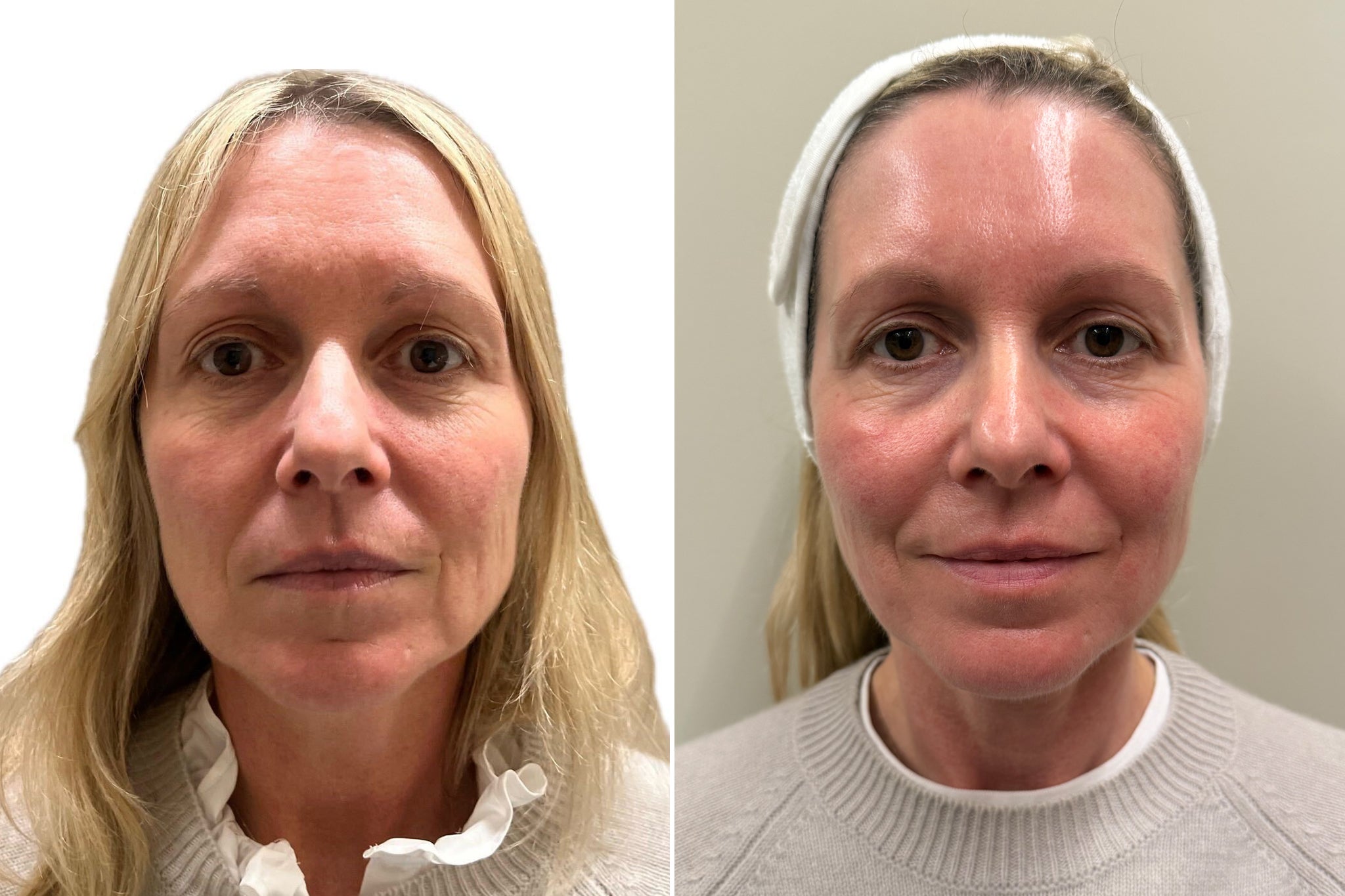
The downtime was so mild I couldn’t quite believe anything major would change. But over the next weeks and two months, I watched as my face blossomed. My jawline is sharper, my skin is firmer and plumper, there’s less jowling, smoother texture and a rested appearance. My face looks more lifted – and best of all, people who I haven’t seen in a few months can’t put their finger on why, but say I look more youthful. I have unveiled a fresher face in time for spring –and it will only get better as the summer approaches (as long as I wear sunscreen).
UltraClear is his number one weapon against “Ozempic face”, which is something Dr Jack is seeing more often in his clinic. “Significant weight loss through GPL-1’s such as Ozempic and Mounjaro can change facial appearance quite quickly,” he says. “Fat compartments in the face shrink and the skin envelope that once fitted that volume can appear looser. Patients often describe looking slightly hollow, tired, or more drawn after rapid weight reduction.”
There is no age threshold for stronger laser treatments such as UltraClear, as the biological condition of the skin is more relevant than the patient’s chronological age. But he says that patients in their forties and fifties often benefit most because collagen levels have declined sufficiently for tightening treatments to make a visible difference, while the skin still retains strong regenerative capacity.
Are advanced lasers really an alternative for a surgical facelift, though, or a poor relation? “They can significantly improve skin quality and produce meaningful tightening – so they can delay the need for surgery for many people,” he says.
“However a surgical facelift addresses deeper structural changes in the face, including repositioning of muscle layers and removal of excess skin. Others eventually choose surgery later in life once structural descent becomes more significant,” he says.
.jpg)
It’s a wonderful experience looking at my face improving weekly. My non-surgical facelift has worked: I have a fresher, tighter and clearer version of the same face, which looks noticeably more youthful. As I watch my face change in front of my eyes, it’s almost like I’ve had a bit of magic sprinkled on me. I look just as I’m meant to, but better.

