The police officer had to break it to her gently. First, he asked Gisèle Pelicot whether she thought she knew her husband Dominique so well that he couldn’t hide anything from her. She said yes.
He also asked whether the couple ever swapped partners. “I heard myself stammering that swinging was inconceivable for me. I couldn’t bear other men touching me. I needed feelings,” she recalls.
Then the officer warned her: “I am going to show you photos and videos that are not going to please you.”
And then her world fell apart.
The first photo showed a man raping a woman who had been laid out on her side and dressed up in a suspender belt. “That’s you in this photo,” the policeman said.
He then showed her another photo, and another after that – from a collection of images that Dominique Pelicot took of his wife over the years when he regularly knocked her unconscious by lacing her food and drink with drugs, so that strangers he invited to their home could assault her while he filmed.
Ms Pelicot could not believe that the inert woman in the photos was her. “I didn’t recognise the individuals. Nor this woman. Her cheek was so flabby. Her mouth so limp. She was a rag doll,” she writes in her new book recounting her story of survival and courage, France’s most shocking mass rape case.
“Fifty-three men had come to our house to rape me,” she recalls being told by the officer, Laurent Perret.

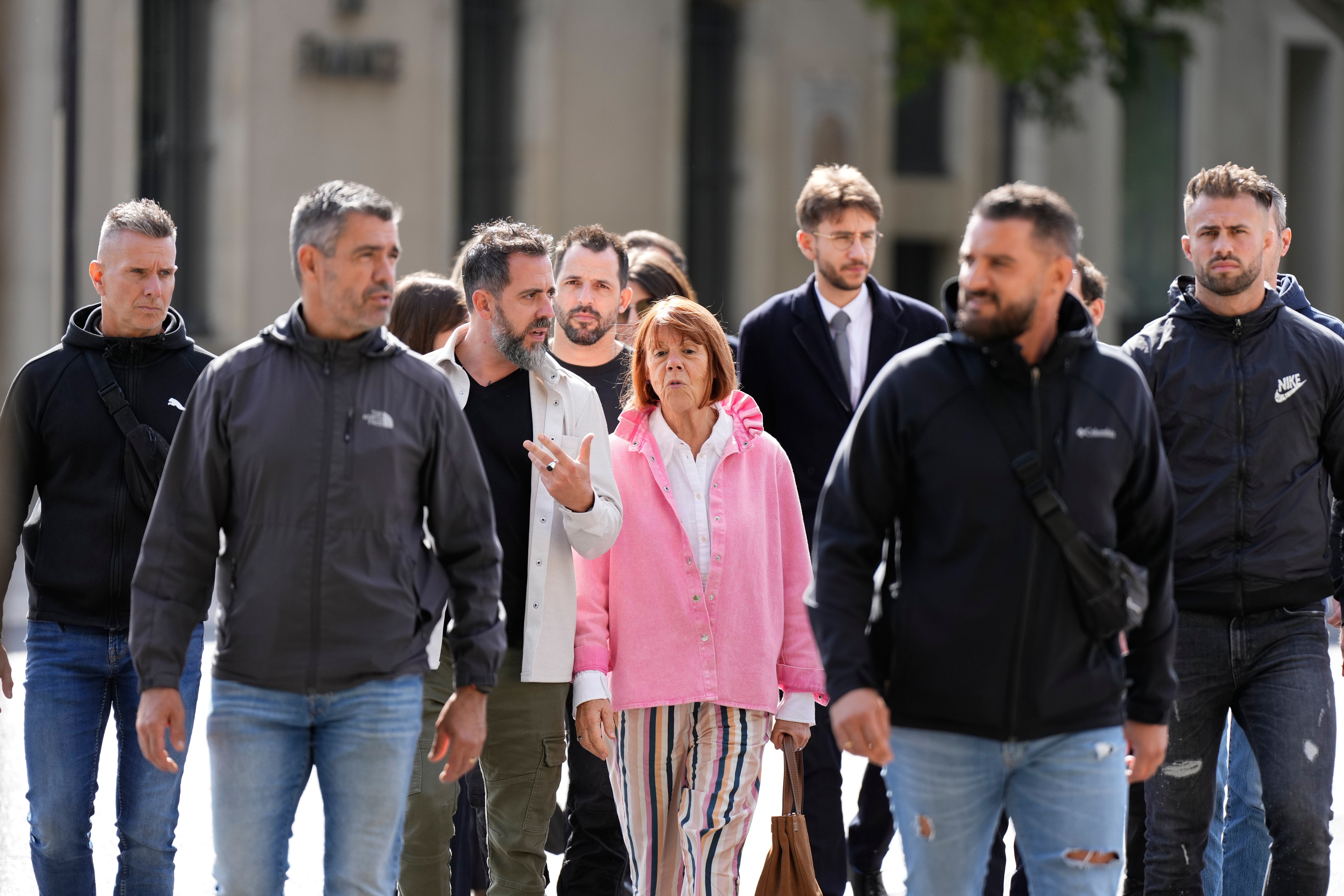
“My brain froze in the office of Deputy Police Sergeant Perret.” Dominique Pelicot, found guilty on all charges, was given the maximum possible sentence of 20 years in prison after a highly publicised trial in 2024.
He had recruited other men in an online chatroom to rape her while she was unconscious; 47 of them were found guilty of rape, two found guilty of attempted rape and two guilty of sexual assault. They were jailed for a total of 428 years.
Extracts of her book, A Hymn to Life: Shame Has to Change Sides, written with journalist Judith Perrignon, and published by French newspaper Le Monde, explain how her then-husband had been summoned by police after a supermarket security guard caught him secretly taking video up women’s skirts.
Ms Pelicot was completely unprepared for the bombshell coming. Gradually, the officer explained the actions of the man she regarded as a loving husband and whom she described as “a super guy”.
Horrified, she had no idea then of how subsequent events would turn her into a a global icon for campaigns against sexual violence.
Embodying the message that it is the perpetrators, not the victims, who should feel shame, the 72-year-old grandmother waived her anonymity in the trial of her ex-husband and the 50 other men.
The book relates how the morning had begun peacefully, when police asked her and her husband over the phone to go to the station.
Dominique Pelicot was interviewed first on his own, extracts published in The Times reveal. Then Deputy Sergeant Perret took Ms Pelicot into his office. “He asked me how I met Dominique and I answered that it was at my aunt’s home in July 1971, and it was a real coup de foudre [love at first sight],” she writes.
When the officer told her that her husband had been charged with rape and drugging her, she broke down in tears. He also showed her photographs and videos taken from her husband’s computer. It showed a man lying beside her, raping her.
“It’s you in this photo,” Perret said. “No it isn’t me,” she answered.
He showed her a photo of another man raping her, still in his fireman’s pullover. By then, she could hardly hear what the policeman was saying. “It was like the distant echo of a voice,” she writes.
They were then joined by a young woman, a psychologist.
“I felt far away, although we were in the same room. I didn’t need her. I was sure of my happiness, our happiness.
“Nearly 50 years of marriage and I could still clearly picture our first meeting. His smile. His shy look. His long curly hair, down to his shoulders. His navy jumper. He was going to love me.”
Ms Pelicot says that when she spoke in court during the trial, she had prepared some notes. “People are thanking me for my courage each day. I want to say to them, ‘it’s not courage but the will and determination to change this patriarchal, macho society’.”
She says that accepting a closed-door trial would have protected her abusers and left her alone with them in court, “hostage to their looks, their lies, their cowardice and their scorn”.
“No one would know what they had done to me. Not a single journalist would be there to write their names next to their crimes,” she explains. “Above all, not a single woman could walk in and sit in the courtroom to feel less alone.”
She says had she been 20 years younger, she might not have dared to refuse a closed-door hearing. “I would have feared the stares,” she writes. “Those damned stares a woman of my generation has always had to contend with…”
“Perhaps shame fades all the more easily when you’re 70, and no one pays attention to you any more.”