


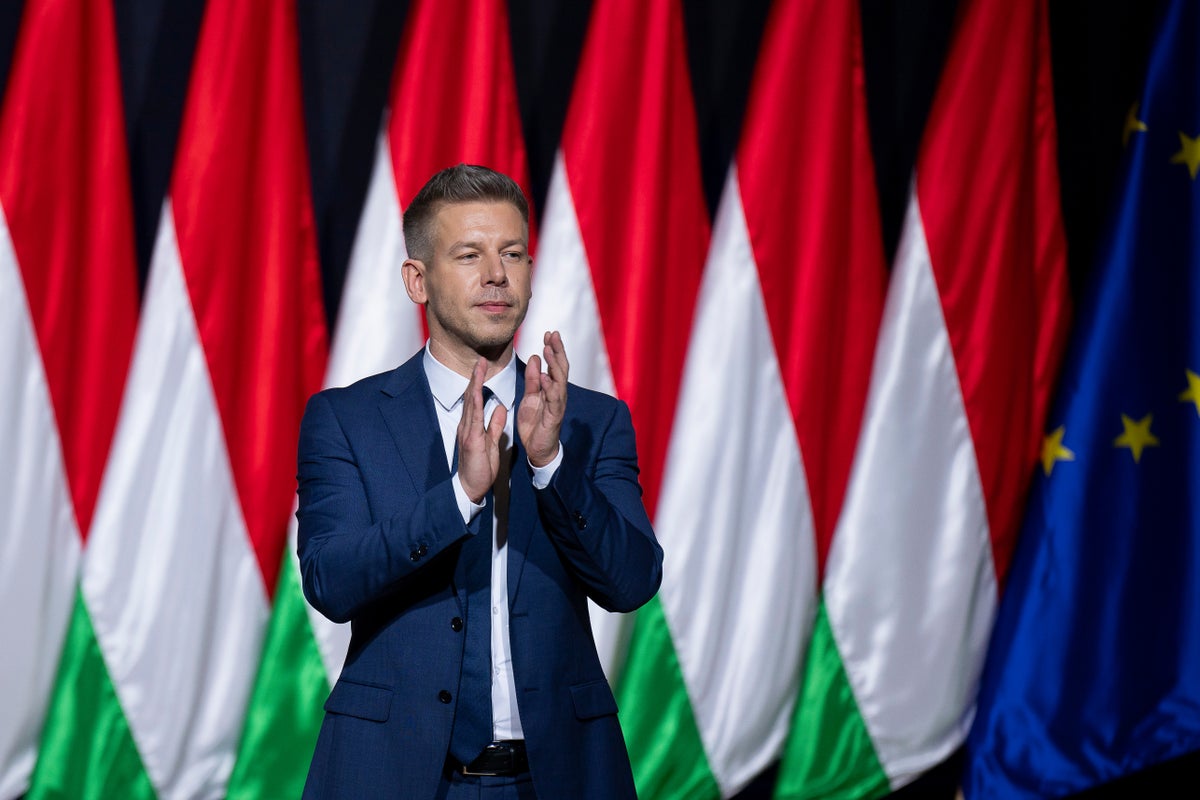
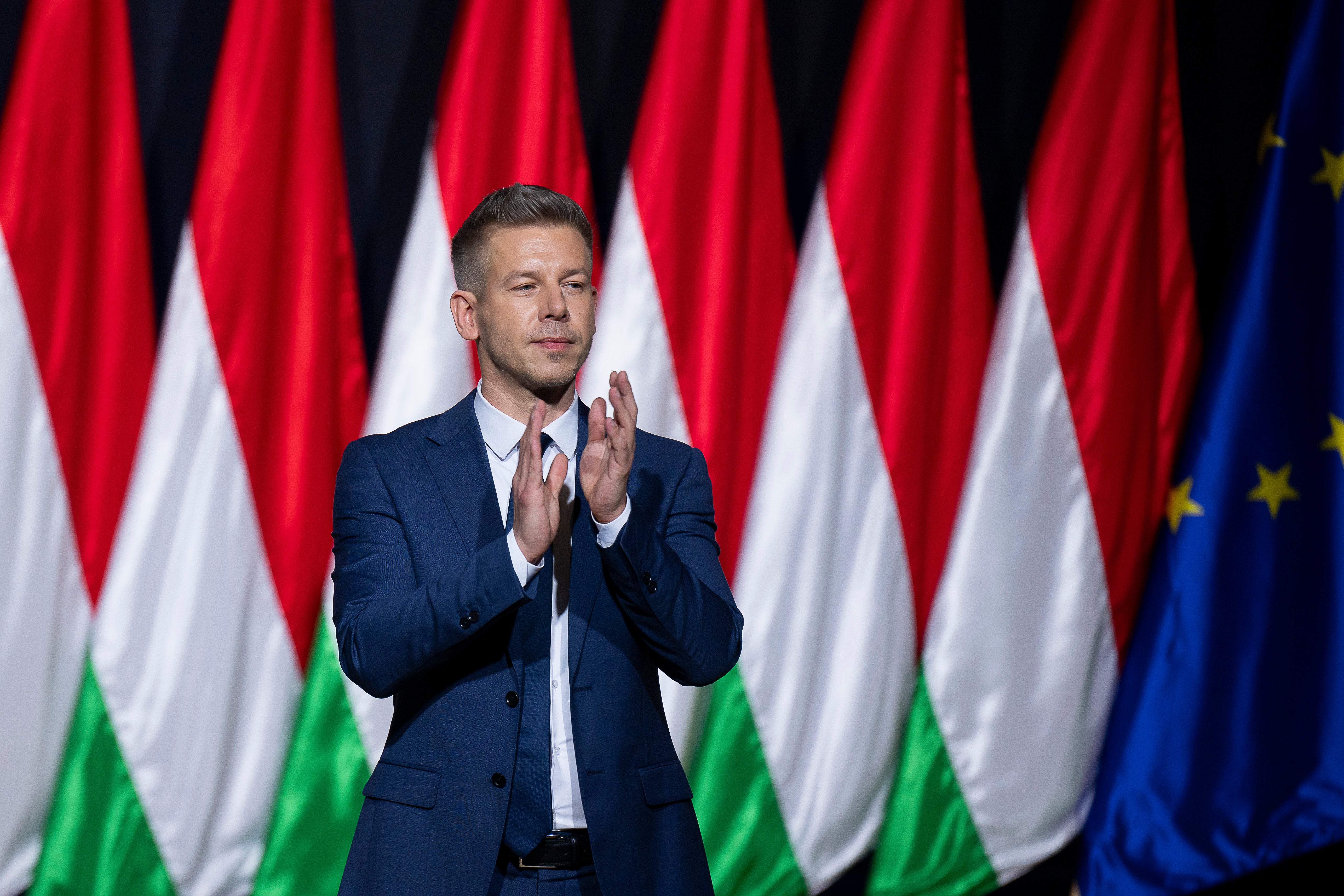
The incoming prime minister of Hungary, Péter Magyar, has said that he will ask Vladimir Putin to end the killing in Ukraine if he speaks with the Russian president.
Addressing a media briefing a day after his landslide election victory over nationalist Viktor Orban, an ally of Putin, Mr Magyar said he hoped Moscow would be forced to end the war soon and affirmed that Ukraine is the clear victim in the conflict.
Mr Magyar, the leader of the centre-right Tisza party, said he would not call the Russian president, but he has previously publicly recognised that he would need to hold talks with Putin and that Budapest would need to continue buying Russian oil and gas for the time being.

Speaking to reporters on Monday, Kremlin spokesman Dmitry Peskov said Moscow is looking forward to “continuing our highly pragmatic engagement with Hungary’s new leadership”.
“We noted Magyar’s statement regarding his willingness to engage in dialogue. Naturally, this will be beneficial for both Moscow and Budapest,” he said, adding that Russia was not sure what the stance of the new leadership would be.
Mr Orban’s election defeat was met with relief in Kyiv, which has been locked in diplomatic battles with a hostile government in Budapest.
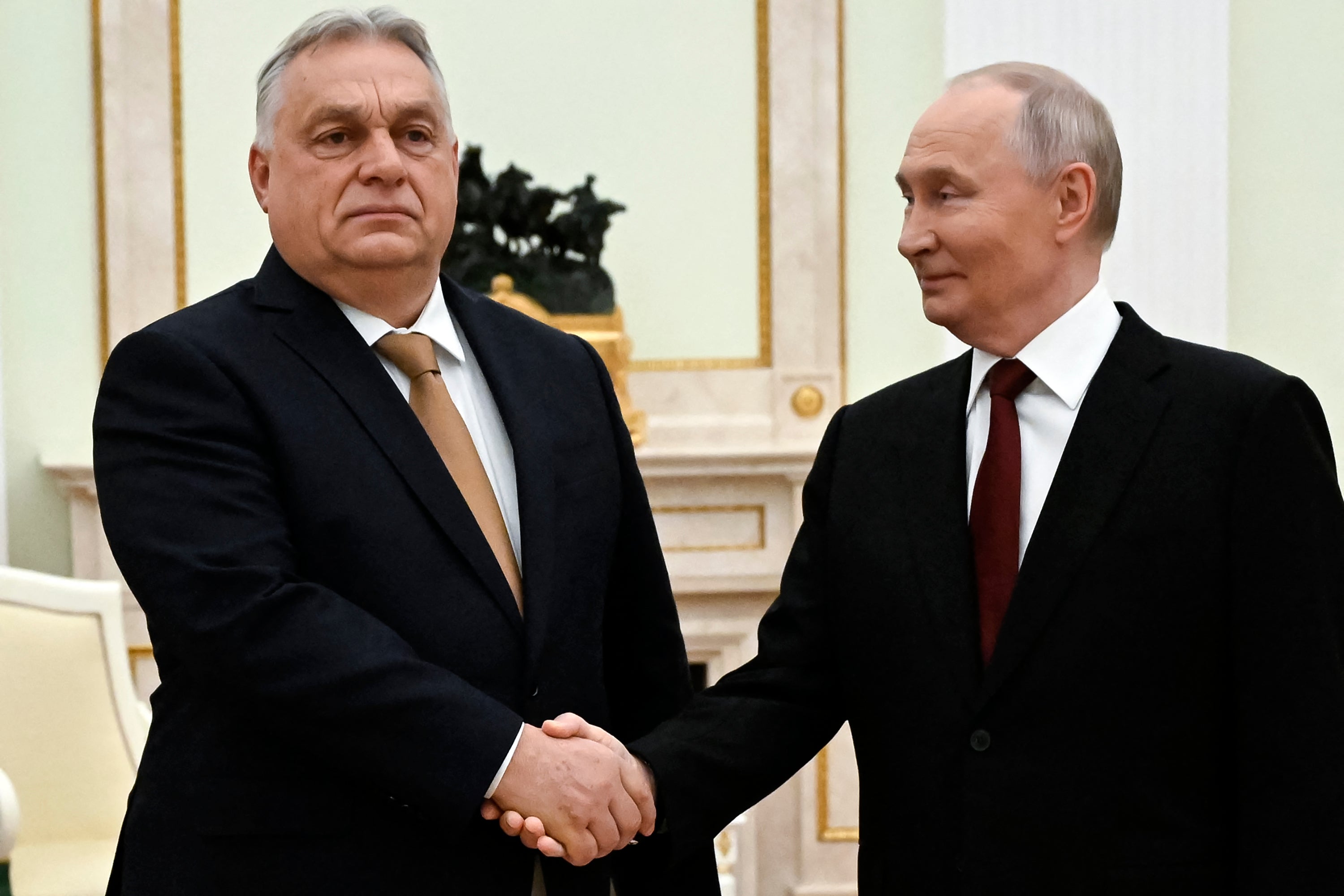
The hardline former prime minister met with Putin multiple times during the war, allowed Russia to start work on building a new nuclear power plant south of Budapest, and often spoke out against sanctions on Russia while flatly opposing Kyiv’s bid to join the 27-nation European Union.

He also blocked a £78bn EU loan to Ukraine after accusing the country of sabotaging Russian oil deliveries to his country by dragging its feet over the repair of a damaged pipeline, something Kyiv denied.
“Orban’s defeat in the elections will have one consequence for us here in Russia. But it is a very significant one,” said Andrei Medvedev, a Russian blogger with a large following.
“Now … Ukraine will receive EU funds, and with them, the resources to wage war for at least a year. It goes without saying that the Ukrainian armed forces and numerous contractors will focus on further developing their drone systems and missile capabilities.”
The election of Mr Magyar, a former Orban ally who now leads a pro-EU and pro-Nato party in Tisza, may prove significant for European unity on the plight of Ukraine.