


Emergency services tackling massive wildfires in Spain and France are in a race against time to get the blazes under control before another 40C heatwave hits Europe this week.
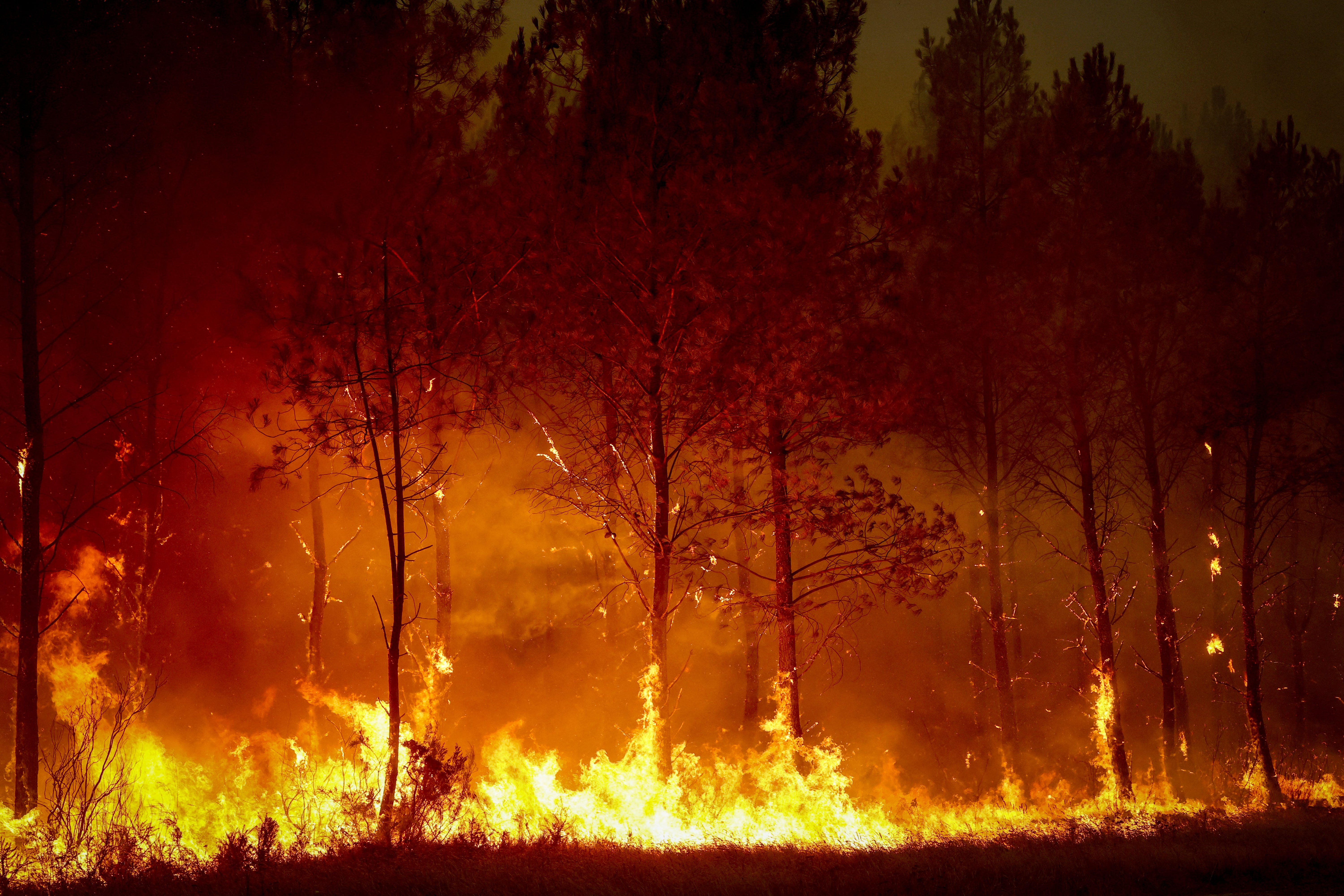
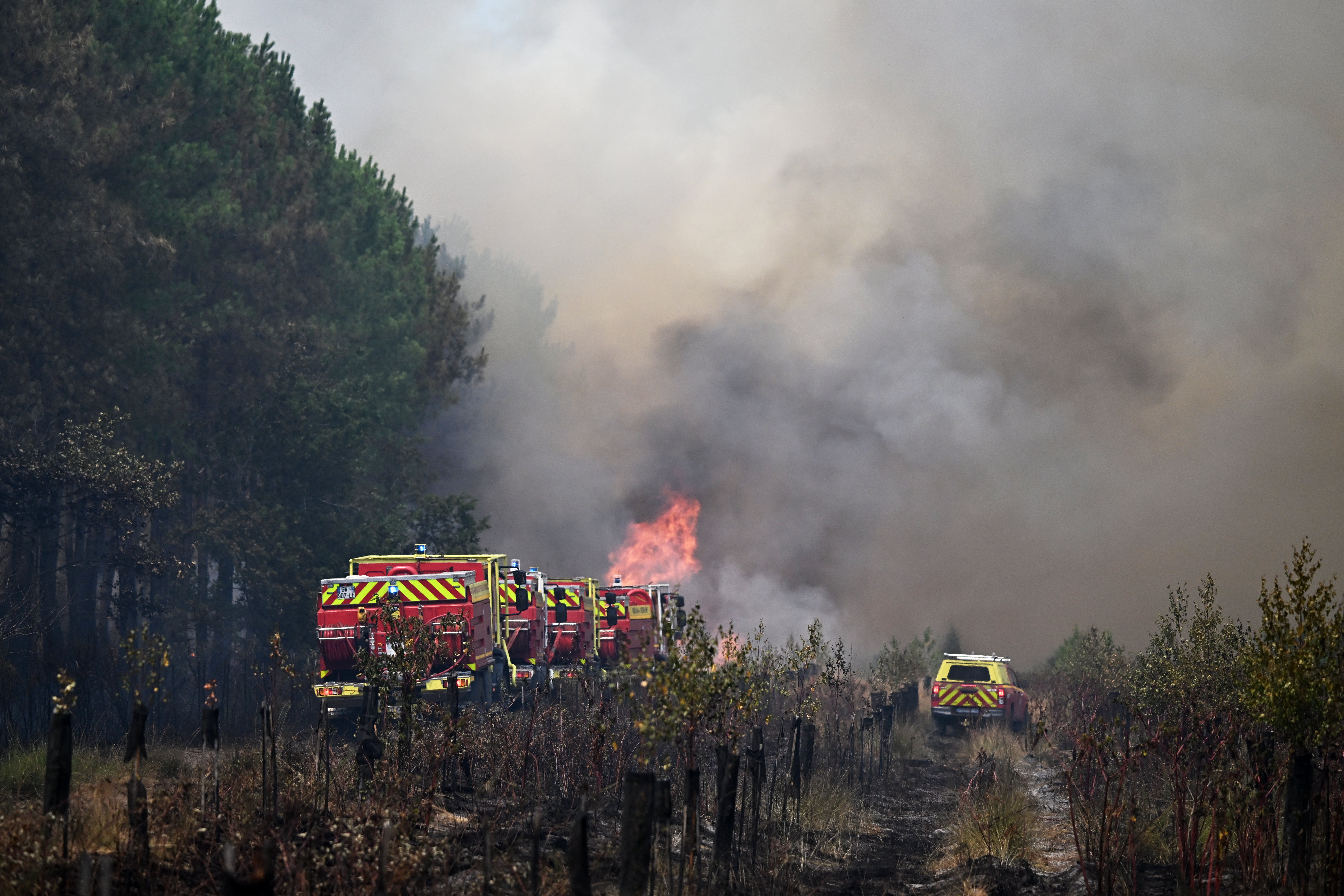
In France, flames have burned through an area roughly four times the size of Paris and are now just nine miles outside the country’s sixth-largest city of Bordeaux, with no sign of slowing down. In central Spain, three separate fronts remained active in the mountains northwest of Madrid in the provinces of Madrid, Toledo and Avila.
The crisis is expected to intensify further with temperatures set to hit 40C in Spain and France within days, according to the meteorological agencies of both countries. The soaring temperatures come amid warnings the wildfires in France could burn for weeks, if not months.
“We are still in the midst of a crisis; we must remain vigilant,” Sophie Brocas, prefect of Bordeaux’s Gironde region told Le Parisien on Monday. “The fire is not contained and remains extremely dangerous.
“This unprecedented blaze does not follow any known pattern; it creates its own winds and requires constant adaptation.”
Authorities have so far evacuated about 250,000 people in France, including holidaymakers and residents, while in Spain around 116,000 have been told to leave their homes or seek shelter. Wildfires have also impacted Italy and Portugal, with the UK government confirming on Monday it is preparing for a similar crisis.
“What we’re experiencing isn’t a succession of isolated events,” Spain’s prime minister Pedro Sanchez said on Monday. “It’s the most painful expression of a climate emergency that is making sixth-generation wildfires more ferocious, heatwaves more frequent, and our territory more vulnerable.”
KEY FIGURES SO FAR:
- 116,000 hectares burned in France this year, including 42,000 from the blaze near Bordeaux
- 360,000 people evacuated, including 250,000 in France and 116,000 in Spain
- 2,500 firefighters, 1,500 military personnel, and 1,200 police officers and gendarmes battling blaze in Gironde, France
- 75 firefighters injured and at least two dead
- 162 people arrested on suspicion of arson in France
On Monday, French president Emmanuel Macron called a crisis meeting of his cabinet to discuss how to battle the fires, after reassuring the country over the weekend that the government would offer support to people “for as long as is needed”.
Mr Macron urged fire crews to “stay strong”, warning that the fight will take time but vowing: “We will win this battle together.”
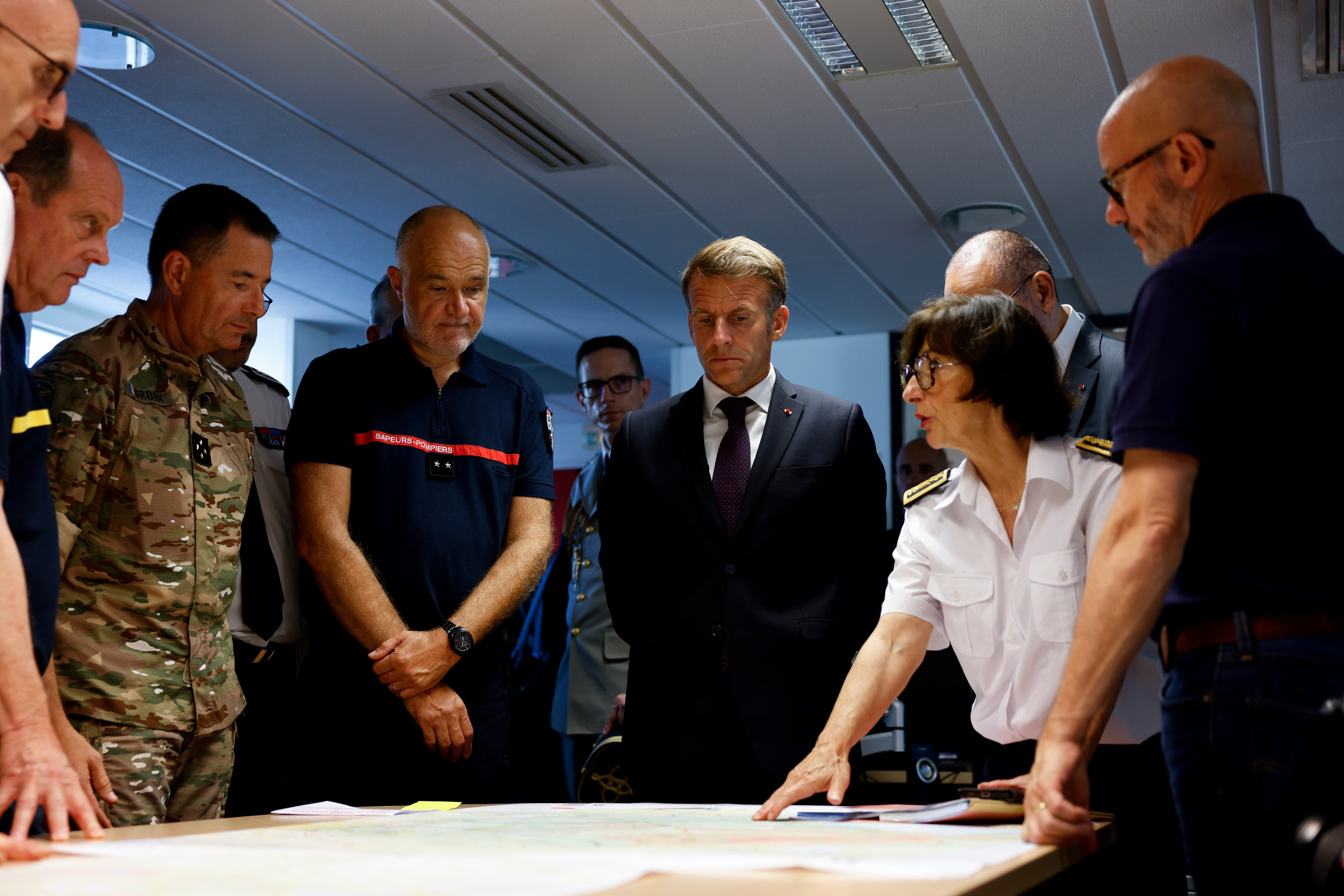
On a visit to a coordination centre for the massive firefighting effort in southwest France on Monday, Mr Macron heard how the blaze raging since last week has been wildly unpredictable, transforming at times into a self-feeding fire storm.
“We’re facing a completely unprecedented fire,” Mr Macron said, describing the situation as France’s worst fire-related crisis since the Second World War..
He praised firefighting teams who stopped the inferno’s progression after successive days of spreading flames. But with woodlands still smouldering, he cautioned that the battle isn’t yet won. The weeks ahead will be hard,” he said.
France’s prime minister Sebastien Lecornu said the country was going through an “unprecedented fire season”, with the area burned already having surpassed the previous record year of 2022. The European Union’s European Forest Fire Information System estimates that over 300,000 hectares have burned in France and Spain as a result of wildfires since January this year.
The extreme fires come after a series of scorching heatwaves across western Europe, with highs of 45C reported earlier this month.
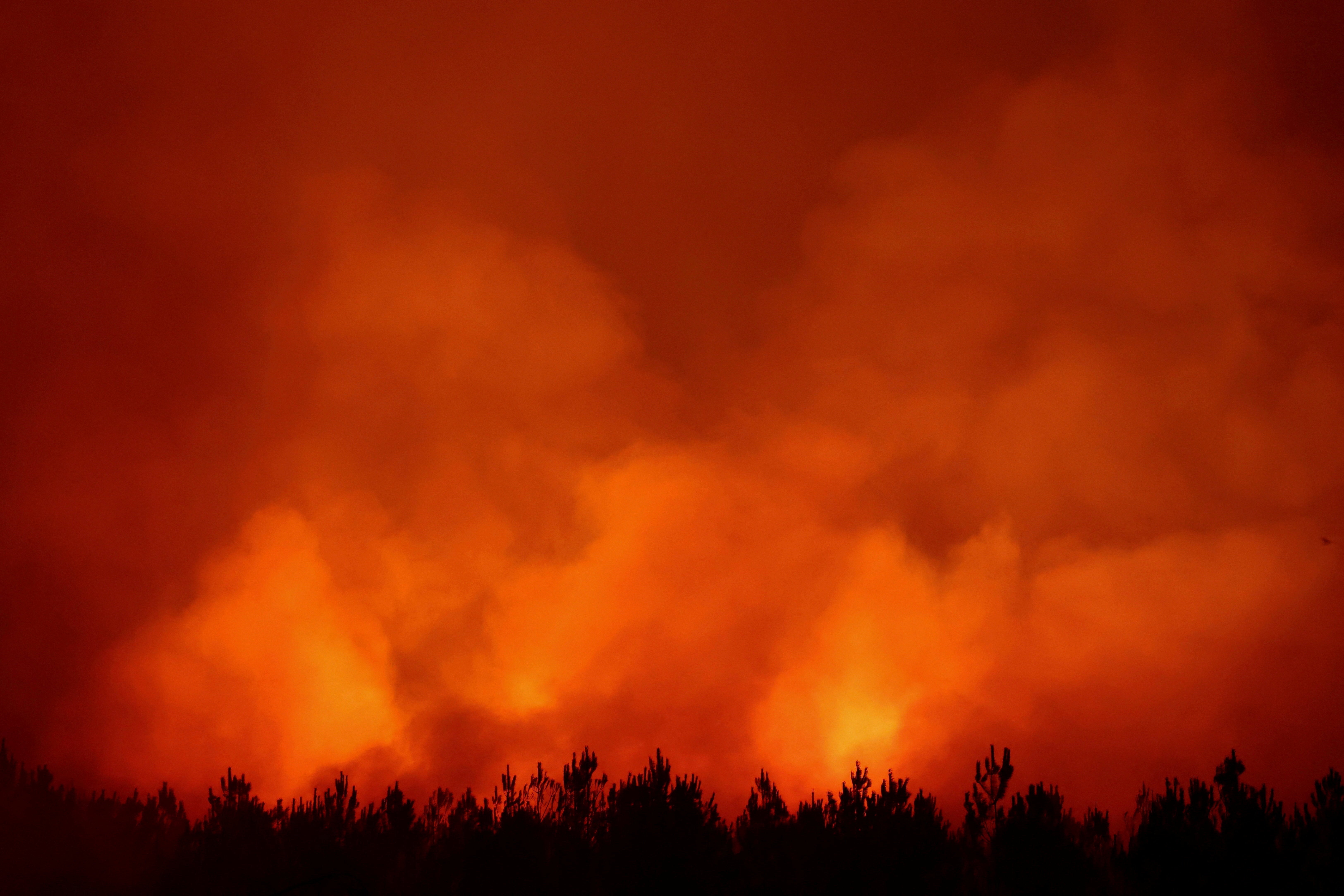
France’s meteorological agency, Météo-France, warned that the next heatwave would settle over the country on Tuesday and that on Wednesday temperatures will continue to rise, with intense heat peaking across much of the western half of the country.
Emmanuel Cerisier, who lives near Bordeaux, told The Independent that there is an overwhelming feeling of “tension and anxiety” as people wonder whether they will have to evacuate.
“Over the last two or three days, we’re experiencing fog and clouds of ashes and you get the smell pretty much all the time,” said Mr Cerisier, who lives with his wife and daughters, aged 18 and 16.
“Even in the city centre of Bordeaux, when the winds get stronger, you can get clouds of ashes that darken the sky. It’s easy to spot here when it starts and it can stay a few hours.
“Elderly people are wearing masks in the city so if you go out in the city centre, it will remind you of the Covid era.
“You get the taste of ashes that burn in your throat when you’re in the middle of those clouds. My kids and wife don’t want to go out when the winds are blowing in our direction.”
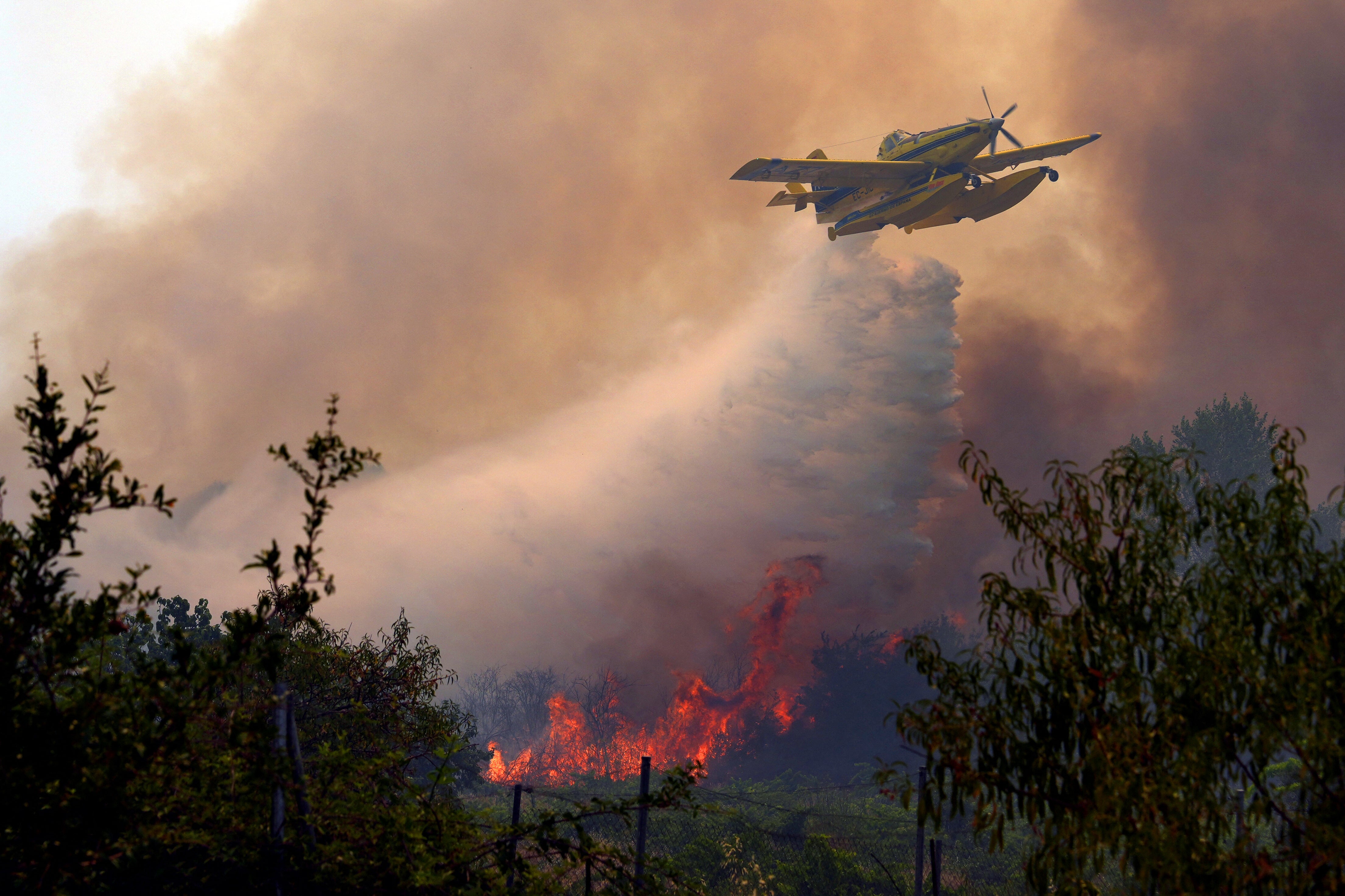
Authorities warned that some of the fires had become so large they had generated their own rare weather system, sparking thunderstorms and strong winds.
“This smoke cloud generates its own weather system, causing anything in its path to spontaneously combust. It is unprecedented in France,” said Eric Brocardi, a spokesperson for the National Firefighters Federation of France. The “fire cloud” phenomena is typically witnessed during volcanic eruptions and can create its own wind and lightning.
Tourists have also been advised to stay away from the region due to low air quality, and on Monday the Bordeaux airport hotel zone was evacuated until further notice, although the airport itself remains operational.
In a statement overnight, the airport said that the decision to close all hotels in its immediate vicinity was made in accordance with the Gironde prefecture.
While flights are still operational, the airport said no accommodation can be provided at the airport itself, which closes overnight. It advised travellers to look outside the evacuated areas or at the Parc des Expositions.