Route 66 is the quintessential American road trip — a 2,500-mile odyssey across eight states from Chicago to Santa Monica.
And with 2026 being the route’s 100th birthday, this year is the perfect time to discover what is now a cultural icon.
Here, we reveal how to do it well, with a guide that steers you towards an authentic Route 66 experience.
We explain how the road acquired legendary status, the diner in Chicago you should have breakfast at before setting off and the dangers of over-reliance on Google Maps for the journey.
Route 66 isn’t a race, and in the following section, we break down how much time to allow for the journey.
From there, it’s the not-to-be-missed sights that help make the trip so wonderfully eccentric, and some of the best motels to book into for a “good old days” vibe.
The finish comes at Santa Monica Pier, where there are a handful of rituals to undertake to mark the end of a road trip of a lifetime.
The birth of a legend

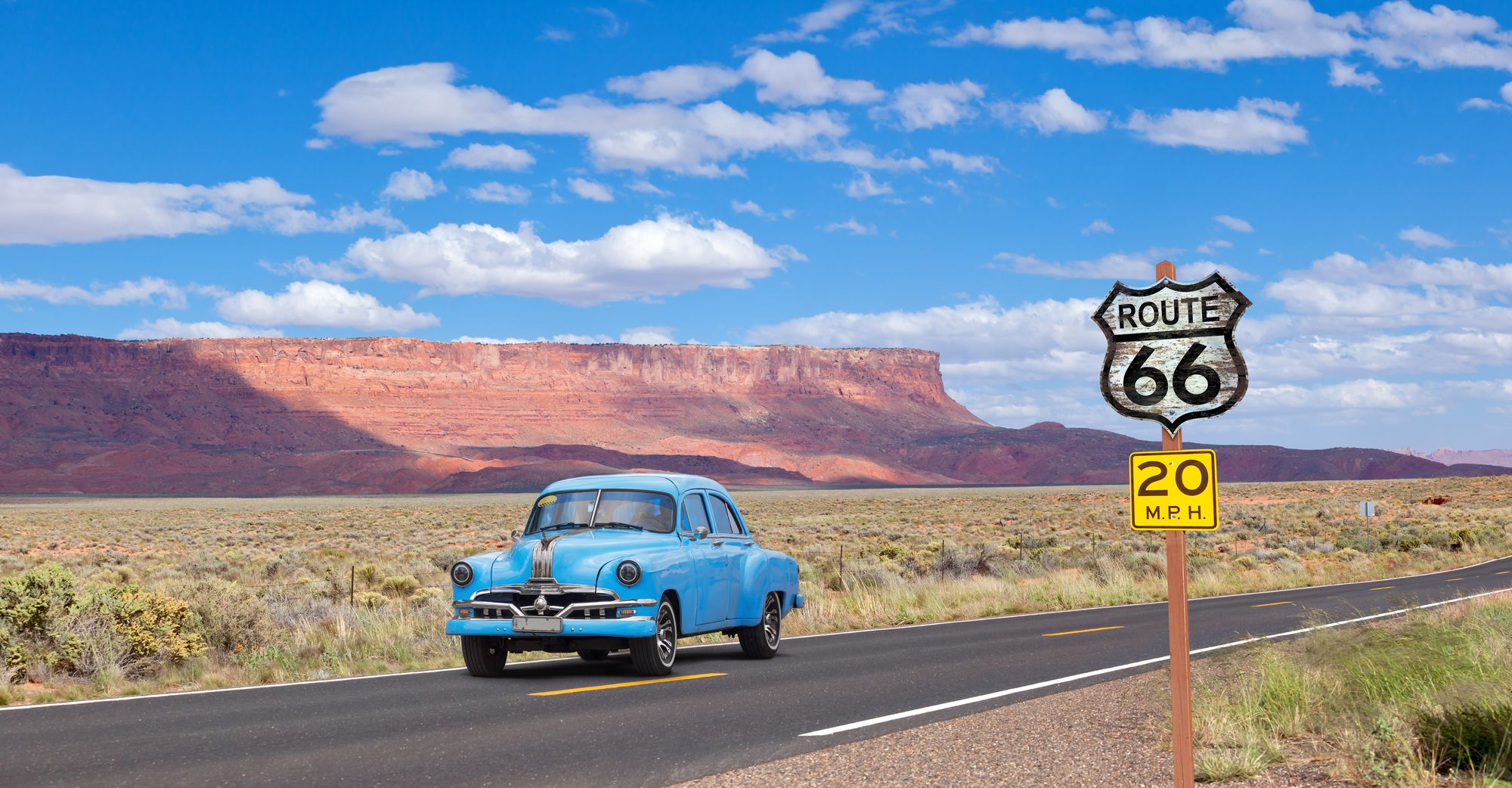
Route 66 was commissioned in 1926 and by the time it was finished and fully paved in the late 1930s, it stretched 2,448 miles across Illinois, Missouri, Kansas, Oklahoma, Texas, New Mexico, Arizona, and California, from Chicago to Santa Monica — and it quickly attained legendary status, despite not even being the first long-distance highway, or the busiest.
The route’s journey to cultural icon began with hundreds of thousands of farmers from Oklahoma, Texas, Arkansas and Missouri using it to reach California in search of work, a plight immortalized in the great John Steinbeck’s powerful 1939 novel The Grapes of Wrath, in which he dubs Route 66 the “Mother Road.”
When car ownership exploded after the Second World War, Americans discovered en masse that this road of opportunity was also a journey of adventure that took them through bewitching desert landscapes and past neon-lit motels and diners that would come to symbolize classic road trip culture.
By the time the road was decommissioned in 1985 and replaced by the Interstate Highway System, it was ingrained in popular culture, featuring in songs such as Bobby Troup’s (Get Your Kicks on) Route 66, recorded by artists from Nat King Cole to the Rolling Stones, and making appearances in countless road trip movies.
Ironically, its death made it even more famous, with preservation movements emerging to maintain and restore motels, diners and roadside attractions that were now bypassed — today Route 66 is a patchwork of historic sections.
Read more: How much of Route 66 remains after a century?
Start in Chicago — the traditional beginning

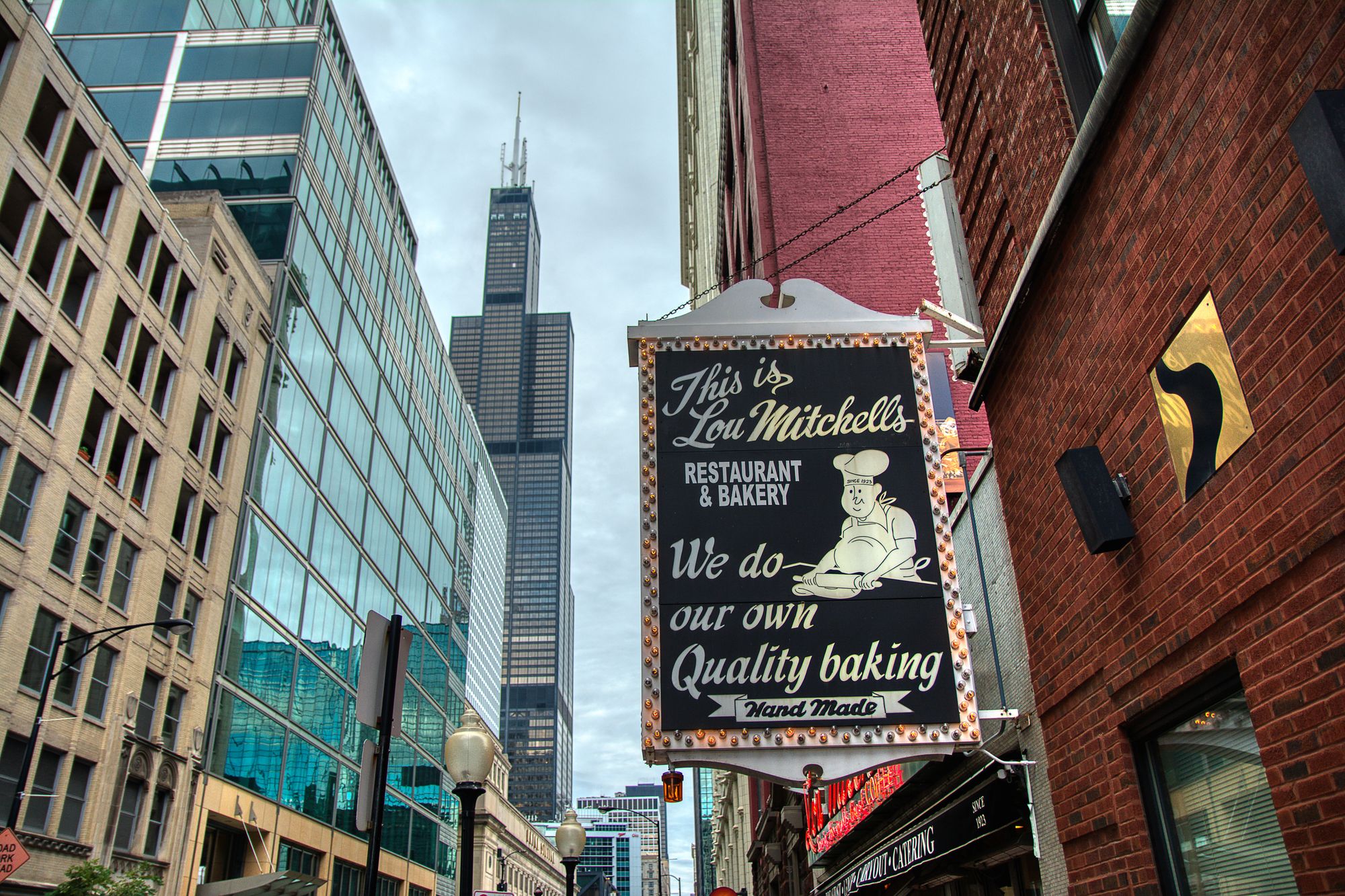
Chicago is the traditional launchpad — it’s the historic gateway to the west, and you’ll mostly have the sun behind you — and the ceremonial starting point is amid the skyscrapers of the Windy City’s downtown district, on Adams Street, near the Art Institute of Chicago.
There, you’ll find a modest brown-and-white “Begin Route 66” sign. However, before you drive past it, tradition dictates that you head to nearby Lou Mitchell’s restaurant and bakery on W. Jackson Boulevard, which has been serving breakfast to westbound road-trippers since 1923.
The menu is classic diner fare, from coffee and pancakes to omelets and corned beef hash. And while you wait for a table, the serving staff hand out complimentary donut holes and Milk Duds.
Once you set off, you’ll find yourself in another world in little more than an hour.
Great place to stay: Silversmith Hotel Chicago Downtown is just a three minute walk from the Route 66 and features rooms with mini-refrigerators, coffee makers and wifi.
Read more: Why your next city break should be to Chicago
Route planning (beware of Google Maps)

Navigation-wise, it would be tempting to type “Route 66” into Google Maps and take it from there.
But that would be a major mistake. It’s worth laboring the point that Route 66 is no longer one long continuous highway, but a mishmash of surviving segments jammed in among newer highways. Some original sections are quite long and scenic, others last for just a few miles before disappearing (and sometimes making a comeback a bit further along).
Ask Google Maps for the route and you’ll likely end up driving along interstates 40, 44 and 55, which replaced large sections of Route 66, and miss some of the most fascinating roadside attractions.
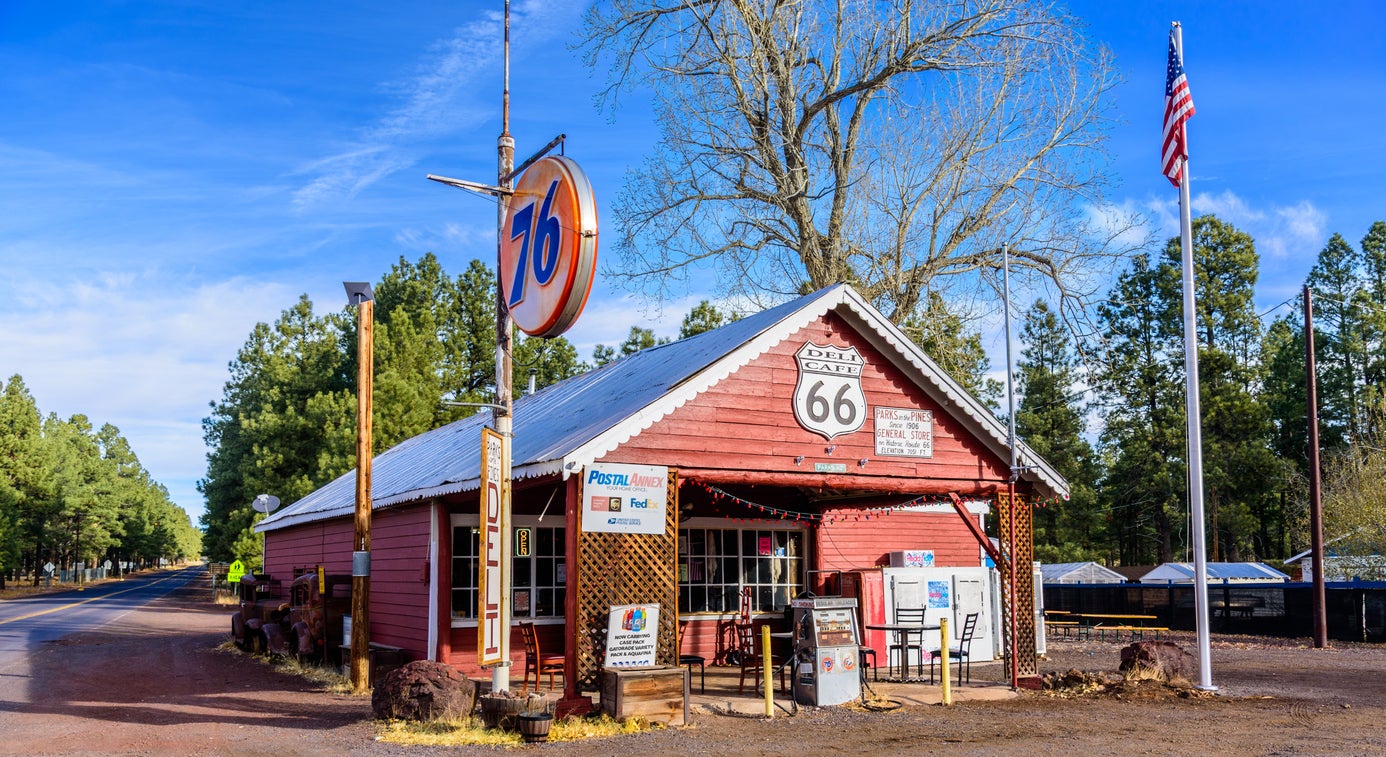
The key is to follow the “Historic Route 66” signs, which will lead you to some of the most compelling sights and scenery.
Read more: Five under-the-radar road trips that get to the heart of America
How long you should allow for Route 66

Ideal: 14 days
Today, Route 66 isn’t a means to an economic end — it’s the main attraction, and driving at your leisure will mean you can fully savor its delights. The Goldilocks time frame? Two weeks, or 150-200 miles a day, if you’re committed to the entire Route 66 Chicago-Santa Monica pilgrimage.
A longer journey means ample time to explore roadside attractions, enjoy vintage motels, and have an extra round of pancakes at a classic diner.
Fair: 10 days
Ten days is a relatively popular timeframe, meaning a pace of around 240 miles a day.
However, some sightseeing will need to be sacrificed. One strategy could be to pick up the pace in the eastern section, then slow down and zero in on the more dramatic scenery offered by New Mexico, Arizona and California in the west.
Doable, but rushed: Seven days
A seven-day trip would mean a slow-fast-slow approach, with sections of interstate used to link the most compelling sights. Stops would need to be picked fairly carefully in advance.
Avoid: Four days or less
Shrinking the journey time to four days or less would reduce the drive to a grueling interstate highway marathon. If simply reaching the finish line is the objective, then note that the drive time is about 40 hours.
Read more: I drove in the US for the first time – here’s what shocked me on the 4,000-mile trip
Not-to-be-missed sights

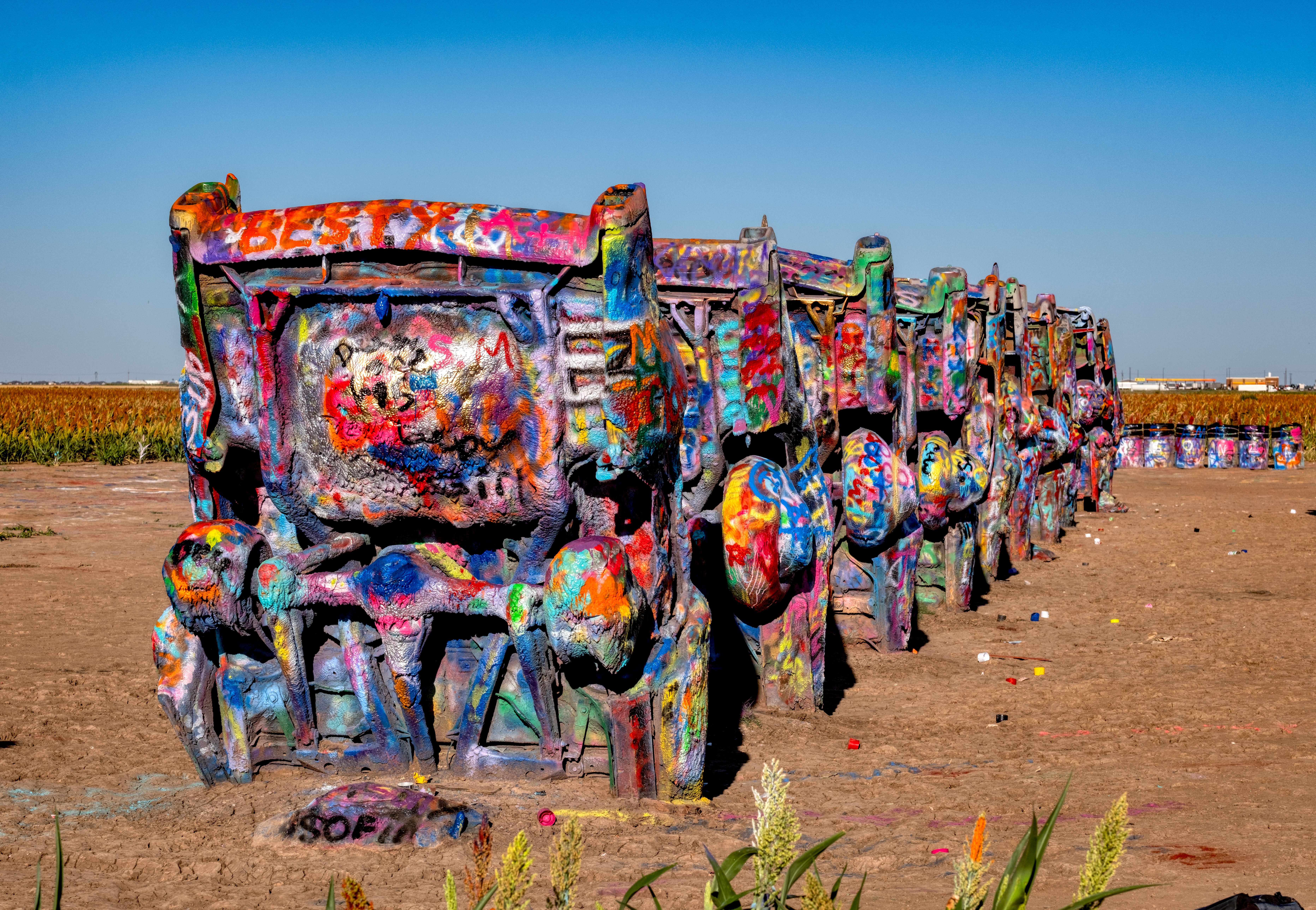
Route 66’s irresistibly eccentric roadside culture doesn’t take long to emerge after leaving Chicago.
Around 90 minutes away is the town of Wilmington, home to the Gemini Giant, a 30-foot fiberglass astronaut holding a rocket, a variation of the “Muffler Man” figures used to advertise roadside businesses across America.
In the small town of Dwight, around 75 miles from Chicago is the beautifully preserved house-and-canopy-style Ambler’s Texaco Gas Station, which dates back to the 1930s.
Cadillac Ranch, just west of Amarillo in Texas, is mandatory. Created in 1974 by the art group Ant Farm, it features 10 classic Cadillacs buried nose-first in the ground at the same angle as the Great Pyramid of Giza. They’re covered in graffiti, and visitors are encouraged to leave their own spray-painted mark.
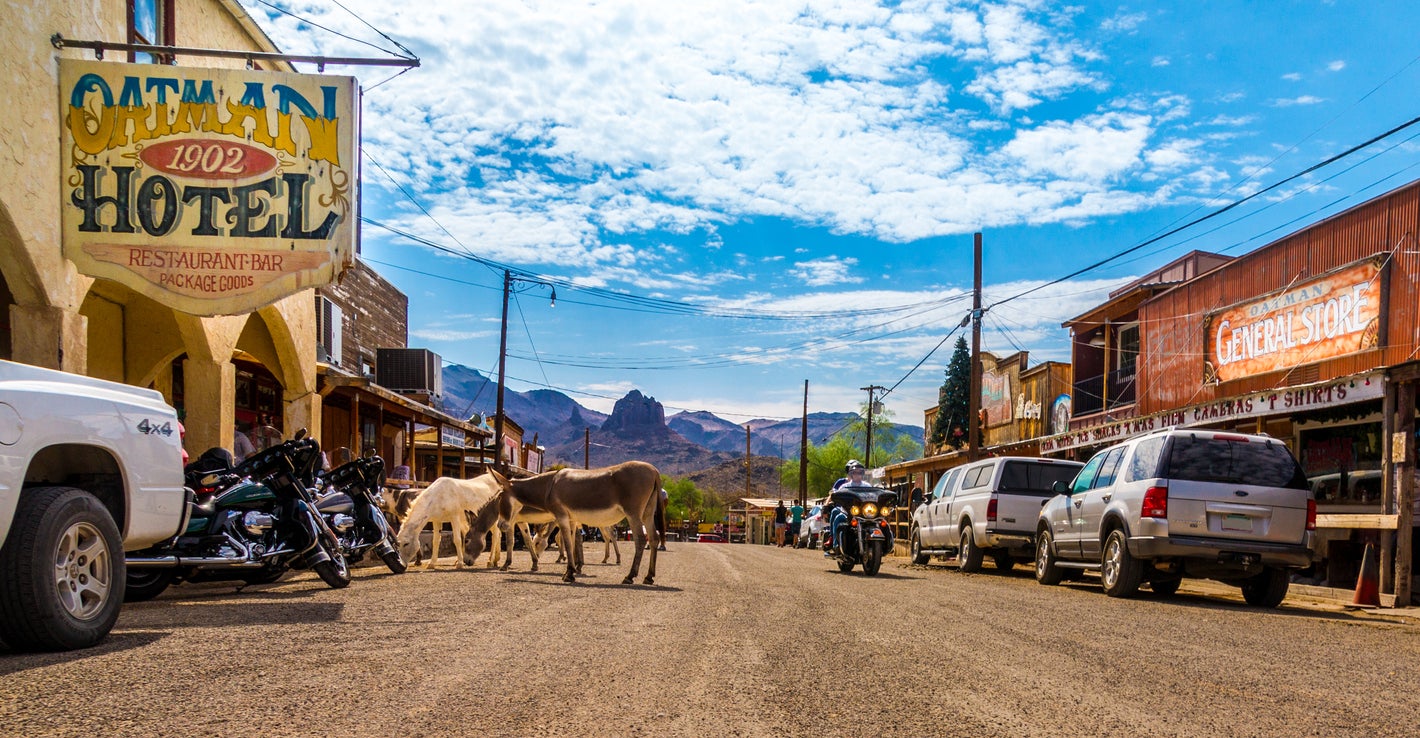
In Oklahoma, there’s the cheerful Blue Whale of Catoosa, an 80-foot-long bright blue concrete cetacean with a winning smile; and in Arizona you can pull up in the ghost town of Oatman, where burros wander the streets and “gunmen” stage Wild West shootouts.
Read more: Adventure vacation activities in America to test your fitness (and bravery)
Stay in a motel, not a chain

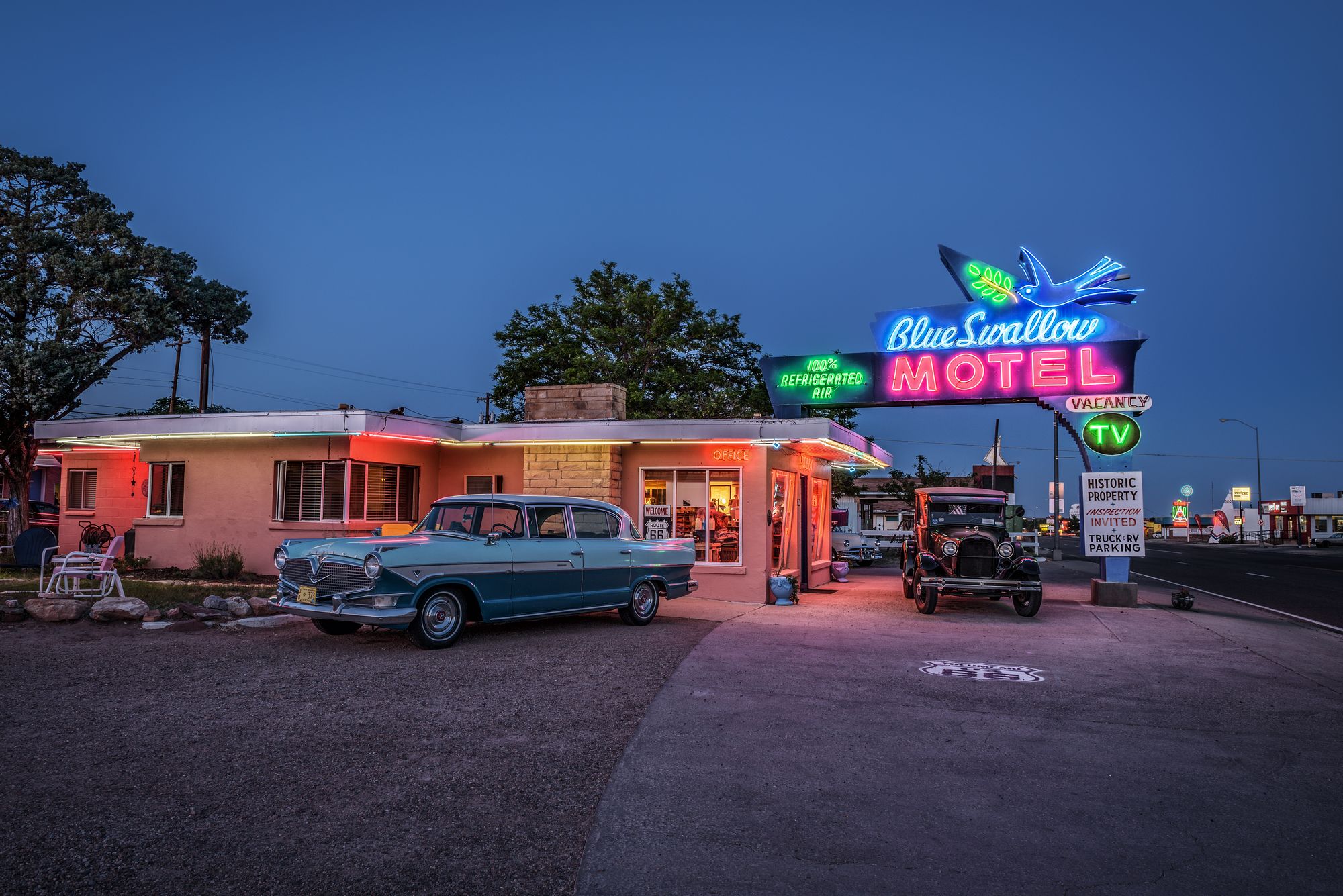
Skip the chains and book into independent motels to be rewarded with a much more authentic Route 66 experience. Family run motels sprung up in huge numbers during the road trip boom of the 1940s and 1950s and there are still a few beautifully preserved examples you can stay in for a taste of the “good old days.” Here are three of the most celebrated options:
Blue Swallow Motel, Tucumcari, New Mexico
The Blue Swallow Motel has been giving Mother Road travelers a comfortable place to rest since 1939, and its yesteryear charms have been beautifully preserved: the neon sign advertising “100% refrigerated air” still glows above it and the rooms contain 1940s-era rotary dial phones and vintage lamps. Rooms from $120.
Wigwam Motel, Holbrook, Arizona
Guests have been staying in the Wigwam Motel’s distinctive concrete teepees since the 1950s — and while the 15 units include mod cons such as wifi and satellite TV, the original handmade hickory furniture has been retained. Rooms from $105.
Boots Court Motel, Carthage, Missouri
When Boots Court Motel opened in 1939, guests paid $2.50 to stay in one of eight rooms completed in the “streamline moderne” architectural style. Each room came with a carport and the property proudly advertised a “radio in every room.” Today, there are 13 renovated rooms for Route 66-ers to stay in and a visitors center housed in the former gas station. Rooms from $79.
Read more: Six epic rides coming to US theme parks in 2026 — including the fastest-ever dive coaster
Finish at the Santa Monica Pier


Eight states and nearly 2,500 miles of tarmac later, you’ll arrive at Santa Monica Pier where you’ll find a sign that simply says “End of the Trail.”
It’s not the most celebratory piece of signage, but the exuberant surroundings, from street performers to the pier’s amusement park, make the occasion a fittingly jubilant one.
A popular ritual among road trippers is to take a selfie at the sign, then walk to the end of the pier and look back, inland, at the land mass that’s been tamed, before a dip of the toes in the Pacific Ocean.
Great place to stay: The Shore Hotel (rooms from $235) is directly across the road from the pier and offers rooms with balconies overlooking the beach.
Good to know: Parking around the pier is congested, and while there is a parking deck beneath the pier, it’s recommended to leave your car at the hotel and walk to the finish line.
Read more: A sober guide to Napa Valley