

Long before a human being sets foot on Mars, the world will have produced its first trillionaire. On 12 June, under the ticker SPCX on the Nasdaq, SpaceX will make its stock market debut with an offering that could raise as much as $75 billion – two and a half times the $29 billion raised by Saudi Aramco in 2019, still the largest Initial Public Offering (IPO) in history to date. The initially indicated valuation of $1.75 trillion has already climbed, according to Bloomberg, to more than $2 trillion, which would make SpaceX one of the world’s most valuable companies.
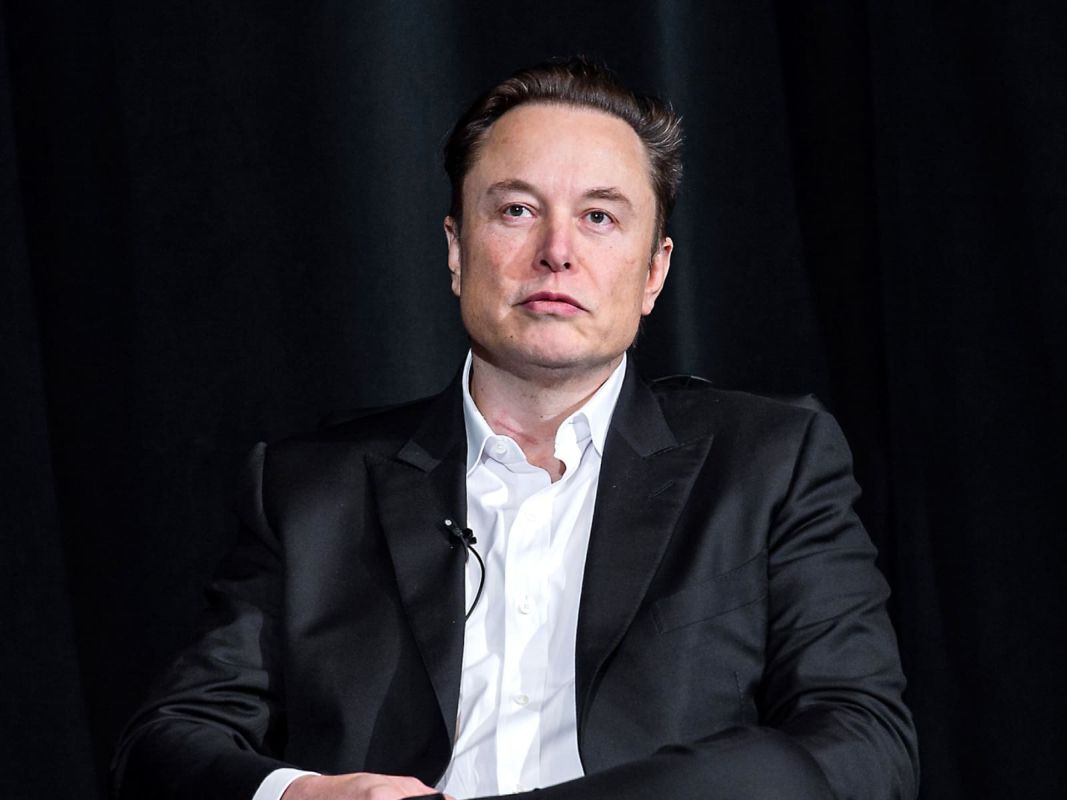
The prospectus filed on 20 May with the Securities and Exchange Commission (SEC) has, for the first time, opened a window into the financial details of one of the world’s largest private companies. The story begins in May 2002, when 30-year-old Elon Musk, who at the time was liquidating his stake in PayPal, founded Space Exploration Technologies Corp with $100 million of his own money. The company had an almost eschatological mission, one that remains unchanged today to make humanity an interplanetary species capable of ensuring its own survival by colonising other planets. But as with all of Musk’s companies, behind the vision lay a highly practical opportunity. The aim was to fill the vacuum created by the decline in American and Soviet investment during the 1990s and enter the space propulsion industry, a sector destined for growth. Musk has said that the decision to found SpaceX came after a failed attempt to purchase a Soviet ballistic missile in order to send a greenhouse to Mars.
In its early years, the company came close to bankruptcy more than once. In 2008, SpaceX was burning cash at an unsustainable rate. After three failed launches of its first rocket prototype, the fourth succeeded just weeks before the company secured, at the last minute, the capital needed to survive thanks to a contract with NASA. From that point onwards, the trajectory changed in 2015 came the first reusable booster, in 2017 the first previously flown and relaunched rocket, and in 2020 the first human crew sent to the International Space Station (ISS). Today, SpaceX handles roughly 85% of US orbital launches.
A complex corporate reality
In many ways, it is a classic American story of success and entrepreneurial genius. Yet buried within the prospectus is a far more complex corporate reality. Within the SpaceX package, Musk has brought together several business lines, each experiencing different fortunes and with synergies that are not always obvious.
The first arm is Starlink, the constellation of more than 9,600 low-Earth-orbit satellites providing high-speed internet access across 164 countries. With 10.3 million subscribers as of March 2026 – up from 2.3 million in 2023 – Starlink generated $11.4 billion in revenue in 2025, accounting for 61% of the company’s consolidated total, alongside operating profit of $4.4 billion and adjusted EBITDA of $7.2 billion. Year-on-year growth reached 50% in revenue and 120% in operating profit. This is the crown jewel that convinced Musk to move forward with the IPO.
The Space segment, which includes commercial launches as well as contracts with NASA and the Pentagon, generated $4.1 billion in revenue in 2025, an 8% increase year on year. The slower growth does not reflect weaker activity SpaceX completed 165 Falcon 9 launches during the year, but only 43 were for external customers; the remainder were used almost entirely to place new Starlink satellites into orbit.
The third segment is the most controversial. The acquisition of xAI, Musk’s artificial intelligence company behind the chatbot Grok and including the social media platform X, was completed in February 2026, just months before the IPO. The AI segment generated $3.2 billion in revenue in 2025, but burned through $6.4 billion in operating losses. In the first quarter of 2026 alone, AI operating losses reached $2.5 billion. It is this division that is dragging the entire group into the red, despite Starlink and the Space business being operationally profitable.
According to sceptics – who are never in short supply when it comes to Elon Musk – the SpaceX prospectus is filled with question marks that would have sunk almost any other listing. Critics argue that the decision to fold xAI into the group, despite its heavy losses, is among the most questionable, as though Musk deliberately chose to include the weakest part of his empire in the package.
But the peculiarities and alleged conflicts of interest do not stop there. The accounts include hundreds of millions of dollars in transactions between group companies, including $131 million worth of Cybertrucks purchased by SpaceX itself, along with roughly $20 billion in intra-group bonds. There are also estimates that raised eyebrows among analysts, such as projections of a $28.5 trillion addressable market, only slightly smaller than the entire US economy.
These distortions would likely have weighed heavily on the valuation of almost any other company, but SpaceX may prove an exception. Musk has conditioned markets to accept that, with him, there are no half measures, and perhaps no rules either. Investors are expected to take the entire package without asking too many questions, in the hope that he can deliver at least part of his extraordinarily ambitious promises. Time and again, Musk has shown himself to be, for better or worse, the sole arbiter of the success or failure of his companies. A larger-than-life figure who has accumulated enough credibility for markets to attach economic value to his vision alone. Even in this IPO, he has not abandoned that register “Our mission is to build the systems required to make life multiplanetary, understand the true nature of the universe, and extend the light of consciousness to the stars,” he declared.
Yet it would be wrong, as many suggest, to claim that Musk’s vision rests solely on storytelling. Across all his ventures, the entrepreneur has consistently managed to chart a path of progress towards the core mission, even if at a slower pace than initially promised. Along the way, he has also demonstrated an ability to diversify and create profitable business fronts. Starlink is the clearest example it is the foundation upon which the success of this IPO rests. And it is also why many investors are willing to overlook some of the concerns.
The Tesla model, replicated
This is especially true for what might be called “Musk’s army” – a broad demographic that simultaneously acts as audience, social media supporters, customers, shareholders and, in some cases, employees within Musk’s ecosystem and communications machine. These people already placed their trust in Musk during the IPO of Tesla and, in many cases, profited handsomely from doing so. In a strategy similar to those adopted previously, Musk has decided to reserve roughly 30% of SpaceX shares for retail investors – an unusual choice for an offering of this scale.
The strategy serves two practical purposes. On the one hand, it allows greater concentration of control in the founder’s hands by limiting the influence of institutional investors. On the other, it monetises years of communication and consensus-building. The loudest voices on social media defending Musk during difficult moments are often Tesla shareholders themselves. Their support even helped him secure record-breaking compensation packages. In 2018, when Musk considered taking Tesla private, he ultimately abandoned the idea partly to avoid alienating that loyal base of small investors willing to follow him anywhere. Now, that same crowd appears ready to subscribe to the next adventure.
Promises that must be delivered
SpaceX’s medium-term success – and therefore the success of its IPO – will depend on three factors, few of which have much to do with colonising Mars. Instead, they concern the company’s ability to deliver on technological development promises that it has not always met in the past, along with the role of the entrepreneur himself.
The first factor is Starlink’s continued success. With roughly 10,000 satellites launched and operating profit of $4.4 billion, the business is already profitable and will determine whether SpaceX can continue financing its space ambitions. The bet is that technological progress will reduce costs even further. The plan hinges on Starship, the fully reusable mega-rocket capable of carrying larger satellites into orbit. If SpaceX succeeds in developing and deploying it at scale, launch costs could fall dramatically. For now, however, that objective still appears distant.
The second factor is AI. Unlike Starlink, xAI is a business line that could consume around $1 billion per month. Musk’s vision is to move the data centres needed to train large language models into space, powered by solar energy. Such technology could provide a massive boost to xAI, or potentially transform SpaceX into a services infrastructure provider for the broader artificial intelligence ecosystem – something akin to NVIDIA. This objective, too, is unlikely to be achieved in the near term.
The third and perhaps most important bet is on Musk himself. The entrepreneur has secured near-absolute control through a governance structure that is far from orthodox. In recent years, there has been no shortage of abrupt turns that risked derailing his companies his political involvement alongside Donald Trump, controversies surrounding substance use, and alleged conflicts of interest. For better or worse, the burden of sustaining lofty valuations while SpaceX attempts to realise its vision will rest squarely on his shoulders. And it is precisely on this front that Musk, despite everything, has yet to fail.
For that reason, betting on the success of SpaceX today does not seem quite so irrational. Almost as irrational as going to Mars.
*As with all investing, financial instruments involve inherent risks, including loss of capital, market fluctuations and liquidity risk. Past performance is no guarantee of future results. It is important to consider your risk tolerance and investment objectives before proceeding.
