After a first week in which her elaborate, creative on-court outfits have garnered more attention than her tennis, Naomi Osaka may now need to accept that talking about the latter really can’t be avoided any longer. She conceded as much later: “Ironically I kind of want to focus on my tennis now, so I might dial back a little bit.”
The four-time major winner arrived at Wimbledon on an excellent run on grass and has propelled herself to ever-higher levels match by match; levels which will make the remainder of the draw sit up and take notice after she dismantled the world No 1 and tournament favourite, Aryna Sabalenka, in the fourth round on Sunday.
Osaka had lost their three other meetings this year and had pinched just one set off her fellow four-time grand slam champion in those three. But a repeat of those never looked likely as she commanded control from the outset on Centre Court, racing to a 6-2 opening set in a shade over half an hour before holding her nerve in an excellent tiebreak, winning the second set 7-6 (2). That she did so with little fuss, against an opponent who holds the record for consecutive grand slam breakers won, 21, made it all the more impressive.
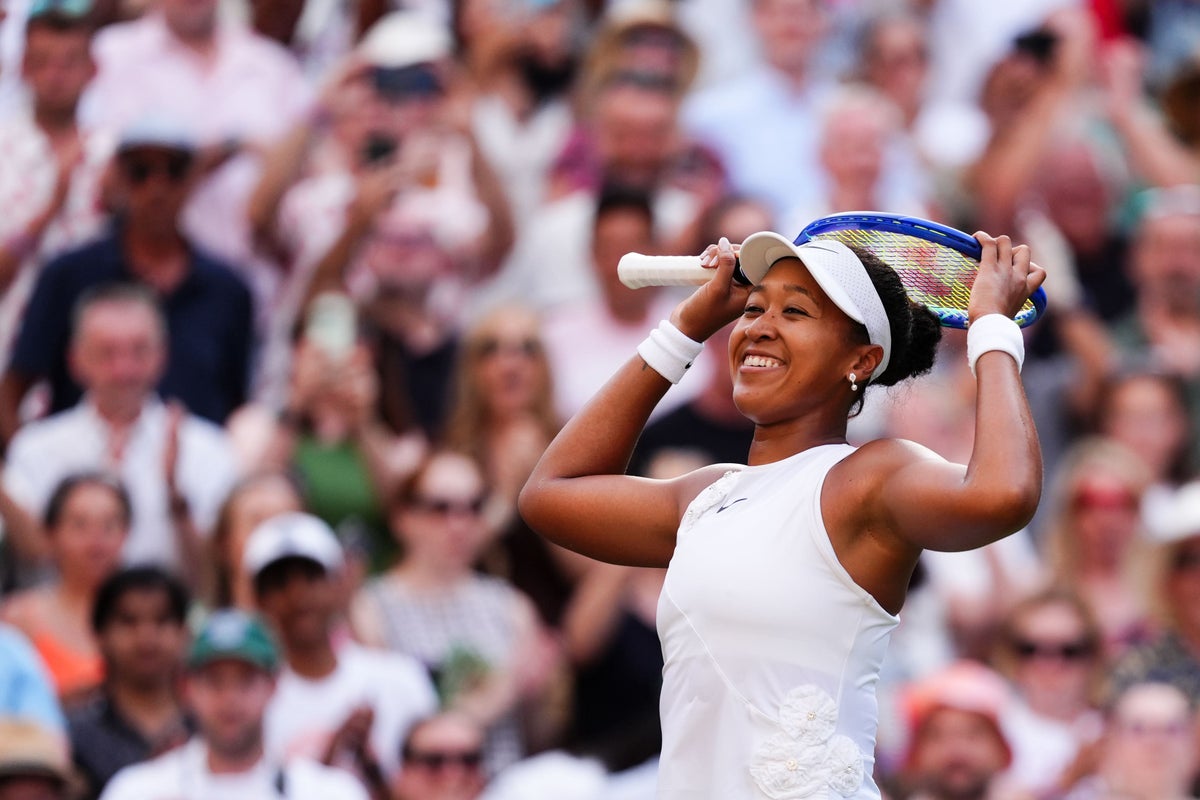
She looked the picture of composure throughout and broke into a relieved smile as she sealed the match with a brilliant backhand winner which Sabalenka could only flail into the net.
“It’s been a long time since I’ve had so much fun on the court and to do it here, it really means a lot,” Osaka said. “Going into this match I lost to her three times in a row so that really sucked, I wanted to turn it over and I’m really glad to have the opportunity to do that.”
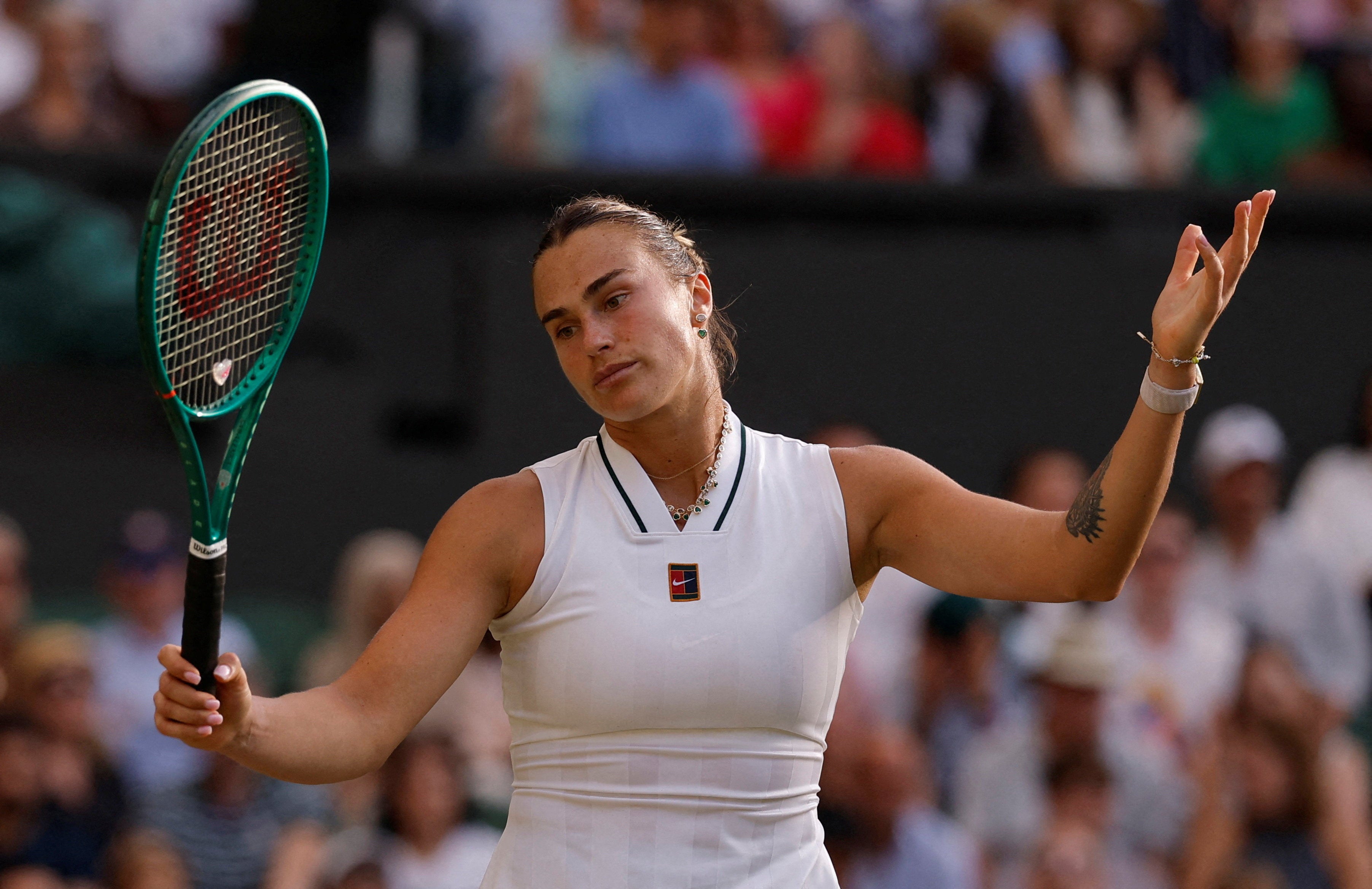
Many of Sabalenka’s recent losses have felt like they have come from her racquet: the 6-0 collapse in the final set of her Roland-Garros exit to Diana Shnaider, the equally emphatic bagelling she endured against Jessica Pegula in Berlin last month.
But while she did not play her best on Centre Court and conceded as much, this was a match which was won by Osaka more than lost by the Belarusian, who came up against an inspired opponent, swinging freely and painting the lines. “She overpowered me. I felt like it was an incredible level from her,” Sabalenka said. “Sometimes you can go out there and do everything you can and still lose the match.”
The two types of losses “both suck”, she added.
For the Belarusian, it is a case of going back to the drawing board: this is her earliest exit at a grand slam since Roland-Garros four years ago, and her first in straight sets since the US Open in 2020. Which, coincidentally, Osaka went on to win.
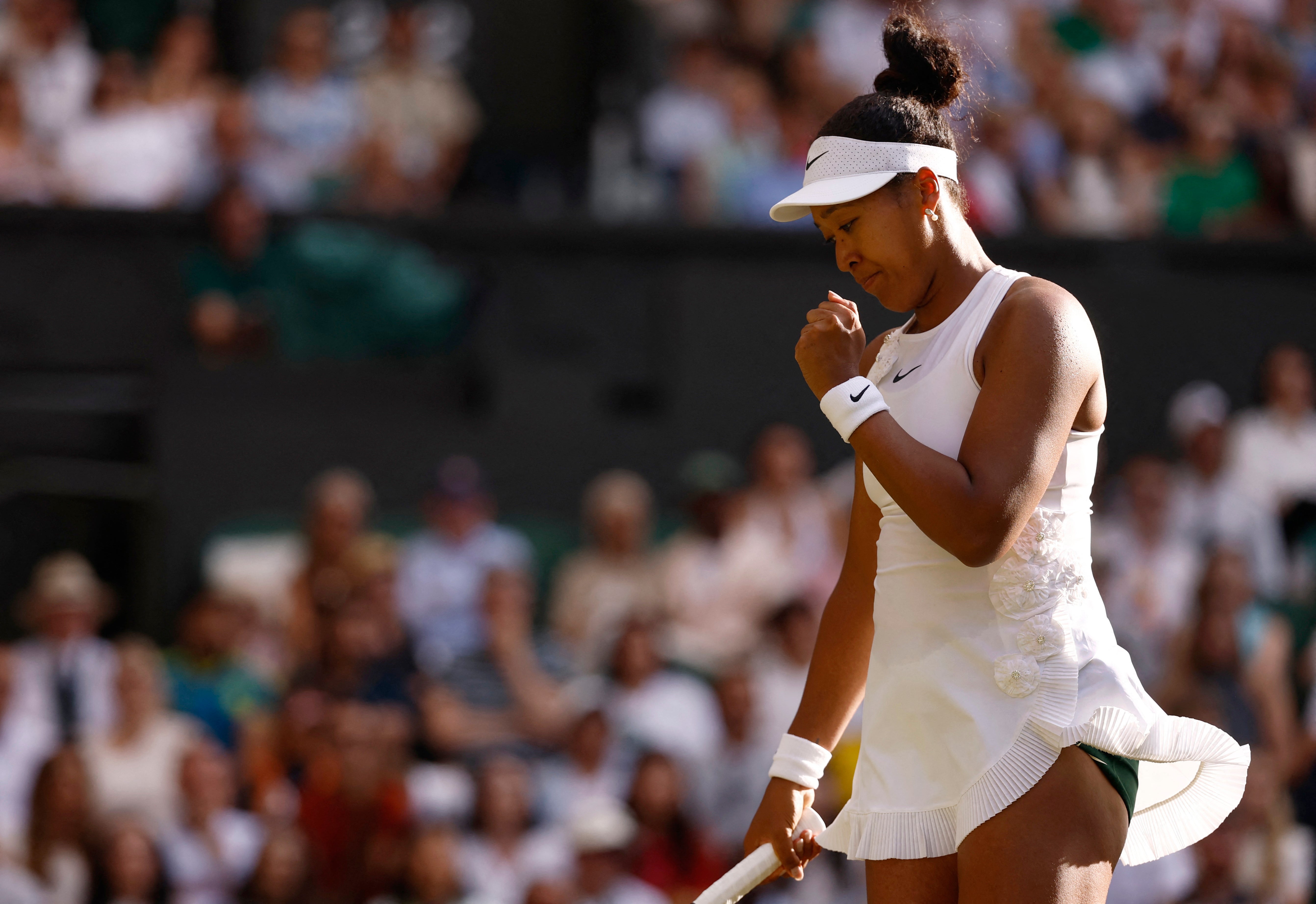
It feels a very real possibility that the 28-year-old can replicate her exploits on hard courts at Wimbledon, having finally found how to adapt her game to grass and now recording her first win over a top-10 player off hard courts.
She credited her successful swing so far – which included reaching the Bad Homburg final, when she retired injured – to “the big Polish man”, new coach Tomasz Wiktorowski. She said of her team: “We all understood that, like, I have potential to play really good on grass. I just need to figure out the movement part.”
Her movement on Sunday was excellent, while her flat groundstrokes and skidding, low-bouncing ball are ideally suited to the surface and constantly frustrated Sabalenka, while she repeatedly outhit one of the game’s biggest hitters, absorbing and redirecting Sabalenka’s pace and firing winners off both wings.
She imposed herself from the baseline and fired down eight aces; faced with an opponent hitting more brutally and accurately than her, Sabalenka overcompensated, leaking errors on her increasingly overhit forehand side. Osaka said: “I tried my best because I remember on the clay courts I felt like she was pushing me back a lot. I just tried to do it to her first.
At 1-1 in the first set Osaka redirected the Belarusian left and right, keeping the ball skimming over the net, and broke with an emphatic backhand winner out wide. By the third game the ever-combustible Sabalenka was beginning to wobble, shouting in frustration as she failed to get the ball over the tape; by the fourth game the meltdown was in full swing as she shrieked in fury at another net. Osaka maintained her composure, fizzing a cross-court strike back in on break point, and Sabalenka volleyed long to concede the double break.
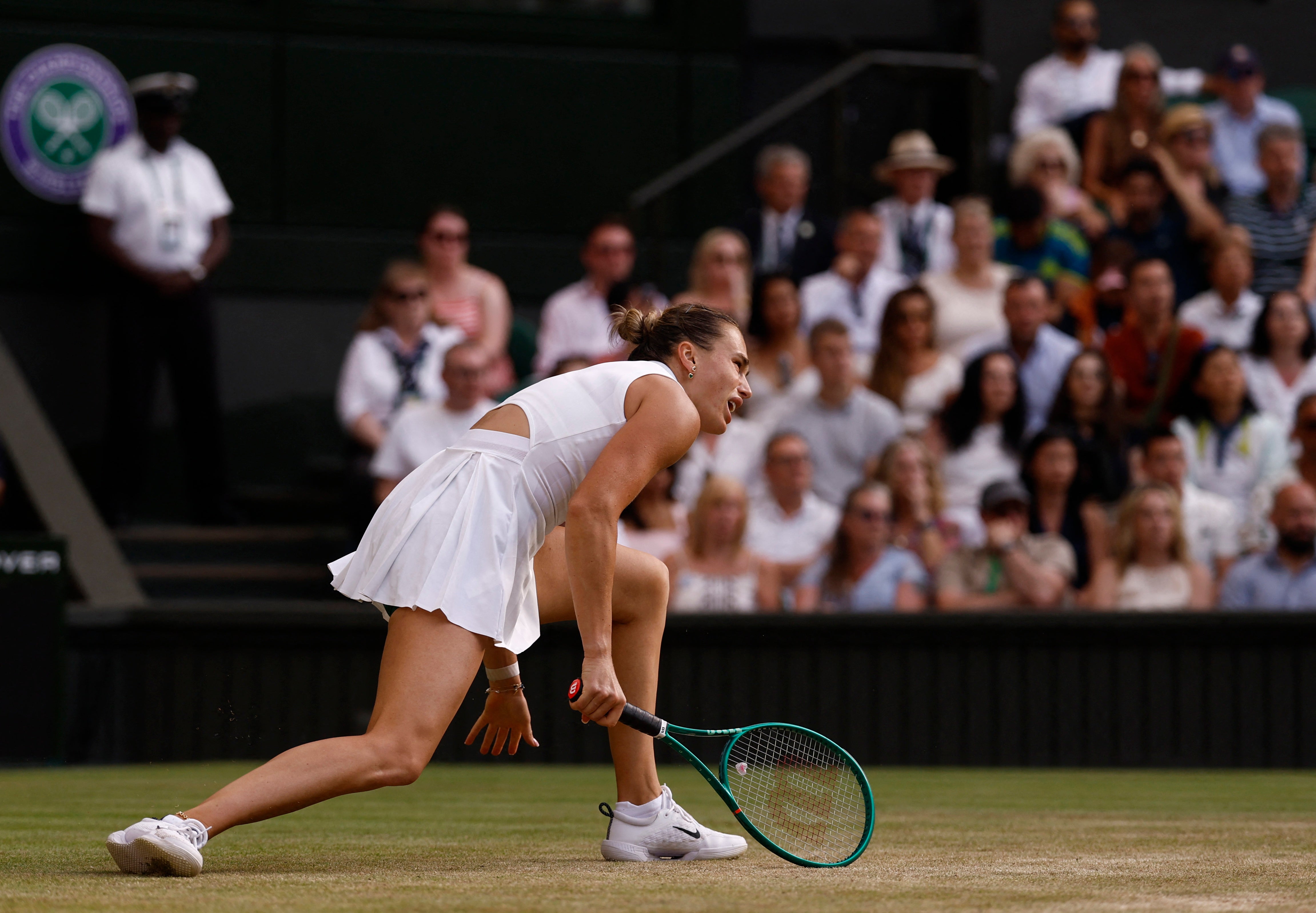
A 123mph serve brought up set point for the Japanese player, before she again outmuscled Sabalenka at the baseline. The world No 1 shanked into the net and immediately took a lengthy comfort break, leaving Osaka to swing her legs and run through drills to keep warm.
The second set proved a closer affair. Osaka said she had felt “very conscious” about trying to close out their meeting in Madrid, when she won the first set. This time, she said: “I thought about it as a practice match. I was just telling myself, like, ‘there’s a really big crowd for this practice match, but we’re going to get through it”.
Sabalenka fell 0-30 down in the third game and whacked herself in the head with her racquet, but it seemed to shake some synapses into place: two errors from Osaka after more bruising rallies rescued the game and she held with an ace out wide. But she could not take her chances, failing to bite on an 80mph second serve by Osaka in the next game, and the former world No 1 continued to one-two punch her way through her service games.
At 2-2 Sabalenka, unable to think clearly, launched a drive volley long for deuce on her own serve, saving two break points after superb running winners by Osaka, but while she clung onto her own serve with difficulty, she never looked like breaking down Osaka’s. A huge unreturnable serve by the Japanese sent the set to a tiebreak; she won all but one of 23 first serve points in the second set.
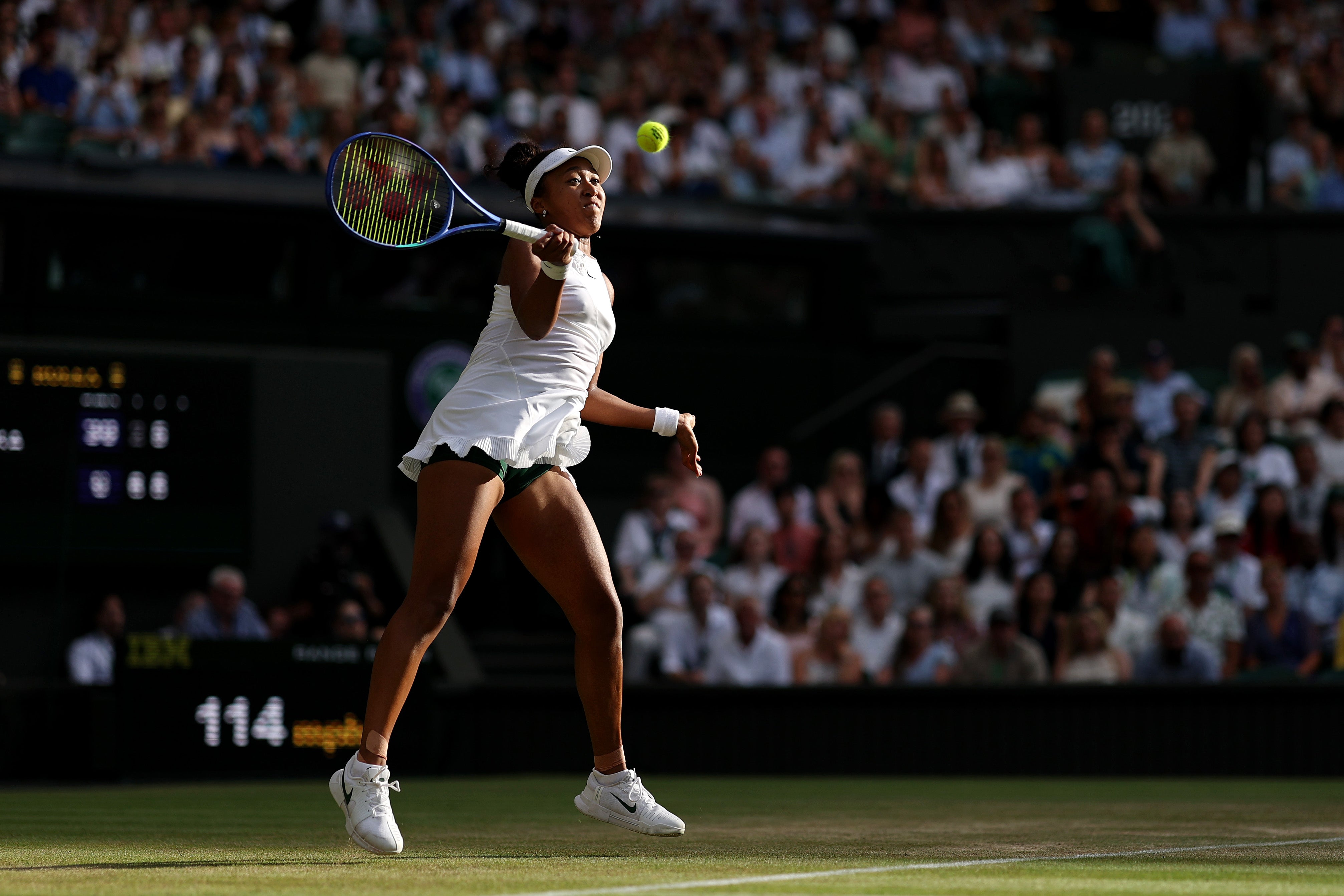
And she remained impermeable in the tiebreak, hitherto always Sabalenka’s domain – not that the Belarusian drew any inspiration from her imposing record. She gave a bleak assessment afterwards: “Well, it’s not good anymore”.
Two forehands long put the top seed 4-1 down, then came an error on the backhand wing. Osaka skipped to the baseline to serve, still doing side-to-side drills, still keeping calm. At 6-1 down Sabalenka fired down an ace, but she had no response to the sublime backhand winner Osaka produced on her second match point. Osaka beamed with joy, a first quarter-final at Wimbledon secured; Sabalenka launched a ball almost out of the stadium in fury.
She said afterwards: “What can I do if the person is acing and hitting the lines, just going for her shots without any fear? I was the one who was just trying to kind of find my rhythm. Two extremes. I was really battling myself. She was just going for it.”
So Sabalenka’s battle against herself, one of the biggest storylines of this season, continues. And Osaka, finally at home on grass, marches on.