


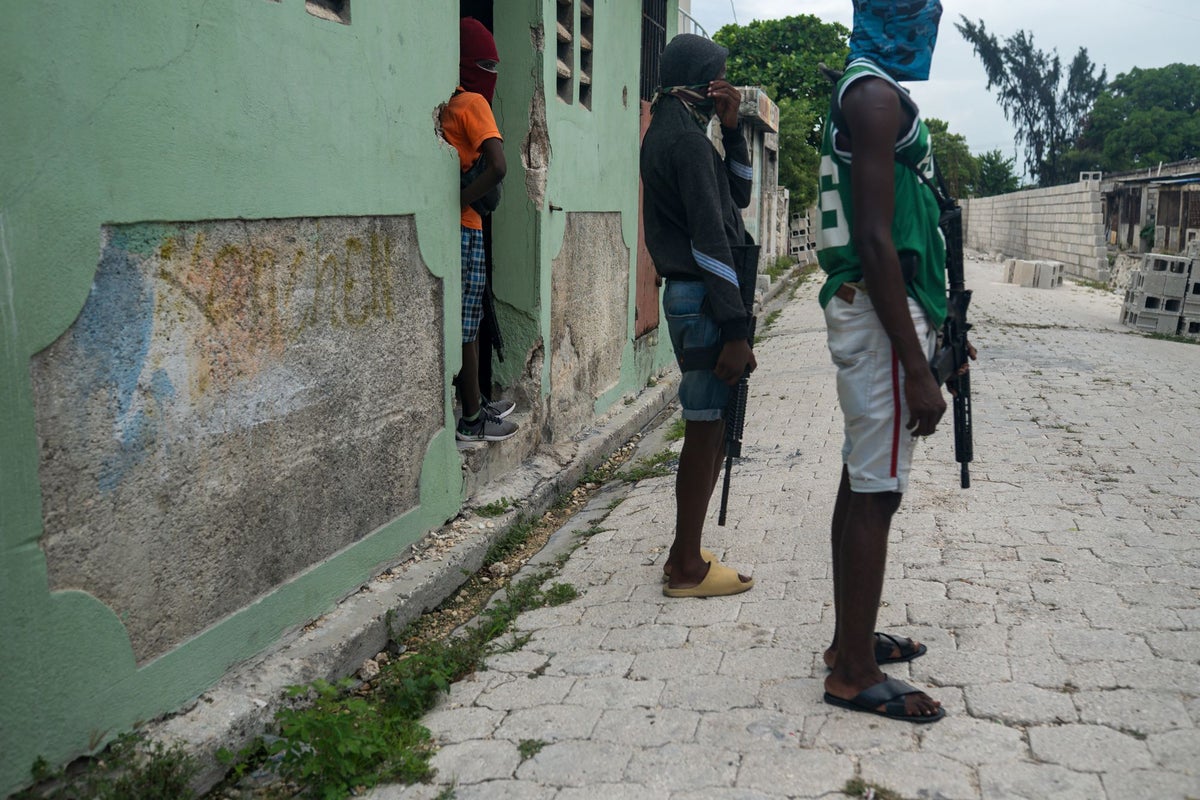
Altagrace, a mother living in the Haitian capital of Port-au-Prince, remembers the moment that her life changed forever.
“Gangs invaded the neighbourhood and started shooting,” she says. The firefight killed her brother, forcing her to flee the area to save her own life.
“If we didn’t leave the area, we would become part of these groups.”
Altagrace is one of 1.4 million people who have been internally displaced as Haiti grapples with a leadership vacuum left by the assassination of its president some five years ago. In that time, guns have been allowed to flood into the country unchecked, galvanising armed groups and leaving people like Altagrace and her young daughter, Anne, vulnerable to exploitation and violence.
Anne, 14, says life has become “very difficult” for them since they were moved to the other side of the city to escape the violence, and then on to a camp for displaced people. There, as many as 10 people are crammed into tiny rooms like “animals in a cage”, according to her mother.
The camp should provide sanctuary for ordinary people fleeing terror. But institutional support has broken down, and malnutrition and disease are rife. No authority in Haiti is strong enough to take back control, ensure justice and deliver the essentials needed for life.
“When we were at home, my mother used to prepare food in the morning when we had to go to school, but in the camp, there are far too many people,” Anne said in testimony shared with The Independent.
Women and children are at particular risk of violence and abuse in such camps. In this environment, murderous gangs attempt to lure young and hungry people in with the promise of food, according to Mary’s Meals, a British charity.
Haiti has been troubled by social and political problems for decades. Poverty has driven a high crime rate, and weak law enforcement has failed to respond to the emergence of gangs. The Covid pandemic, fuel shortages and extreme weather have exacerbated existing inequalities.
The country was plunged further into crisis following the assassination of Haitian president Jovenel Moïse in July 2021. Police said a group of foreign mercenaries were behind the attack and arrested dozens of people, including his wife. The New York Times suggested he had been killed over his efforts to tackle arms and drug smugglers.

-copy.jpeg)
That murder was still being passed through the courts as recently as March, while gangs have consolidated power and clashed with one another for influence in the intervening years. Some 90 per cent of the capital is now under gang control, and hundreds of thousands of people have been forced from their jobs, schools and homes into camps across lawless Haiti.
Unicef says this has resulted in the worst hunger crisis in the country’s history, reporting in October that more than half the population is facing “crisis” levels of food insecurity. People have been piled into displacement camps away from the violence, but these too are undersupplied.
The organisation warned last year that child recruitment to gangs surged 70 per cent in 2024 as gangs honed in on hungry youngsters, stuck in miserable conditions in overcrowded camps.
Unicef says that half of all armed group members are children, some as young as eight. Some 1.2 million children in Haiti live in fear of armed violence and recruitment into gangs preying on their hunger, they say.
“Many are taken by force. Others are manipulated or driven by extreme poverty,” explained Unicef spokesperson James Elder. “It’s a lethal cycle: Children are recruited into the groups that fuel their own suffering,”
Mary’s Meals, a Scottish charity working with local partners in Haiti to help feed schoolchildren, says the situation is “far more severe” today than it was when they started. Killings, trafficking, murder and sexual violence occur on a daily basis, they say.
Emmline Toussaint, who coordinates a programme for feeding schoolchildren in and around Port-au-Prince, where gangs control some 85 per cent of the city, told The Independent that providing the essentials is key to keeping young people away from gangs.
“When you are a child that has been displaced, with no access to clean water, with the everyday risk of being raped, would he or she wake up in the morning and go to school? They would not be motivated. The motivation comes from the fact that they know there is that school meal waiting for them.
“The first thing that you’re thinking of is your survival, if I need to survive what do I need? First is the food.”
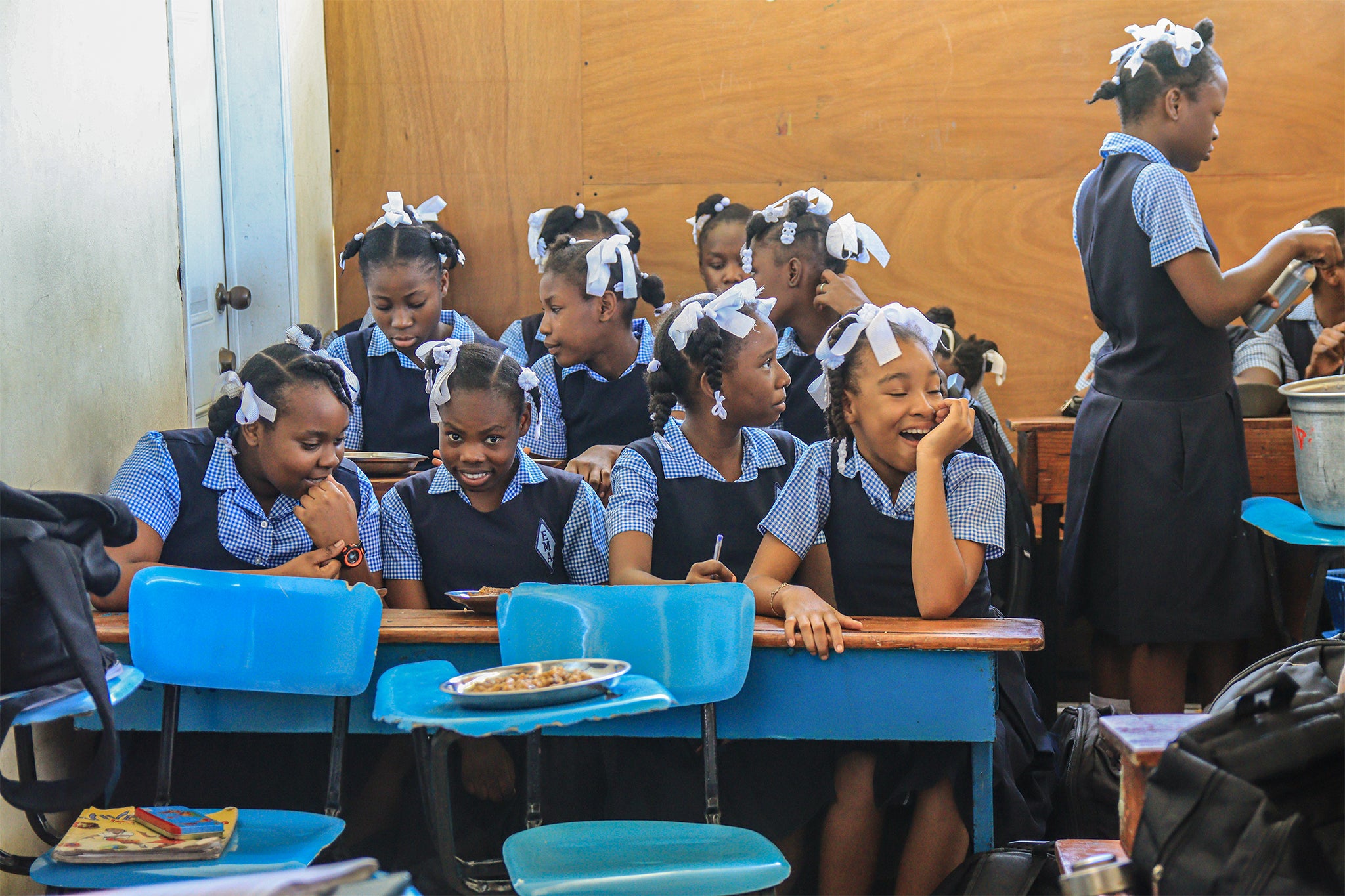
Giving these children access to food helps to address concerns about gangs preying on vulnerable children caught up in the conflict.
Speaking about her own children, Altagrace says: “With the help of Mary’s Meals at school, I no longer have concerns. The children always come and tell me about the different types of food they are offered. Then, as a mother, even if I can’t eat, if my child finds something to eat, it makes me happy.”
“You see them being happy while at school, they’re playing, you see their smiles when they have that meal. It’s a good sign, it’s a sign of hope.”