

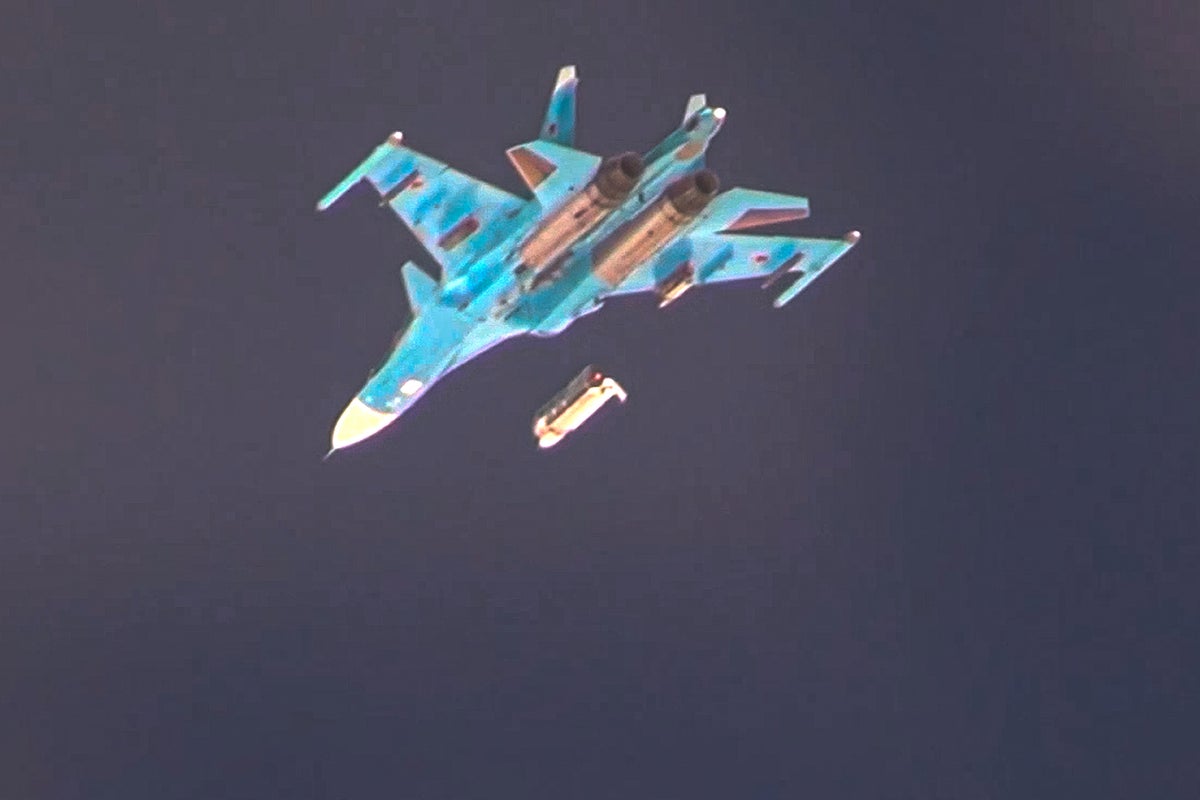
Russian glide bombs killed two people and injured at least 15 others in an attack on the southeastern Ukrainian city of Zaporizhzhia on Tuesday, authorities said.
Regional governor Ivan Fedorov, writing on the Telegram messaging app, said Russian forces had launched seven bombs over a 90-minute period at the city.
In Zaporizhzhia and across Ukraine as a whole, these strikes have increasingly come from glide bombs – the low-cost ordinance that experts say are reshaping the war in Ukraine.
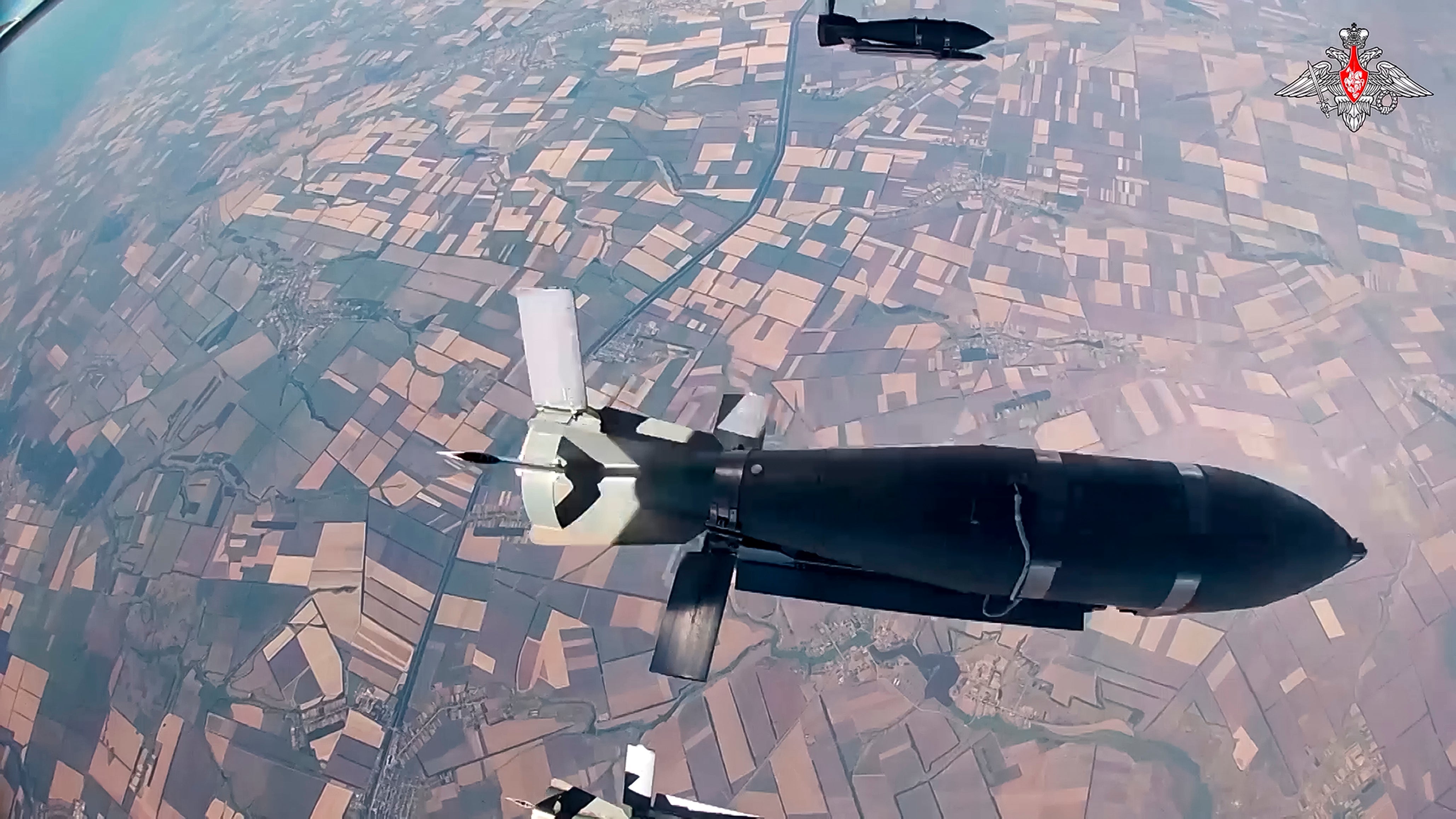
Weighing between several hundred and a few thousand kilograms, these ordinary bombs fitted with wings and a guidance system have been among Russia’s most formidable weapons since its 2022 full-scale invasion of Ukraine.
They have become especially deadly of late, with thousands launched in recent months.

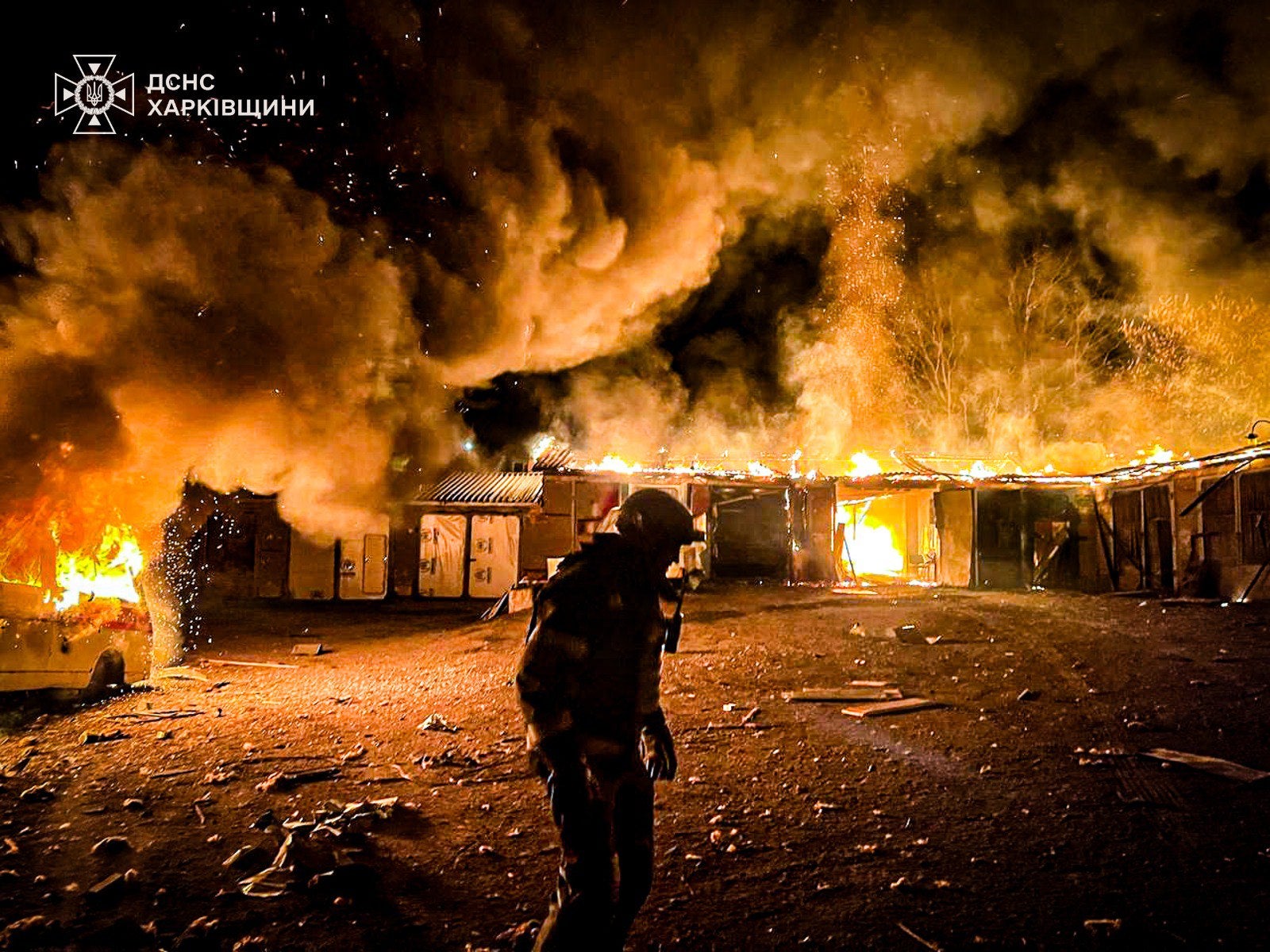
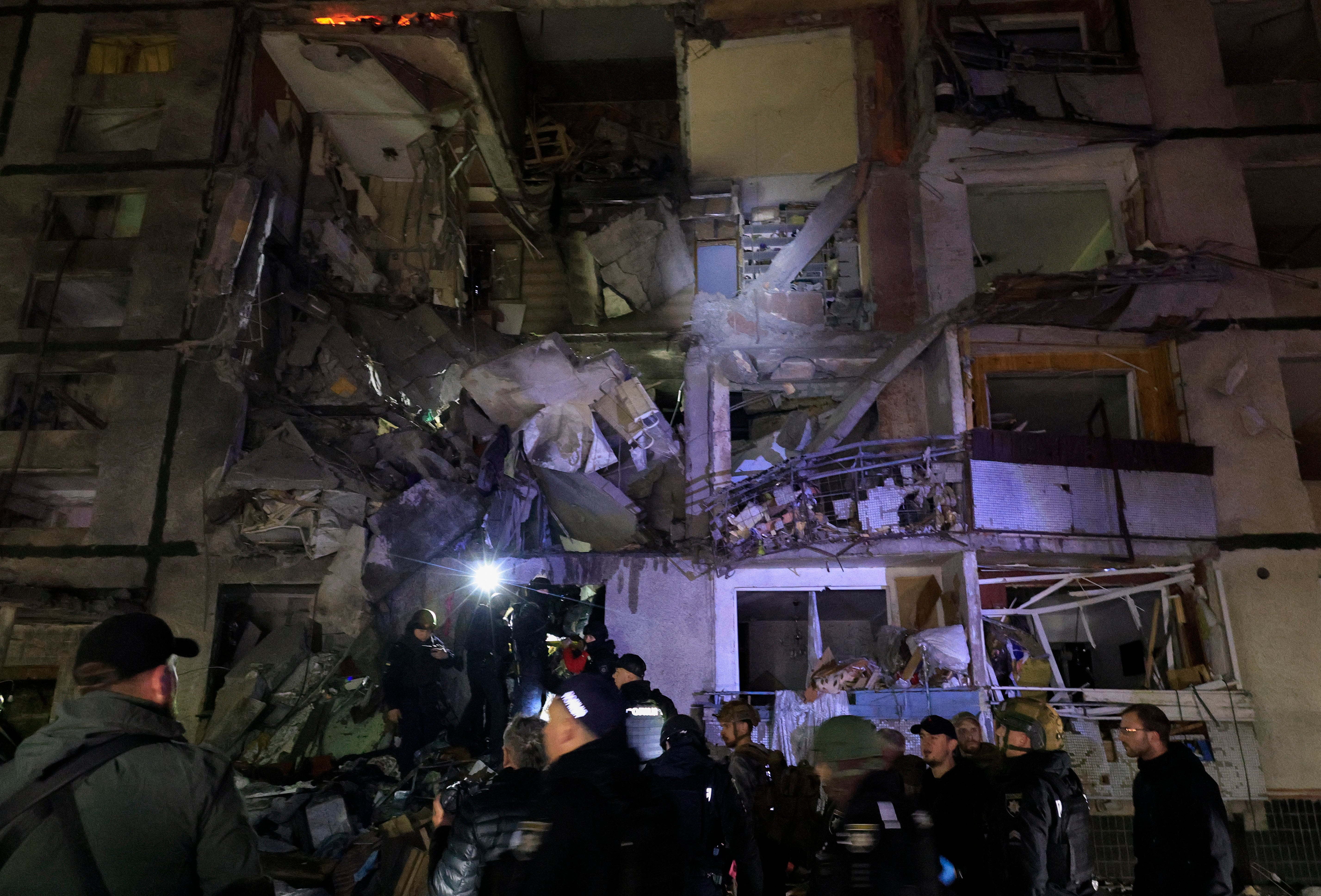
Their capacity to devastate an apartment block in Zaporizhzhia or Kherson with a single strike from dozens of miles away inside Russia and beyond Ukrainian air defences has tormented Ukrainian commanders.
That is until May this year, when Ukraine announced they had developed their own.
Although Western allies had supplied Ukraine with glide bombs, Kyiv had grown impatient with their unwillingness to supply enough and so spent 17 months domestically producing the Vyrivniuvach, or “Equaliser”.
“For a significant period, there was very little practical defence against Russian glide bombs, and that contributed significantly to heavy Ukrainian casualties along the front line,” said Keir Giles, an associate fellow of Chatham House’s Russia and Eurasia Programme and the author of Who Will Defend Europe.

Why glide bombs are vital on the battlefield
Although inexpensive and highly reliable, the turn for both sides was largely motivated out of necessity, with traditional forms of artillery rendered out of action.
Across the modern battlefields of Ukraine, drones have hunted and destroyed the vast majority of each side’s howitzers, according to Military Balance.
Their artillery pieces depleted, Moscow and Kyiv saw “stand-off” ordinance like glide bombs as the solution, capable of delivering high-explosive ordinance from dozens of miles away.
Recently, their adoption has been accelerated, with Russia reportedly launched more than 1,800 glide bombs in the first week of June alone, according to Forbes.

Low cost and easily made
Much like the off-the-shelf drones and inexpensive Bayraktar and Shaheeds which have dominated the war, however, Russian and Ukrainian glide bombs are low cost and easily engineered.
The vast majority of Russia’s supply comes from archaic Soviet-era bombs mounted to a rudimentary cage system with folding wings, inertial measurement unit, and satellite guidance called the Universal Gliding and Correction Module (UMPK).
They are designed to be released from Russian fighter aircraft like the Su-34 flying at an especially high altitude, whereafter it glides for 60 to 95km to deliver a bomb of between 250- and 3000-kilograms.
This distance from launch point to target – as well as the fact they lack a heat signature and can fall quickly from a high altitude moments before striking – make them very difficult to eliminate.
Ukraine’s glide bombs are much slighter than Moscow’s, however, produced at only 250-kilograms.


More explosive than drones
Crucially, both sides have deployed these strikes not simply as strategic hits on cities and industrial areas meant to hamper morale and interrupt supply lines. Instead, these glide munitions have been employed in support of their “fire-centric doctrine” – when artillery is tactically directed on enemy front line positions such as to soften up defences or eliminate surveillance positions ahead of a troop offensive.
Both sides have been keen to promote this in recent social media videos, posting clips of glide bombs striking each other’s positions during combat operations.
“Virtually any frontline artillery positions the Ukrainians have are at risk of being destroyed,” said Christoph Bergs, a research analyst at the Royal United Services Institute (Rusi).
“While small FPV (first-person view) quadcopters and tactical drones can strike targets, they simply do not have the explosive yield of a 250kg or 500kg bomb.”