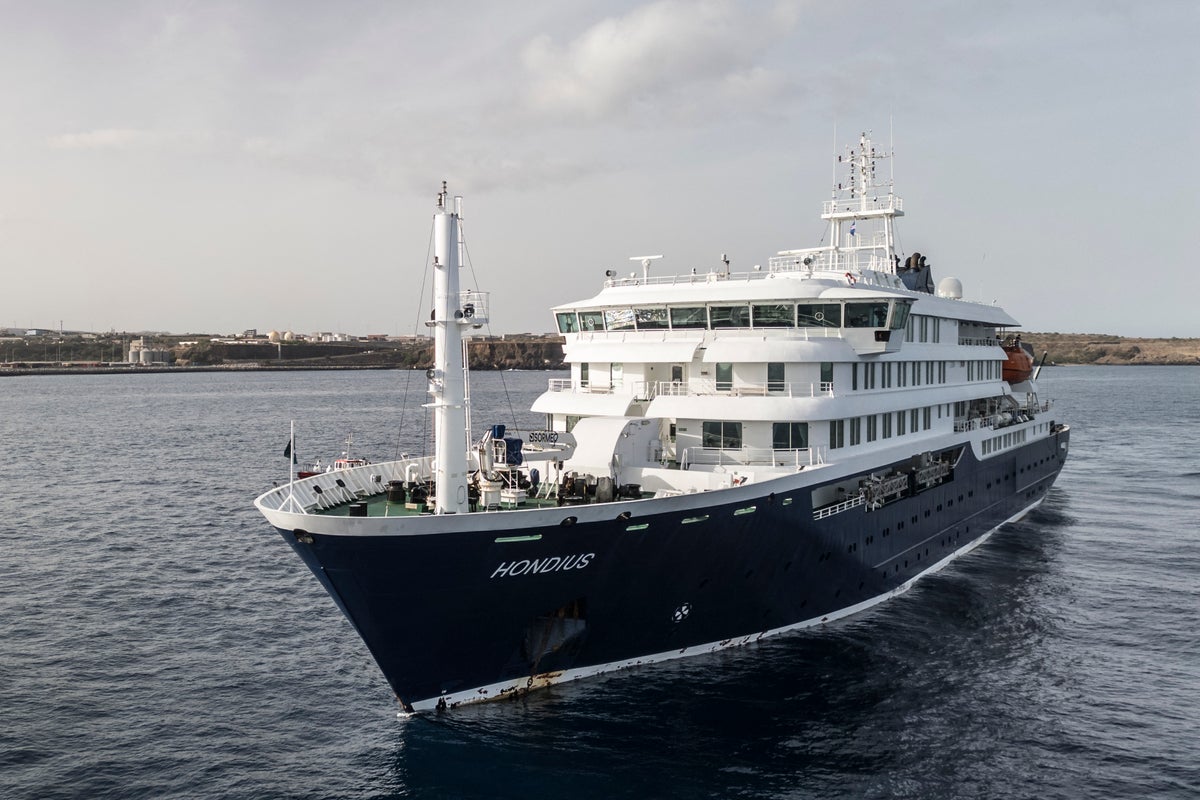
The hygiene of cruise lines may be under scrutiny after the outbreak of hantavirus on a polar expedition vessel, but passengers should be reassured that cases are rare.
At least three people have died aboard Oceanwide Expeditions’ MV Hondius, which began a remote voyage from Argentina to Cape Verde on 1 April, carrying 147 passengers.
The World Health Organisation (WHO) said a total of 11 hantavirus cases had been identified from the cruise ship so far and nine were confirmed as the Andes strain.
Three individuals were medically evacuated in Cape Verde on 6 May and there was a mass repatriation from Tenerife earlier this week.
This included 20 British passengers who arrived at an isolation facility after their repatriation flight landed in the UK on Sunday.
Oceanwide Expeditions said 27 individuals remain on board, 25 crew and two medical staff. None are displaying symptoms associated with hantavirus.
The vessel is expected to arrive in Rotterdam on either Sunday 17 or Monday, 18 May. Upon arrival, all crew will disembark and follow quarantine procedures outlined by the Dutch authorities.
The incident has raised memories of how cruise ships were hit by the coronavirus pandemic, although this situation is much more rare.
A statement from industry group, the Expedition Cruise Network, said ships undergo strict biosecurity measures.
It said: “Our thoughts are with the passengers, crew, and families affected.
“As a member of the Expedition Cruise Network, Oceanwide Expeditions has our full support as they manage this situation.”
Can you catch hantavirus on a cruise ship?
Despite the high-profile coverage, cases of hantavirus are rare. In fact, there are no other known cases of hantavirus being present on a cruise so passengers shouldn’t be deterred.
Hantavirus is mainly spread by contact with rodents or their urine, saliva or droppings, particularly when the material is disturbed and becomes airborne, posing a risk of inhalation.
The WHO says that while uncommon, hantaviruses may spread between people.
It is still unclear whether the outbreak began on board or via an excursion but the Andes strain identified is normally found in parts of South America, especially Argentina and Chile.
The cruise began in Ushuaia, Argentina.
Passengers have visited remote locations including Antarctica, South Georgia, Nightingale Island, Tristan da Cunha, Saint Helena and Ascension Island during the cruise.
Aside from this case, there is no public data on hantavirus outbreaks on other cruise ships.
A spokesperson for industry body the Cruise Lines International Association (CLIA) said: “The global cruise industry maintains comprehensive health, sanitation and medical protocols designed to protect the health and well-being of passengers and crew, and CLIA-member cruise lines are required to adhere to policies that go well beyond regulatory requirements.”
How common is norovirus on cruise ships?
While there are no known cases of hantavirus on other cruise lines, stomach bugs and norovirus are more common concerns.
Norovirus is a highly contagious virus that causes acute gastroenteritis, leading to vomiting, diarrhoea, nausea and stomach pain.
In the US, the Centers for Disease Control and Prevention (CDC) recorded 23 norovirus cases on cruise ships in 2025.
These figures only cover ships that visit an American port, so the actual numbers are likely much higher.
But with 30 million yearly passengers worldwide, the risk of becoming unwell is minimal.
In fact, data from the CDC suggests passengers are more likely to fall ill on land. Occurrences of gastrointestinal issues are one in 5,500 at sea, which accounts for around one per cent of all cases.
Will you get ill on a cruise?
With thousands of people congregating in a confined space, it is no surprise that people can get ill on a cruise.
This perception was compounded during the pandemic, when coronavirus cases escalated among hundreds of passengers on Diamond Princess and the ship ended up quarantined in Japan for two weeks.
There have also been negative media portrayals in programmes such as HBO’s The Last Cruise documentary.
Despite the media coverage, CDC data suggests the most common settings for gastrointestinal illnesses are actually healthcare facilities followed by restaurants or catered events, schools and day care centres.
Nicky Kelvin, editor at large of travel tips website The Points Guy, said: “Passengers are not highly likely to become sick from hygiene-related causes on a cruise due to high standards of cleanliness, as well as rigorous inspections which have been implemented since 1970.
“Concerns about norovirus on cruises are a result of ships being required to report all cases of norovirus to authorities, compared with schools or nursing homes where norovirus is rampant but do not require reports.”
How clean are cruise ships?
Cruise lines follow the International Health Regulations of the WHO and the CDC’s Vessel Sanitisation Program (VSP). Among the requirements is the need for passengers to complete health questionnaires before boarding.
The regulations require cruise ships to provide health declarations detailing illnesses of individuals on board to port authorities prior to docking.
Every cruise ship receives multiple inspections each year – announced and unannounced – to support implementation of strict environmental and safety regulations.
Under the VSP, ships must get 86 out of 100 points to pass, covering cleanliness of areas such as cabins, galleys and dining rooms, swimming pools and kids’ clubs.
To comply with this, cruise ships are routinely cleaned, with crew regularly sanitising surfaces such as tables, handrails, door handles and taps. Cruise passengers are reminded to wash their hands when entering the buffet and restaurants, while hand sanitisers are readily available in public locations.
CLIA members also follow guidelines specifying that ships must have at least one qualified medical professional permanently available for medical bay visits or cabin “house calls”.
CLIA managing director Andy Harmer said: “The cruise industry’s first priority is the health and safety of passengers, crew and the communities that we visit.
“Thanks to robust and rigorous protocols that cruise lines have put in place, cruise is one of the safest forms of travel. From cleaning practices that are often unparalleled in other settings to passenger screenings, cruise lines take extensive measures to keep their guests healthy.”
What happens when there is an outbreak on a cruise?
If a passenger contracts norovirus or other contagious illnesses, they are usually quarantined in their cabin to prevent further spread of the illness.
Jenni Fielding, who runs the Cruise Mummy blog, added that the situation can change quickly if there is an outbreak.
She said: “I’ve experienced this on about 10 per cent of my cruises. When it happens, things like salt and pepper shakers disappear, replaced by individual sachets.
“You won’t be allowed to serve your own drinks in the buffet; crew members will do it for you. You’ll also see crew with buckets of disinfectant, scrubbing every surface between guests. If you do get sick, you’ll be ordered to stay in your cabin until you’ve been symptom-free for 24 hours – and don’t worry, room service is free.”
To prevent illness, she advises avoiding touching handrails unless absolutely necessary and pressing elevator buttons with your knuckles.
She said: “Little things like this help reduce the risk of catching anything.
“Since the pandemic, new cruise ships have been designed with extra hygiene measures in mind. Every restaurant now has handwashing sinks at the entrance, and some even have automatic hand-washing machines. Many cruise lines are also moving away from self-service buffets, with crew members plating up food instead.
“When Covid first hit, the idea of people being stuck on ships made for dramatic headlines. But that doesn’t mean you’re more likely to catch illnesses on a cruise ship. I’ve never stayed in a hotel or eaten in a restaurant where someone ensures every single person has clean hands before entering. On a cruise ship, that’s just standard practice.”
This piece is kept updated with the latest information
Read more: How to avoid getting seasick on a cruise