

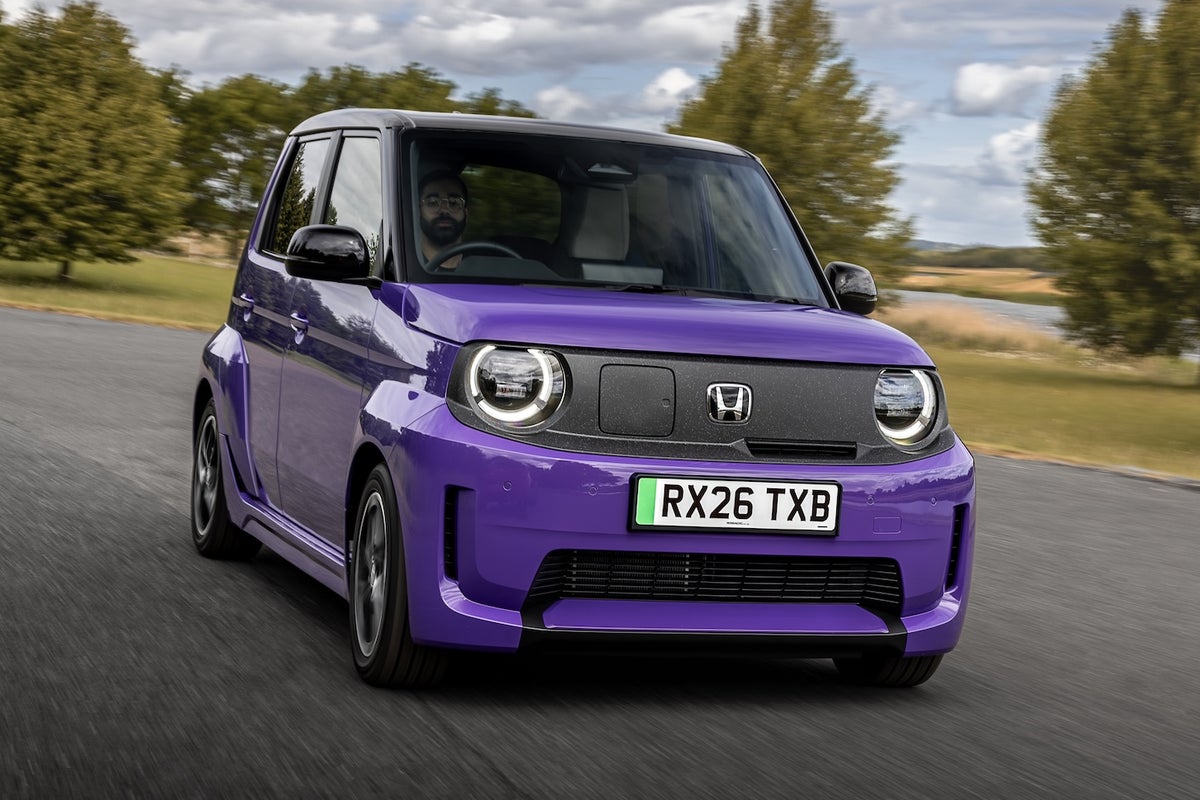
Honda’s entry into the electric car market hasn’t exactly been wholehearted. The delightful Honda e came and went, loved by owners (and me), but ignored by many buyers who were put off buy the high price and low range. The bigger and bizarrely named e:Ny1 has also very quickly been and gone, while the exciting 0 Series electric cars were cancelled before they evern got off the starting blocks.
Undeterred, Honda is having another go with a car that is cheap, very cheerful but has challenges all its own. The new Honda Super-N is a very Honda way of doing things. Instead of building another sensible little EV that looks like it has been designed by a committee, Honda has gone back to one of the things it has always done best: tiny cars with big personality.
The Super-N is based on the N-ONE e:, one of Honda’s Japanese small Kei cars. This is more than a straight lift from Japan with a different badge, though – Honda says the Super-N has been reworked for the UK, with wider tracks, beefed-up suspension, a more playful look, more power in Boost mode and a driving experience that is meant to give a tiny electric city car the spirit of something much more exciting.
That also explains the name. This car could only really exist as a slightly larger, slightly more grown-up and slightly sillier version of Honda’s N kei car family, so Super-N makes a certain amount of sense. It is not a large car suddenly trying to be small; it is a properly tiny car that has been made just big enough and just serious enough to work here.
It is also, potentially, a very important car for Honda. The UK gets it first because right-hand drive makes life easier when the starting point is the fellow right-hand drive market of Japan. However, this is also a bit of a Trojan horse for taking the Super-N into the rest of Europe. Honda’s team told me that it needs to see how the car performs in Britain before a decision is made on left-hand drive production and wider European sales. That makes a change.
So, if you like the idea of Europe getting a tiny electric Honda with a fake engine noise and a Boost button, the UK’s reaction could help decide what happens next.
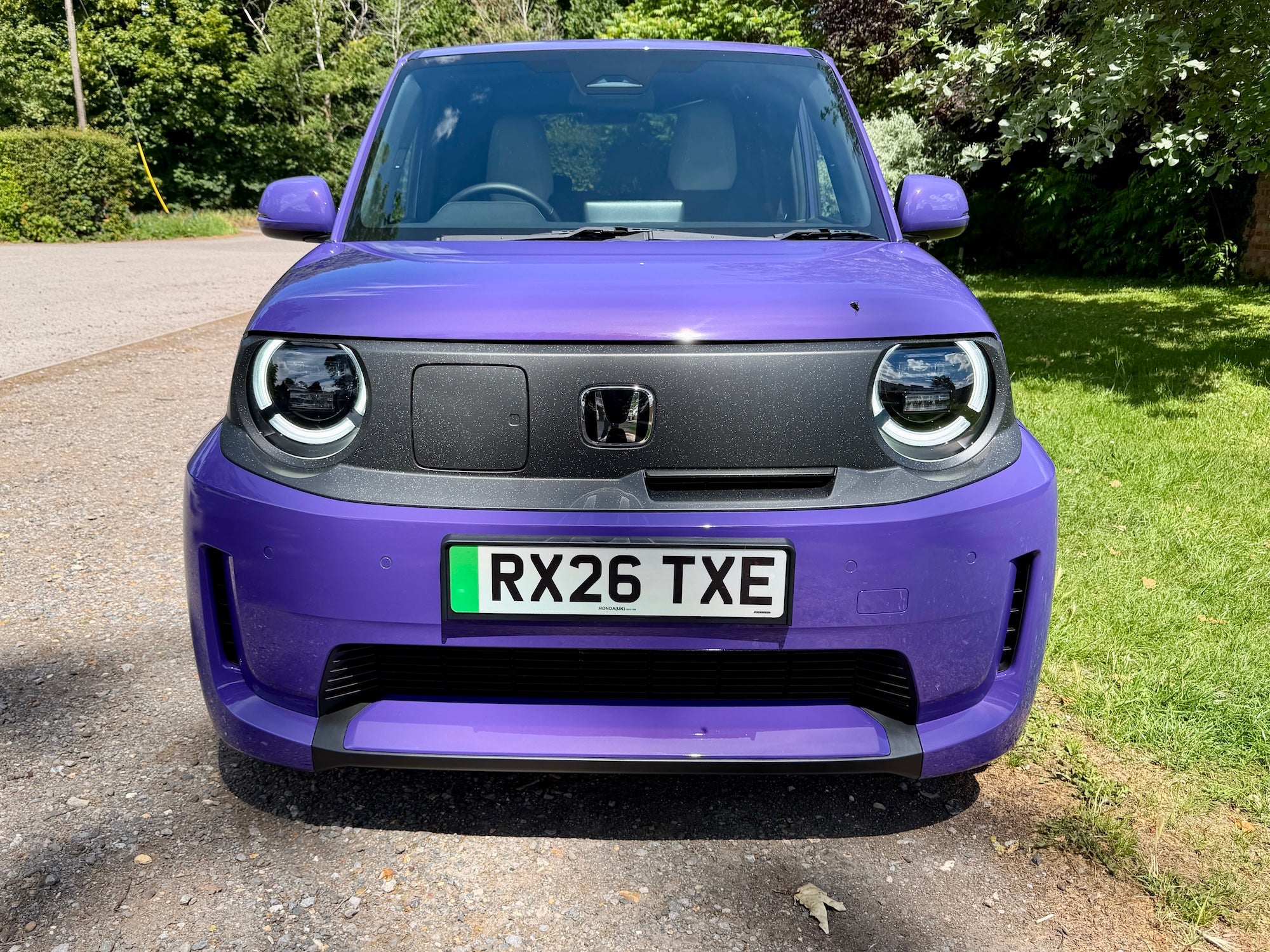
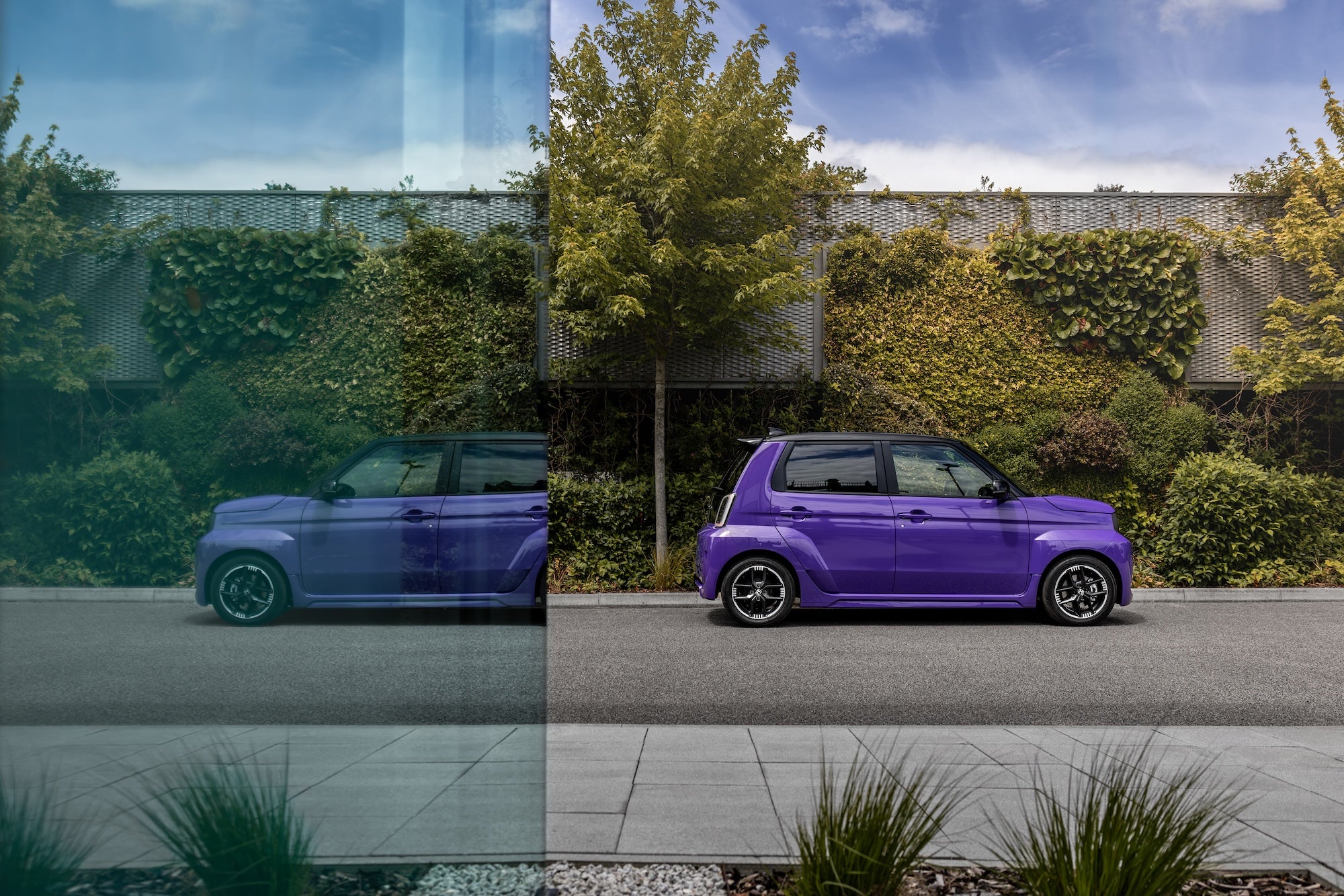
There is a lovely back story to this, too. Honda says the design takes inspiration from the 1980s City Turbo II, with its upright nose, circular lights, wide stance, flared arches and playful performance-car attitude. There are gloss black details, vents, a little rear spoiler, 15-inch alloys and even a Formula One-inspired rear fog light. In the Boost Violet Pearl of my test car, it looks wonderfully cheeky.
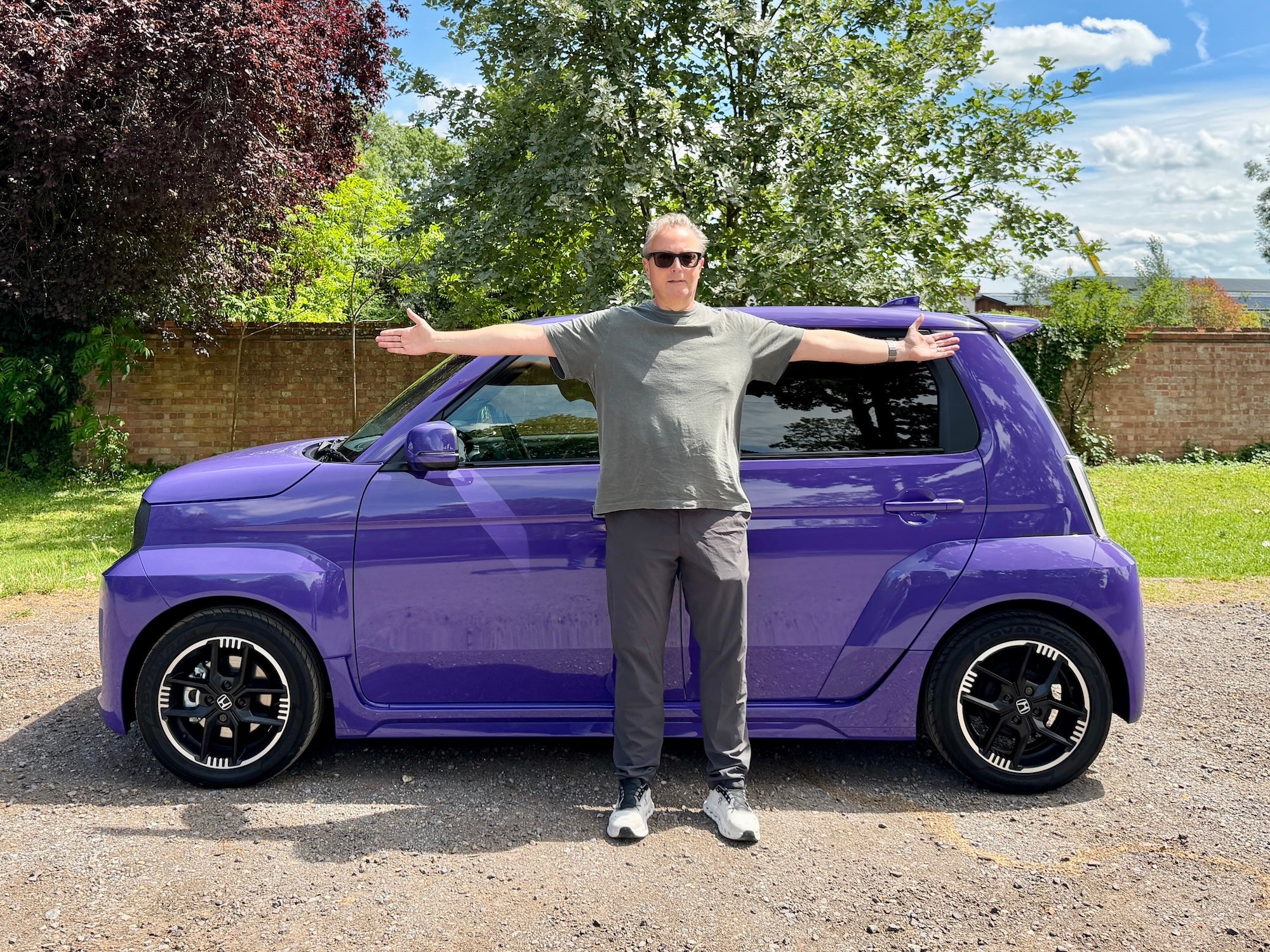
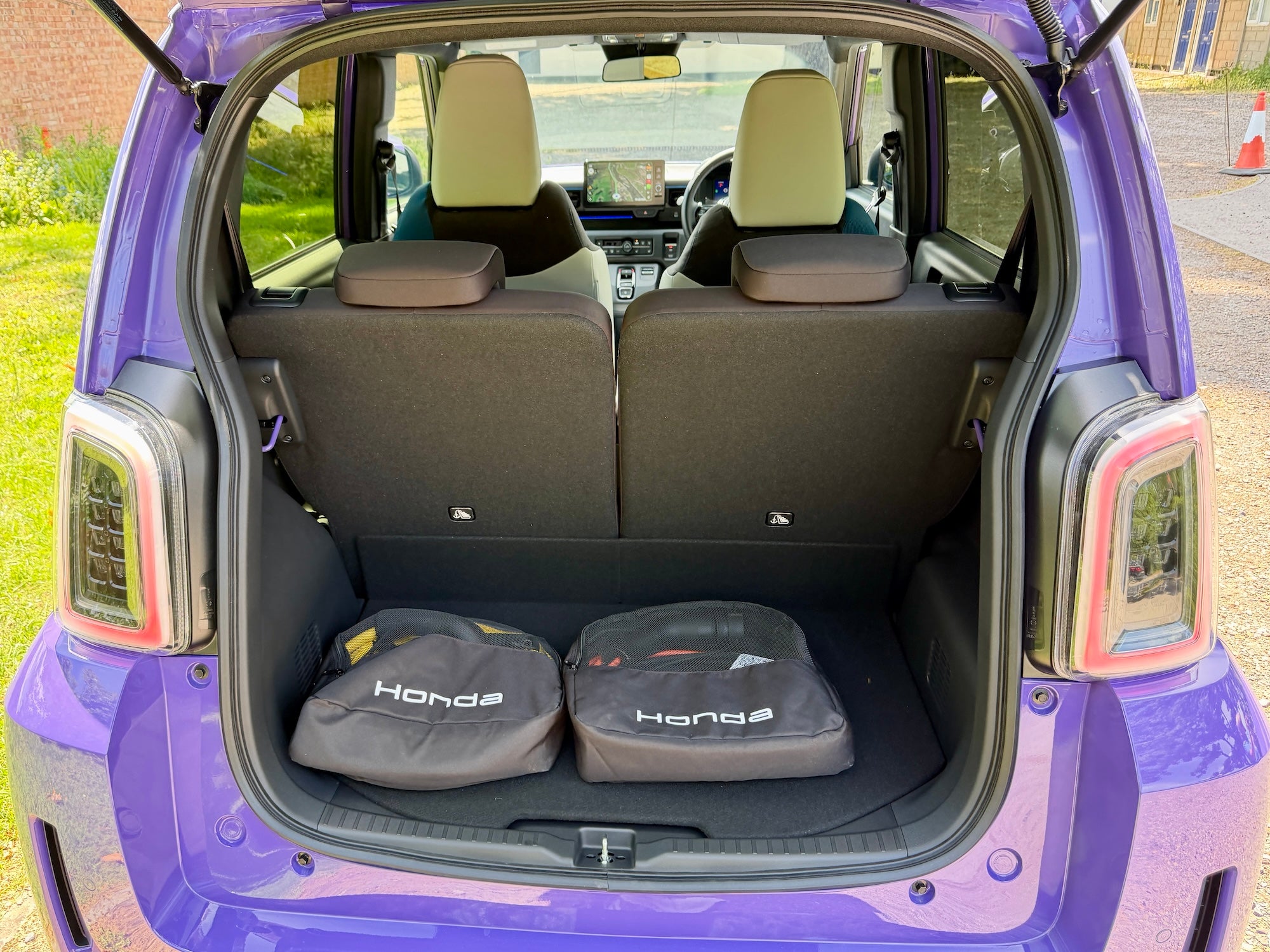
It is small, though. The Super-N is just 3599mm long, 1573mm wide and 1608mm tall, with a 2516mm wheelbase. That makes it shorter and narrower than a Hyundai Inster, although from inside it feels like there is more width than the numbers suggest. It is a four-seater rather than a five-seater, with a 162-litre boot, so nobody should mistake this for a family hatchback.
What it is, though, is a little city and commuter car with a strong dose of Honda cleverness. It has a 29.6kWh battery, an official combined range of 128 miles and a claimed city-only range of 199 miles. You must decide if that is enough, but it is worth remembering what this car is for. It is not trying to be a motorway-mile muncher or a family holiday machine.
It is also under £19,000 before options, which makes it look like sensational value. The equipment list is excellent, the infotainment works well, the cabin is smarter than you might expect and the Bose sound system is a genuine surprise in a car this small and affordable.
But there is a big catch. The ride is dreadful at times. In fact, on some roads it is almost enough to shake your fillings loose, or your dentures if you are the typical Honda buyer. Honda’s engineers told me they had re-engineered the car for the UK because they thought the Japanese original would be too firm on our roads. Oops.
How I tested
I drove the Honda Super-N on familiar roads in and around Berkshire and Buckinghamshire, including town streets, faster roads and motorways. I assessed the ride comfort, performance, space, infotainment, audio and everyday usability.

Independent rating: 6/10
- Pros: Sensational value, bags of charm, brilliant Bose stereo, clever packaging, good rear room, fun Boost mode
- Cons: Dreadful ride, small boot, modest range, front seat cushion feels tight, tyre noise on the motorway
- Price from: £18,995
- Battery size: 29.6kWh
- Maximum EV range: 128 miles
- Maximum charging rate: 50kW DC
Battery, range, charging, performance and drive
The Super-N uses a 29.6kWh lithium-ion battery mounted under the floor, feeding a front electric motor. In normal driving, that motor produces 63bhp, but press the Boost button on the steering wheel and output rises to 94bhp. Torque is 162Nm, which does not sound like much in modern EV terms, but this car weighs just 1097kg, so it had very little weight to drag around, until I got in.

Officially, the numbers look modest. The spec sheet gives a 0-62mph time of 14.5 seconds and an 84mph top speed. However, Honda says Boost mode cuts the 0-62mph time from 14.5 seconds to 10 seconds, and on the road the car certainly feels closer to the quicker figure. It left me doubting the 14-plus second number because it feels much nippier than that, especially at town speeds where instant electric response and low weight make a real difference.
Boost mode is the headline party trick. It adds a welcome extra kick of power and brings in Honda’s simulated seven-speed transmission and Active Sound Control. That means you get fake gear changes, a fake rev counter and a fake engine noise coming through the speakers. It is not going to trouble Hyundai’s brilliant N electric cars for excitement, but then you could have three Super-Ns for the price of one Ioniq N model with a nice bit of cash to spare.
The noise itself is quite fun. It adds a bit of drama without taking itself too seriously, although it is some way off the full theatre of Hyundai’s system. Still, in a car this small, light and affordable, there is something very Honda about it. It feels like engineers were allowed to have a bit of a laugh.
There are four main drive modes: Econ, City, Normal and Sport, with Boost available for a bit more fun. City mode brings one-pedal driving, which lets the car accelerate, slow and stop using the accelerator pedal. The steering-wheel paddles are more unusual. In normal driving they do not behave like traditional gearshift paddles. Instead, they act more like a brake to slow the car before resetting when you get back on the power. It takes a moment to get your head around, but it does give you another way to manage speed without always using the brake pedal.
The official combined range is 128 miles, while the city range is claimed to be 199 miles – and I was impressed by the efficiency on my test drive. That spread tells you everything you need to know about where the Super-N is at its best. Use it for school runs, commuting, shopping trips and city driving, and the range should make much more sense. Ask it to do repeated long motorway drives and it will feel less in its comfort zone.
The Super-N can rapid charge at up to 50kW, taking the battery to 80 per cent in around 30 minutes. On a 7.4kW AC supply, a full charge takes about 4.5 hours. The charging port is hidden neatly in the front grille, with lighting to show charge status.
On the road, the Super-N is a mixed bag. For such a tall car, body roll is reasonably well controlled. It turns in neatly, feels light on its feet and has a solidly engineered feel that makes you trust it. The wider track, low weight and floor-mounted battery all help, and the engineering team I met clearly had a great deal of passion for this little car project.
But that body control comes at a cost. The ride can be extremely hard. Honda says the Super-N has a bespoke chassis set-up, with stronger suspension parts, revised steering, aluminium front lower arms, a reinforced rear beam axle and 15-inch wheels with Honda-specific Yokohama Advan Fleva tyres. All that helps it feel alert and tidy through corners, but on rougher roads the firmness is impossible to ignore.
That is the big compromise. The Super-N is fun because it feels small, light and responsive, but there are moments when it feels as if the suspension has been tuned with a little too much enthusiasm. I would trade a bit of that nimbleness for a bit more comfort, especially given how many of these cars are likely to spend their lives on the UK’s broken urban roads.

Take it on the motorway and the Super-N feels fine at 70mph, which is reassuring for such a small car. It doesn’t feel blown about or nervous, and the straight-line stability is better than you might expect. The main issue is noise. There is a lot of tyre roar rather than wind noise, which again points to the tyres and the firm chassis set-up. The electric motor is quiet, but the road surface is not.
Interior, practicality and boot space
The Super-N’s cabin is smart enough, and it has the sort of upright, square, no-nonsense layout that makes small Hondas so easy to like. It is very plasticky inside, but it looks and feels like it will last. This is a Honda after all, and there is a solidity to the way everything is put together that counts for a lot.
There are also bits of it that feel like a step back into Honda’s 90s cars, and I do not mean that entirely as a criticism. The dashboard is simple, the driving position is upright, the controls are easy to understand and there is none of the overdone showroom gloss you find in some modern small cars. It is cheerful rather than plush.
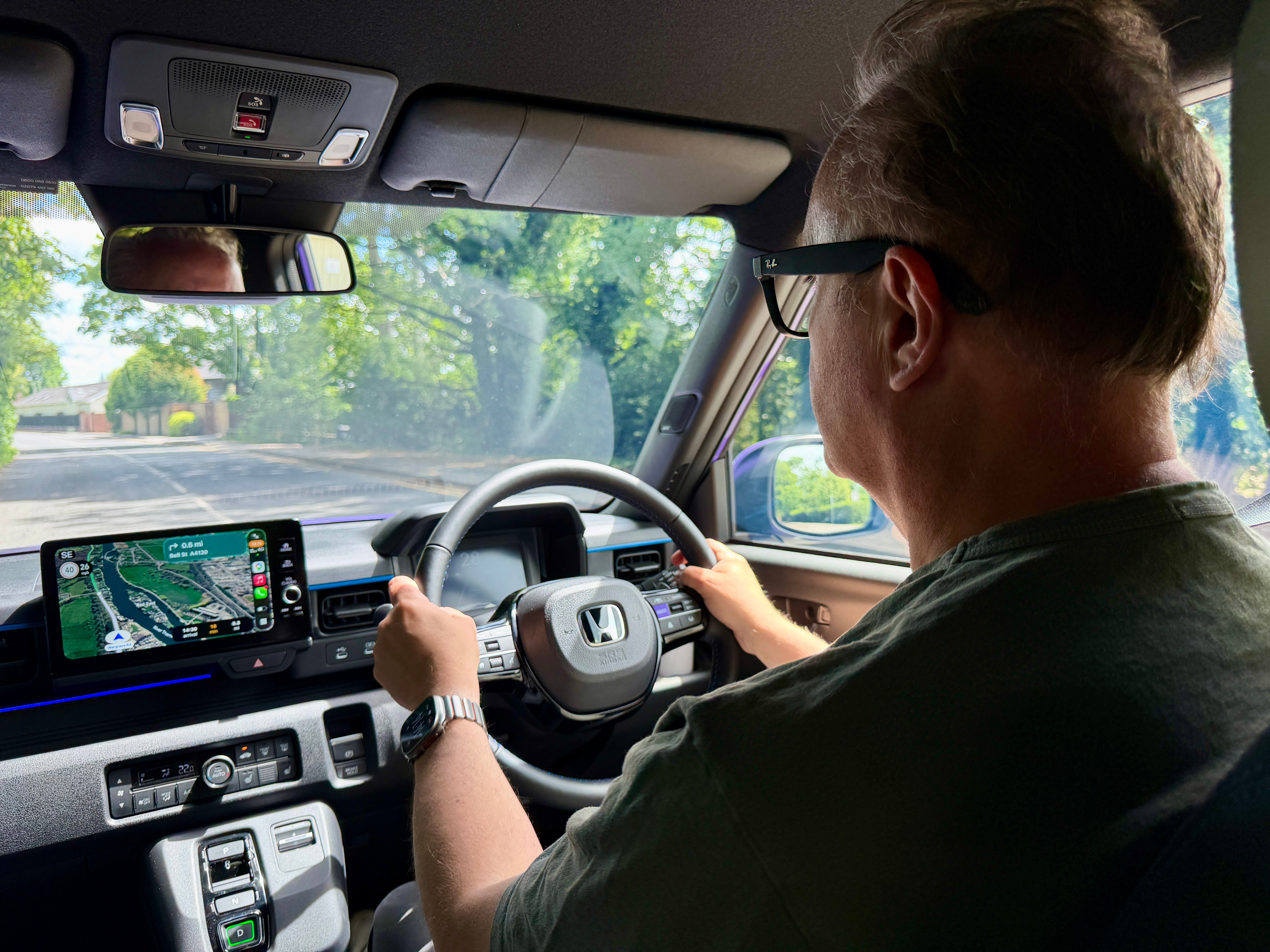
Honda has given the Super-N a retro-themed seven-inch digital instrument display with three dials, inspired by the City Turbo II. In Boost mode, the display switches to a purple theme, with a large rev counter, gear position, battery temperature and power readouts. There is also a full-width blue pinstripe across the dashboard, blue stitching on the two-spoke steering wheel and blue detailing on the asymmetric front seats.
The interior is not short of character, then, although storage could be better. There is a useful tray ahead of the front passenger, and the open, upright layout helps, but I would like a few more places to put the usual daily clutter. There is also no sign of wireless phone charging, which feels like an omission when so much else is included.
The front seats have been reworked for the Super-N with thicker bolsters, extra support webbing and firmer cushioning. They hold you in place better than you might expect in such a little car, but the seat squab feels a little tight if you are wider of hip. The lower seating position helps the car feel a bit sportier, but you are still sitting in a tall, upright small car rather than something low and racy.
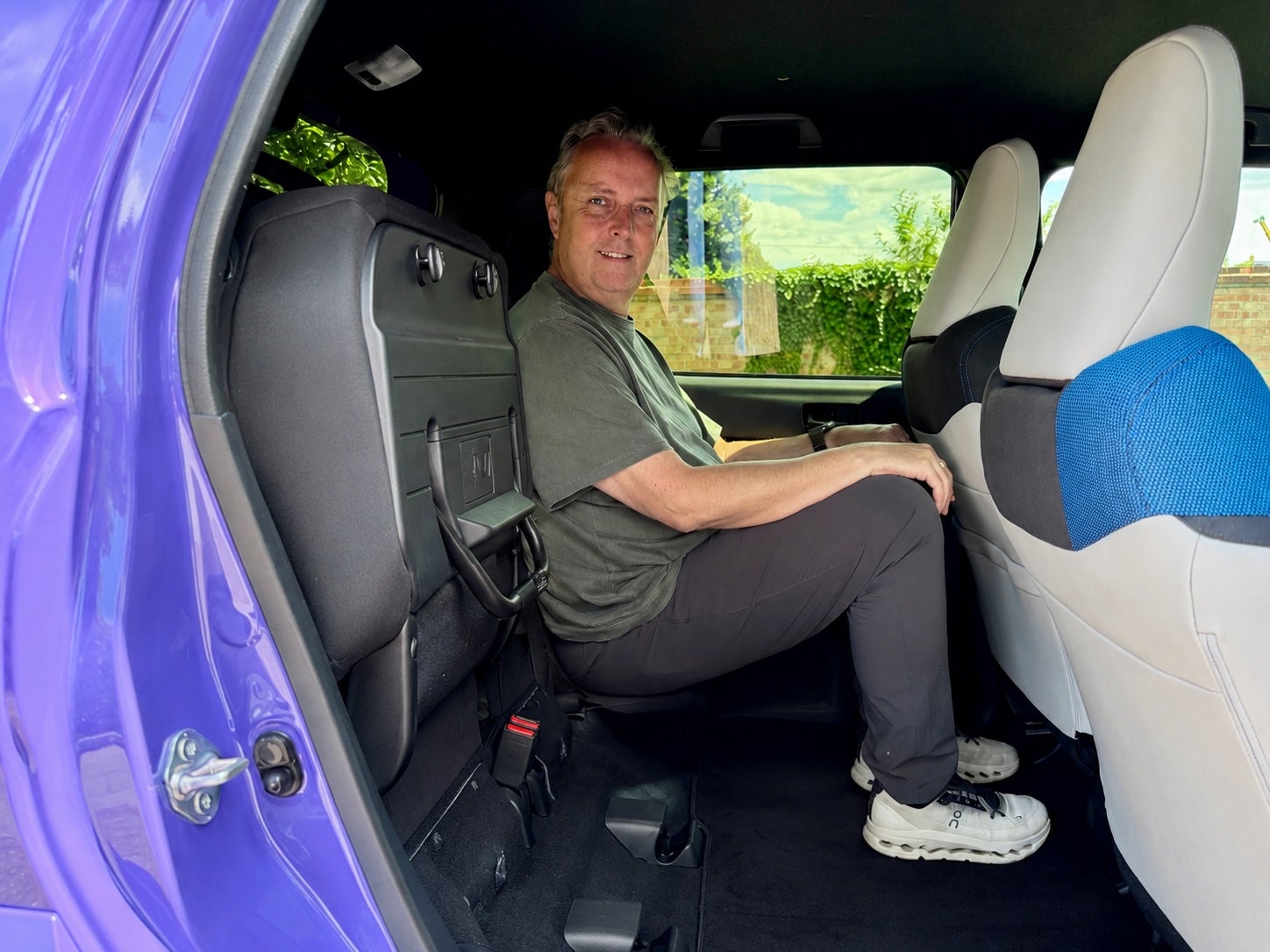
Space is one of the Super-N’s best tricks. It is a tiny car on the outside, but the interior is much roomier than expected. Rear legroom is excellent for two people, and the headroom is enormous. You really could wear a top hat inside. There are only four seats, not five, but for two adults in the back it is genuinely impressive.
It also feels like there is more width than in a Hyundai Inster, even though the Honda is officially narrow. That may be down to the simple dashboard, upright glasshouse and clever packaging. The thin battery under the floor helps, while the large windows make the cabin feel light and open.
Honda’s Magic Seats are included, too, with the rear seats able to fold down or tip up to carry taller items. It is one of those Honda ideas that still feels clever because it is properly useful. In dive-down mode, the seats fold to create a flat load floor from the boot area to the back of the front seats. In tip-up mode, the rear seat bases lift to make room for taller things in the cabin.
The boot is small, with 162 litres available with the rear seats up. That is not much luggage space, even by small EV standards, and it means the Super-N will not be the best choice if you regularly carry lots of bags. Fold the seats down and there is up to 967 litres loaded to the roof, or 618 litres loaded to the window line, which is much more useful.
The saving grace is the boot opening. The low lip and large aperture are a real bonus, making it easy to load heavier or awkward items. In day-to-day use, that can matter more than the raw capacity figure, because you are not having to lift everything up and over a high sill.
The outside design helps give the car its charm. The Super-N has a wide front bumper, flared wheel arches, gloss black grille, circular LED headlights and aero ducts that feed the cooling system. It is 100mm wider than the Japanese N-ONE e: and 185mm longer, with larger bumpers helping give it a lower, more planted look.

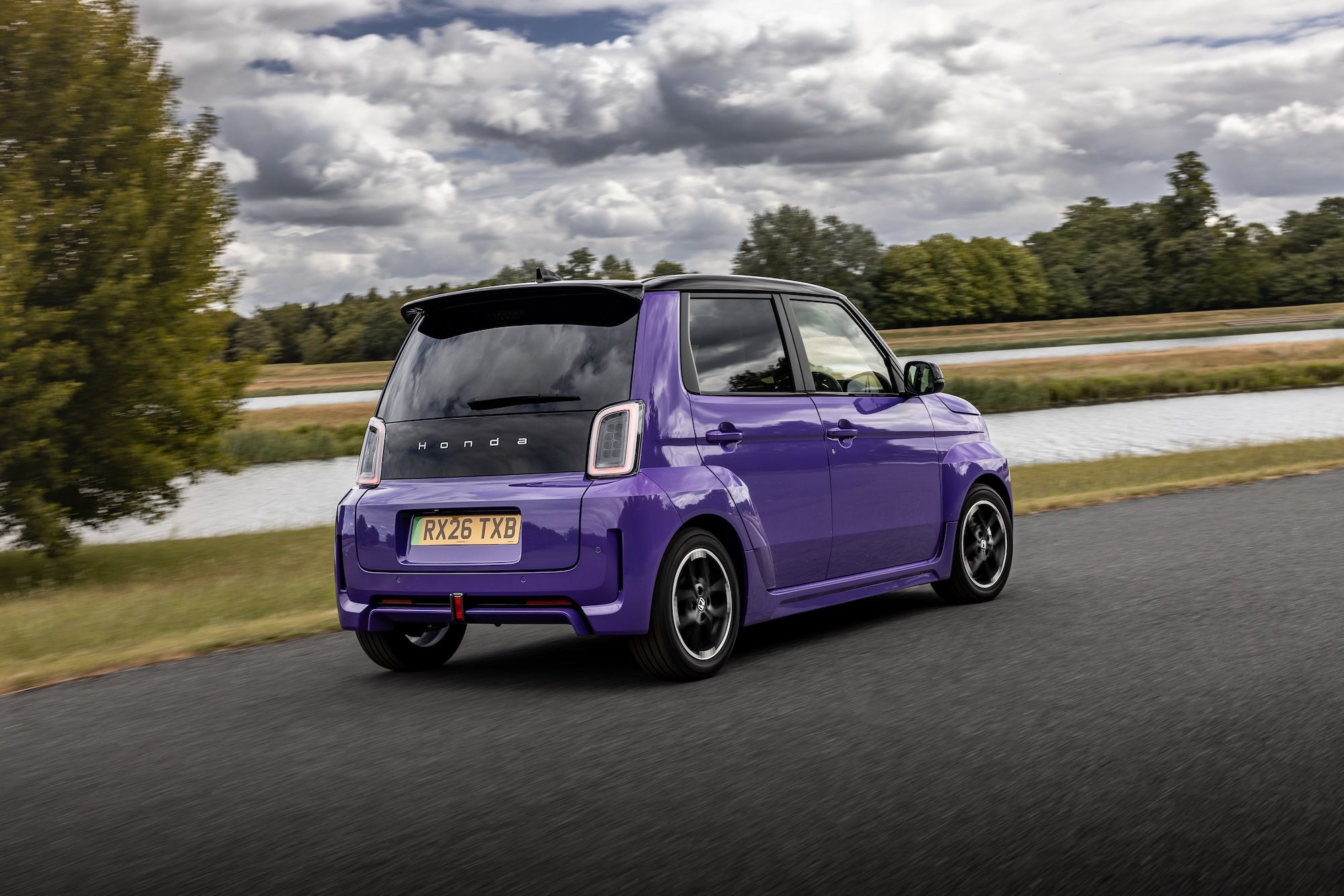
The details are fun without being silly. The full-width Honda lettering across the rear, the gloss black tailgate panel, the little roof spoiler with the centrally mounted rear fog light all make it look more special than a basic city car. Colours include Boost Violet Pearl, Platinum White Pearl, Crystal Black Pearl, Seabed Blue Pearl and Mono Grey, with two-tone options available on several shades.
Technology, stereo and infotainment
The Super-N’s tech package is one of its strongest areas, especially when you remember the price. This is not a stripped-out little EV where all the good stuff has been saved for bigger, more expensive Hondas. The equipment level is excellent.
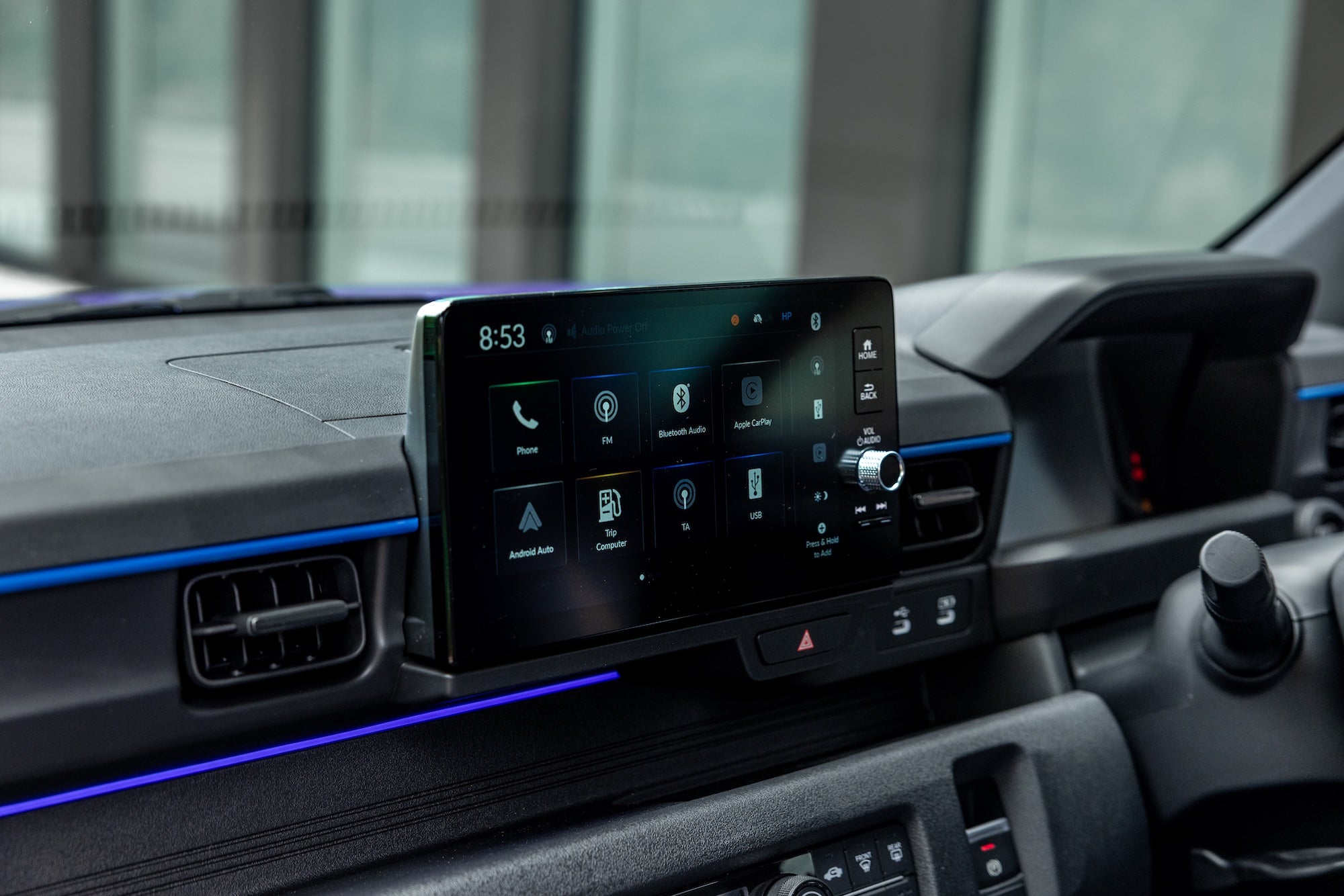
The main infotainment system uses a nine-inch Honda CONNECT touchscreen with navigation, AM, FM and DAB radio, plus wired and wireless Apple CarPlay and Android Auto. It is not the biggest screen in the world, but it works well. The menus are clear, the layout is simple and Honda has resisted the temptation to bury everything behind endless touch-sensitive nonsense.
That is helped by the physical controls. Heating and ventilation are controlled using proper buttons and dials, and there are shortcut keys for useful functions. In a small car that is likely to spend a lot of time in traffic and around town, that sort of ease of use is exactly what you want.
The seven-inch driver display is more playful. It uses a cowled three-dial layout, which gives the cabin a nice retro Honda feel. In normal driving it gives you the key information clearly enough, while Sport and Boost modes bring in more performance-style graphics. Boost mode switches the theme from blue to purple, which also matches the ambient lighting strip across the dashboard.
The simulated gearbox is controlled through the steering-wheel paddles in Sport and Boost modes, and it is tied to the fake engine noise and rev counter display. In a normal EV this might feel like a gimmick, and in truth it is a gimmick, but in the Super-N it fits the character of the car. It is meant to be fun, and it is.
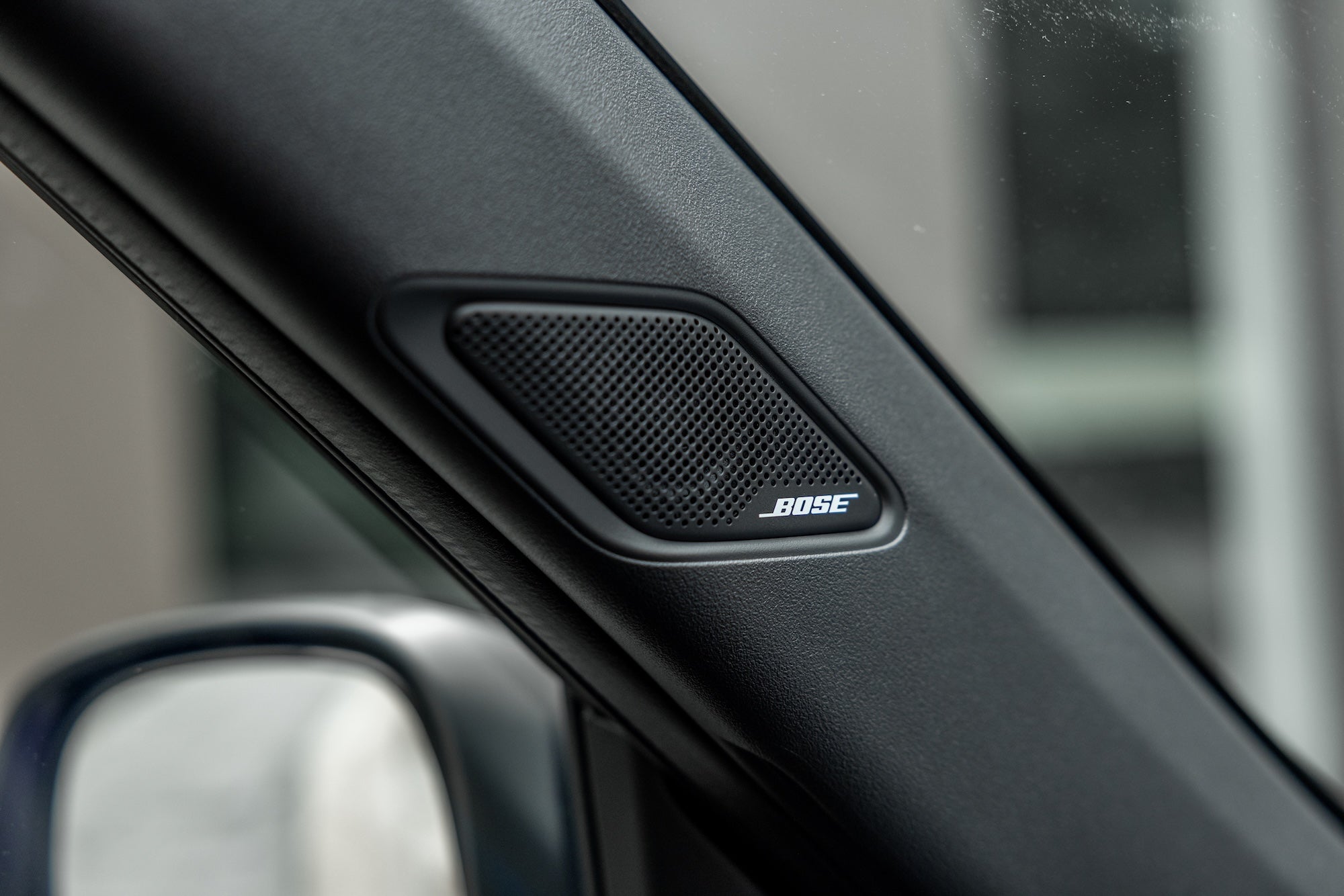
The Bose sound system is the real surprise. I was genuinely impressed to find such a good stereo in such a small and affordable car. It has proper bass, but also good detail and separation, so it does not just thump away like a cheap aftermarket system. It feels like a real bonus.
Honda says the eight-speaker Bose system was developed specifically for the Super-N’s cabin, with seven high-performance speakers, an eight-channel digital amplifier and a 20cm subwoofer mounted under the boot floor in a 13.1-litre enclosure. The result is much better than you would expect at this price. It sounds rich and full, but still clear.
There is also Bluetooth, DAB, two USB-C ports and MyHonda+ app connectivity. The app allows remote charging control, charge scheduling, cabin pre-conditioning, vehicle location, horn activation and geofencing. A digital key can also be set up through the app, allowing locking, unlocking and starting by smartphone using Bluetooth.
Safety kit is strong for a car this small. Honda SENSING is standard, bringing Collision Mitigation Braking with Forward Collision Warning, Traffic Jam Assist, Traffic Sign Recognition, Low Speed Brake Function, Front and Rear Collision Throttle Control, Adaptive Cruise Control, Road Departure Mitigation and Lane Keeping Assist.
The Super-N is also the first Honda of this size to get Post-Collision Mitigation Braking, which can apply the brakes after a crash to reduce the risk of a secondary impact. There is also Honda’s Advanced Compatibility Engineering body structure, a safety frame around the battery, airbags for front and side impacts, curtain airbags for both rows, whiplash protection for the front seats and two Isofix points in the rear.
The accessories are modest but suit the car. There is a Super-N Style Pack with matte grey centre stripes running over the bonnet, roof and tailgate spoiler, plus Starry Silver side stripes. Inside, there are matching floor mats with grey striping, blue accents and Super-N logos.
Prices and running costs
The Super-N is priced from £18,995. The test car was in Boost Violet Pearl with an accessory pack, taking the on-the-road price to £19,690. On today’s small EV market, that looks like sensational value.
The key question is whether the range is enough. The official combined figure is 128 miles, with a city figure of 199 miles. For a household’s only car, that may feel limiting. For a city car, commuter car or second car, it makes much more sense. Most Super-N buyers are unlikely to be crossing continents every week.
Charging should be cheap and simple if you have home charging. A full charge from a 7.4kW AC supply takes around 4.5 hours, while a 50kW rapid charger can take the battery to 80 per cent in about 30 minutes. The official efficiency figure works out at 4.2 miles/kWh, which is decent for a small EV with a tall body.
Running costs should also be helped by the modest tyre size, low weight and simple electric drivetrain. Insurance and servicing details will make a difference, but nothing about the Super-N suggests it should be expensive to keep on the road.
The risk is that buyers may compare it with bigger small EVs and wonder whether 128 miles is enough. That is fair. But the Super-N is not really trying to be a conventional small EV. It is a tiny Honda city car with a big personality, clever packaging and a price that gives it a real point of difference.
The verdict: Honda Super-N
The Honda Super-N is tiny, clever, hugely charming and sensational value, proving Japan does have an answer to cheap Chinese cars. Whether I could live with the Super-N’s hard ride is another matter, but there is something deeply likeable about this little electric Honda.
Honda Super-N rivals:
FAQs
How long does it take to charge?
The Honda Super-N can charge to 80 per cent in around 30 minutes using a 50kW rapid charger. On a 7.4kW AC supply, a full charge takes about 4.5 hours.
How much does it cost – is it worth it?
The Super-N starts from £18,995, while the car tested here costs £19,690 with its accessory pack. It looks like excellent value given the equipment, charm and engineering, although buyers will need to decide whether the 128-mile combined range is enough.
Does Honda replace batteries for free?
As with all new EVs, the battery is covered for a total of eight years.
Why trust us
Our team of motoring experts have decades of experience driving, reviewing and reporting on the latest EV cars, and our verdicts are reached with every kind of driver in mind. We thoroughly test drive every car we recommend, so you can be sure our verdicts are honest, unbiased and authentic.
With more than 30 years of experience, Steve Fowler is one of the UK’s best-known automative journalists. Steve has interviewed key industry figures, from Tesla’s Elon Musk to Ford’s Jim Farley, and is a judge for both Germany’s and India’s Car of the Year Awards, as well as being a director of World Car of the Year. When it comes to electric vehicles, Steve reviews all the latest models for The Independent as they launch, from Abarth to Zeekr, and he uses his expert knowledge of car buyers’ needs to provide a comprehensive verdict.