




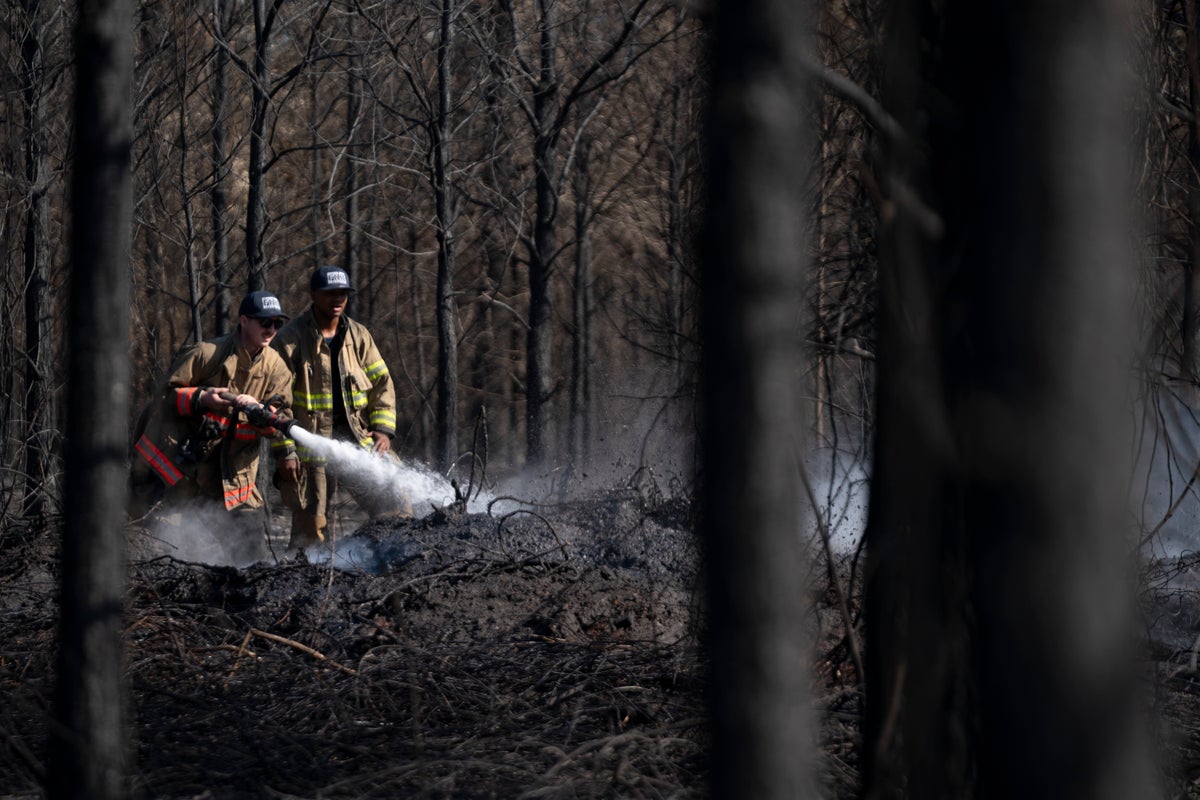
A volunteer firefighter has died battling a wildfire in northern Florida, as more than 120 homes have been destroyed across southeast Georgia, with thousands more under threat from two massive blazes.
Officials on Friday suggested one of the Georgia fires may have been ignited by a foil balloon making contact with power lines.
The Southeast is currently experiencing an unusually high number of wildfires this spring, a situation scientists attribute to a confluence of extreme drought, powerful winds, climate change, and the lingering presence of dead trees toppled by Hurricane Helene in 2024.
In northern Florida, the Nassau County Sheriff’s Office confirmed Friday that volunteer firefighter James “Kevin” Crews suffered an unspecified medical emergency while suppressing a brush fire.
Crews was rushed to a hospital, where he tragically died Thursday evening, according to a news release shared on social media.
Hilliard Volunteer Fire Chief Jerry Johnson issued a statement saying, “Kevin was the epitome of courage and dedication. His sacrifice will never be forgotten.”
Georgia Gov. Brian Kemp, after observing firefighting efforts firsthand, told reporters that state officials believe the 87 homes burned in rural Brantley County this week represent the highest number ever destroyed by a single wildfire in the state’s history.
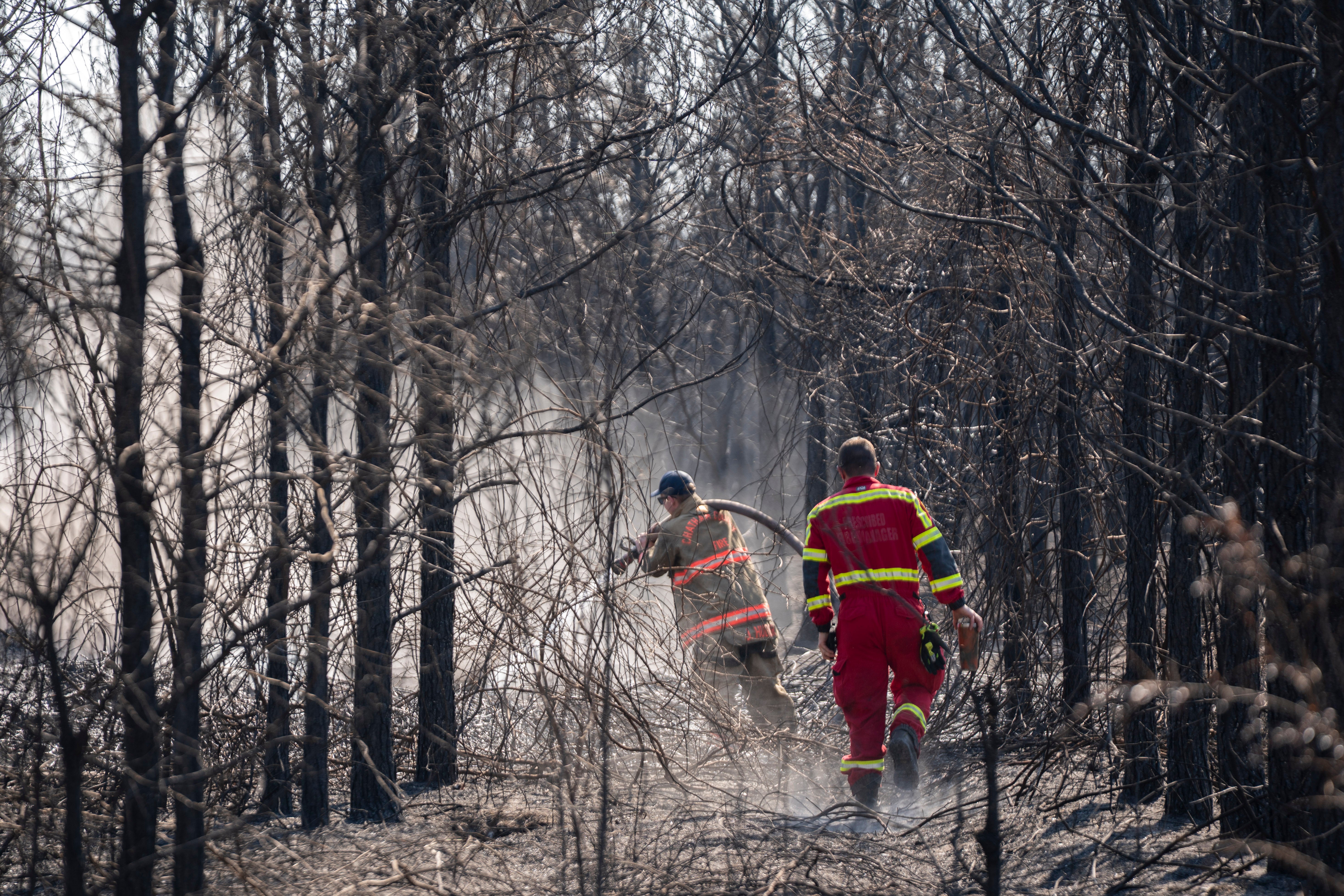
An additional 35 homes have been lost to a larger fire raging in sparsely populated Clinch and Echols counties, near the Florida state line.
This blaze has consumed approximately 50 square miles, an area twice the size of Manhattan.
Governor Kemp stated that investigators suspect the Brantley County fire was sparked by a foil party balloon that struck live power lines, creating an electrical arc that ignited the ground.
He added that the larger fire is believed to have started when a man was welding a gate outdoors.
The Brantley County blaze, which spans over 11 square miles and continues to grow, was only 15% contained by Friday, according to the Georgia Forestry Commission.
An estimated 4,000 homes in the county were under evacuation orders, said commission spokesperson Seth Hawkins.
Kemp starkly assessed the situation, stating, “There’s no way to stop this fire. They’re having to contain the flanks and the back of it and then, hopefully, we get a change in the weather.” No fire-related deaths or injuries have been reported in Georgia.
Beyond these major incidents, firefighters are battling more than 150 other wildfires across Georgia and Florida, sending smoky haze far from the flames and prompting air quality warnings in several cities.
Michael Gibson, whose mobile home was consumed by the fire, recounted his experience. He was at work when his fiancée called, urging him to return.
By the time he arrived, firefighters were already on his street. He managed to get his family to safety but was prevented by police from returning to salvage belongings. “We’ve lost everything, but I’m one of the lucky ones,”
Gibson said Friday. “We’ve been prepared to leave. And I’m truly blessed to have my family and to have somewhere to sleep. … A lot of people in my county didn’t make it out with the clothes on their backs.”
Jennifer Murphy, from the Brantley County community of Hortense, described having little time to react when firefighters knocked on her door.
She barely managed to gather her dog, Chip, and a single bag of belongings before firefighters urgently helped her down her wheelchair ramp and into her van.

“It was like, ‘Get out now, right now. You’ve got to leave,’” Murphy said Friday from a local church where she had spent the night.
While bulldozer crews work to establish fire breaks around the burning areas, firefighters from dozens of local agencies are concentrating on protecting nearby homes and structures.
This involves clearing away dry brush and using hoses and sprinklers to keep properties wet. Seth Hawkins of the forestry commission noted, “We’ve definitely had the local fire guys out there literally hosing stuff down.”
In Florida, firefighters were contending with over 120 wildfires on Friday, predominantly in the state’s northern half.
Georgia fire crews responded to 31 new, relatively small blazes on Thursday, the state forestry commission reported. Officials emphasize that a soaking rain is desperately needed to extinguish the large fires, as possible showers forecast for the weekend are not expected to bring sufficient rainfall. There is also a concern that thunderstorms could lead to lightning strikes, sparking even more fires. Johnny Sabo, director of the Georgia Forestry Commission, warned, “It is going to take 8 to 10 inches before we can walk away from these fires.” He added that long-range forecasts predict less than average rainfall until July.


.jpg?width=1200&height=800&crop=1200:800 "Boeing told UPS that engine flaw wasn’t flight safety risk before 15 died, officials claim – UK Times")