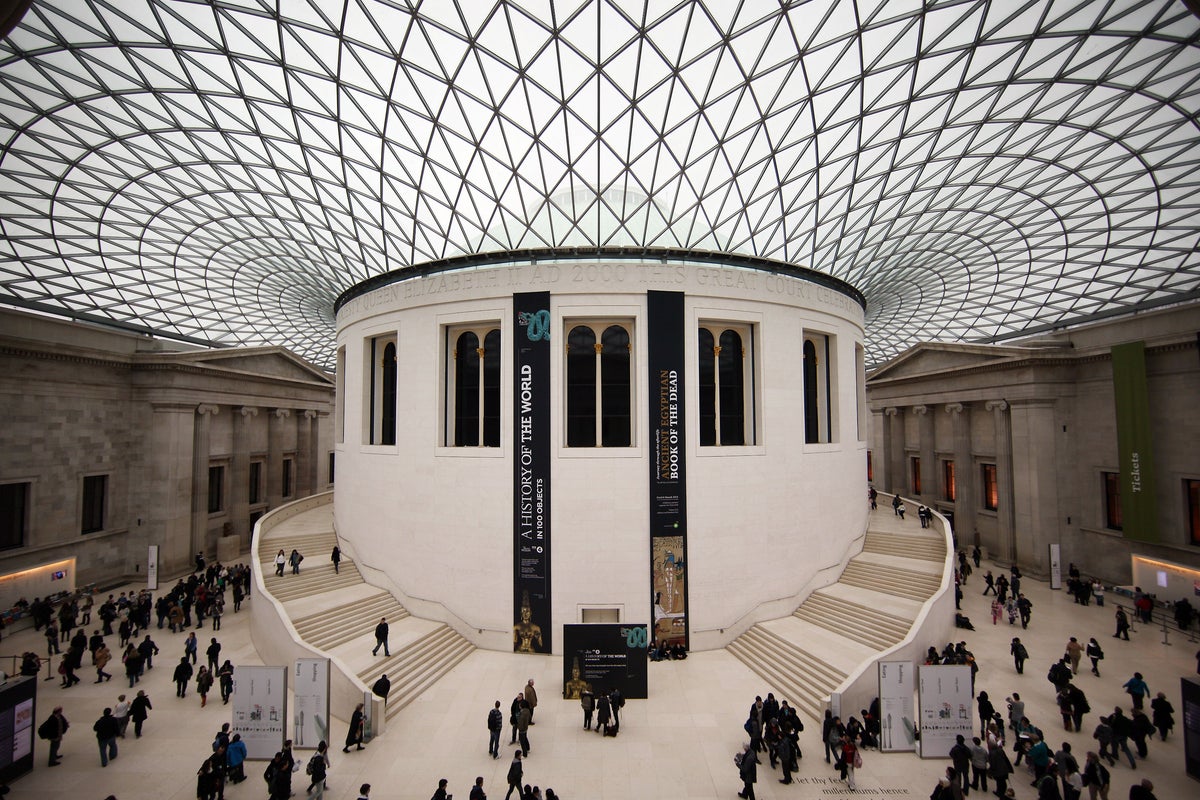
The government is considering introducing charges for international tourists visiting national museums in an effort to boost funds for the sector.
On Thursday, the culture department accepted Baroness Margaret Hodge’s review of Arts Council England, in which she recommended that museums, including the British Museum and National Gallery, limit free entry.
Under the proposals, digital IDs, which don’t currently exist, would be required for museums to differentiate between domestic and international visitors.
In its response to Baroness Hodge’s recommendations, the government said: “We will work with the museum sector to explore the potential opportunities that charging international visitors at national museums could bring to support access to arts everywhere, and the timeframes for this.
“The government believes charging international visitors at national museums could provide significant benefits. It could underpin our commitment to ensure art and culture is accessible, representative and shared across the country, and support the long-term financial resilience of these organisations.
“We will work with the museum sector to explore options for charging international visitors that will deliver benefits for the sector and we will provide an update before the end of the year.”

The changes would align with the policies of many major museums across the world. General admission for New York’s Museum of Modern Art costs $30 (around £22), while a ticket to the Louvre for most non-Europeans is €32 euros (£27).
But Alison Cole, the director of the Cultural Policy Unit (CPU) thinktank, worries that charges could deter tourists from visiting the UK in the first place.
She said: “The free admission is a landmark Labour policy, which will celebrate its 25th anniversary this year, and has been overwhelmingly successful.”
The free entry to permanent galleries at DCMS-sponsored museums began in 2001 in a bid to boost attendance and improve access.
National Museums Liverpool recorded a 269 per cent rise in visitors after charges were dropped.
“Our free national museum offer is proven to be one of the top motivators for international tourism to this country,” she added.


Instead of an admission fee, the CPU would like to see a hotel levy, which they estimate will generate more than £1.2bn a year. Much of that could be spent on supporting the cultural sector, Ms Cole said.
She also fears the digital ID requirement could also prevent British citizens from visiting museums. “It’s the people you most want to attract, people, particularly that Labour most want to attract, that probably would be the most deterred by something like this.
“It would be an unintended consequence, but it’s always good to think of those while you’re considering something, rather than afterwards.”
New research released by the Art Fund on Thursday shows that 72 per cent of the public say that some revenue from a potential tourist tax should be used to help keep national museums free to enter.
Jenny Waldman, the director of Art Fund, said: “Our free national museums are one of the great success stories of UK cultural policy — opening up world-class collections to everyone, driving tourism, and enriching millions of lives every year. But they need additional funding in the face of rising costs and declining grant-in-aid.”