



Google is charging ahead with plans to integrate its artificial intelligence models into the U.S. military, despite reports of increasing public protest from the company’s employees, who warn the partnership could risk dangerous and unlawful conduct.
Last week, the company announced it had signed a deal with the Pentagon to use its AI models in classified work.
“We are proud to be part of a broad consortium of leading AI labs and technology and cloud companies providing AI services and infrastructure in support of national security,” Jenn Crider, a Google spokeswoman, told The New York Times. “We remain committed to the private and public sector consensus that AI should not be used for domestic mass surveillance or autonomous weaponry without appropriate human oversight.”
The deal, for which the alleged terms were reported by the tech news site The Information, allows the Pentagon to use Google AI for “any lawful purpose,” while stipulating that Google AI “is not intended for, and should not be used for, domestic mass surveillance or autonomous weapons…without appropriate human oversight.”
Last week, hundreds of Google employees signed onto an open letter to CEO Sundar Pichai, urging the company to refuse classified AI contracts and warning that working with the Defense Department could “cause irreparable damage to Google’s reputation, business, and role in the world.”
“We want to see AI benefit humanity; not to see it being used in inhumane or extremely harmful ways,” the letter argued. “This includes lethal autonomous weapons and mass surveillance but extends beyond.”
Individual executives have also publicly voiced their concerns, a rarity in Silicon Valley.
“I’m speechless at Google signing a deal to use our AI models for classified tasks,” Andreas Kirsch, a senior researcher at Google’s DeepMind AI lab, wrote on X. “Frankly, it is shameful.”
The Independent has contacted Google and the Defense Department for comment.
The Pentagon has insisted it won’t use AI for fully autonomous weapons or mass domestic surveillance.
Despite these concerns, Google employees allege they have watched their influence over the company’s direction wane in recent years.
Previously, employees protesting and resigning appeared to influence the company’s 2018 decision to back out of Project Maven, an AI-assisted military targeting program.
Since then, employees claim they’ve been banned from discussing sensitive topics such as ICE and whether the Gaza war was a genocide on internal forums. Shortly after Trump was elected, the company reportedly removed an online portion of its AI principles saying it would not use its technology to develop weapons.
Google isn’t alone in providing AI to the military and national security establishment. Fellow tech giants including Microsoft, Amazon Web Services, Nvidia, OpenAI, Reflection and SpaceX have all reached deals to provide AI for use in classified systems, the Defense Department announced Friday.
Google also isn’t alone in facing protest as a result of these deals, many of which were first outlined last year.
Earlier this year, users said they were boycotting OpenAI’s popular ChatGPT after the company agreed to terms with the Pentagon.
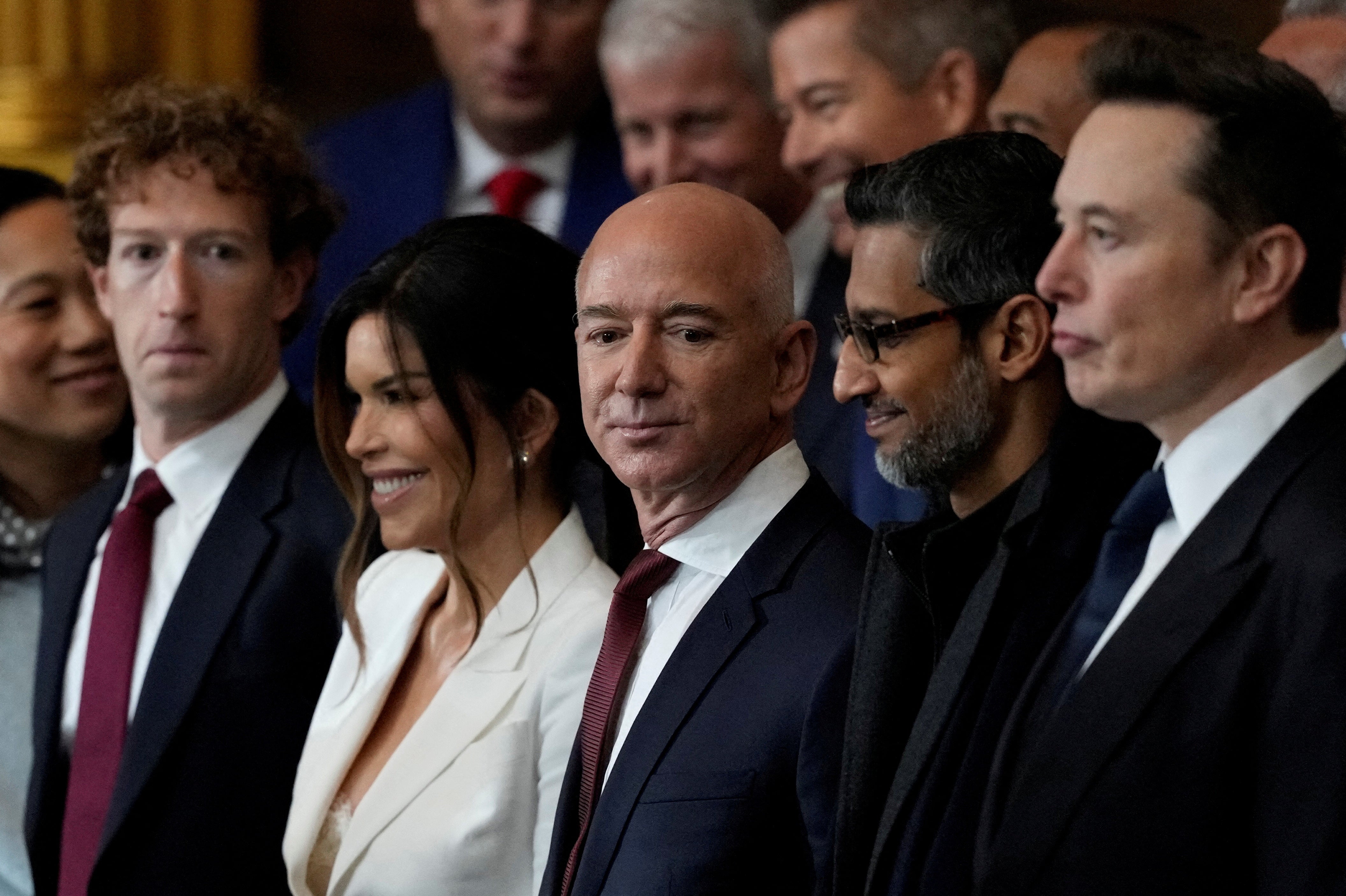
The deal infuriated some customers, given that OpenAI had said it supported similar red lines around its technology as Anthropic, another top AI lab, which the Pentagon has labeled a “supply chain risk” after it wouldn’t agree to the military’s terms on a defense-related AI contract.
The military has reportedly already used Anthropic’s model Claude as part of the Iran war.
Last year, former employees of Palantir, a data-mining firm with extensive military and immigration contacts, wrote an open letter protesting the company’s work with the Trump administration.
Silicon Valley has always had a complicated relationship with the military and national security establishment. The Pentagon has long been one of the tech industry’s key clients and investors, but this military relationship has sat uneasily with Silicon Valley’s oftentimes liberal culture and utopian dreams about technology.
In recent years, many top tech executives have shifted to the political right, and tech companies and their leaders donated millions of dollars to the second Trump campaign and inauguration.