



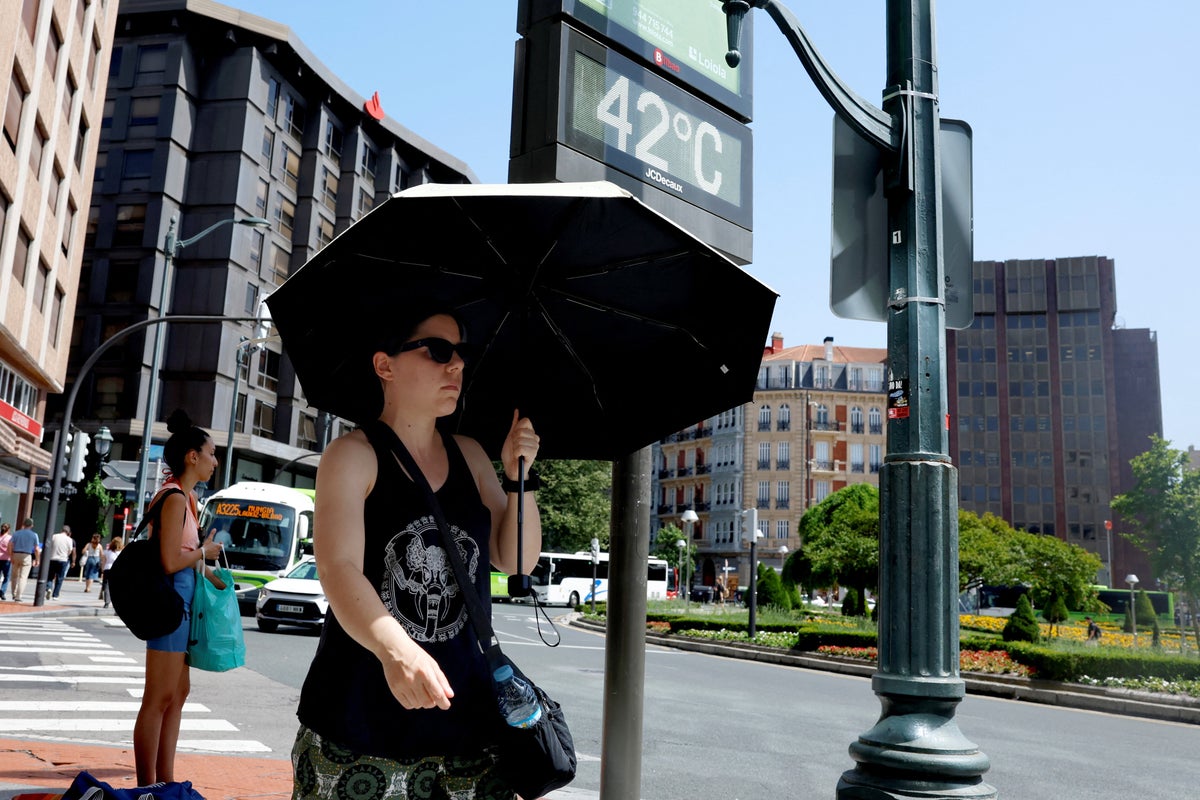
Global temperatures are likely to continue at or near record levels in the next five years, with the annual average potentially reaching as high as 1.9C above pre-industrial levels, scientists have found.
New UN climate predictions released on Thursday suggest mean annual temperatures near the earth’s surface over the years 2026-2030 will range from 1.3C to 1.9C above the 1850-1900 average.
The analysis from the UN’s World Meteorological Organisation (WMO) and the UK’s Met Office finds an 86 per cent chance that one year between now and 2030 will break the record for the warmest year.
It comes after 2024’s record temperatures broke – temporarily at least – the 1.5C threshold to which countries have agreed to limit global warming to avoid its most dangerous impacts.
The WMO and Met Office found a 91 per cent chance that at least one year in the next five will do the same.
There is also a 75 per cent chance the 2026-2030 five-year mean will exceed 1.5C above the 1950-1990 average, according to the scientists.

The climate models show there is a possibility that the world’s global average temperature could even exceed 2C above pre-industrial levels before 2030, although the scientists behind the analysis said it was “exceptionally unlikely”, with less than 1per cent chance it could happen.
Elsewhere, they found Arctic temperatures over the next five winters are predicted to be 2.8C above average temperatures for 1991-2020 – an anomaly more than three and a half times that of global mean temperature anomaly over the same period.
They also warn that northern Europe could see some very wet winters over the next five years, which is one of the key climate hazards for the region, bringing with it the risk of flooding.

The UN Paris climate treaty agreed in 2015 saw countries commit to action to curb global warming well below 2C above pre-industrial levels and to pursue efforts to curb rises to 1.5C in a bid to avoid the worst impacts of rising sea levels, drought, floods, heatwaves and extreme storms brought on by climate change.
The world’s average temperature exceeded 1.5C above the 1850-1900 average for the first time in 2024 as an “El Nino” climate phenomenon in the tropical Pacific pushed up temperatures on top of human-caused global warming.
The likelihood of the next five years being above 1.5C does not mean the threshold has been permanently breached, as the figures for long-term warming are averaged over 20 years.
Scientists say warming is currently around 1.4C above pre-industrial levels, measured from a baseline of 1850-1900 before global large-scale burning of fossil fuels took off.

The WMO and Met Office found the five-year predicted average temperature in the central tropical Pacific indicates a tendency towards El Nino weather conditions, particularly in the years 2027 and 2028.
Leon Hermanson, lead author of the report, said: “There is an El Niño predicted for the end of 2026, which increases the chances of the following year, 2027, being the next record-breaking year.”
The global annual to decadal climate update is issued annually by the WMO and is produced by the Met Office.
The report comes just after a heatwave smashed May temperature records in the UK, with experts saying the extreme weather event has been made more likely and severe by human-driven climate change.
Responding to the new report, climate minister Katie White said: “When families are worrying about grandparents overheating behind closed curtains, and children are struggling to sleep through another unbearably hot night, this stops feeling like a warning about the future and starts feeling frighteningly close to home.
“Each new temperature record broken brings the reality of climate change closer to all of us, and nobody wants to hand the next generation more extreme heat, more flooding and constant disruption as the new normal.
“But we also know surrender is not an option.
“Climate change is a global challenge, and Britain will play our part, leading with the best of British science, innovation and clean energy to protect future generations while creating the jobs, investment and energy security we deserve here at home.”