


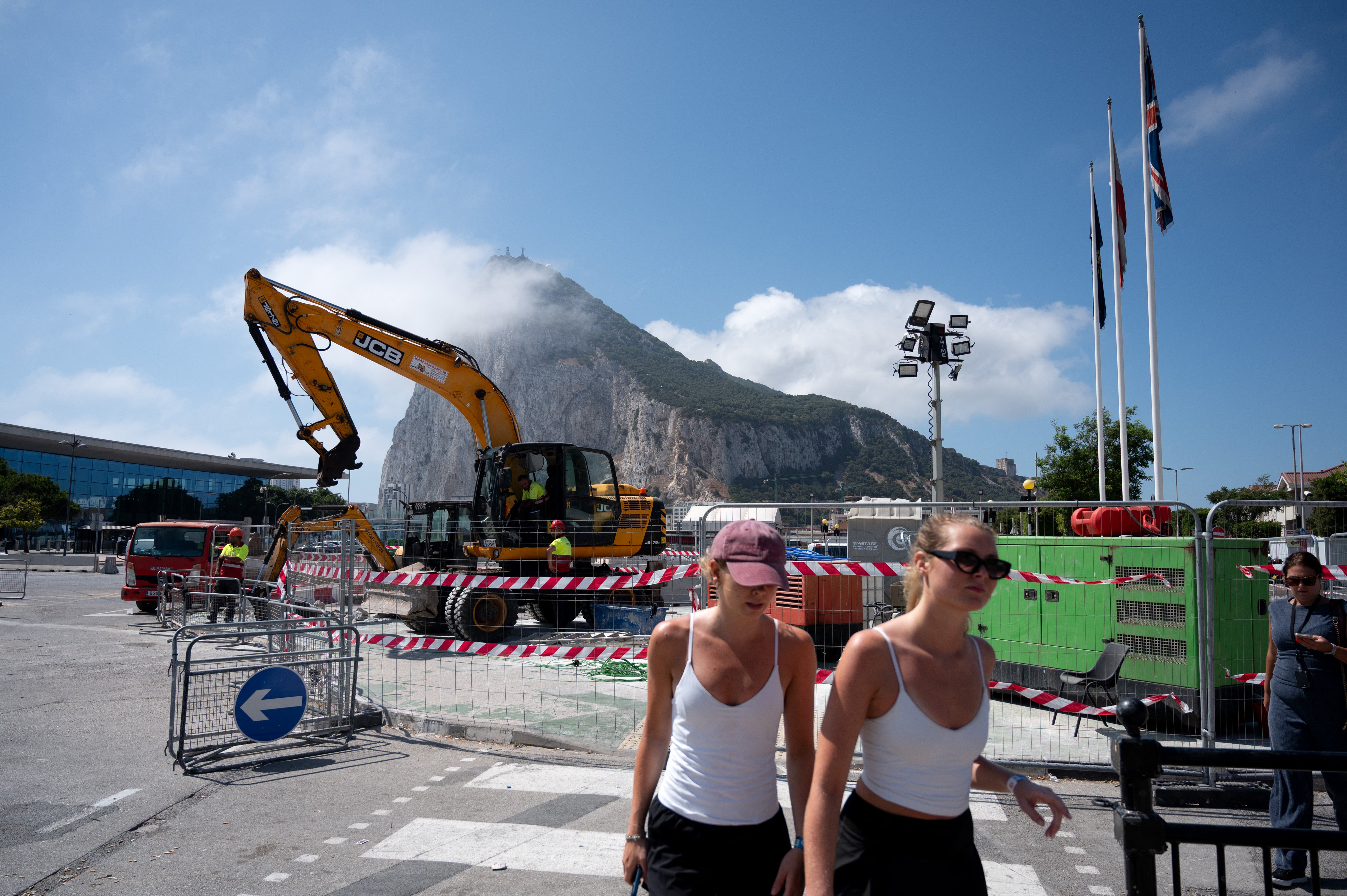
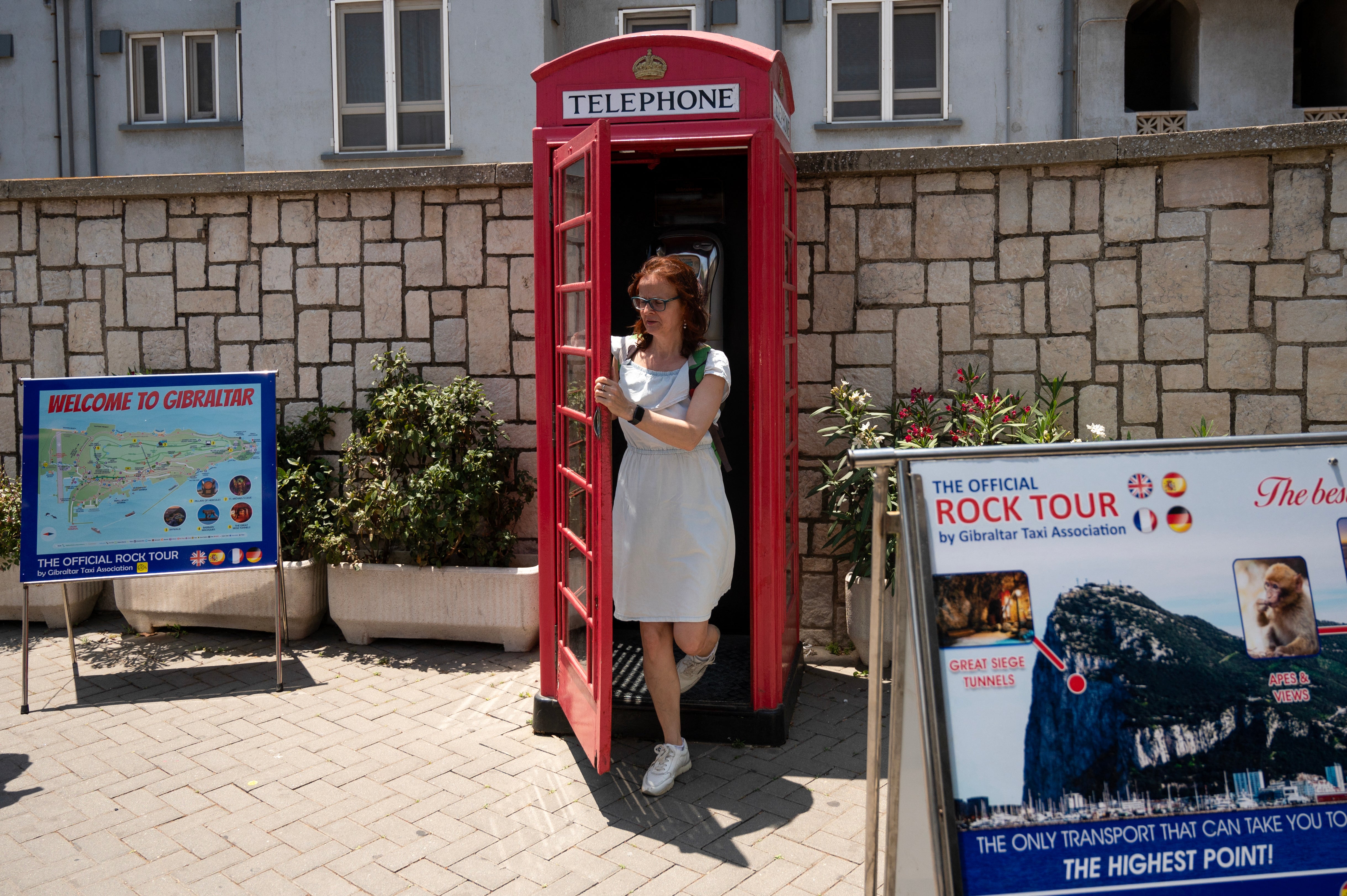
When Gibraltar’s land border with Europe disappears forever this week, a brand-new fleet of London black cabs and freshly painted new red phone boxes will appear on the Rock.
It is, perhaps, an effort by the Gibraltarian government to emphasize its Britishness – just as it moves closer to Brussels.
In the biggest change since Spain ceded the Rock to Britain over 300 years ago, the land border which has divided Gibraltar with its geographical neighbour will vanish on July 15 as part of a post-Brexit deal.
Famous for its Barbary Macaques, British bobbies and fierce resistance to Spanish attempts to recover the matchbox-sized territory, Gibraltar’s 40,000 residents are expected to find it easier to move around Europe having lost freedom of movement after the Brexit vote a decade ago.
Officially, they will still be subject to the 90-day stay limit, but as there will be no controls on the land border with Spain, it is unclear how this will be enforced. Locals believe it will be practically impossible to implement.
So, will this tiny isthmus at the foot of southern Spain so famous for its fondness for Britain become just another part of continental Europe?
Up to a point, say many on the Rock.
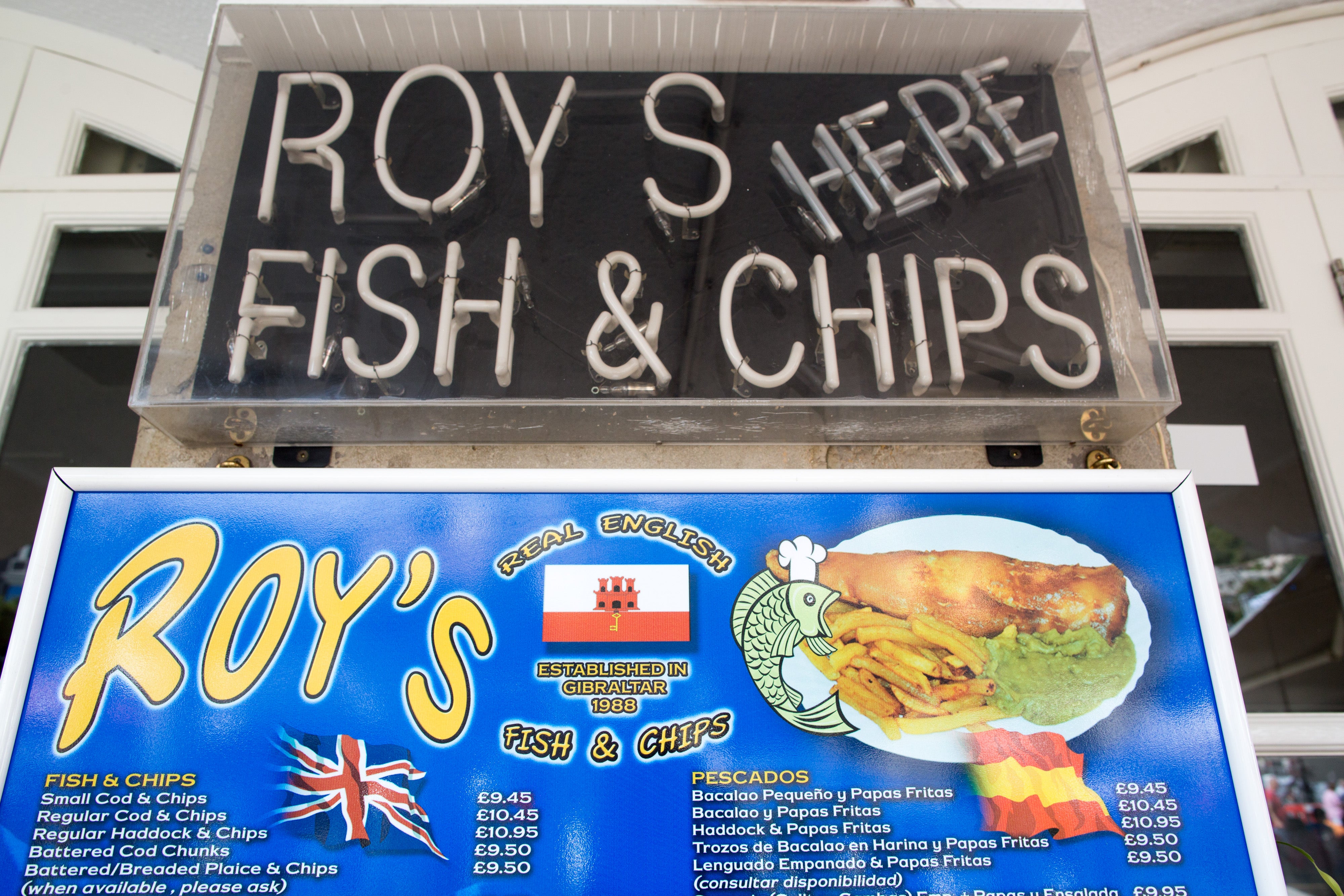
At Roy’s Fish and Chip, Roland Walker, son of the eponymous owner, is confident the closer union with Europe will only be good for Britain’s most famous dish.
“At present we get mostly British people and Americans coming in for fish n ‘chips, not so many Spaniards. Maybe if more come to visit when the Rock opens, that will be good for business,” he says.
When the land border comes down, a new transaction tax will come into force in Gibraltar. Instead of the current import duty of between 0-12 per cent, they must pay a flat 15 per cent rate which they can pass onto customers or assume.
Walker is not discouraged: “Yes, we will have to pay more tax but we will have to see how that works out. But I think this has got to be a good move. Having a hard border was the only other option and that would have been a disaster.”
Some Gibraltar residents like Mike Nicholls feel the changes will bring the good and the bad influences of continental Europe.
“I sense we will feel a little bit more European. We will be able to waltz into Spain without impediment. It will be quite odd, quite a novelty. There will be so many things you can do. It is pretty good, we have the benefits of Europe, a low tax economy and British traditions,” says Nicholls, CEO of Chestertons estate agent.
“On the other hand, we have enjoyed a low crime (society) because we are a cul-de-sac, there is no way out. Now the people we don’t want, the unsavory ones, may find it easier to come in. Here we don’t always have to close our door because it is such a community-based place.”
The alternative would be a closed border which, Nicholls adds, would be unthinkable.
“A closed border would mean businesses leaving, We would just become a sunny Falklands.”
Brian Reyes, editor of The Gibraltar Chronicle, the local paper, believes many fail to understand that the Rock is not some outpost of Little England on the Mediterranean.
“We will still be eating fish n’ chips” he says. “But you have to remember we are not English; we are a mixture of Mediterranean-British.
“There will be freedom of movement into the Schengen area for Gibraltar residents. Officially, they will be subject to the 90 day rule but it will be difficult to see how that is enforced.”
Gibraltar’s population is a hotchpotch of nationalities and religions; English, Scottish and Irish live alongside the Maltese, Genovese and Jewish and Muslims.
Llanito, the mixture of English and Spanish and other Mediterranean tongues only spoken on the Rock, is another example of the singular character of the place.
When Reyes speak, he starts a sentence in English and finishes it in Spanish.
Of course people are a little worried about such a seismic change, he says, but there is a general optimism in the air.
“People are naturally twitchy about how things are going to change and twitchy about security. It will be a huge change. Especially on the high street as they will have to pay new taxes,” he continues.
“But there is also a quiet optimism about the future. You must remember that the alternative, a hard border, would have been awful.”
The Imperial Newsagents, which includes the Model Den, a shop for those fond of building models of Spitfire fighters or Lancaster bombers, opened in 1919.
The new tax may force its owners to push up prices and customers might choose to buy cheaper models over the border in Spain, where prices are lower.
Owen Smith, chairperson of the Gibraltar Federation of Small Business, said more European companies like Zara might start to invade the High Street.
“I do think that there is a chance we may lose some of our British retail experience. I know there is a concerted effort to stop that happening. It is the USP of Gibraltar,” he says.
“Gibraltar has been slightly insulated from many of the challenges which high streets in the UK face. It has many locally owned businesses and fewer franchises. It is one of the challenges to try to retain that uniqueness.”
Anyone arriving by foot in the Rock must first cross Gibraltar airport runway before entering the territory.
At present the only planes which arrive are from the UK but as the border comes down, that may change.
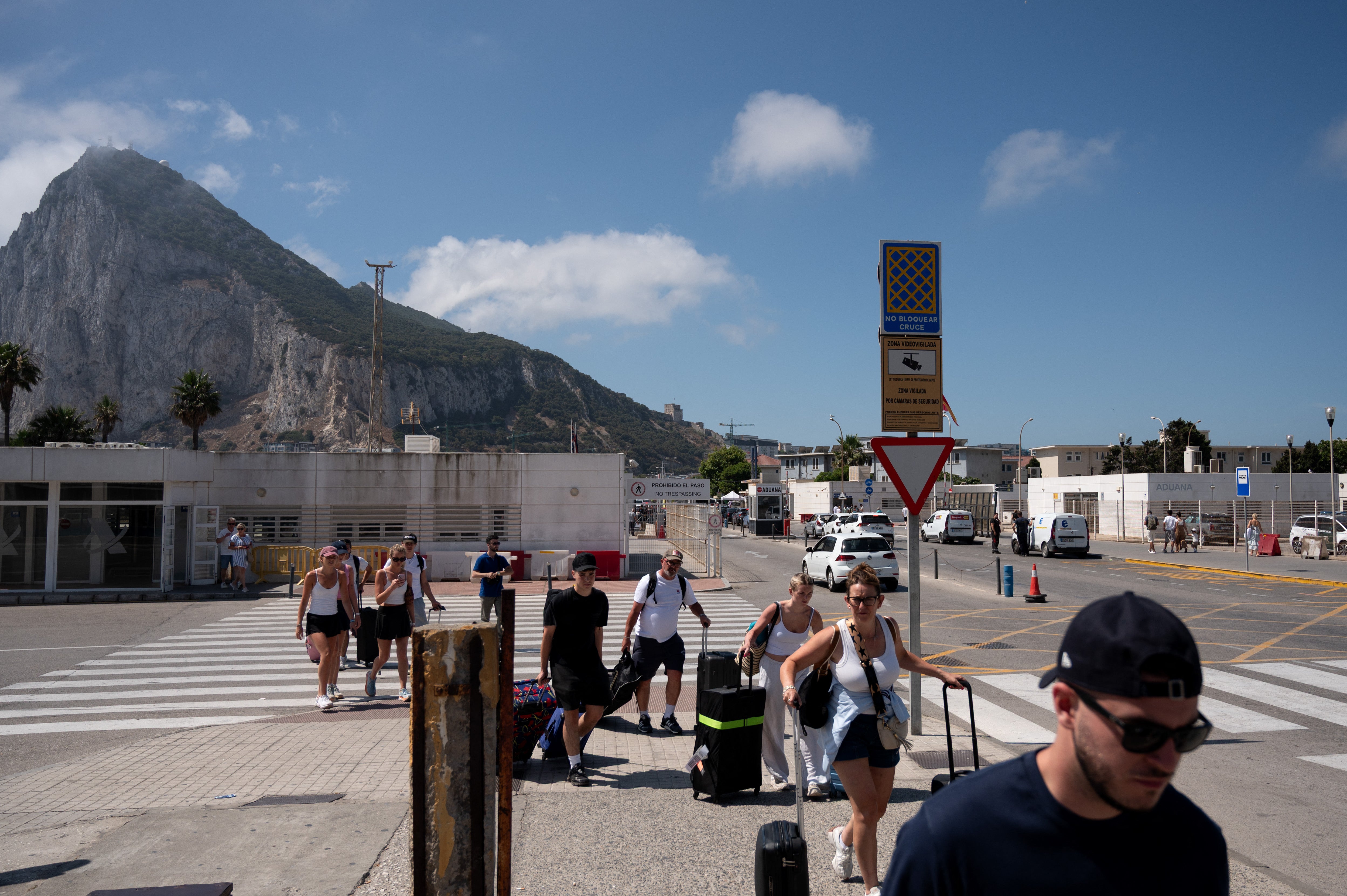
Visit Gibraltar, the tourist office, told The Independent other airlines have expressed an interest in flying into the Rock but declined to reveal more details.
When the land border disappears, it will be the most important change for a British Overseas Territory since Britain handed Hong Kong back to China in 1997.
Diggers have already removed police buildings from Spain’s side of the border crossing ahead of the deal being signed in Brussels, which removes the need to present passports at the land border between Gibraltar and Spain.
Britons arriving at the airport will still have to show their passports to Gibraltar officials then Spanish civil guards, who will have the final say on entry to a British territory. The same will apply to arrivals at the port.
The Royal Gibraltar Police office for passport controls also disappeared ahead of the signing of the deal which makes the Rock part of the EU’s Schengen border-free space.
The possibility of Spanish sovereignty over the Rock was not discussed but Fabian Picardo, Gibraltar’s chief minister, had to accept greater Spanish influence. Madrid will have a veto over granting of residency to Gibraltar.
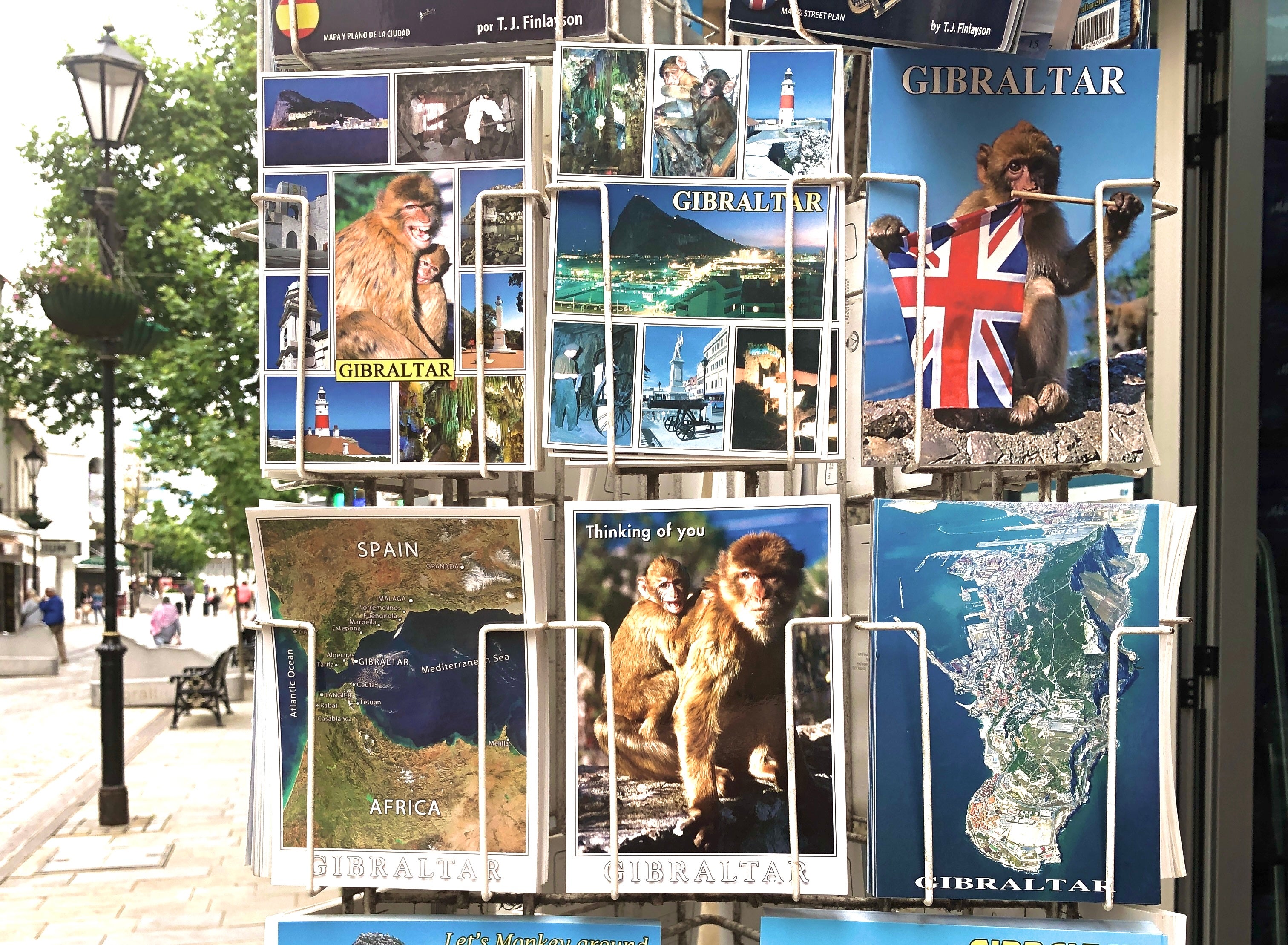
Across the border in La Linea de la Concepción live many of the 15,000 Spanish workers who commute daily to the Rock to keep the place going.
The post-Brexit deal has already created a social split in one of Spain’s poorest towns which has long been dogged by drug trafficking. Here unemployment stands at nearly 29 per cent, leaving crime the only option for many young people.
“What is happening is an increasing number of people from Gibraltar with a higher earning power are buying houses and pushing up prices beyond what local people can afford. It creates a divide,” Juan Franco, mayor of La Linea, said.
“It is gentrification, but locals are being left out.”