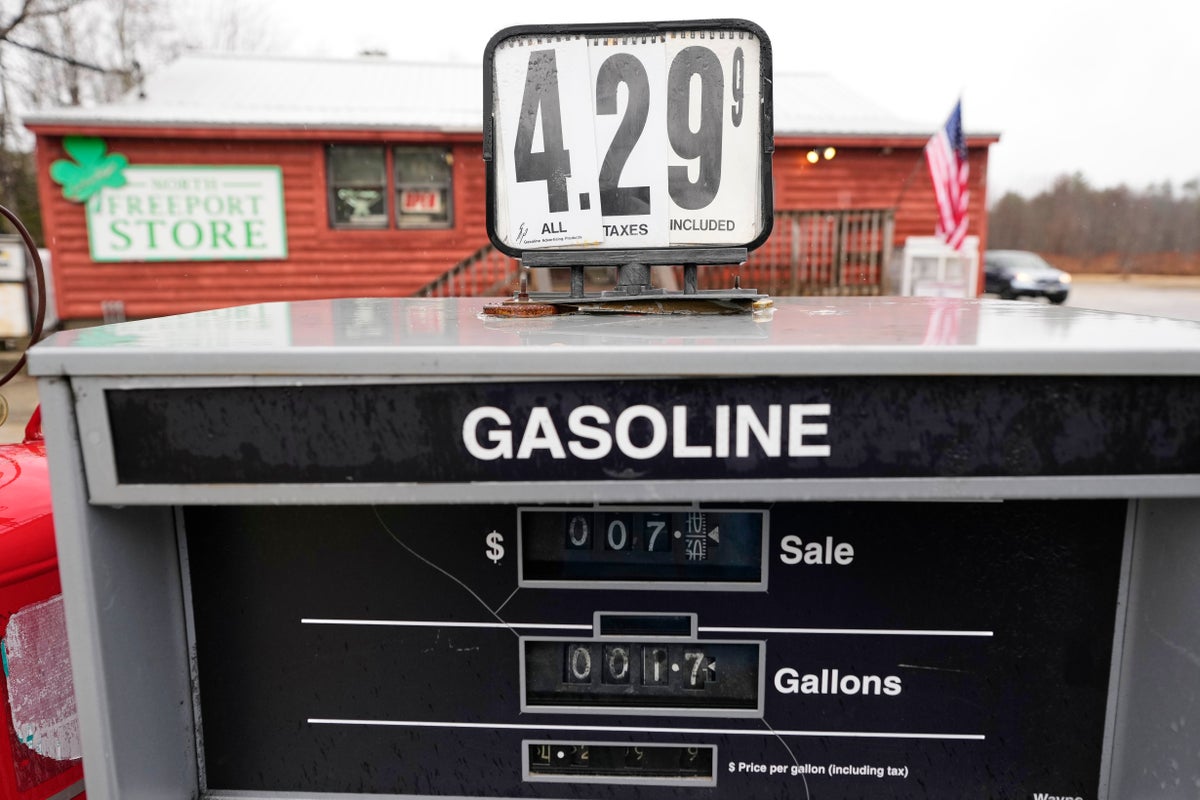
With the average price of a gallon of gas topping $4 nationally, some federal and state officials have talked of temporarily reducing motor fuel taxes to provide relief to motorists.
So far, Georgia and Utah are the only states to suspend all or part of their gas taxes as the war in Iran has pushed fuel prices higher. Others are considering it. But there are a variety of reasons that policymakers may not relax gas taxes, including concerns about government finances, doubts about the action’s effectiveness and uncertainty about how long the war will last.
Here’s a look, by the numbers, at the debate:
2 states
The two states to suspend gas taxes this year took significantly different approaches. Georgia’s 60-day suspension of its 33-cent-a-gallon gas tax took effect once Republican Gov Brian Kemp signed it into law on March 20, making it the first state to act since the war started. Three days later, Republican Utah Gov. Spencer Cox signed a law temporarily trimming 6 cents off the state’s 38-cent-a-gallon fuel tax. But the six-month reduction won’t begin until July 1.
38 cents
Retail gas stations have charged consumers an average of 38 cents per gallon above wholesale prices over the past five years, according to Jeff Lenard, a spokesperson for the National Association of Convenience Stores. Their profits after expenses often are less than half that, he said. Meanwhile, the daily price for a barrel of oil has swung dramatically during the war with Iran — sometimes by the equivalent of around 40 cents a gallon, Lenard said.
Why do those numbers matter? They highlight the complexity of setting gas prices. When a gas tax is suspended, motorists may not see an equivalent reduction in retail prices. That’s made Republican Florida Gov. Ron DeSantis hesitant to repeat a gas tax suspension he approved when prices last spiked in 2022.
“Our ability to influence the fuel prices are really marginal at best,” DeSantis said in March, adding: “I don’t think the consumer really felt relief.”
61 cents
California charges a nationally high gas tax of 61 cents per gallon, with additional fees on top of that. The tax contributes to California’s highest-in-the-nation gas prices, which averaged $5.89 a gallon on Wednesday, according to AAA. Several Democratic and Republican gubernatorial candidates have called for suspending the gas tax. But the proposal hasn’t gained traction in the Democratic-led Legislature, where some are concerned about how to make up for the lost revenue.
$100 million
Republicans in Maryland pushed for a 30-day gas-tax suspension. But their attempts were rejected by the Democratic-led General Assembly. A spokesperson for Democratic Gov. Wes Moore said a one-month suspension could have blown a $100 million hole in the state’s transportation budget even as officials already were cutting spending and shifting money to make up for a projected shortfall in the state’s overall budget.
A better approach would be to end the war, said Moore spokesperson Ammar Moussa, adding: “The best way to bring prices down is to address the source of the pain.”
Since the war began on Feb. 28, Trump has repeatedly has said it could be over soon while also threatening to widen the conflict.
$330 million
Whether states have the money to make up for lost fuel taxes is a pivotal question. Georgia is dipping into its surplus. In Connecticut, Democratic state Senate leaders have suggested that Gov. Ned Lamont could tap into the roughly $330 million remaining in an emergency fund meant to respond to federal government actions to help offset a proposed one-month suspension of the state’s 25-cent-a-gallon gas tax.
“The fund was created precisely for situations like this: when federal actions create hardship for Connecticut families,” Senate President Pro Tem Martin Looney and Majority Leader Bob Duff said in a statement.
A spokesman for the Democratic governor said Lamont is willing to work with lawmakers on “a smart and strategic pause to the state’s gas tax.”
$800 million
Gas taxes generally pay for building, expanding and repairing roads and bridges. Unless funds are shifted from elsewhere, suspending a gas tax means less money for transportation projects, including some that may already have been budgeted.
In South Carolina, the state gas tax provides about $800 million yearly, helping to fund nearly $7 billion of projects ranging from safety improvements on two-lane roads to a massive overhaul of interstate interchanges. Republican Gov. Henry McMaster worries that major projects would take longer and cost more if tax revenue were cut. He dismissed the suspension of gas taxes as a “sort of knee-jerk reaction.”
“We’d like them all to be lower and lower,” McMaster said, “but that’s one we should not take any money out of.”
___
Associated Press writers Jeffrey Collins, Susan Haigh and Brian Witte contributed to this report.
.png?trim=0,0,0,0&width=1200&height=800&crop=1200:800 "Well Enough | Ed Gamble on body transformations: ‘Your life is horrible’ – UK Times")