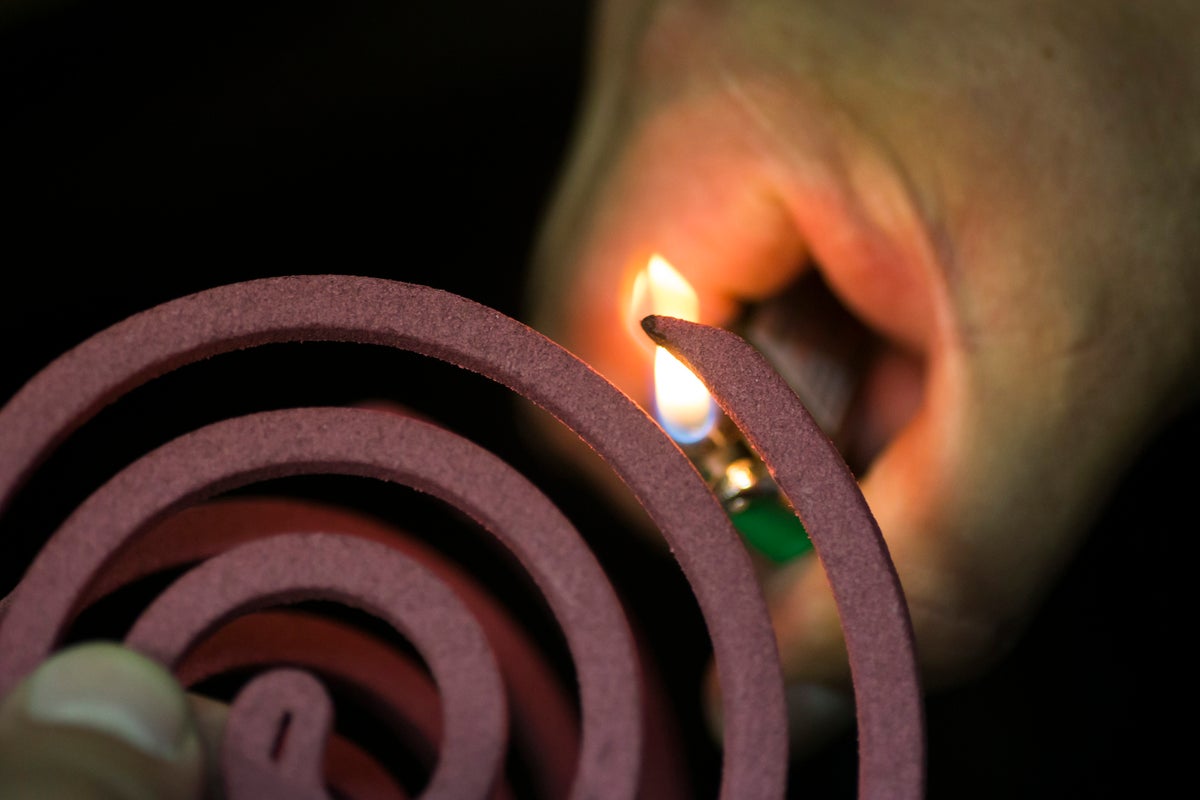
Diptyque, a French luxury brand, is facing a wave of ridicule after releasing a £39 “scented spiral” that social media users say looks almost identical to the inexpensive mosquito coil burned in homes across Asia to keep insects away.
The perfume and home-fragrance company recently introduced a citronnelle, or lemongrass, incense spiral as part of its Summer Water Garden collection. A set of six scented coils and a gold-finish holder retails for €45 (£39), while a matching glazed porcelain incense holder designed for the spirals costs a further €140 (£121).
On its website, Diptyque describes the spiral as a luxury outdoor fragrance releasing “relaxing notes recalling the peaceful air of a water garden” that create “an outdoor oasis” with a “fresh, herbaceous scent”.
The porcelain holder, crafted by artisans in Portugal and glazed in green with “subtle tonal variations”, features leaf-shaped openings inspired by “the mosaics of Diptyque’s summer water garden”.

For many people online, the product looked less like a luxury item and more like something found next to mosquito spray and insect repellent on a local supermarket aisle.
In India, users are comparing the spiral to mosquito-repellent products from familiar brands like Kachhua Chaap and Good Knight, whose coils typically sell for between ₹30 (24p) and ₹50 (39p).
“Oh to be the mosquito that dies smelling Diptyque citronnelle, like, what a diva! Even pests have a more luxurious death than my dating life,” joked one user on X.
“They gentrified my hit mosquito coil,” wrote another.
In the Philippines, where mosquito coils are commonly known as “katol”, users began jokingly referring to the spiral as “kateaulle”, a faux-French spin on the Filipino word for mosquito coil.
One person posted images of Diptyque’s luxury spiral and a lavender-scented mosquito coil sold by the pest-control company Baygon and wrote: “You came from a mansion, I came from the streets.”
A Reddit user described it as a “marked up mosquito coil” and added that “citronella is such a strong smell that putting it on actual fragrant wood should be a crime”.
“My guess is this is just sawdust with some essential oil added to it, and the same thing can be bought in the ‘outdoor’ section of your favourite department store for 10 per cent of the price,” they wrote.
For many people in Asia, the spiral brought to mind a growing list of luxury products that faced ridicule online in the past for resembling familiar household and cultural items.
Last year, the Italian fashion house Prada faced backlash over sandals that were identical to traditional Kolhapuri chappals, a centuries-old handcrafted footwear style from the Indian states of Maharashtra and Karnataka, before later acknowledging the inspiration.
Many recalled the controversy that engulfed the French luxury label Dior in 2022 after it sold a $3,800 skirt that closely resembled the traditional Chinese mamianqun, or horse-face skirt, and described it as a “hallmark Dior silhouette” without initially acknowledging its historical origins.
The mosquito coil itself has a long and unexpectedly global history.
The modern version was first developed in Japan in the late 19th century by entrepreneur Eiichiro Ueyama, who developed mosquito-repelling incense using pyrethrum, a natural insecticide derived from chrysanthemum flowers, according to The Japan Times.
The now-familiar spiral shape emerged after his wife, Yuki Ueyama, suggested coiling the incense so it would burn for longer periods, an idea that took years to perfect before reaching the market.
The product spread widely across Asia because it was cheap, portable, and required no electricity. Over time, coils became closely associated with humid evenings, monsoon, and mosquito control in countries like India, Indonesia, Thailand, China, and the Philippines.
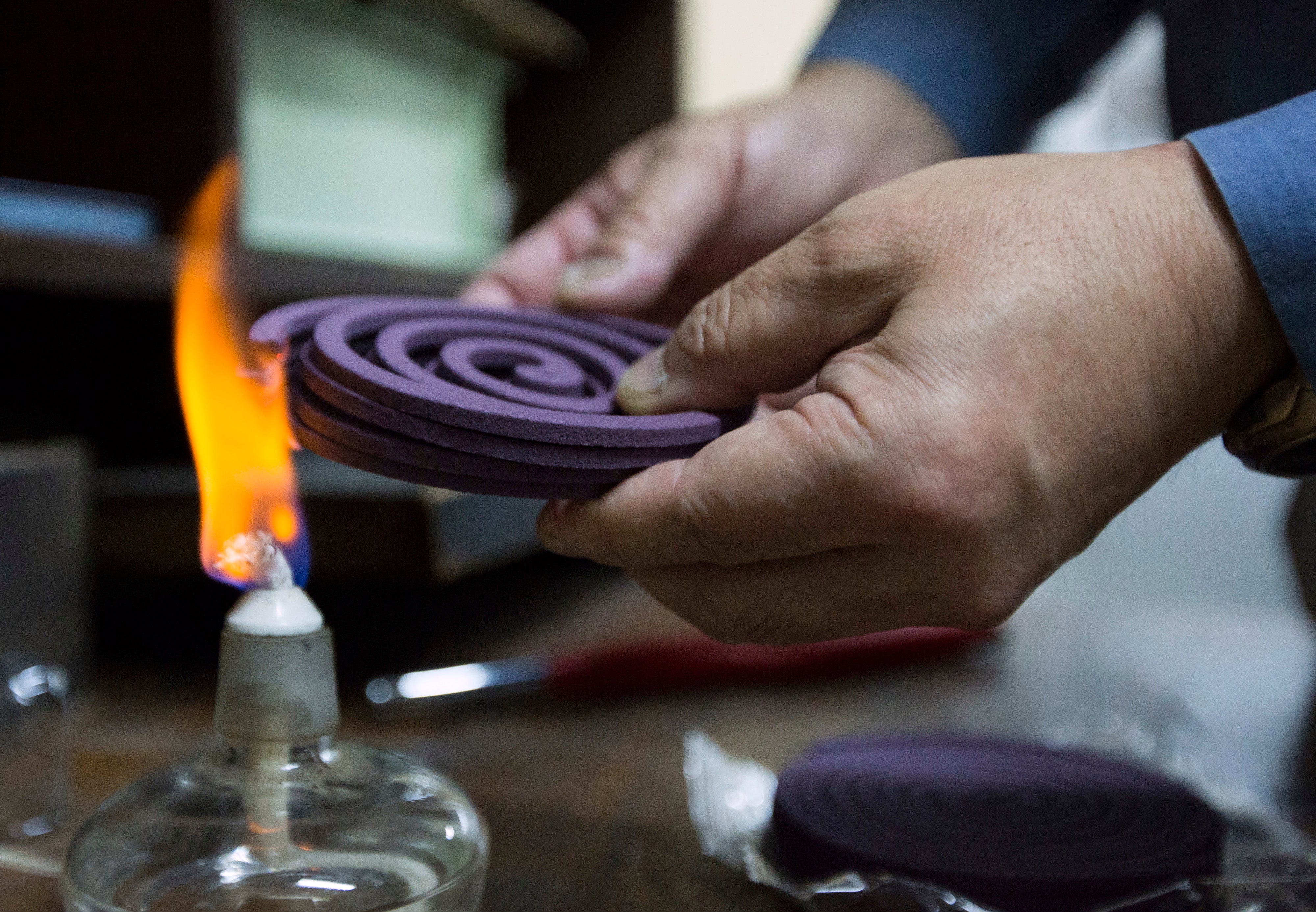
Different nations also developed their own names and cultural associations for them. In Japan, they are known as “katori senko”, meaning “mosquito-taking incense”. In the Philippines “katol” became a generic household term for mosquito coils regardless of brand.
Diptyque’s spiral, by contrast, is not positioned in any way as insect repellent but as a luxury outdoor fragrance experience. According to the description on the website, the citronnelle coil is designed to evoke “the peaceful air of a water garden” and create “a serene cocoon” when paired with the matching porcelain holder.
The Independent has reached out to Diptyque for comment.