
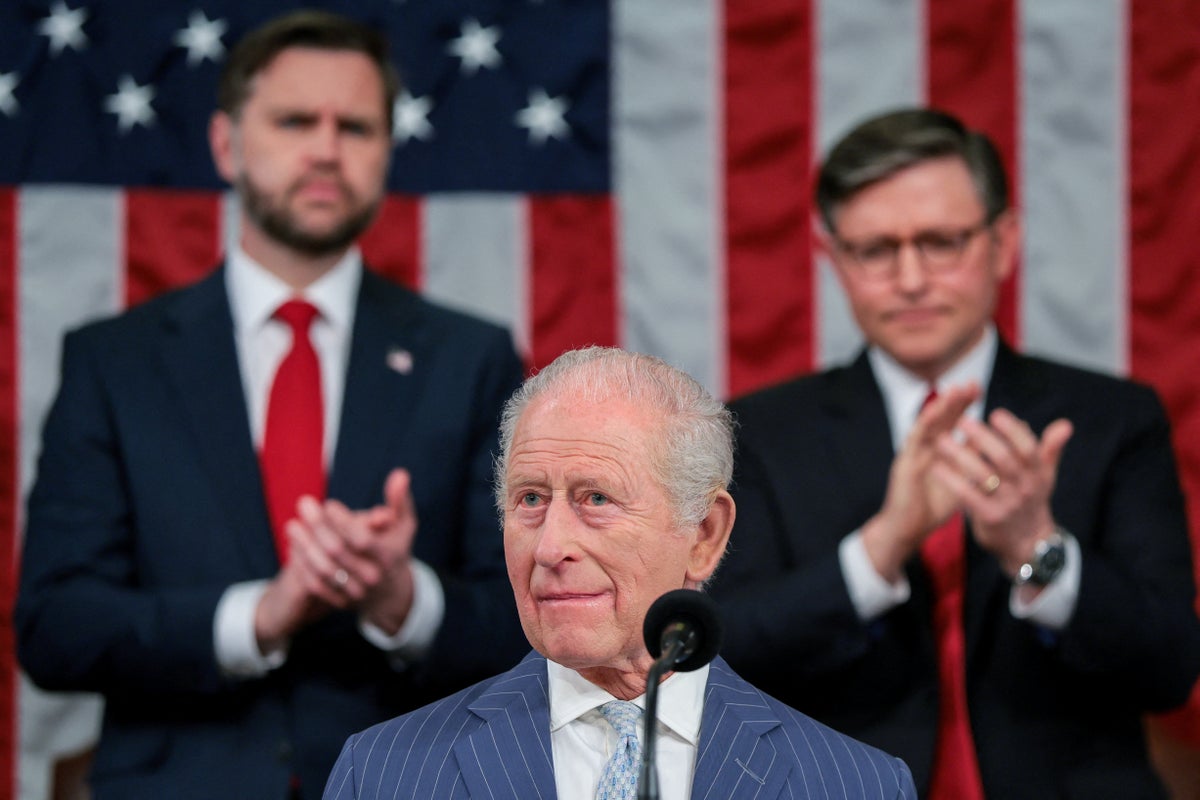
King Charles III centred transatlantic harmony in his historic speech to both houses of Congress, receiving multiple standing ovations and a rapturous response.
He became the second monarch, after his mother Queen Elizabeth II, to stand and speak in front of representatives in the iconic US Capitol Building. The King is currently visiting Washington DC for a four-day state visit that many hope will appease US president Donald Trump, as relations with the UK are currently in a difficult place.
The parallels between the two speeches, 35 years apart, were notable. When the late Queen gave her speech in 1991, Republican George H. W. Bush was president and Conservative John Major was prime minister, and the two nations grappled with the Gulf War and the pending fall of the Soviet Union. Spectators at the time reflected on the late Queen’s sense of humour, her focus on the “special relationship” and calls for transatlantic cooperation.
As Charles stood where his mother had, instability in the Middle East and eastern Europe remains just as prevalent, and the themes of his speech were much the same, as he referred to the importance of Nato and the interlinked destinies of the UK and US.
Here are the key takeaways from his speech:
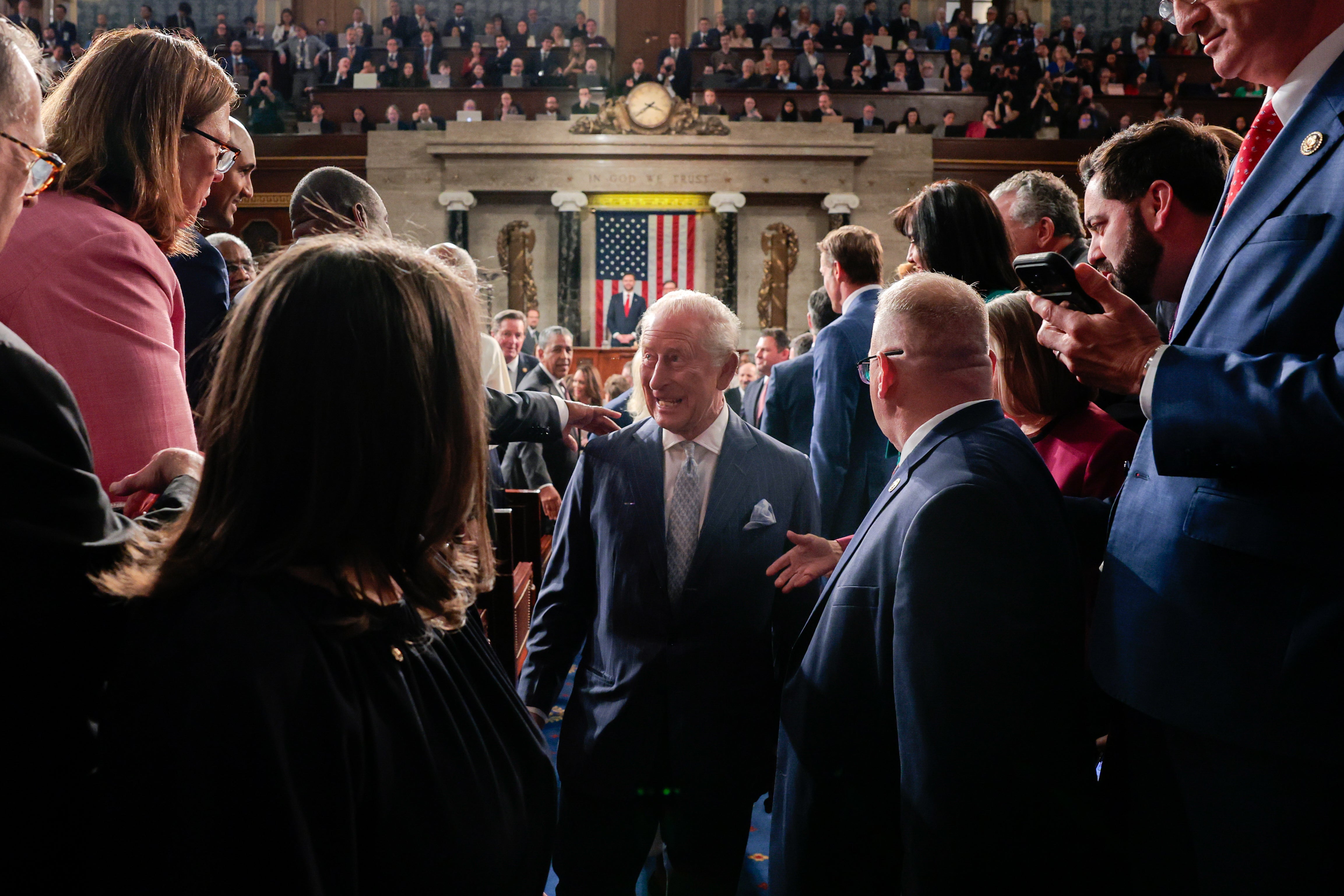
The UK-US ‘special relationship’
A focus on the special relationship was at the core of King Charles’s speech. Reflecting on the 250th anniversary of American independence, the King said that while the UK and the US had not always agreed, the partnership of the two nations had produced greatness.
“With the spirit of 1776 in our minds, we can perhaps agree that we do not always agree – at least in the first instance,” he said. “Indeed, the very principle on which your Congress was founded – no taxation without representation – was at once a fundamental disagreement between us, and at the same time a shared democratic value which you inherited from us.
“Ours is a partnership born out of dispute, but no less strong for it, so perhaps, in this example, we can discern that our nations are in fact instinctively like-minded – a product of the common democratic, legal and social traditions in which our governance is rooted to this day.
“Drawing on these values and traditions, time and again, our two countries have always found ways to come together.”
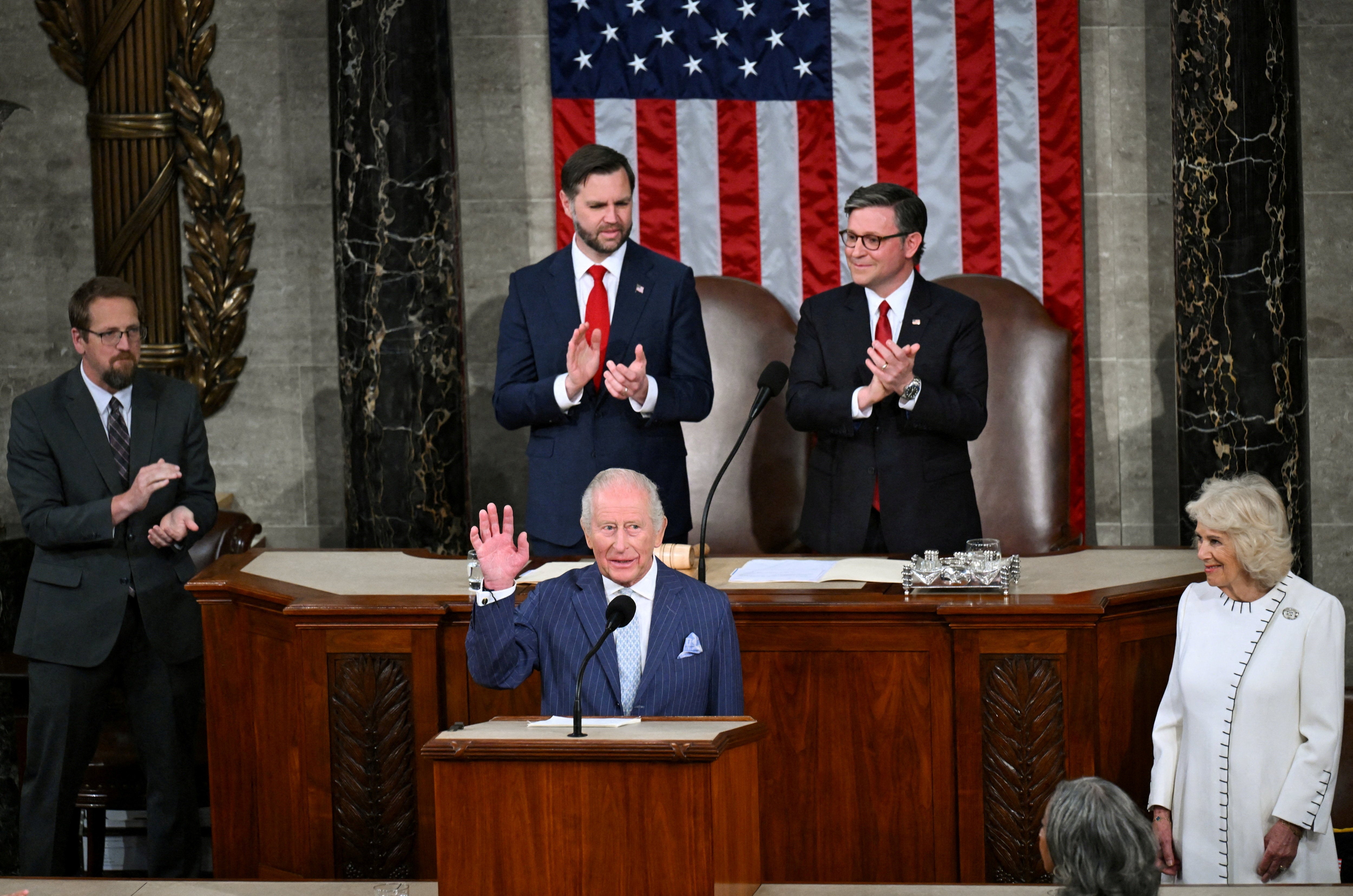
The pressure was on for the monarch as President Trump had expressed disappointment in the UK for not showing as much support to the US-Israeli conflict in Iran. The president has called the UK’s approach to the Iran war “terrible” and repeatedly lashed out at prime minister Sir Keir Starmer – at one point describing him as “not Winston Churchill”.
“The story of the United Kingdom and the United States is, at its heart, a story of reconciliation, renewal and remarkable partnership,” King Charles said. “From the bitter divisions of 250 years ago, we forged a friendship that has grown into one of the most consequential alliances in human history.”
In defence of Nato
King Charles made a point to defend the role of Nato, following criticisms from President Trump of the alliance for not being sufficiently supportive of the war he launched against Iran at the end of February.
At the start of his speech, Charles acknowledged: “We meet in times of great uncertainty, in times of conflict from Europe to the Middle East which pose immense challenges for the international community and whose impact is felt in communities the length and breadth of our own countries.”
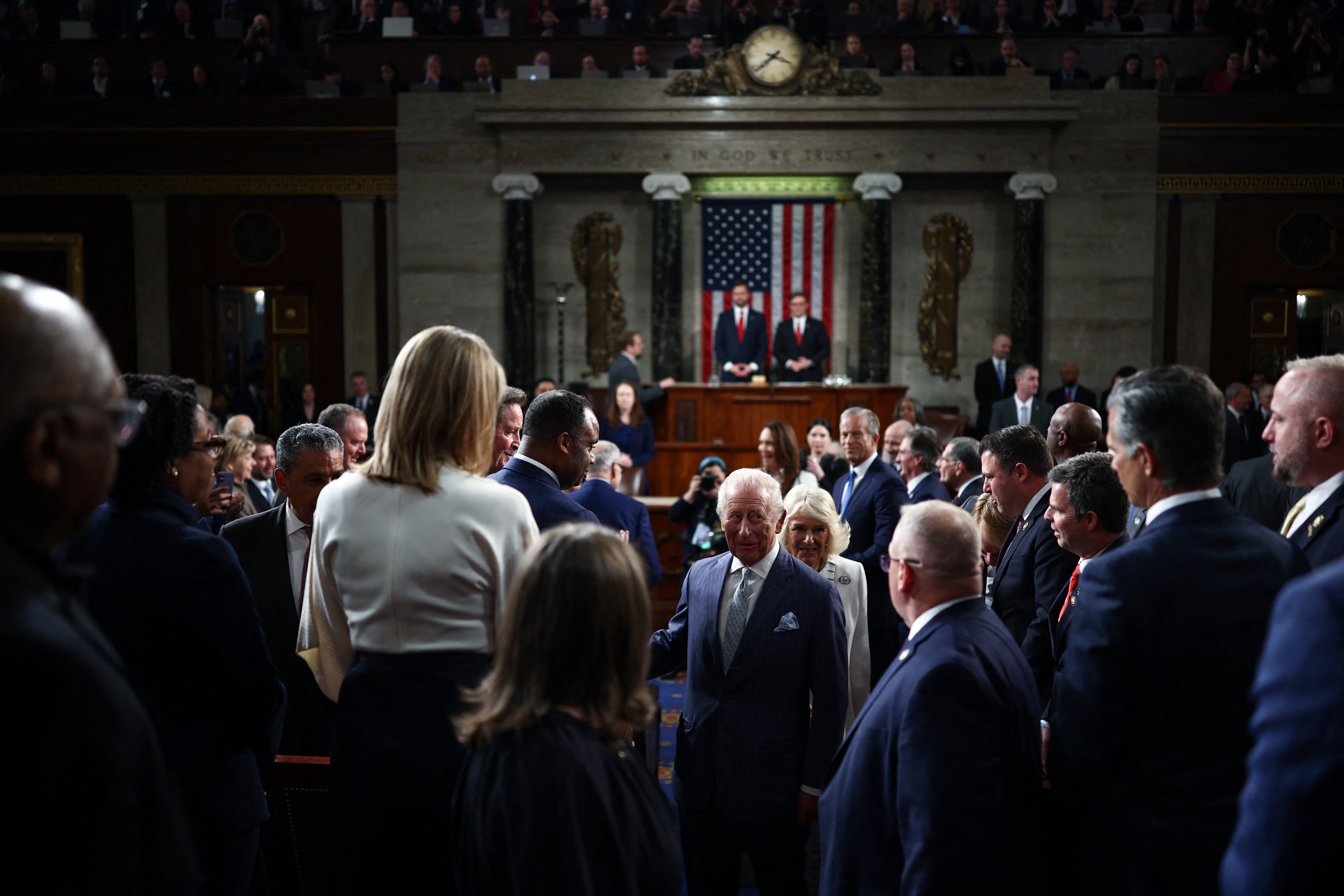
He later said: “From the depths of the Atlantic to the disastrously melting ice-caps of the Arctic, the commitment and expertise of the United States Armed Forces and its allies lie at the heart of NATO, pledged to each other’s defence, protecting our citizens and interests, keeping North Americans and Europeans safe from our common adversaries.”
Mr Trump previously called the 32-member defensive alliance a “paper tiger” and threatened to withdraw America from the mutual defence pact.
As he looked to the 25th anniversary of 9/11, Charles pointed out that Nato had invoked Article Five for the first time and the United Nations Security Council put on a united front.
“We answered the call together – as our people have done so for more than a century, shoulder to shoulder, through two World Wars, the Cold War, Afghanistan and moments that have defined our shared security,” he said. “Today, Mr Speaker, that same, unyielding resolve is needed for the defence of Ukraine and her most courageous people.
“It is needed in order to secure a truly just and lasting peace.”
No mention of Epstein’s survivors
The monarch has faced repeated calls to meet with or at least acknowledge the survivors of Jeffrey Epstein as part of his visit. Speaking at the heart of the US legislature, he fell short of making a direct acknowledgement of the survivors, but did make a more general reference to victims.
“In both of our countries, it is the very fact of our vibrant, diverse and free societies that gives us our collective strength, including to support victims of some of the ills that, so tragically, exist in both our societies today,” he said.
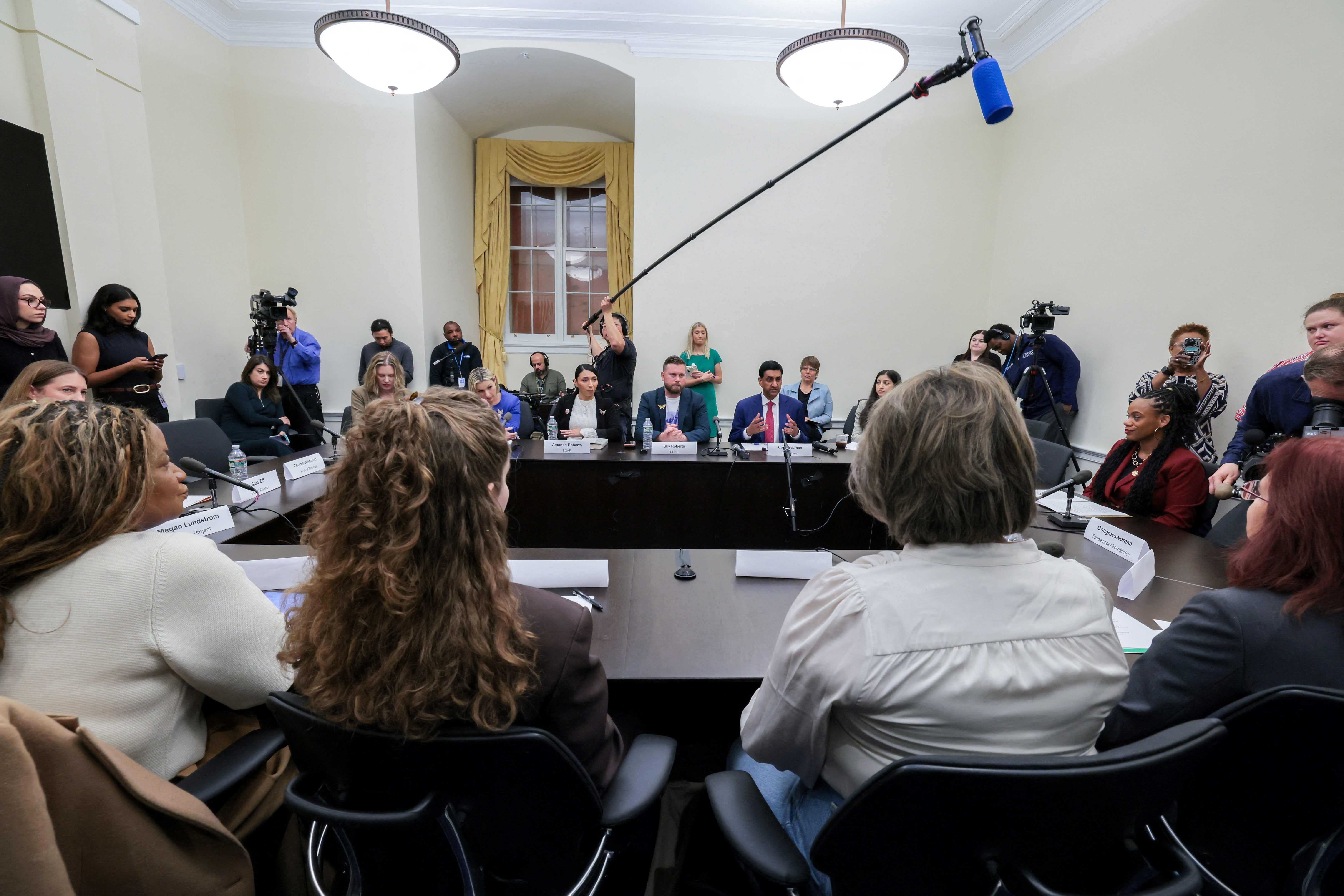
A palace aide has said it was on the King’s “mind to acknowledge victims of abuse, so they are naturally incorporated in this line”.
The King has faced particular pressure to meet with the survivors because his brother, Andrew Mountbatten-Windsor, had a close relationship with the disgraced financier. One victim of Epstein, Virginia Giuffre, claimed she met the former Duke of York when she was 17 and had sex with him. Mr Mountbatten-Windsor has always denied any wrongdoing.
Multiple standing ovations
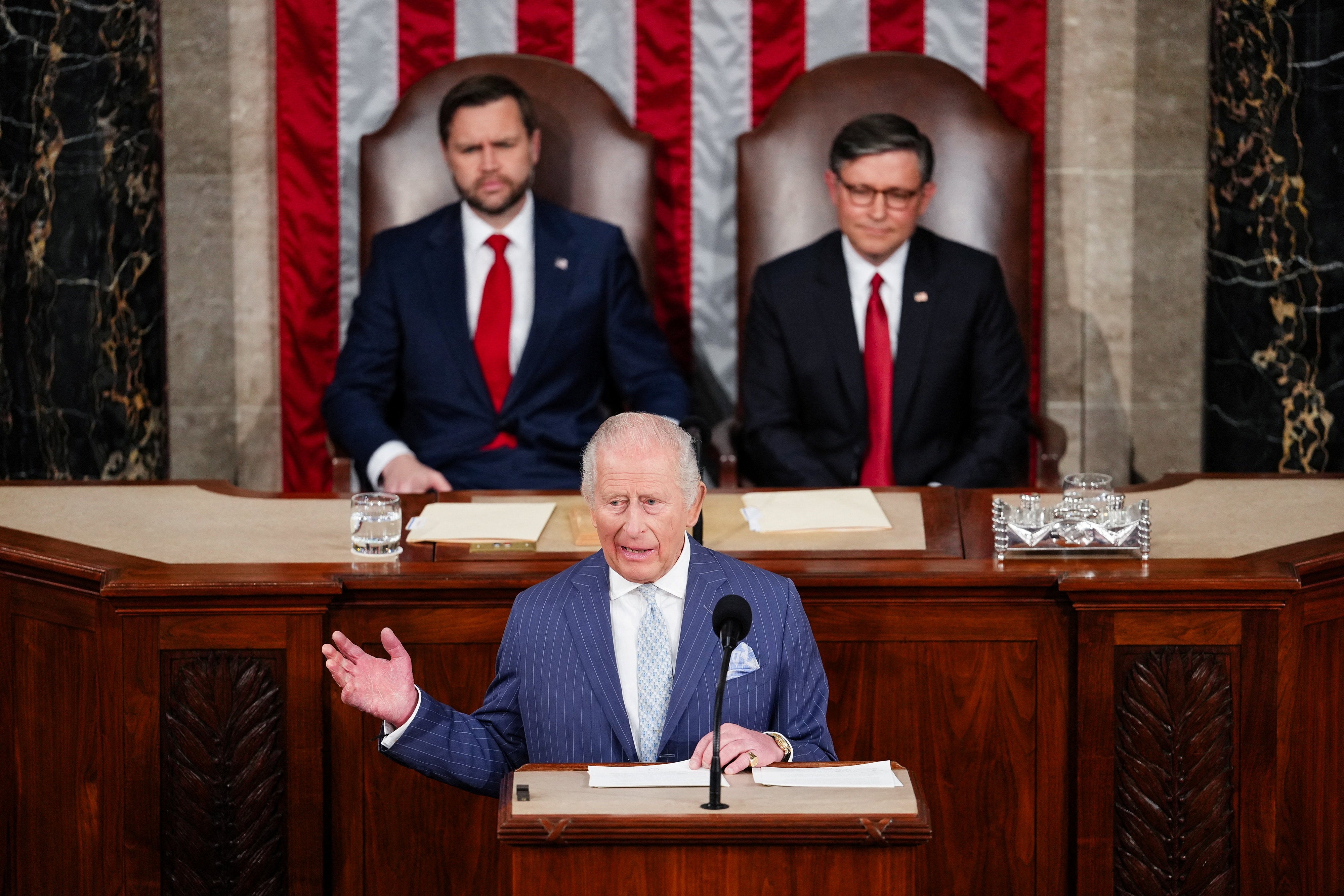
The King’s speech was met with a rapturous response from both houses in Congress, as the audience repeatedly interrupted his address with loud applause. There were 12 standing ovations in total as the oft-divided Capitol Building was united in enthusiasm for his speech.
The King’s sense of humour
Commentators have acknowledged that a sense of humour and charm are key parts of the King’s artillery when interacting with President Trump. As he spoke in front of Congress, he took a moment to make jokes once again.
“As you may know, when I address my own Parliament at Westminster, we still follow an age-old tradition and take a member of Parliament ‘hostage’, holding him or her at Buckingham Palace until I am safely returned,” he joked. “These days, we look after our ‘guest’ rather well – to the point that they often do not want to leave.
“I don’t know, Mr Speaker, if there were any volunteers for that role here today?”