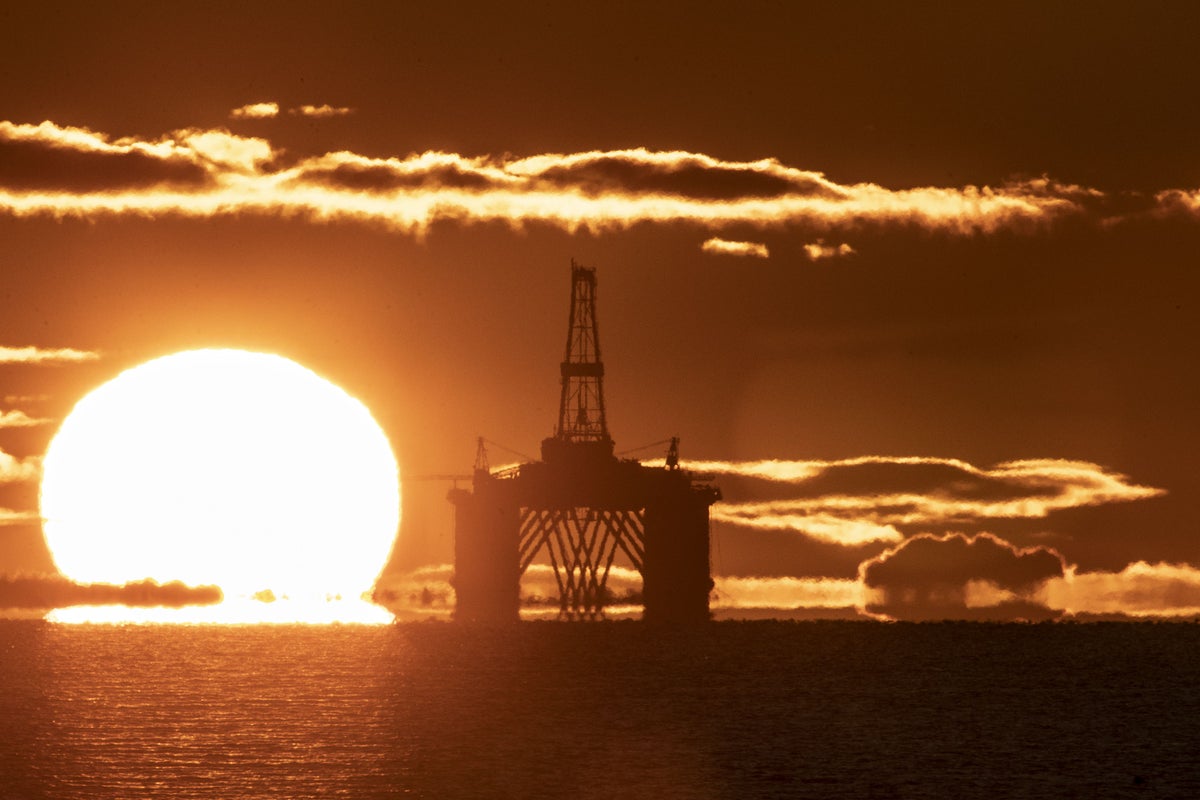
The offshore energy industry will hold an exercise to test its response to simulated threats involving suspicious vessels, drones and cyber attacks.
Ahead of a conference taking place in Aberdeen this week, “exercise Granite Resolve” will gauge how the industry, police and other agencies deal with a complex emergency situation.
While the desktop exercise does not specify the origin of the potential threat, it comes after the UK and allies tracked Russian submarines loitering near critical undersea infrastructure in the High North.
The Defence Secretary has said the activity was closely monitored and warned Russia that any attempt to damage infrastructure would have “serious consequences”.
Offshore Energy UK’s (OEUK) Security and Resilience conference will take place on Wednesday, bringing together industry figures, defence specialists and Police Scotland to discuss how to protect North Sea assets and its energy system.
Mark Wilson, OEUK’s energy operations director, said the offshore industry has long had “robust” arrangements to deal with dangers like fires and explosions at sea, but it does not want to be complacent about emerging threats.
He told the Press Association: “Responding to some of the evolving physical and cyber security threats, requires us to be on the front foot and be agile in our thought process.”
Around 70 personnel from the offshore energy industry will take part in the desktop exercise, as well as officials from Police Scotland, the Department for Energy Security and other agencies.
The scenario will involve both physical and cyber security threats, where signals initially come from other jurisdictions in the North Sea such as Norway and Denmark.
Those taking part will be asked to respond to vessel activity and drone activity “both subsea and airborne”.
Complicating the scenario further, a group of activists will be boarding unattended installations – generating a “cybersecurity threat”.
The exact motivations of these activists, including whether they are working for a “state actor”, will not be immediately apparent – introducing more uncertainty into the situation.
Mr Wilson said: “The idea being, we’re going to test this at multiple levels.
“We’ve got well-tested and well-proven structures to our response arrangements.
“We’ve got an offshore emergency response team, an onshore incident management team and an onshore crisis management team who look after strategic aspects.
“And we’re going to be testing the scenario through those three different teams using the individuals we’ve got.”
He said the reports of Russian submarine activity in the High North, where there are few offshore oil and gas assets, had not led to increased vigilance from the industry – but the areas around offshore installations are already closely monitored.
Mr Wilson said: “If we were to see something unusual, then we’ve got reporting mechanisms in place to go to the relevant government agencies.”
The conference is due to take place in Aberdeen on Wednesday.