“Exemplary” international students had their hopes of attending university in the UK “dashed at very short notice” after the Home Office imposed a blanket visa ban on nationals from four countries, the High Court has heard.
Seven prospective female students from Sudan, Afghanistan, and Cameroon have brought a legal challenge against the home secretary’s decision in March to halt study visas for people from those countries and Myanmar.
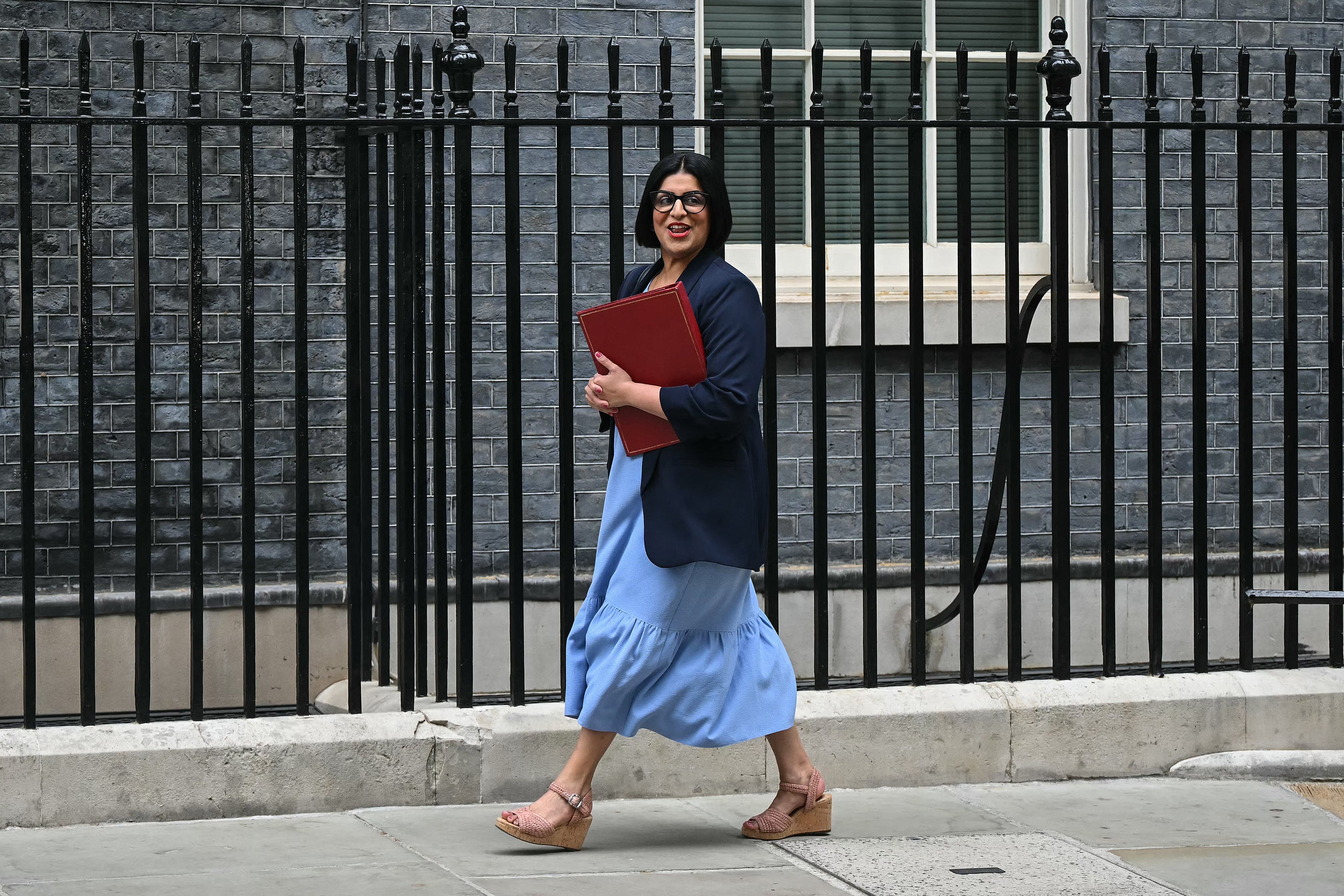
Home secretary Shabana Mahmood said that students had been exploiting the system by using it as a gateway to enter the UK before later claiming asylum, but the High Court heard on Monday that the blanket ban would “impact a large number of people on which the [abuse] that this policy is aimed is not relevant”.
One of the Sudanese claimants, Dr Farah, has an offer to study a master’s degree in applied digital health at Oxford University and plans to return to Sudan after her studies to become accredited to practice medicine in the country.
Another, Ms Ali, has an offer to study a master’s in women’s health at University College London, and wants to develop expertise in sexual and reproductive health so she can prevent the practice of female genital mutilation in Sudan.
A third, Ms Raad, has ambitions to rebuild Sudan’s health system and is focusing her career on re-establishing health services in conflict areas. She also has an offer to study for a master’s degree at Oxford.
Tim Buley KC, for the Sudanese claimants, told Mrs Justice Steyn that they were “exemplary students, who have taken major sacrifices”, adding: “They have had their expectations and hopes dashed at very short notice. They are publicly spirited individuals who want to pursue routes of study that would benefit others as well as themselves. There is no basis to think that they themselves would seek to claim asylum, or seek to stay in the United Kingdom if they were granted a visa.”
Mr Buley said that Ms Raad still had the potential to start her course later this year if the court ruled in the claimants’ favour as Oxford University have agreed to hold the offer open until 31 August.
The court heard that the home secretary based her decision to ban visas from Sudan, Afghanistan, Cameroon and Myanmar on “an arbitrarily calculated figure”, that “bears no relation to the factual rate at which student visa holders claim asylum”.
The Home Office had compared student visas issued annually, and visa-linked asylum claims in that same year, but not taken into account that many people wait a few years before they claim asylum and do not do so on the first year they arrive in the UK to study. The statistics “therefore compared apples and oranges”, the claimants argued.
Mr Buley told the court that there are varying reasons why students from certain countries might claim asylum in particular years, such as a wave of in-country persecution or the outbreak of civil war. These reasons “are not predictive of the future, they are not an indication of the numbers that will happen next year, or the pattern, because they can vary for all sorts of reasons due to the underlying country conditions”, Mr Buley said.
As a result, it was wrong to pick out nationals from these four countries as perpetrators of visa “abuse”, he argued.
Among the other claimants, one of the two Afghan students, Ms Sadat, has unconditional offers from both Sussex and Bradford universities to study for a master’s in AI, and the other hopes to study civil engineering at Manchester.
The Cameroonian claimant, Ms Forkwa, has two PhD offers from Oxford and Kings College London and has been studying peace-building and conflict transformation. The Sudanese claimant, Ms Khalifa, has offers to study master’s in AI for medicine and public health at Bristol and Glasgow respectively.
Raza Husain KC for these four claimants said in written submissions to the court that the visa brake was “an enormous blow” to the women, “all of whom have faced and overcome serious obstacles to their education prior to seeking to study in the UK”.
The Home Office argued that the home secretary needed to take action because the number of people claiming asylum has increased dramatically in the past decade, including asylum claims from visa holders.
There were 41,000 asylum claims from visa holders in the year ending September 2025, the government said in submissions, adding: “These figures place the phenomenon of visa-linked asylum claims at a similar if not greater scale than that of small boat arrivals”.
Students accounted for 47 per cent of visa-linked asylum claims, the Home Office said.
The home secretary believes that “public confidence risks being undermined” when legal visas are used “as a route to claim asylum in the UK”.