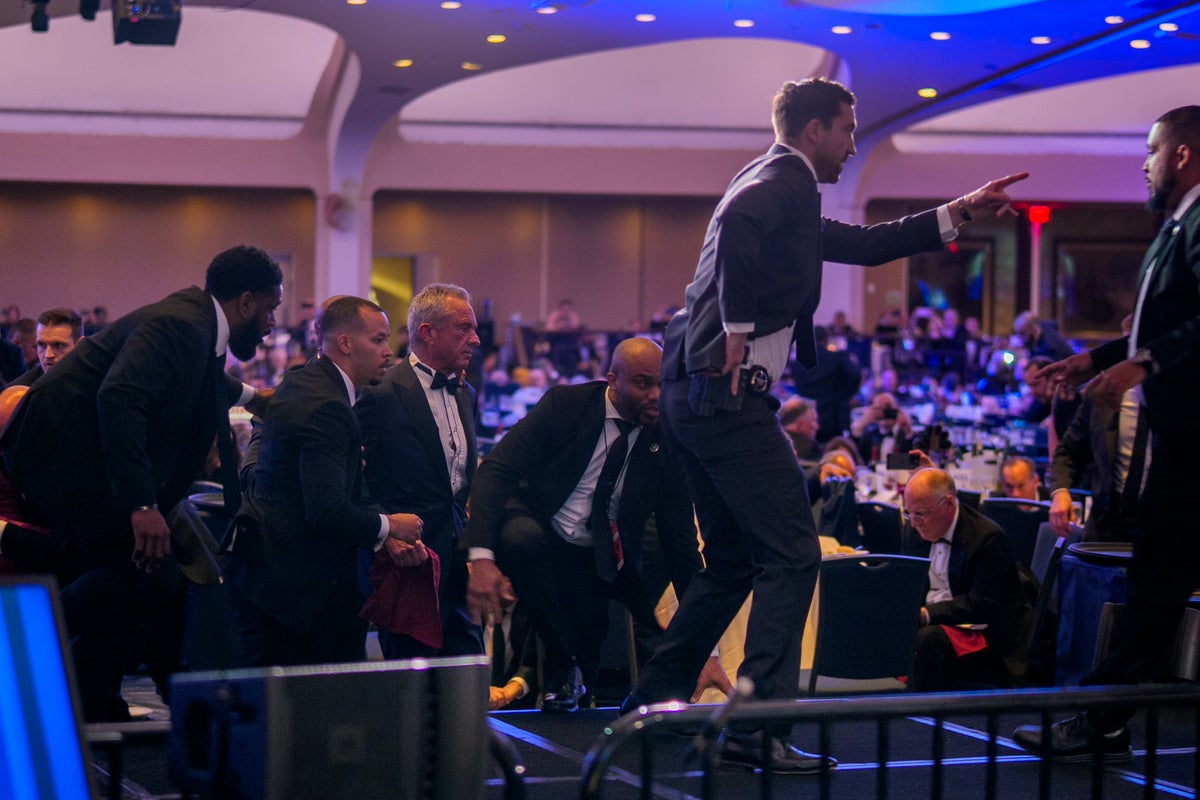
The gunman who tried to storm into the annual White House Correspondents’ Association dinner exposed gaps that need to be closed to prevent future attacks, former Secret Service agents say.
“The system worked. Could it be much better? Yes,” Bobby McDonald, who protected then-presidents Bill Clinton and George W. Bush, told The Independent on Monday. “We had a positive outcome, not a successful one.”
With President Donald Trump insisting that the event be rescheduled “within 30 days,” McDonald said the the Secret Service would have to quickly develop ideas to beef up security.
“I think they have to have some discussions about creativity,” he said. “They’re going to have to blow up their plan.”
In a prepared statement, Secret Service spokesperson Anthony Guglielmi said, “While the protective model for White House Correspondents’ Dinner event proved effective, the key takeaway for future events is that enhancements should be expected at every level, as that is how the model is designed to function.”

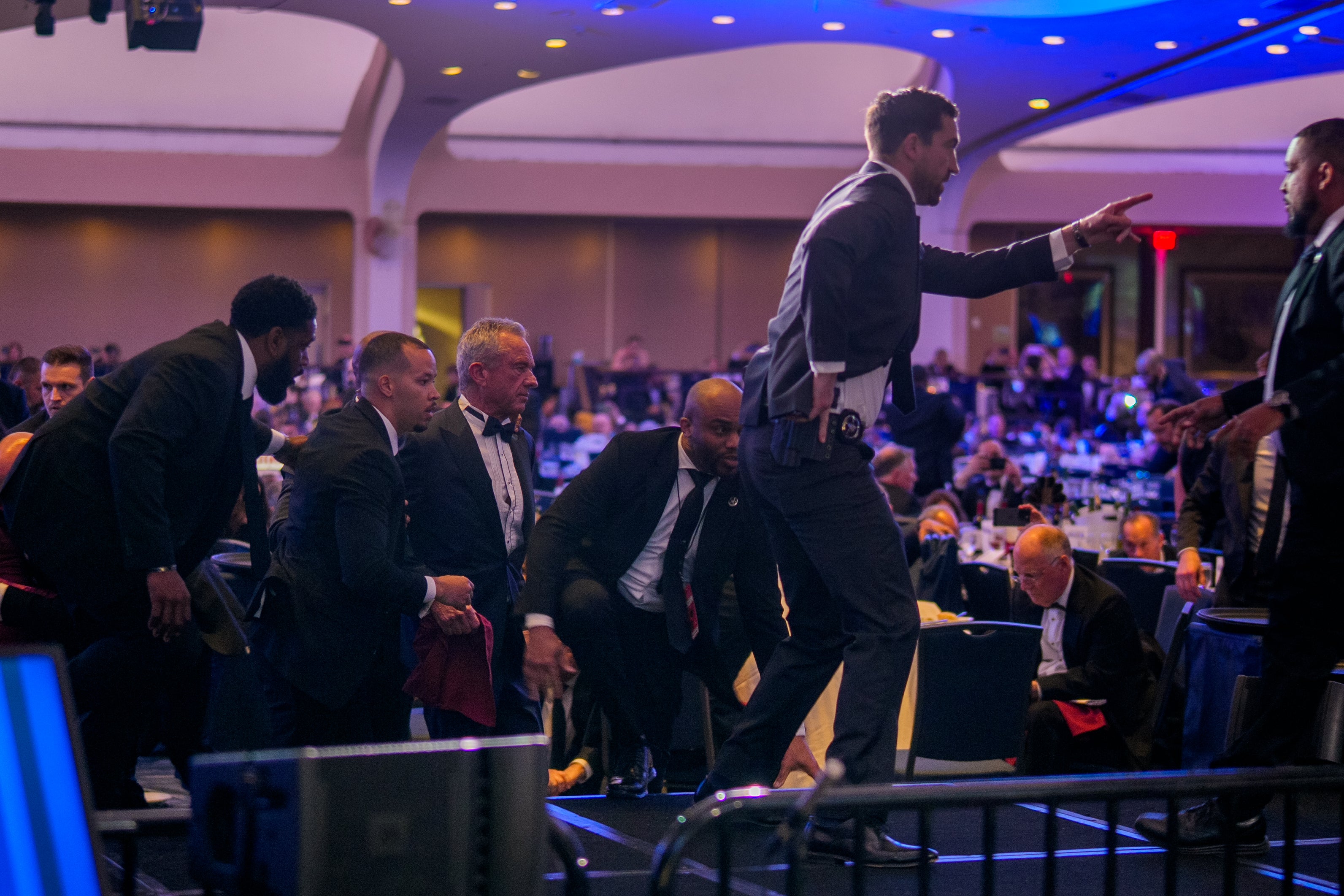
“Every protective decision is driven by intelligence amid a dynamic and currently elevated threat environment. We are actively focused on identifying the trigger for this incident and fully understanding the factors that led to it,” Guglielmi said.
The White House didn’t immediately return a request for comment but Trump, who on Saturday made his first appearance at the annual event , has praised the Secret Service and other law enforcement officers for acting “quickly and bravely” and doing a “fantastic job.”
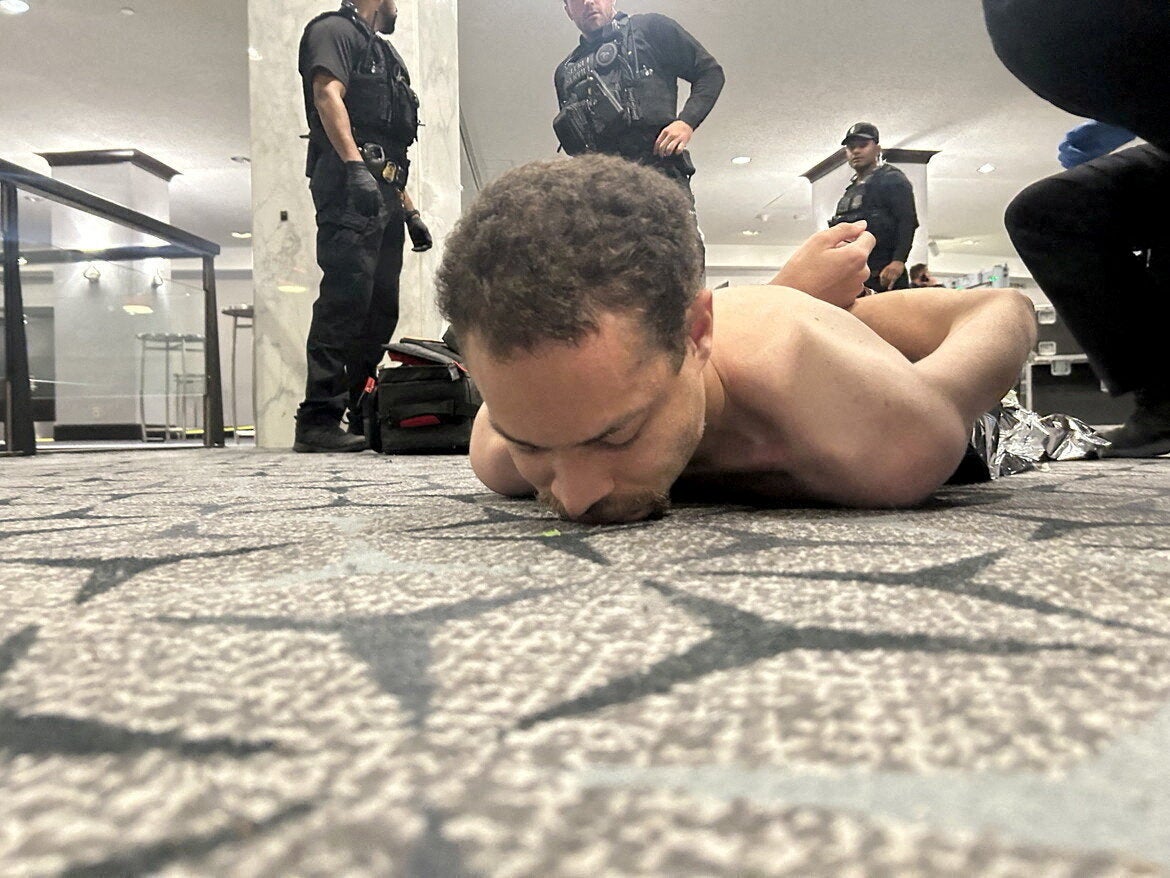
Cole Tomas Allen, 31, of Torrance, California, was reportedly armed with a shotgun, a handgun and several knives when he allegedly barreled past a checkpoint before being stopped from entering the ballroom in the Washington Hilton hotel where the dinner was taking place.
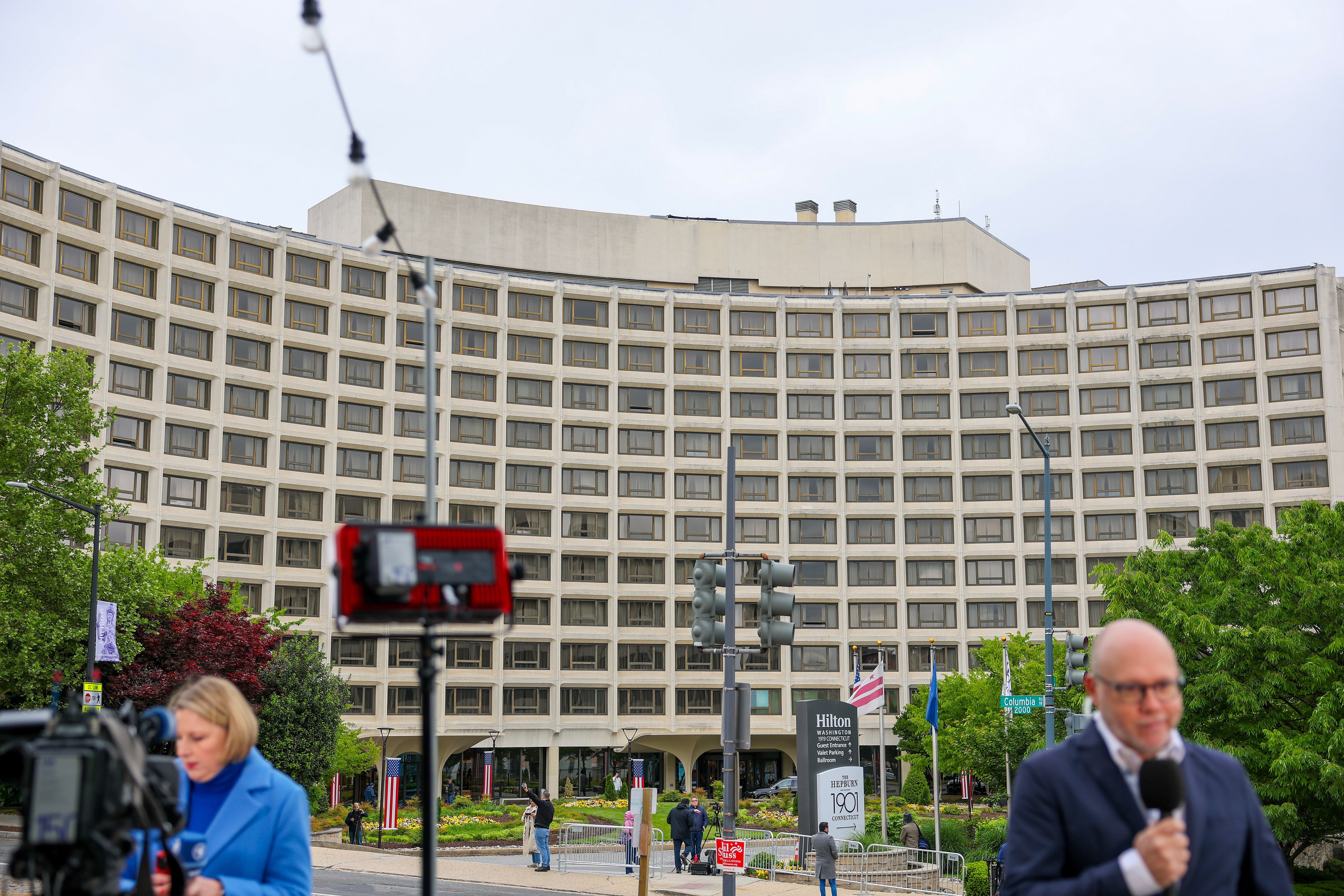
The hotel is the same one where then-president Ronald Reagan was wounded in a 1981 shooting outside as he walked toward his limousine after delivering a speech.
Allen reportedly checked into the hotel on Friday after traveling across the country by train and allegedly sent relatives a manifesto where he marveled that security efforts seemed focused “outside” and that “not a single person there considers the possibility that I could be a threat.”

“What the hell is the Secret Service doing?” he wrote. “Like, I expected security cameras at every bend, bugged hotel rooms, armed agents every 10 feet, metal detectors out the wazoo. What I got (who knows, maybe they’re pranking me!) is nothing.”
Secret Service Director Sean Curran has said that since Allen was unable to barge into the ballroom, it “shows that our multi-layered protection works.”
Former Secret Service Agent Bill Gage, who said he was “at the Hilton all the time” during 5 1/2 years assigned to the Washington, D.C., field office, described the agency’s protective model as “concentric and overlapping lawyers of security.”
The decades-old protocols start with emptying an event space, posting agents at every entrance and exit, using specially trained dogs to sweep the area for explosives and setting up metal-detecting magnetometers to screen guests for weapons, he said.
“The big takeaway is the protective model worked,” said Gage, now director of executive protection for the SafeHaven Security Group. “He got past the magnetometer but he didn’t get to the next layer.”
The Washington Hilton has more than 1,100 rooms and the WHCA dinner reportedly drew about 2,300 guests to its underground ballroom, which Gage said presented a series of security challenges.
“It is incredibly difficult for the Secret Service to secure a very busy hotel on a very busy street,” he said.

Gage likened Saturday night’s incident to the two previous assassination attempts against Trump, calling them all “low-tech attacks by people with no training.”
He also said there was probably “nothing to be done” that would have allowed authorities to identify Cole as a potential threat beforehand.
“There were no tripwires for this guy that he was setting off along the way, except for about an hour before the attack he sent a manifesto to his family,” Gage said. “We’re a free country. We don’t keep tabs on our citizens. This isn’t China.”
McDonald, who retired as assistant special agent in charge in charge of then-vice president Joe Biden’s security detail, said he thought there were “numerous things that could have been done” to further safeguard the ballroom.
“Had he seen more security in the lobby or at the magnetometer, he might have turned around,” McDonald said of Allen.
McDonald also said the Secret Service needed to create “better time and space distance” between checkpoints, and both he and Gage said the agency would likely consider setting up serpentine barriers before the magnetometers.
McDonald, now an assistant professor of criminal justice and criminology at the University of New Haven, also said that the agency “has to look at the possibility of setting up its security perimeter earlier, as well as equipping agents with ballistic shields.
“If he was wearing a suicide vest instead of the weapons he was carrying, we could have had a very different outcome,” he said of the attacker.
McDonald noted that “in a lot of different countries, you stand on line for a lot of different things.”
“At many hotels in many countries you have to go through a security check before you drive in,” he said. “We have to finally accept the fact that we have to be more accepting of a delay before getting into a hotel because you have to go through some sort of security element.”