




.png?trim=0,0,0,0&width=1200&height=800&crop=1200:800)
Emma Barnett is on a mission to reframe motherhood. More specifically, she’s reframing the crucial 52 weeks taken by employed women after they give birth, otherwise known as maternity leave. It’s the second part of that phrase that Barnett takes issue with. “Maternity leave…” she muses. “I think the word ‘service’ is more accurate.”
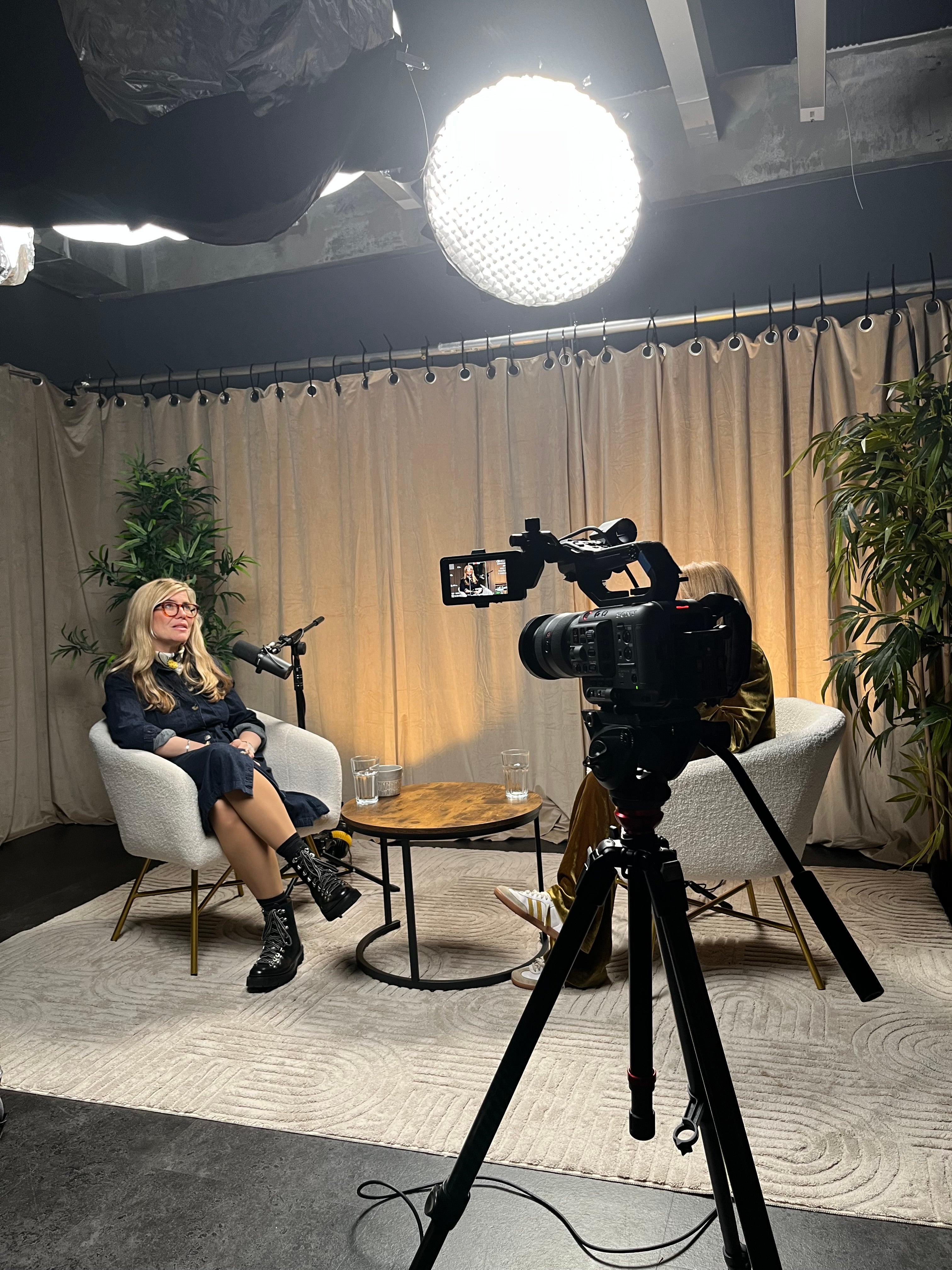
Barnett, 41, is an award-winning broadcaster, journalist, and author. You may know her as the host of Radio 4’s Women’s Hour, or more recently as one of the presenters of the Today programme. But she’s also a mum of two, after many years of trying to get pregnant and seven rounds of IVF. It was while she was at home after the birth of her second child, on what she calls her ‘second tour of duty’, that she finally felt able to reflect on all that she had seen, heard, learned, and suffered in the process of becoming a mother. What started as a stream of consciousness eventually became her new book: Maternity Service.
The term ‘service’ is specific, evocative, and powerful. Unsurprising, really, for someone whose career has always revolved around the precise arrangement of words. “It speaks to the love, the repetitiveness, the digging deep that you need to do,” she explains on The Independent’s Well Enough podcast. “I found it extraordinary to become a mother, to create another human with the person I love, but everything about my identity shifted. I was groping around for language to describe it.”
Hence, the military terminology. There’s the titular maternity service (”I can remember watching the hands of the kitchen clock go round, because there was nothing to do. It was bloody awful,”), but the metaphor fits pleasingly into so many other aspects of motherhood, like Barnett’s various maternity ‘uniforms’. She wore loose, flowy dresses during IVF, when her body was purple and bruised from injecting herself up to seven times a day. After she’d given birth, she opted for stretchy black polo necks, selecting specifically for their forgiveness on a body in flux and healing. “Without realising it, I was channelling Steve Jobs.”

And when Barnett uses the word ‘duty’, she’s evoking every layer: the commitment, dedication, and honour, but also the sacrifice, pain, injury, grit, and frustration. “There’s a lot of parenthood, specifically motherhood, which is deadening. First off, there’s no other job in the world that you go into injured. Most women enter that line of duty, that new world, while also needing to heal.”
Barnett’s own healing from her births was dramatic. She delivered both children via cesarean, and has choice words for whoever dreamt up the idea that some women are ‘too posh to push’ and opt for a c-section as an ‘easy’ alternative: “F*** you. It’s stomach surgery. It’s the hardest thing I’ve ever done.
“The recovery was horrendous. I had complications with my bladder, the catheter, everything. I had no idea what a hypertonic pelvic floor was; I didn’t even know that was something that could happen. Everyone told me that I wouldn’t be able to jump on a trampoline; no one even mentioned that it can go the other way and be too tight instead. Cue the jokes about tightness. But it feels awful.”
Barnett was back to work, presenting Andrew Marr’s program on BBC 1, just three months after her son was born. Returning to the world of work was not a smooth transition. “I felt like I couldn’t breathe. I was so anxious to make sure we got the program right, but I was still breastfeeding, I couldn’t relax. I didn’t understand what was going on.”

The actual facts of becoming a mother, despite Barnett’s long fight to get there, took her basically entirely by surprise – but by her own admission, she’s never been one for research. “I don’t like to engage with something until I have to,” Barnett laughs, as she recalls her husband begging her to unpack the pram before they got back from the hospital with a baby. Nope, she replied. Let’s just wait to see what happens.
As it happens, what was waiting for her on the other side was a tectonic shift. Yes, of course, an amazing fresh love for these two fresh heartbeats. But motherhood also came with bewildering new anxiety. Barnett found maternity service isolating and boring. Barnett felt a massive sense of loss for who she had been before her children.
Every aspect of the process frustrated, fascinated, and enraptured her, and when she ‘groped for words’ to help explain her new world, she found herself without the resources she needed. It was the discovery of the term matrescence, coined by anthropologist Dana Raphael in the 1970s, which brought Barnett some comfort: Raphael argues that becoming a mother is just as drastic a life phase as puberty, complete with brain and hormonal changes, and a full-on death and rebirth of identity.
“These ideas are quite regular to talk about now. We now know that your brain changes when you become a mother. It changes in fathers, too, but it seismically changes for mothers, so that you can care and become a carer. But this was back in 2018.” Frank conversations around maternity and motherhood were more of a ‘niche interest sport’.
This is why Barnett is so frank about the changes, challenges, and surrealism of her own pregnancy and births. She doesn’t want anyone else to feel isolated and confused in the way she did in those first weeks (or months, or years), and she’s characteristically blunt about people who might dissuade her. “There are people who say there’s too much said and written about motherhood nowadays – as in, they think it’ll put women off.

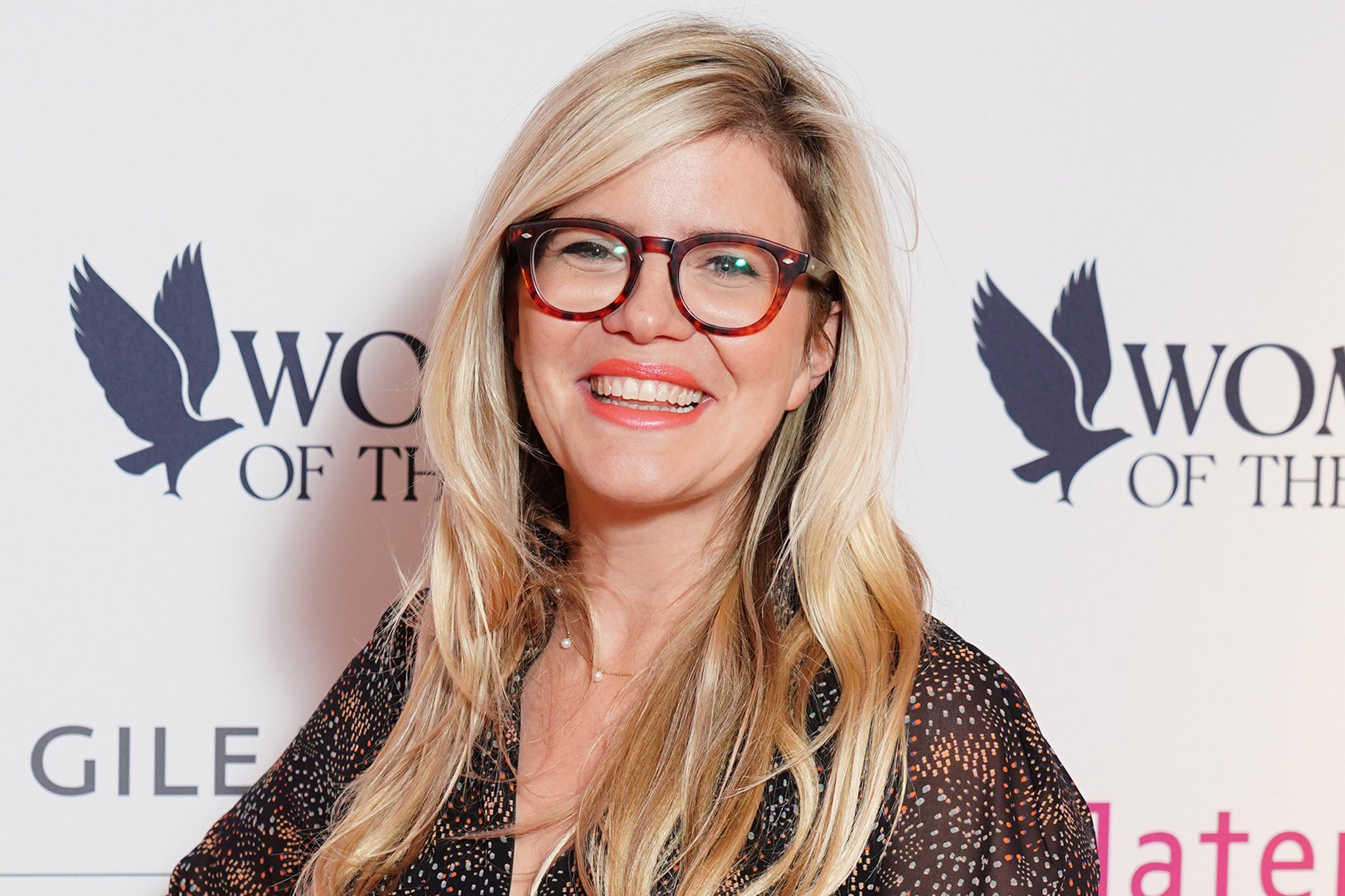
“That’s utter bollocks. We know women and men are not having children, and it ain’t nothing to do with honesty memoirs, it’s to do with the realities of living in a worse-off situation than your parents for the first time in a generation. It’s not because women like me have decided to tell certain things as they are.”
Watch the full episode of Well Enough with Emma Barnett here, or listen on Spotify and Apple Podcasts.

