




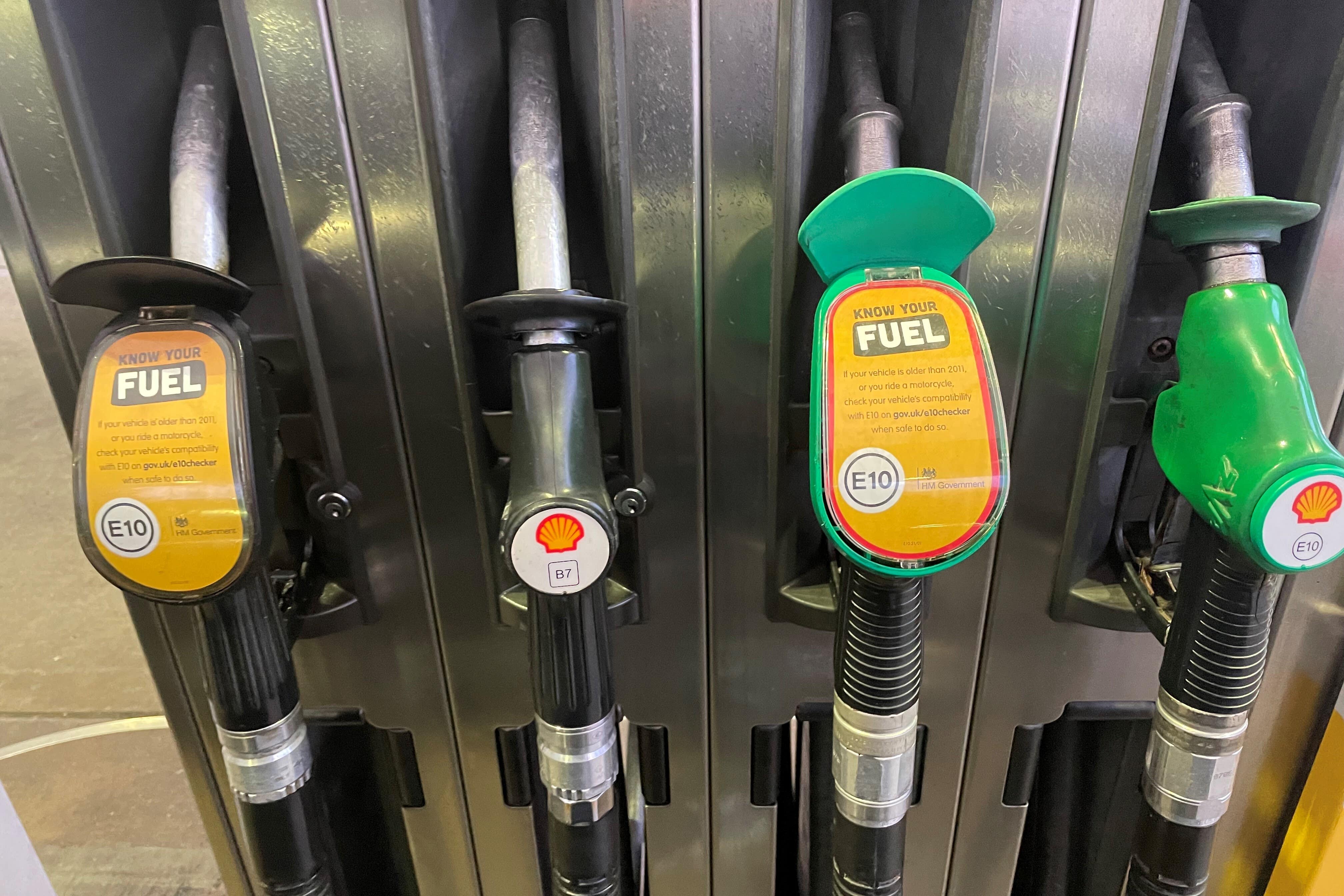
The petrol station has never been anyone’s idea of a fun day out, but lately it has become even less appealing. With fuel prices climbing again following renewed tension in the Middle East, more drivers are looking at the numbers and wondering whether now is the time to plug in instead.
That is the story behind three recent EV buyers who all made the switch with running costs firmly in mind. There are other reasons too, from tax savings to timing, design and the simple pleasure of waking up with a charged car on the driveway. But the same theme keeps emerging: petrol and diesel have become expensive enough to make electricity look very tempting indeed.
The timing is hard to ignore. RAC figures show petrol at 159p a litre and diesel at 186p a litre, while a further 5p-a-litre rise would add around £3.30 to the cost of filling a small to medium-size car.
Read more: New research says EV owners struggle to stick to speed limits
For Steve Taylor-Chambers, who has just moved into a new Jaecoo E5, rising fuel prices were not the only reason for switching, but they were a big one. He had been driving a petrol Seat Arona and was coming to the end of his previous contract, so the timing worked.
“Increased fuel prices was a big reason,” he said. “Another one was it just so happens that I was coming to the end of my current contract, so it made sense to start looking into electric. My friends who’ve got electric cars say they wouldn’t go back to petrol or diesel at all, so it was just the right timing. But obviously fuel price was a big factor.”
Steve has only had his car for a few weeks, so it is still early days, but the first sums already look persuasive. He says the Seat would do around 300 to 350 miles on a £70 tank of petrol. The Jaecoo is currently being charged at home from a three-pin plug while he waits for a decision from his landlord on installing a proper wallbox, and even without a cheaper EV tariff he says a long charge is adding only a little over £5 to his electricity bill. That gives him around 200 miles before he needs to charge again.
“And that’s without being on a cheap tariff,” he said. Once he has a Type 2 charger at home, he expects the cost to fall further.
There has been a bit of adjustment. Charging from a plug is not the same as nipping to a petrol station and driving away five minutes later. But Steve says the ownership experience has been “absolutely fine”, and that Octopus Electric Vehicles, which supplied the car, has helped while the home charging situation is being sorted.
“The entire experience with Octopus has been absolutely brilliant,” he said. Steve’s deal was either a free home charger or 12,000 miles of public charging, and Octopus has been supportive while he works out what he can do at home. As for the car itself, his verdict is short and sweet. “Absolutely brilliant,” he said. “It’s just so smooth.”

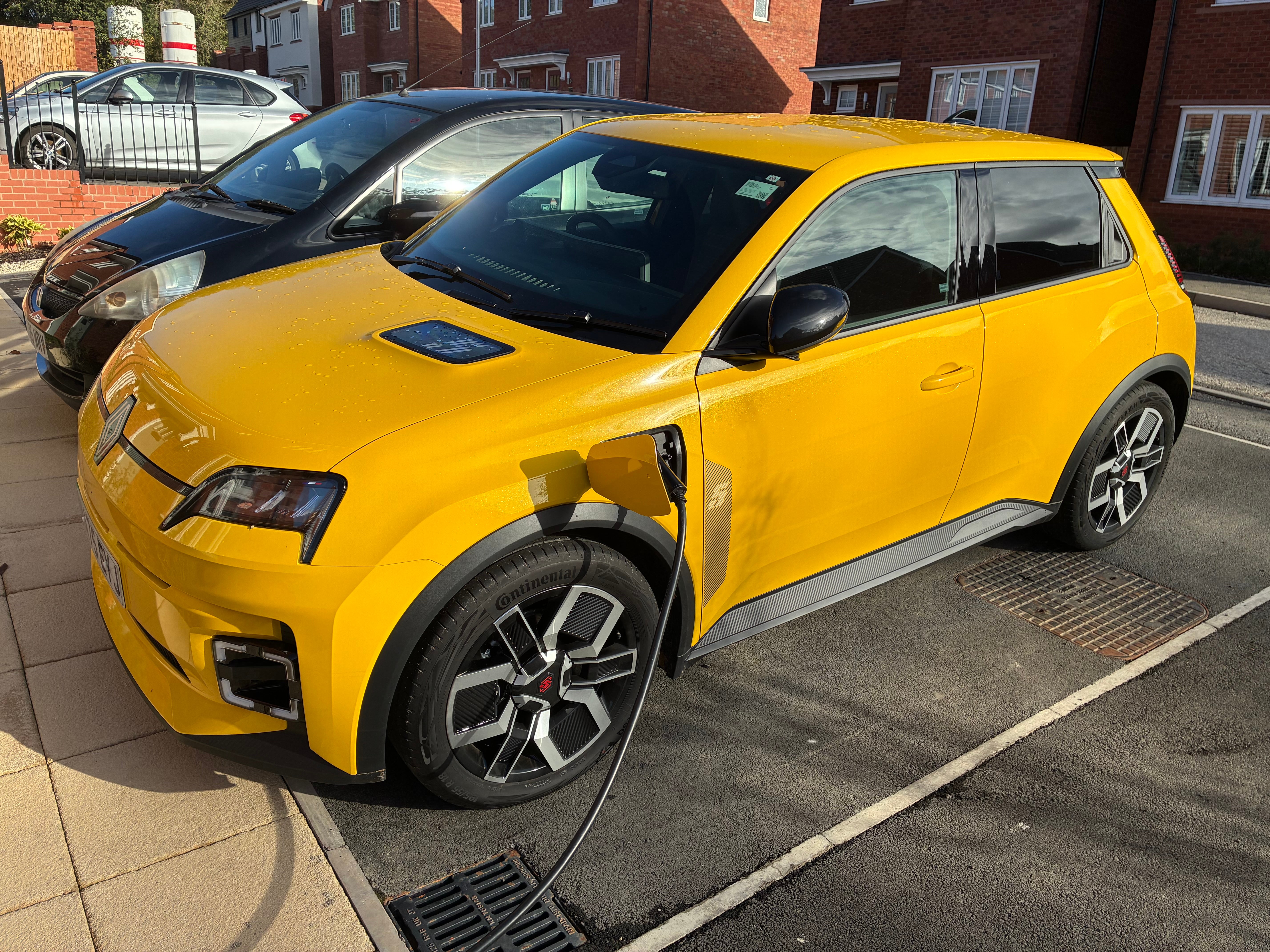
Chi Wong has been running a Renault 5 Techno for eight months and admits there was some emotion in the purchase. He has been a Renault fan since childhood, with a Mk1 Clio in the family when he was born. But the numbers still helped make the final decision.
“I’ve had my Techno 5 for eight months. I bought the 5 because I have been a Renault fan since I was young – the Mk1 Clio was our family car when I was born,” he said. “I’ve enjoyed the 5’s appearance and design ever since it was launched. What pushed me over the line was the car’s affordable price, along with the fact that running costs for electricity were vastly lower than petrol.”
Chi has a Myenergi home charger and pays 14p per kWh on his tariff. He appreciates that cheaper tariffs are available, but his home also has solar panels, which allows him to charge more flexibly and cut costs further when the sun is doing its bit.
Chi’s weekly comparison is striking. He says it costs him around £18 on average to charge his Renault 5 for a working week, compared with £61 using his petrol car, while in a best-case sunny week, he says the solar panels can save him a further £6.
He is also getting strong efficiency from the car by driving with a bit of discipline. “I can get even further savings by driving with discipline – limiting myself to 63 mph unless overtaking,” he said. “Even with Sport mode, the car is relatively economical, and I can be quick in overtaking others while saving energy. It pays to drive economically but with my car it doesn’t feel like a chore. As a result, I currently have an average of 4.2 miles/kwh – a very good figure.”
Chi’s clearest comparison came after an unfortunate accident in January, when he had to use a petrol courtesy car.
“There was a period where I had an accident in January and had to drive a petrol-powered courtesy car,” he said. “The difference was stark – I had to pay £70 per week to refuel that car. I couldn’t wait to get my 5 back and once I did, I realised how liberated I felt financially. With the current geopolitical situation looking to last for some time, anyone buying a 5 will set them well for the future.”
That kind of thinking is now showing up in the wider market. Auto Trader said electric was the most popular fuel type for new cars on its platform for the first time in April, taking 29 per cent of all new car enquiries, up from 17 per cent last year. Petrol fell from 35 per cent to 25 per cent, while diesel dropped from 10.5 per cent to 7.8 per cent. Auto Trader and Zapmap also said annual EV fuel-cost savings reached a record £960 in April, based on a typical mix of home and public charging.

When it comes to Renault, and especially the Renault 5, the French brand is seeing a real shift towards electric power. Adam Wood, Renault’s UK MD, told us: “In the last eight weeks compared to the prior eight weeks, we’ve seen an increase of 42 per cent in terms of visitors to electric car pages on our website.
“The Renault 5, for example, for the month of April was the best-selling EV in the UK and our EV mix for the month as a brand was just under 50 per cent.”
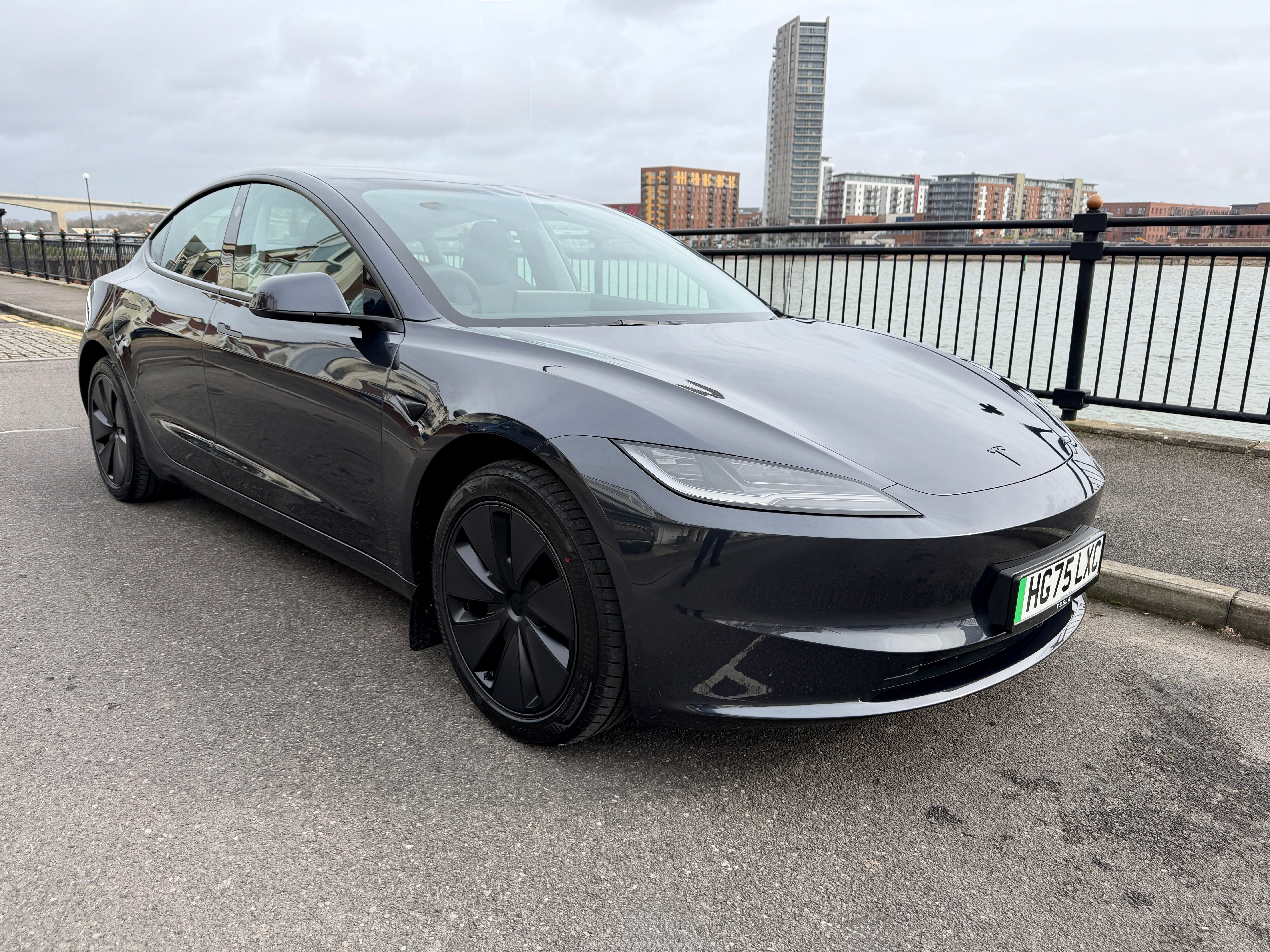
Andrew Banks is another happy Renault customer, but he’s gone further than most. He is now on his second EV, with a Tesla as his own car and a new Renault 5 for his wife. Andrew runs a digital retail business, so there are company car tax benefits involved, but he says the move was still driven by fuel costs.
“I’ve got two EVs and I’ve just got my second one last week,” he said. “My first was a Tesla; that’s my car. The second EV is my wife’s car, but it’s all been driven by cost.
“The main thing around the Tesla was fuel cost, but because I put that through my business, I also benefit from the usual kind of company car tax perks around that. I used to have a BMW 5 Series. I’ve been a petrolhead in the past – I’ve had five-litre Mustangs and all the silly stuff.”
He says replacing the BMW with a Tesla is saving him around £3,500 a year in fuel. More recently, his wife had been spending around £50 a week on fuel in her Mini Cooper, mainly on school runs and everyday errands, which added up to roughly £200 a month.
By switching to a Renault 5 and charging at home on a cheap overnight tariff, Andrew estimates her running costs could fall dramatically.
“We’ve just swapped onto a new EV tariff at home,” he said. “And if we’ve done our sums correct, my wife’s cost is going to go from £200 a month down to £100 a year for the equivalent mileage if we charge it overnight at 5p per kilowatt.”
He reckons the combined annual saving across the two cars is north of £5,000 before any business-related savings are included.
There was a car-choice reason in the recent car swap, too. His wife had owned Minis for the past 12 years, but he says the current Mini range did not quite fit what she wanted: a small, stylish, compact five-door electric car with plenty of kit. The Renault 5, he says, delivered the same sort of charm at a lower price.
“The Renault 5 gives you that cool, quirky retro vibe, which she loves about the Mini,” he said. “And it was about seven grand cheaper as a direct comparison spec for spec with a three-door Mini, which would’ve been a compromise.”
He says his wife is still getting used to moving from years of petrol manuals to an automatic electric car, but the benefits are already obvious.
“She loves the fact she doesn’t have to go to the petrol station,” he said. “She loves the fact she’s got a full tank of ‘fuel’ every single morning when she leaves the house. And the cost saving to her is an absolute no-brainer.”
Banks also points to lower servicing costs from his experience with the Tesla.
“The costs for servicing over the last four years are absolutely zero,” he said. “In fact, no, I spent 50 quid on some filters and did that myself because Tesla encouraged you to do it yourself and not take it into the dealer. So, we’re saving a fortune. The driving experience is better. The Tesla in particular; the software experience, regular updates, new features. I can’t see any reason why I’d ever look back.”
For all three buyers, the move to electric was not about making a grand statement. It was about looking at fuel bills, looking at electricity costs, and deciding that the numbers finally made sense. Rising fuel prices may not be the only reason people are switching to EVs, but for many drivers, they are becoming a very persuasive nudge.