President Donald Trump’s mass deportation campaign in Minneapolis triggered an international incident Tuesday after federal immigration officers tried to enter the Ecuadorian consulate before staff blocked the “attempted incursion,” according to the country’s foreign ministry.
The ministry issued a formal “note of protest” to the U.S. embassy in Ecuador, demanding such incidents “not be repeated.”
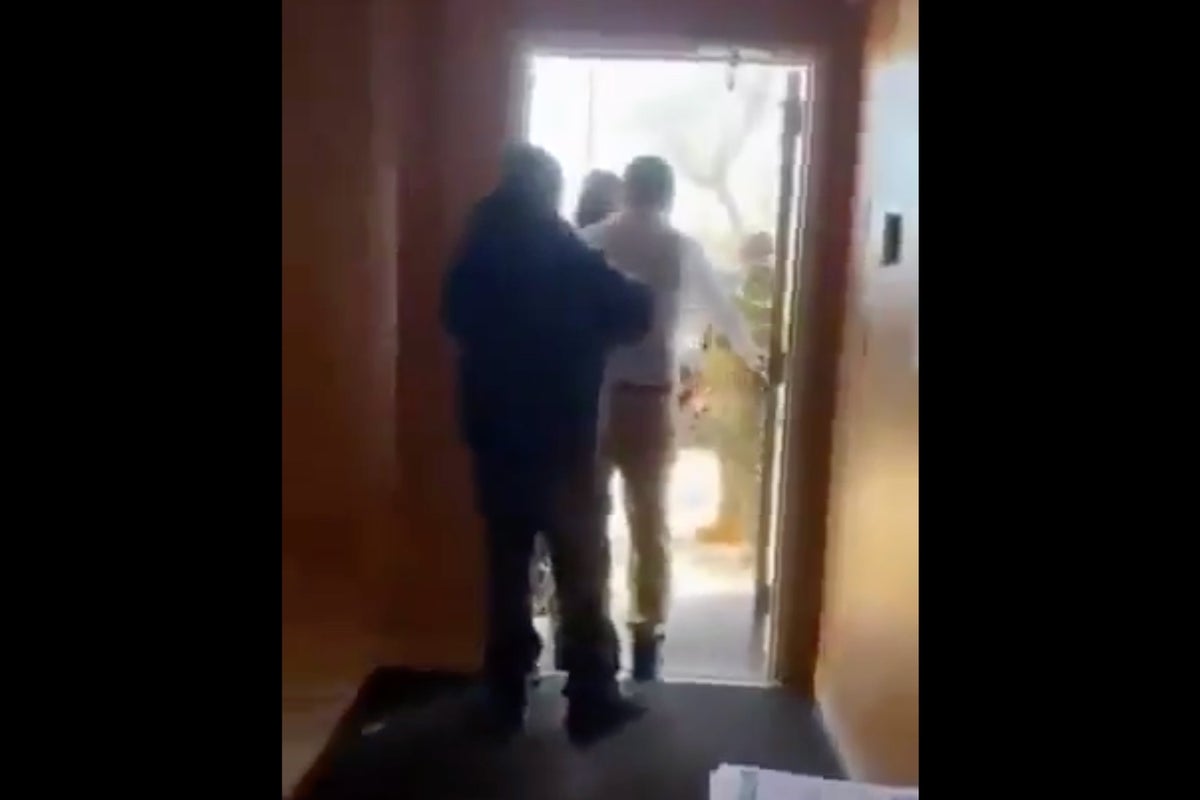
In a widely shared video, a consulate employee is seen rushing to the door as masked immigration officers try to open it. It’s unclear whether the officers are working with Immigration and Customs Enforcement or Customs and Border Protection, the two main enforcement arms of the Department of Homeland Security on the streets of Minneapolis.
“If you touch me, I will grab you,” an officer can be heard saying.
“You cannot enter here,” the employee replies. “This is a consulate. This is a foreign government property.”

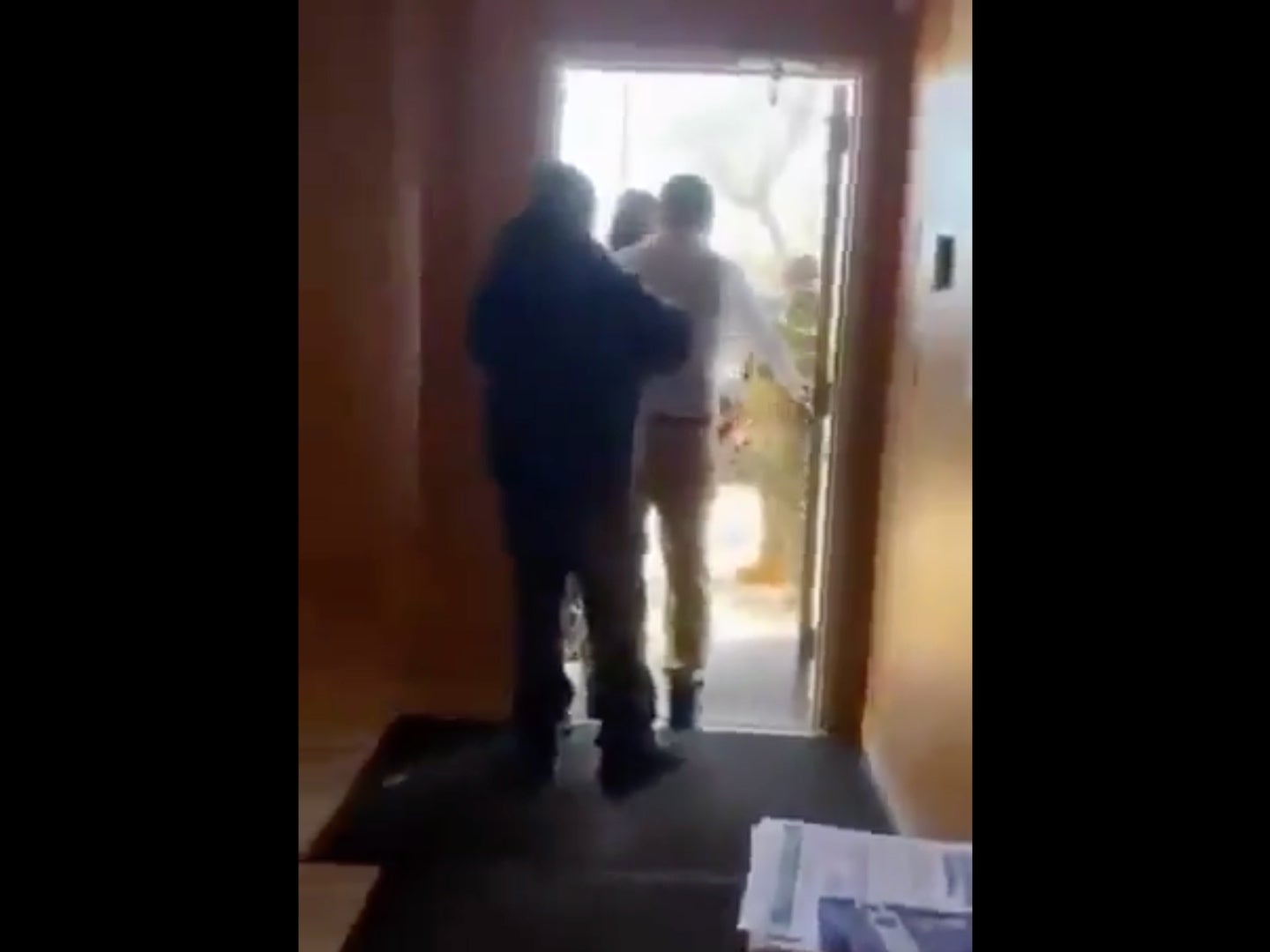
After the agents leave, the consular employee, speaking in Spanish, says he is making a call, and another employee says officers appeared to be trying to follow people into the building.
In a statement, Ecuador’s foreign ministry said consulate staff “prevented the entry of the ICE officer to the consular headquarters, thus ensuring the protection of the Ecuadorians who were in that moment at the consular headquarters.” Staff also implemented “emergency protocols,” it noted.
Ecuador issued a formal complaint the the U.S. Embassy in Ecuador “so that acts of this nature do not be repeated in any of the consular offices of Ecuador in the United States,” according to the statement.
Under the Vienna Conventions, a country’s embassies and other diplomatic offices are considered sovereign territory of that nation and protected under diplomatic immunity that prohibits the host nation’s officers from unauthorized entry. The U.S. is a party to the international treaties.
Neither the State Department nor Homeland Security responded to The Independent’s requests for comment about the consulate incident.


The latest clash follows weeks of growing tensions and violence from immigration officers patrolling Minneapolis, where roughly 3,000 masked and heavily armed agents have been deployed. The city is reeling in the wake of the killings of Alex Pretti and Renee Good, two U.S. citizens and demonstrators who were shot and killed by immigration officers this month.
Several high-profile immigration arrests have also targeted Ecuadoran nationals, including five-year-old Liam Conejo Ramos and his father Adrian Alexander Conejo Arias, who was arrested in the driveway of their home in suburban Minneapolis last week. The image of the pre-schooler standing in his frozen driveway wearing a Spider-Man backpack and blue, woolly Pokemon hat during father’s arrest went viral online and has fueled further outrage.
On Monday, a federal judge temporarily blocked their immediate removal from the country after the boy’s father sued the Trump administration over his arrest and detention.
The arrest of another Ecuadoran man, identified in court filings as Juan T.R., also triggered the wrath of Minnesota’s chief federal judge, who threatened to hold ICE chief Todd Lyons in contempt after repeated “violations” of court orders.
In a blistering ruling Monday, Judge Patrick Schiltz said the court’s “patience is at an end” and ordered Lyons to testify.
Earlier this month, the judge had ordered ICE to prove Juan T.R. with a bond hearing within seven days or release him. He was released Tuesday, and the judge called off Lyons from appearing in court.
Minneapolis City Council member Elliot Payne said he spoke with Ecuadoran Ambassador Helena Del Carmen Yanez Loza after Tuesday’s incident.
“It’s really important that our Ecuadoran community knows that their consulate is a safe place to come and do the business they need to do,” Payne said in a video from outside the building Tuesday night.
“It’s been really helpful having folks out here,” he said. “It makes people feel safer when they’re coming to do business at the consulate.
Ana Pottratz Acosta, University of Minnesota Law School professor and an affiliate of the James H. Binger Center for New Americans, told the Associated Press that federal officers trying to force their way into a consulate is “beyond unusual” and “unprecedented and potentially dangerous.”
“This is indicative of a broader issue with Trump’s mass deportation push,” according to Aaron Reichlin-Melnick, a senior fellow with the American Immigration Council think tank. “Officers aren’t doing even basic investigations (to figure out things like ‘is this address a consulate’) as pressure to keep up arrests is so high.”