
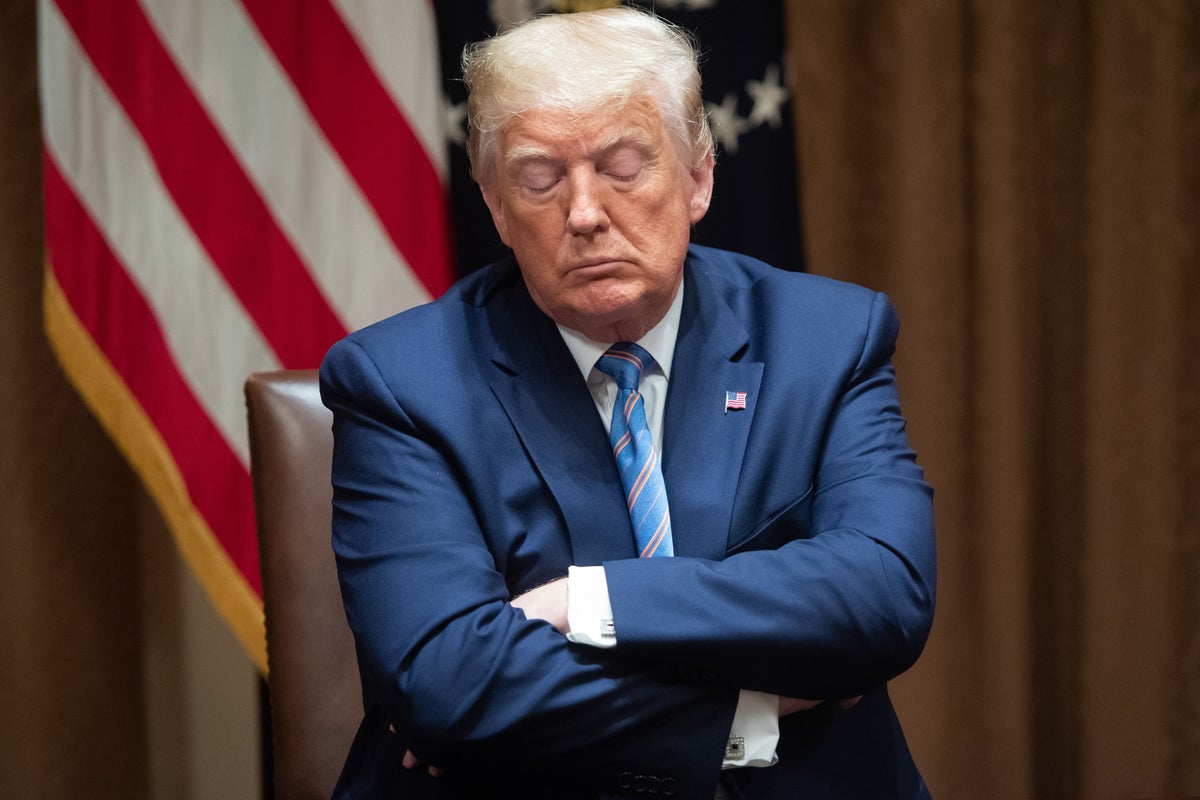
On paper and most likely, until recently, in the mind of Donald Trump, a conflict between Iran on one side and Israel and the United States on the other has a predictable outcome.
As with Operation Midnight Hammer’s strikes on Iranian nuclear facilities in the 12-day war last summer, and again in Venezuela, it would all be over swiftly and, relatively, cleanly with the minimum of fuss. By now, roughly speaking, Iran would be under the control of a new Trump-approved ruler and, handily, another oil-rich nation would be under American tutelage.
It is fair to say that things have not gone to plan, quite possibly because there never was much of a plan in the first place. Iran was not as puny a foe as President Trump assumed. For on its side, as is now clearer than ever, it also enjoys effective control of much of the world’s supply of oil and gas through the Strait of Hormuz, with the baleful effects now being felt internationally.
One of the few things the Islamic Republic of Iran can be said to be superlative at is the taking of hostages. That is exactly what it has now done to the global economy.
The other special skill of Iran and its terrorist associates in the region is asymmetric warfare. It is a world leader in using cheap but devastating drones on civilian and industrial targets.
The ill-defended high-rise hotels, ritzy malls and the vast oil and gas fields of the Gulf states provide a rich array of targets. “Force majeure” has already led to the closure of the Qatari LNG operations, the most important export supply on Earth. Most importantly, Iran is busily strangling what is arguably the world’s most critical waterway – the Strait of Hormuz. The regime’s hold on power seems secure.
It was indeed not supposed to be this way. Only a few days ago, the US defence secretary, Pete Hegseth, an absurdly swaggering ex-Fox News host, declared smugly that no one needs to worry about the Strait because “it’s something we’re dealing with, we have been dealing with it”.
Now, worryingly, President Trump himself has been pushed by events to ask for help from various countries, mostly allies, that depend on oil and gas from the Gulf. Those include Japan, France, South Korea, the UK – and China.
There is a particular naivety about asking Beijing to help America win a war that China has already condemned, and in which it is rumoured to be supporting Iran and negotiating immunity for its own vessels.
For a number of reasons, it is also a problematic request for the rest of the allies America has called upon. First, it’s America’s and Israel’s war. The rest of the “West”, if the term still applies, was never consulted about it. If they had, they would have been rightly horrified. Not only that, but Mr Trump said he didn’t need any help from anyone.
Being asked to help clear up the mess is therefore rather galling, and not least because Mr Trump has spent the last year insulting, undermining, tariffing and even threatening to annex land from at least two otherwise friendly powers.
The second issue is still more difficult, and arises because this war was so clearly not thought through. As was stated bluntly by Sir Keir Starmer: no one else wants to be dragged into this American-Israeli war of choice with no endgame in sight.
By the sounds of it, Sir Keir and others may agree to dispatch some limited resources, such as mine-busting drones, but only when a “viable plan” has been worked out – a pointed reference to America’s ill-prepared rush to conflict. In those circumstances, another loose “coalition of the willing” might come up with a scheme to liberate the Persian Gulf to maritime traffic, but it will have to be one agreed by all those involved, and not merely placing the Royal Navy under US control for the duration.
What has been obvious from the outset remains true now. There is in fact no military solution to the very genuine problem of Iran’s nuclear ambitions. There is, on the other hand, a wide and precious international consensus that an Iran armed with nuclear weapons would be a disaster for the region and a threat to the world, triggering a rapid proliferation among Iran’s neighbours, with Israel, even with its own nuclear weapons, badly exposed.
A negotiated settlement with Iran under international supervision remains the best way forward, and is inevitable when the fighting stops. In truth, it will be close to the Iran nuclear deal negotiated by Barack Obama that Mr Trump withdrew from in his first term in 2018. Indeed, such a treaty was almost agreed when Mr Trump was persuaded by Mr Netanyahu to go to war instead.
The terrible irony is that the war has actually strengthened Iran’s negotiating power. It has not been President Trump’s finest hour. His Nobel Peace Prize has probably slipped from his grasp – but at least he may have finally learned that even America needs allies.