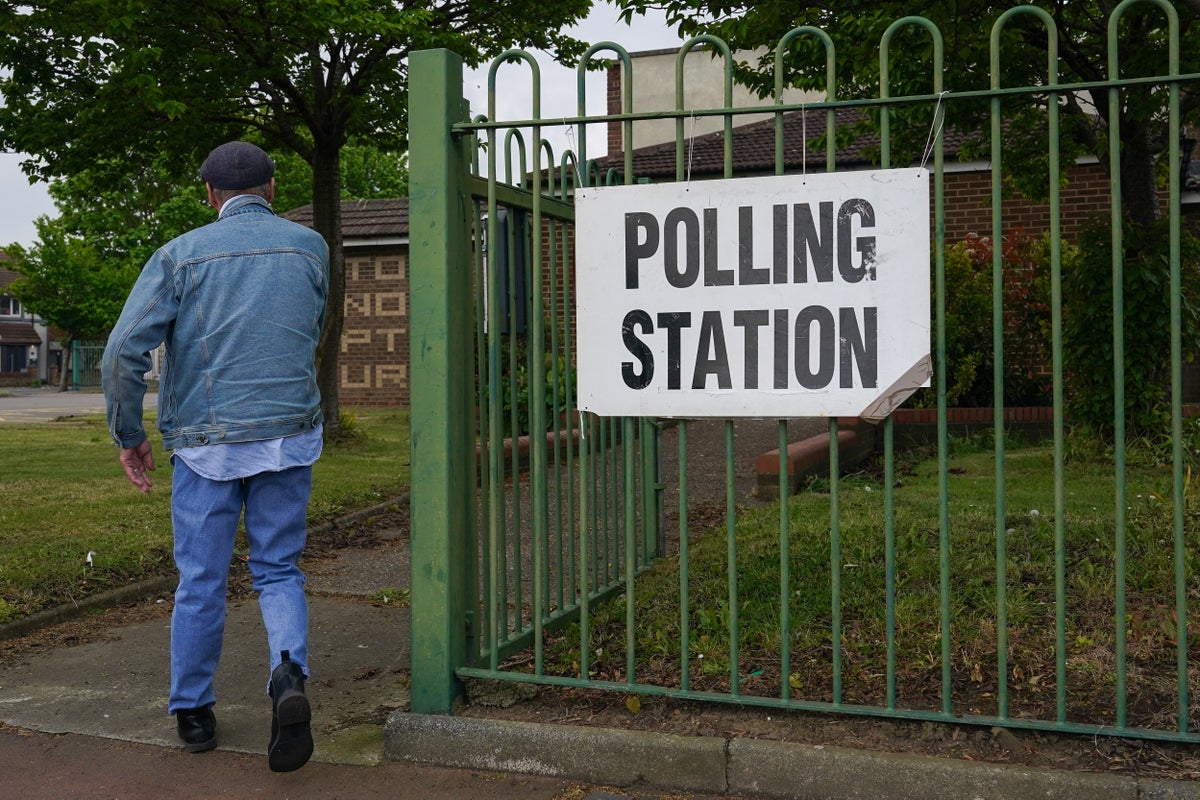
Voters across the UK are heading to their local polling stations to take part in elections for the Welsh and Scottish parliaments, as well as thousands of seats on English councils.
Since May 2023, voters have been required to bring photographic identification for certain elections. This came after parliament passed the Elections Act in April 2022, enacting a recommendation the Electoral Commission first made in 2014.
Voter ID is now required at by-elections and recall petitions, general elections, local elections and referendums in England, and Police and Crime Commissioner elections in England and Wales.
However, the new rules do not apply to Scotland’s Holyrood or Wales’ Senedd elections, where voters do not need to bring ID with them.
Here’s everything you need to know about voter ID for the 2026 local elections:
What ID do I need to vote?
There are many different forms of ID that will be accepted at the polling station. It must be photographic ID – meaning a bank card is not valid, for instance.
Accepted forms of ID include:
- Passport issued by the UK, any of the Channel Islands, the Isle of Man, a British Overseas Territory, an EEA state, or a Commonwealth country
- A photo driving licence issued by the UK, any of the Channel Islands, the Isle of Man, or an EEA state (including a provisional driving licence)
- A Blue Badge
- Older Person’s Bus Pass
- Disabled Person’s Bus Pass
- Freedom Pass
- Identity card bearing the Proof of Age Standards Scheme hologram (a PASS card)
- Biometric immigration document
- Ministry of Defence Form 90 (Defence Identity Card)
- National identity card issued by an EEA state
- Anonymous Elector’s Document
Voters can use an out-of-date photo ID provided it still looks like them. A full list of accepted forms of ID can be found on the Electoral Commission website.
If you don’t have voter ID
Anyone who does that have an accepted form of photo ID is able to apply for a Voter Authority Certificate. It’s free to apply for, and will be accepted at all polling stations.
A Voter Authority Certificate can be applied for on the Electoral Commission website. It is free and they do not expire, although it is recommended people reapply every 10 years to ensure their likeness remains similar to the ID.
It is now to late too late to apply for one of these certificates for the 7 May local elections. The deadline was 28 April.
What are the issues around voter ID?
The government sought to pass the new voter ID laws to crack down on election fraud, specifically ‘personation’. This is a criminal offence, where a person votes at an election pretending to be someone they’re not.
Writing after they were passed, then-levelling up minister Kemi Badenoch said the new law “means we can eliminate election fraud and make elections more inclusive, ensuring that everyone eligible to vote will continue to have the opportunity to do so.”
However, critics of the voter ID rules have pointed out that cases of electoral fraud are rare in the UK, and personation even more so. Latest data from the Electoral Commission shows that, between 2018 and 2022, only 11 of the 1,386 alleged cases of electoral fraud resulted in convictions.
There are also concerns that voter ID laws can disproportionately affect marginalised communities’ ability to vote.
In 2021, government-commissioned research found that those with limiting disabilities, the unemployed, people without qualifications, and those who had never voted before were among the least likely to hold a valid form of photo ID.
Further research presented to the House of Commons found that the changes may result in 1.1 million fewer people voting in the next general election.
“As there is no justification for this threat to the right to vote, it feels like an opportunistic attack on the rights of some of the most marginalised people in society,” said a spokesperson for the Liberty human rights advocacy group in 2021.
“A classic example of ruling through division and distrust.”
The government’s choice to accept forms of local travel photo ID for older people, but not younger people, has also come under scrutiny. Neither the 16-25 or 26-30 railcard are accepted.