




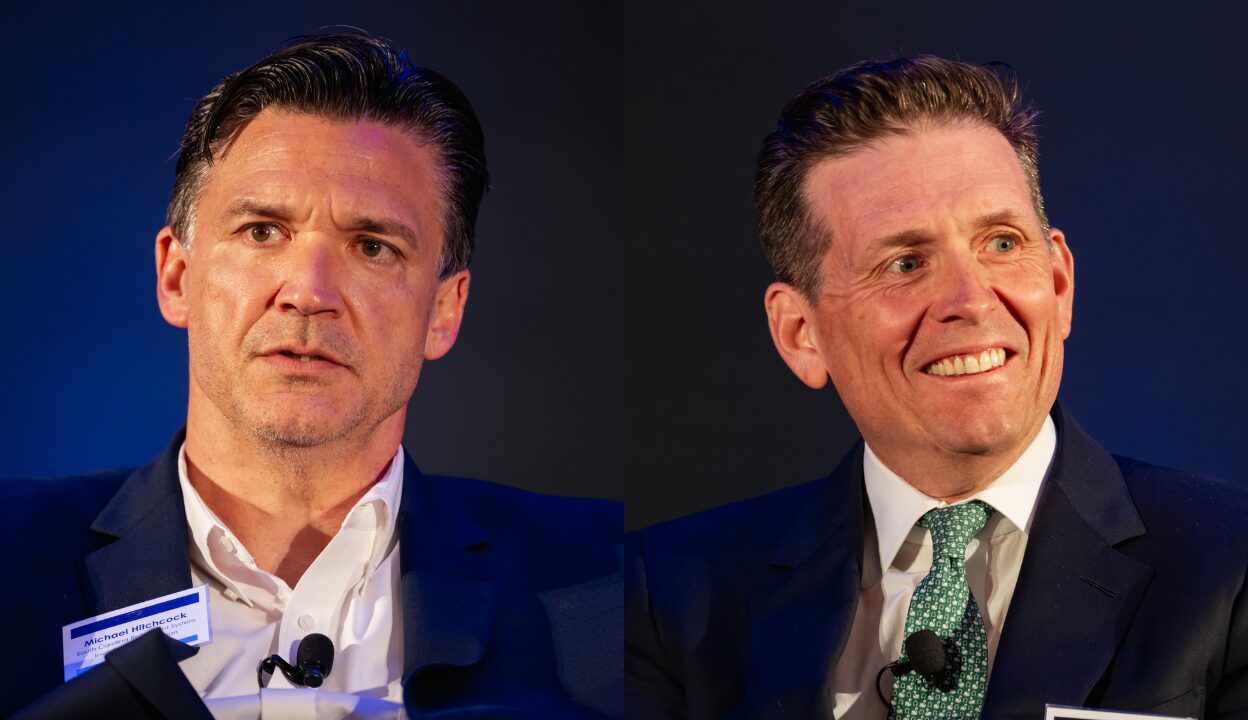
When Blue Owl Capital came under sustained media pressure over redemptions from its private credit funds, the South Carolina Retirement System Investment Commission (RSIC) chief executive Michael Hitchcock didn’t waver. What allocators learned in a period of crisis, he said, tells them more about a manager than any official due diligence could.
RSIC is one of the early backers of Owl Rock – the predecessor to Blue Owl’s credit platform – committing $200 million to Owl Rock’s debut direct lending vehicle in 2018.
The manager has had a tough few months with redemption pressure on several of its funds due to a combination of factors, including investor concerns around technology and software exposure, as well as a liquidity mismatch between retail expectation and fund reality.
“We learn more about a firm, and how they react when times are tough… than we learn in the ordinary due diligence,” Hitchcock told the Fiduciary Investors Symposium at Harvard University.
“Humbleness” is a key quality the $54 billion allocator looks out for; while crises do happen, how a manager implements the lessons learned is crucial.
“We don’t expect every pitch to hit a home run, we know things aren’t going to work out sometimes,” he said.
“[But] are there open lines of communication? Are they acting in a way that is more in their interest than in ours? It tells us a lot.”
James Clarke, global head of institutional capital at Blue Owl Capital, conceded the firm dealt with the press fallout from massive redemption numbers “initially, poorly”. But it ramped up engagements with the media to put its version of the story forward, noting that as a service provider, managers are an extension of clients seen as trusted guardians of retirement or government savings by their stakeholders.
“My biggest regret of the whole thing was that we put our clients in a position where they had to defend us,” Clarke said.
“Part of the client experience is making sure that we make their lives easier, and when you’re constantly in the media, I think people have got to understand that a pension fund or a sovereign wealth fund has bosses.
“They’re accountable to their boards; those boards see these things and they put up the pressure. You have to ask yourself the question of ‘why would I stay with that manager, or why would I pick that manager?’.”
The key to a good LP-GP relationship is ultimately about alignment, Hitchcock said, and finding the balance between commercial interest and beneficiary outcomes.
“We like to say we don’t agree to pay you carry if you can live off the management fee, but we’re looking for ways to align with managers,” he said.
“We understand that they’re looking to get paid and looking to make money, but we’re looking for opportunities where that overlaps with what we’re trying to do for our beneficiaries.”
Actually doing the homework before a pitch, Hitchcock said, is the best way for a manager to show their understanding of mutual interests.
“We’re a public pension fund, it’s all online, do a little bit of homework,” he said. “Each of our asset classes has a different role in the portfolio. Private credit for us is more direct lending focused, so opportunistic credit is not something that would probably be particularly interested in.”
“We’re very interested in folks that really want to come help us solve our problems and the issues that we face, really help fulfil the purpose that we’re trying to fulfil, rather than being asset gatherers or [think] everything is a fundraising visit.
“If they’re fee aggregators, and they want their piece of the pie to be bigger and our piece of the pie to be smaller… that’s going to be a problem.”

