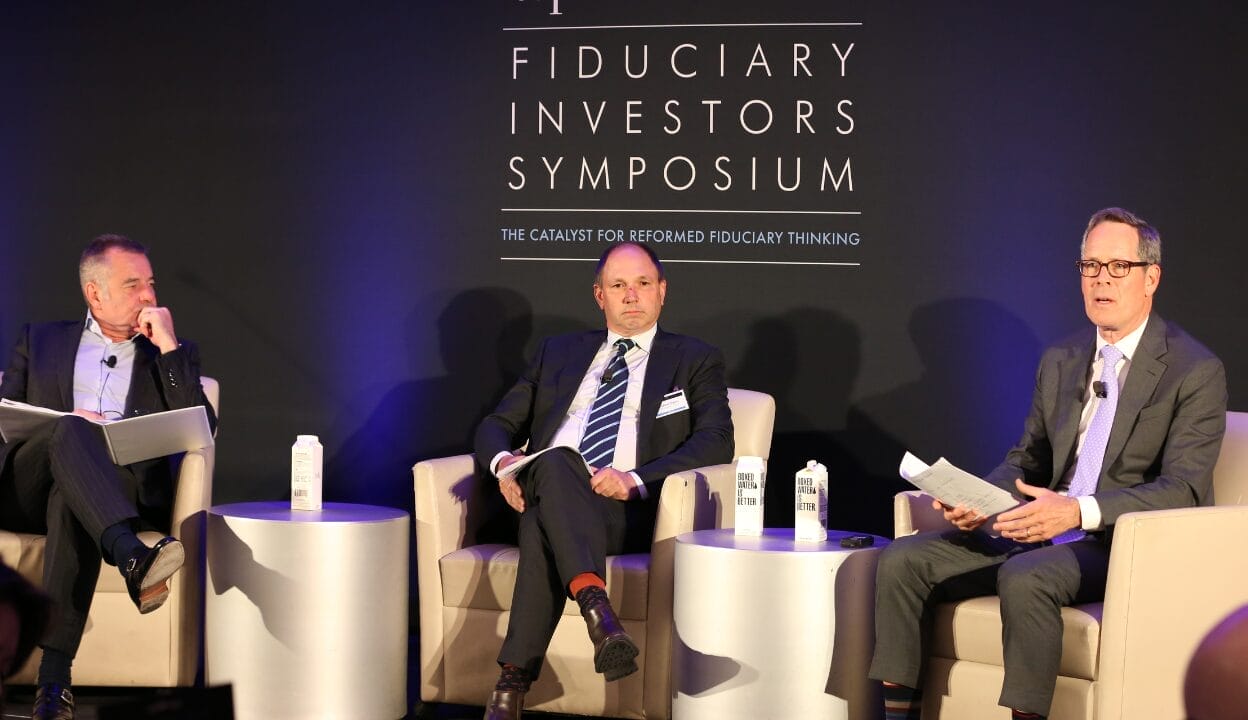

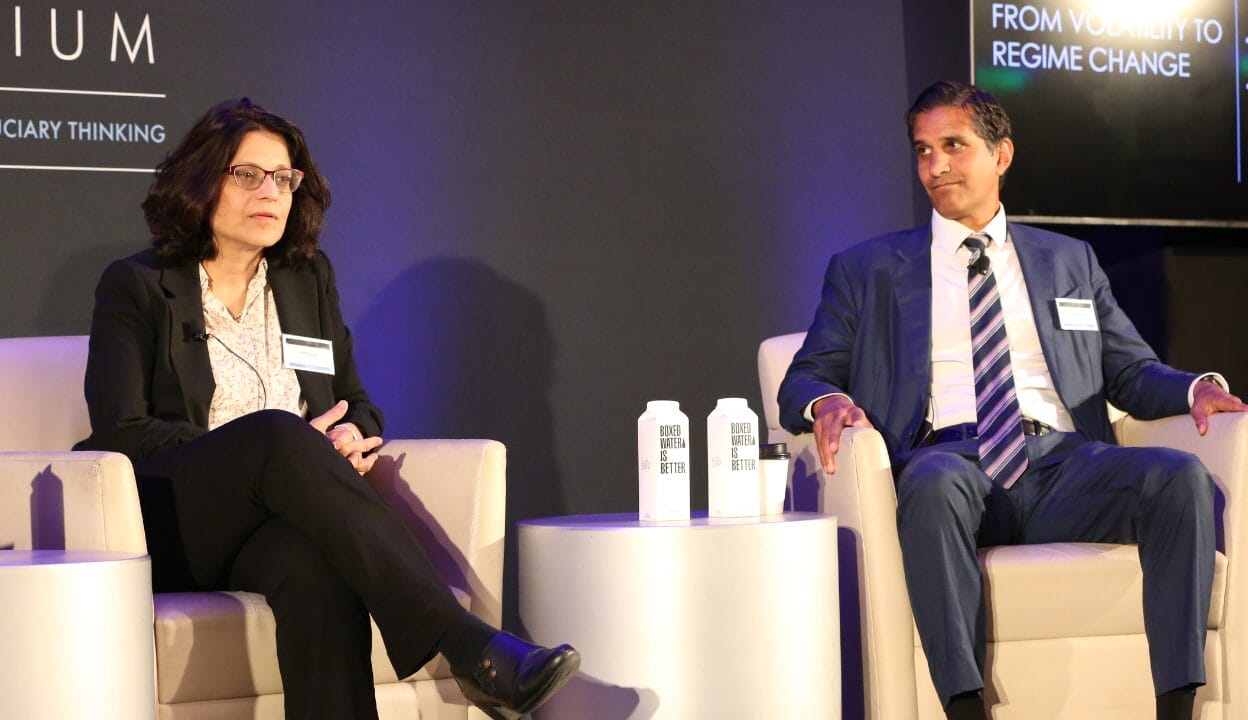
The $570 billion CPP Investments is strengthening efforts around scenario analysis as volatile fiscal, geopolitical and economic risk factors plunge the macro environment into a state of flux, with the fund naming four scenarios for the future world order within its risk management framework.
These scenarios inform all the top-down and bottom-up decisions the Canadian pension giant makes, senior managing director and chief risk officer Priti Singh told the Top1000funds.com Fiduciary Investors Symposium.
The four central risk scenarios in the framework – named the “deglobalisation radar” – are deglobalisation, re-Americanisation, de-Americanisation and complete fragmentation. It is informed by over 70 indicators built in partnership with Oxford University and serves as the basis for CPP Investments’ regime analysis.
“When initially the tariffs came in and all of the announcements, and every day you didn’t know which way you were going, you quickly realised that you needed a framework to how you tackle this,” Priti told the symposium at Harvard University
“We picked 2007 as the peak of the globalisation theme, and then we think from that, how have trade flows changed; how have capital flows changed; where is human capital going; what about policy; and then the fifth pillar we chose actually was US and China [relationship], because that has such deep implications.”
The point of the exercise is not to predict outcomes but to be prepared for them, Priti said. Being prepared will not only help an investor manage risks more efficiently when a crisis does arrive but also set it up to take advantage of any possible market dislocation.
Liquidity is an essential part of the game, and Priti said the fund is “pretty high” on the liquidity spectrum right now in an environment rich with investment opportunities.
“With the portfolio, we have lines that would say call on capital, but when you call on capital at that time, you also had 10 different teams coming in,” she said.
“So how do you make a relative value assessment across which one of these 10 opportunities are the best use of capital at that time? Those are things that you can prepare for today. You don’t have to wait for the crisis to come in and actually do that.
“Most of the work that we’re doing now is on the risk preparedness side versus saying, ‘hey, can we come up with the best dashboard that’s going to pick the best probability of when this would happen’.”
A culture of risk
Apart from rigorous risk practices, building a healthy culture of risk is less discussed but equally important. Daleep Singh, vice chair and chief global economist at PGIM said the upcoming market is one that will reward organisations with “humility as a core cultural characteristic”.
“It’ll reward people who can imagine. [But] it’s going to really punish those who are unwilling to learn from history and are going to confidently assert this time is different,” said Daleep.
“The demand side of the economy and the supply side are both in flux, and you can have regime shifts that are much more frequent than you assumed previously, if you don’t believe that, or you don’t recognise it, you’re going to make very big mistakes.”
Daleep was previously deputy national security advisor for the National Economic Council for the Biden Administration and headed the markets group of the New York Federal Reserve. The biggest opportunity he sees for investors now is the potential for “economic security to become an asset class”.
Specifically, this refers to the opportunity for investors to bridge the financial gap on critical national projects with long time horizons, such as supply chain build-out and various areas of technology innovation.
Daleep estimated the opportunity set could be as big as $10 trillion across global governments. This is catalysed by the fact that almost every major government in the world is fiscally constrained.
“The VC community is too small and doesn’t scale up enough to fund them. It requires a lot of upfront capex, which front-loads risk and depresses early returns, and it requires you to be comfortable with geopolitical and regulatory risk – most investors are not,” he said.
“That’s why we have this valley of death between proven science and commercial scale. There is a market failure that someone – some institution, some asset manager – is going to fill.
“It involves being able to offer growth equity, hybrid capital, and infrastructure debt to follow a technology from prototype to pilot to commercial scale. I think that’s the premise of industrial policy.
“Every supply chain vulnerability is a commercial opportunity.”