


Choosing a new boiler should be straightforward, but in reality, it can quickly become a tangle of overlapping jargon, technical ratings and installer shorthand. Two of the most common terms you will come across are condensing boiler and combi boiler.
They sound like two competing options, but they describe different elements. A condensing boiler describes how efficiently the boiler uses fuel. A combi boiler, meanwhile, describes how the boiler supplies heating and hot water. In other words, a boiler can be both. In fact, most modern combi boilers installed in UK homes are also condensing boilers.
So, the real question is not whether a condensing or combi boiler is better. It’s whether your home is better suited to a combi, system or regular boiler, all of which can be condensing.
Get a boiler installation quote for your home
Use our comparison tool to get a range of free quotes from leading boiler installers across the UK.
What is a condensing boiler?
A condensing boiler is designed to waste less heat than an older, non-condensing boiler. Traditional boilers allow more heat to escape through the flue. Condensing boilers capture and reuse more of that heat before the gases leave the property, making them more efficient. The Energy Saving Trust explains that modern condensing boilers are more efficient than older models because they reuse heat from gases that would otherwise escape through the flue.
The name comes from the fact that water vapour in the flue gases condenses as heat is recovered. This creates condensate, which is drained away through a pipe.
Most households replacing an old gas boiler today will be offered a condensing model. British Gas says a 2007 law made it compulsory for new boilers in the UK to be condensing boilers, and notes that A-rated boilers are more than 90 per cent efficient, compared with under 70 per cent for G-rated boilers.
However, the term ‘condensing’ does not tell you how the boiler delivers hot water. For that, you need to look at the boiler type.
What is a combi boiler?
A combi boiler, short for combination boiler, provides central heating and hot water from a single unit. It heats water on demand, rather than storing it in a separate hot water cylinder.
This makes combi boilers popular in flats, smaller houses and homes where cupboard space is limited. There is no separate cylinder to fit, no hot water tank in the loft and no need to heat a full store of water before you use it.
When you turn on a hot tap or shower, the boiler fires up and heats mains water as it passes through the unit. When you turn the tap off, it stops.
The main trade-off is flow rate. A combi boiler can usually supply one shower or hot tap comfortably, but performance can dip if several people are using hot water at the same time. This is why a combi that works well in a one-bathroom flat may feel stretched in a larger family home with multiple bathrooms.
Condensing vs combi boiler: What is the difference?
The simplest way to think about it is this:
A condensing boiler is an efficiency feature. A combi boiler is a boiler type.
A modern boiler may be:
- A condensing combi boiler
- A condensing system boiler
- A condensing regular, or heat-only, boiler
This is why thinking about it as a condenser boiler vs a combi boiler can be misleading. You usually do not choose between the two. You are choosing which type of condensing boiler best suits your home.

What are the main types of boiler?
There are three main types of domestic boilers to understand.
Combi boilers
A combi boiler provides heating and hot water from one compact unit. It does not usually need a separate cylinder, which makes it a practical option for smaller properties.
A combi boiler may be best if:
- You live in a flat or small house
- You have one bathroom
- You have limited space for a cylinder
- You want hot water on demand
- Your mains water pressure is good
It may be less suitable if:
- Several people often shower at the same time
- You have two or more bathrooms
- Your mains water pressure is poor
- You want stored hot water as a backup
System boilers
A system boiler works with a separate hot water cylinder. It heats water and stores it until needed, which can make it better suited to larger homes or households with higher hot water demand.
A system boiler may be best if:
- You have more than one bathroom
- Several people use hot water at similar times
- You already have a hot water cylinder
- You have enough space for a cylinder
The downside is that a cylinder takes up space, and stored hot water can run out if demand is high. However, for homes with multiple bathrooms, a system boiler can often provide a more comfortable hot water experience than a combi.
Conventional, or regular, boilers
Conventional boilers, sometimes called regular or heat-only boilers, are often found in older homes with traditional heating systems. They usually work with both a hot water cylinder and a cold water storage tank, often in the loft.
A conventional boiler may make sense if your home already has this system and replacing it with a combi would require significant changes to pipework, tanks and cylinders.
They are generally less compact than combi boilers, but they can still be a practical option for larger or older properties.
Which boiler is best for a small home?
For many flats and smaller houses, a modern condensing combi boiler will be the simplest option. It saves space, provides hot water on demand and avoids the need for a separate cylinder.
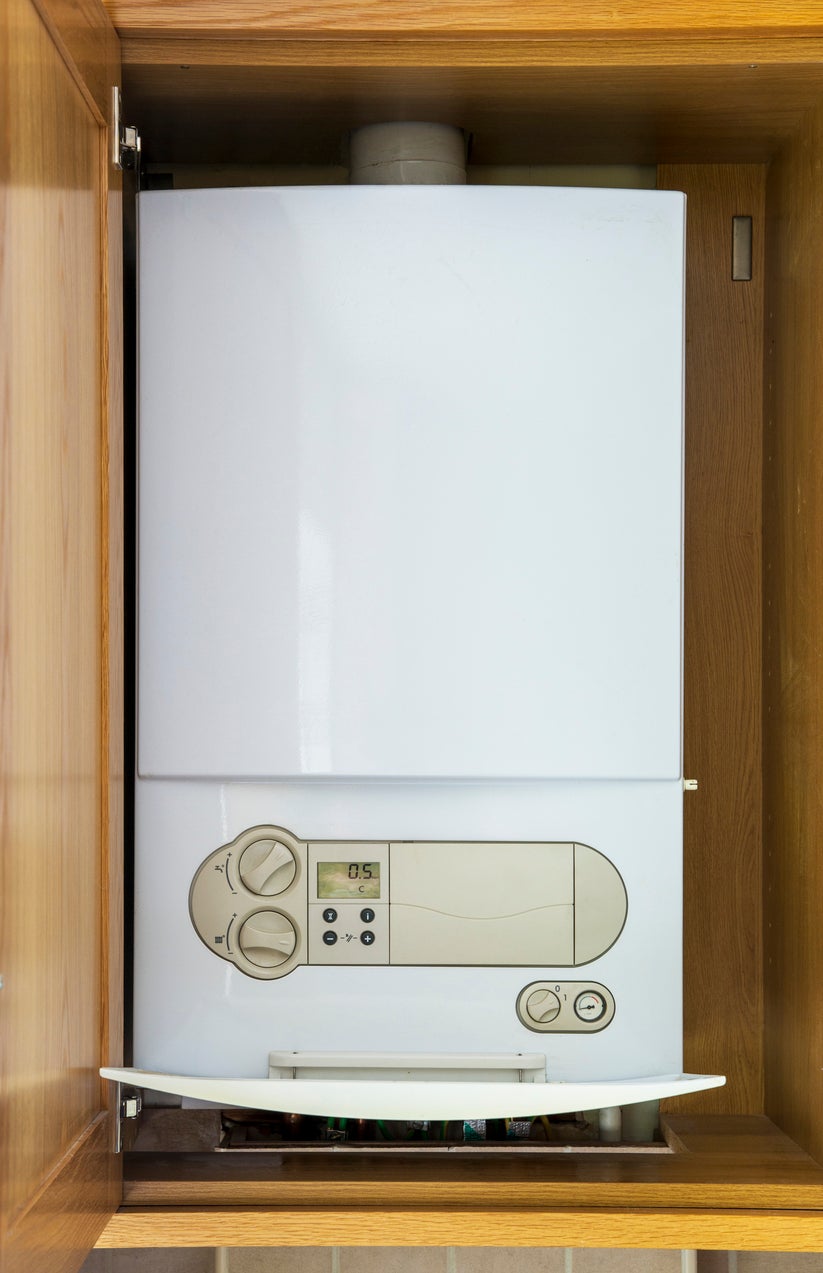
This can be particularly useful where storage is limited. Removing an old hot water cylinder can free up an airing cupboard, while the boiler itself can often be fitted in a kitchen cupboard or utility space.
However, an installer should still check the property’s mains water pressure and flow rate. A combi boiler relies on mains water, so poor pressure can affect shower performance.
Which boiler is best for a larger home?
For larger homes, especially those with two or more bathrooms, a system boiler may be a better fit. The stored hot water cylinder means the household can draw hot water from more than one outlet at the same time.
A high-output combi boiler may work in some larger homes, but it is not always the most comfortable option. If one person is showering while someone else is running a bath or using hot water downstairs, a combi can be placed under strain.
The best choice depends less on the number of bedrooms and more on how the home uses hot water. A couple in a four-bedroom house may be fine with a combi. A family of five in a three-bedroom house with two showers may be better served by a system boiler.
Which boiler is cheaper to install?
A like-for-like combi boiler replacement is often one of the simpler boiler installation jobs, especially if the new boiler is going in the same place as the old one.
Costs can rise when the system type changes. Replacing a regular boiler with a combi, for example, may involve removing a hot water cylinder and water tanks, altering pipework and upgrading parts of the heating system.
A system boiler installation may also cost more if a new cylinder is required. The final price will depend on the boiler brand, size, flue location, controls, labour costs and whether any extra work is needed on radiators, valves or pipework.
Which boiler is more efficient?
A modern condensing boiler should be much more efficient than an older non-condensing boiler. But the difference between a modern condensing combi and a modern condensing system boiler is not as simple as saying one is always cheaper to run.
A combi boiler can be efficient for smaller households because it only heats hot water when needed. That’s because there is no cylinder of hot water to keep warm.
However, real-world efficiency depends on the whole heating system. Boiler size, controls, flow temperature, insulation and household habits all affect running costs.
Energy Saving Trust says turning down a boiler’s flow temperature to 60C can improve boiler efficiency by nearly 4 per cent, according to research from Nesta, although any savings depend on the home and how the system is used.
That means the best boiler isn’t just the most efficient model on paper, but the one that is correctly sized, properly installed and set up to work efficiently in your home.
Should you choose a combi boiler?
A combi boiler is often a good choice if you want a compact system, do not have very high hot water demand and have good mains water pressure.
It is usually most suitable for flats, smaller homes and one-bathroom properties. It can also suit some medium-size homes, provided hot water is not often needed in multiple rooms at the same time.
The main advantages are space, simplicity and on-demand hot water. The main limitation is that it may not cope as well with several showers or taps running at once.
Should you choose a system or regular boiler instead?
A system boiler is often better for larger homes, families and properties with more than one bathroom. It can supply stored hot water to multiple outlets more comfortably than many combi boilers.
A regular boiler may be worth considering if your home already has a traditional heating system and changing to a combi would be disruptive or expensive.
In both cases, the boiler can still be a modern condensing boiler.
Should you consider a heat pump instead?
If your boiler is reaching the end of its life, it may also be worth considering whether a heat pump could work for your home.
Heat pumps have different installation requirements and usually cost more up front than a gas boiler, but they are likely to become a bigger part of home heating as the UK moves away from fossil fuels. For some households, especially those planning insulation upgrades or wider renovations, it may be worth comparing the options before committing to another gas boiler.
For those sticking with gas for now, choosing the right boiler type and getting it set up properly still matters.
The verdict: Condensing vs combi boiler – which is best?
There is no single winner because this is not a like-for-like comparison. A condensing boiler is the modern efficiency standard. A combi boiler is one type of boiler.
For many smaller homes, the best option will be a modern condensing combi boiler. It is compact, efficient and provides hot water on demand without the need for a separate cylinder.
For larger homes or households where several people use hot water at the same time, a condensing system boiler with a hot water cylinder may be the better choice. In older properties with existing tanks and cylinders, a regular condensing boiler may still make sense.
The best boiler is not necessarily the one with the most impressive specification. It is the one that matches your home’s water pressure, number of bathrooms, heating demand and daily routines.