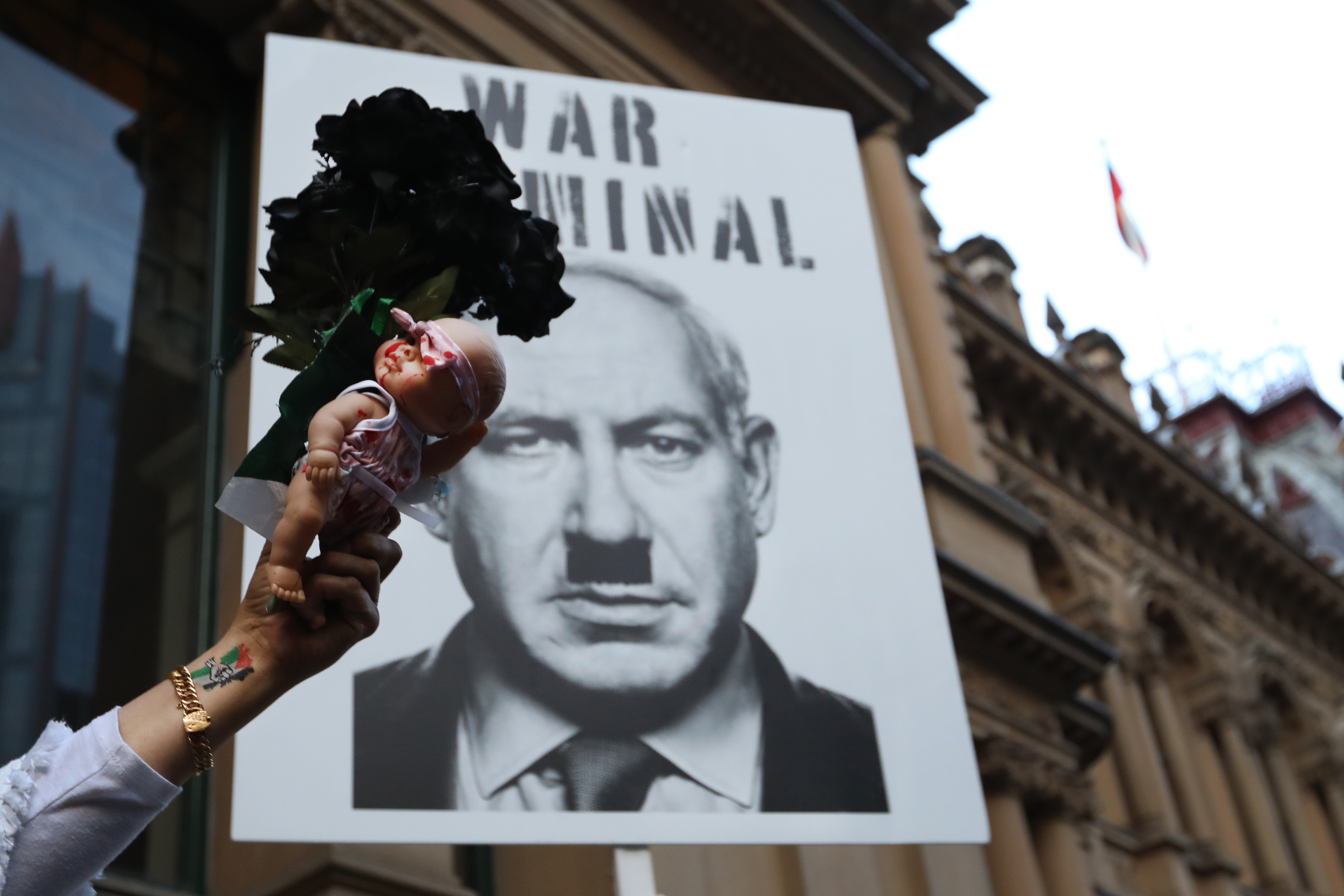
Australian politicians urged restraint on Tuesday after police in Sydney clashed with people protesting the visit of Israeli president Isaac Herzog, who is accused of inciting a genocide against Palestinians in Gaza.
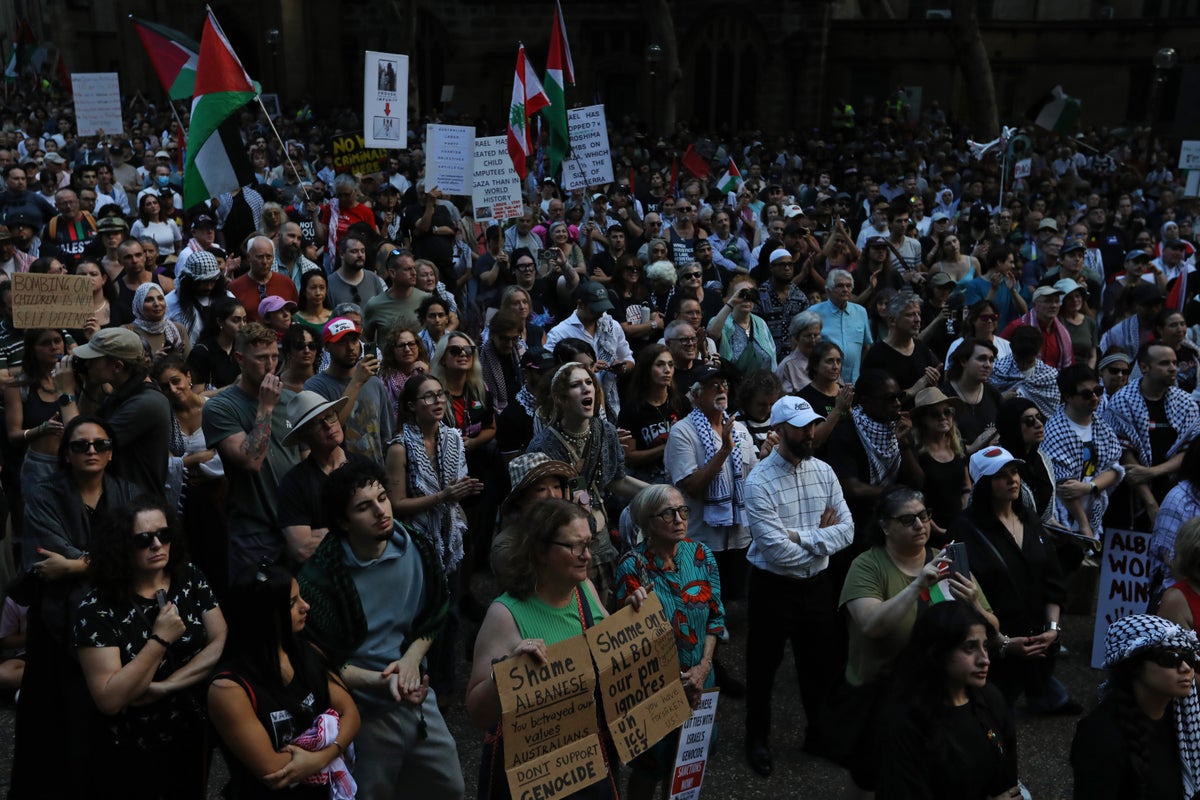
Police made at least 27 arrests amid allegations of excessive force used against protesters and rights groups, reports said. Violence broke out on the evening of 9 February after thousands of people gathered near Sydney Town Hall to oppose Mr Herzog’s visit.
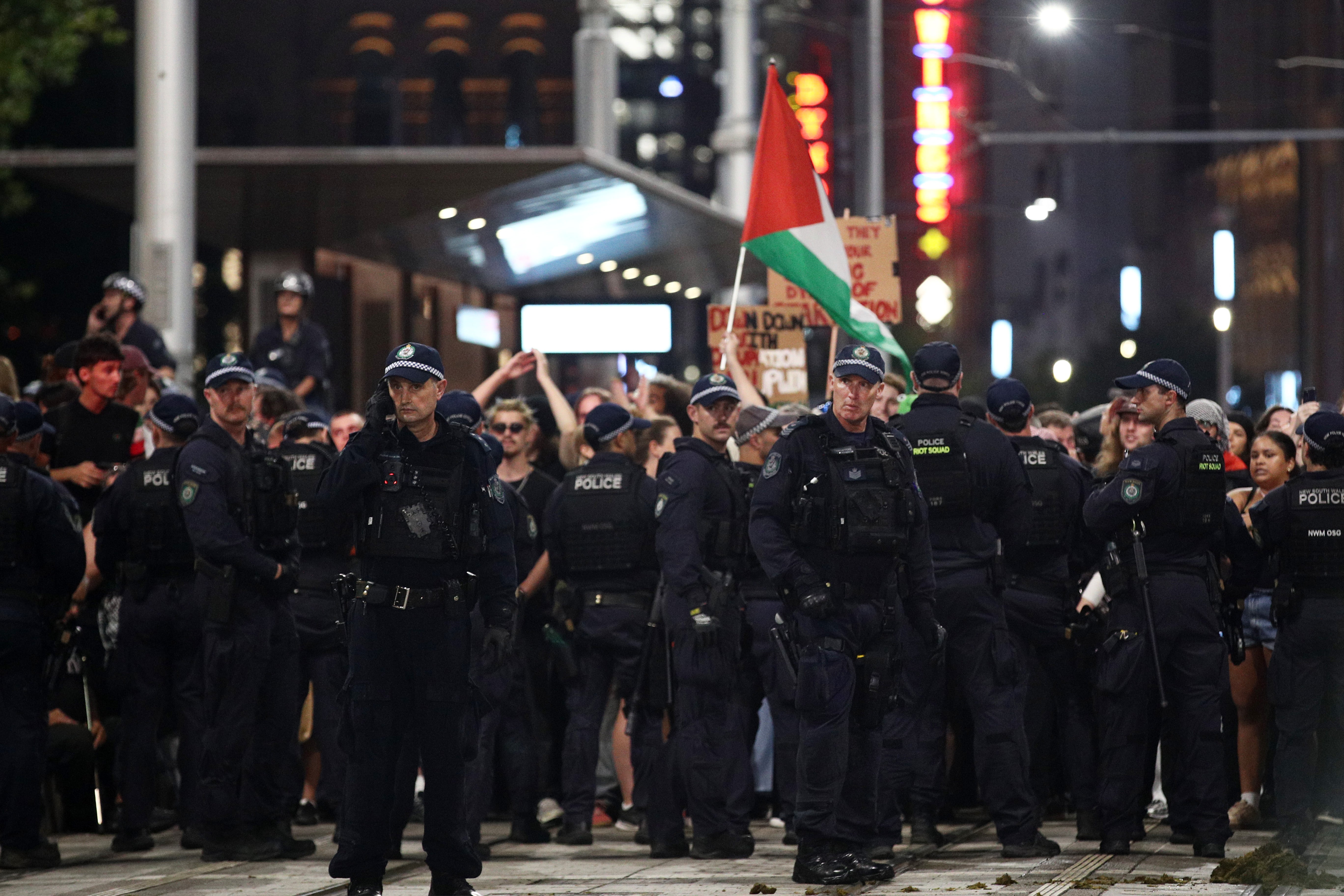
The New South Wales Police said officers moved to clear the area after demonstrators attempted to breach blockades, resulting in arrests. Ten people were accused of assaulting police officers.
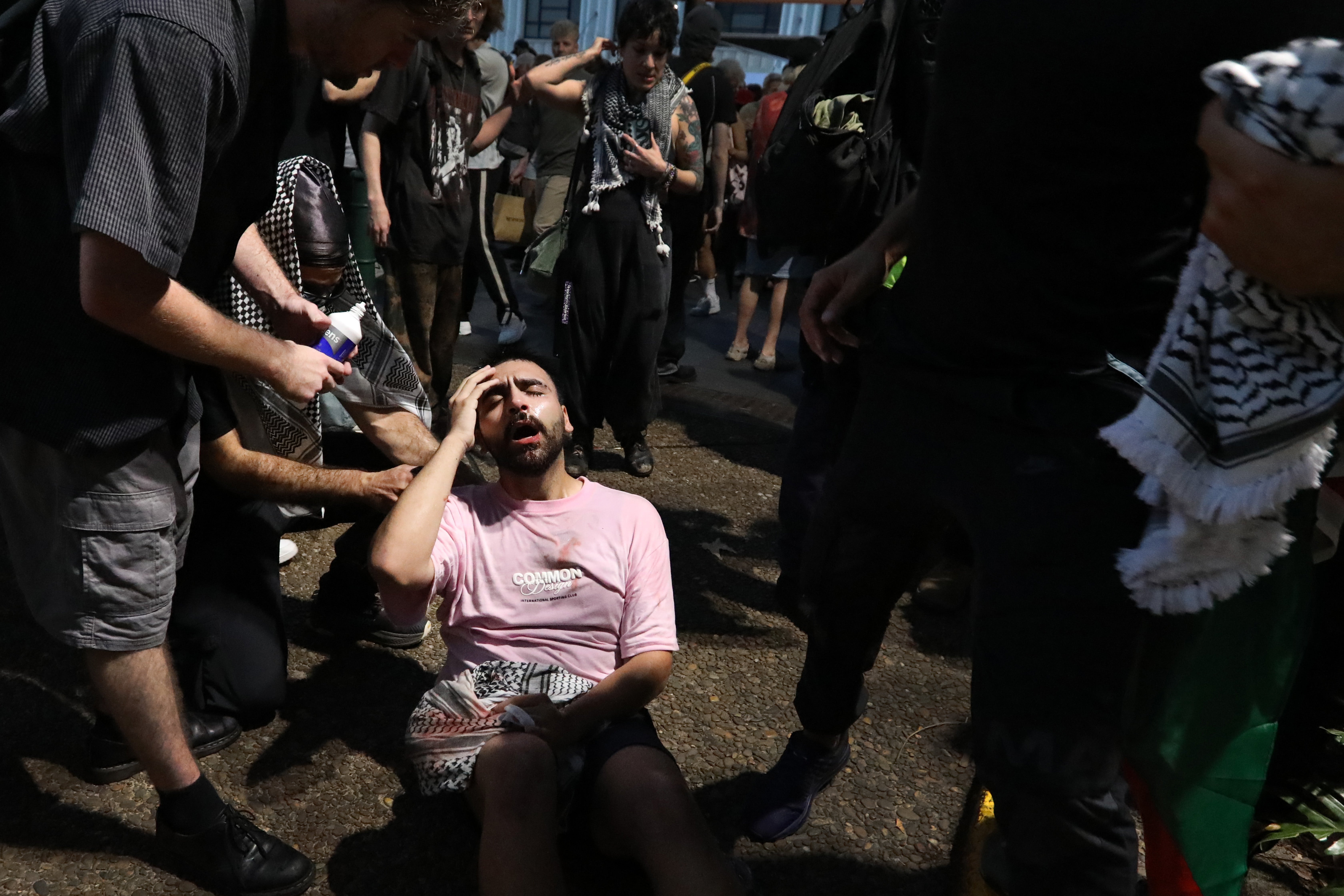
Tear gas and pepper spray were used to disperse the crowd, while television footage showed officers pushing protesters back and restraining some of them on the ground. Police said there were no reports of serious injuries.

Prime minister Anthony Albanese said he was “devastated” by the scenes and called for peaceful protests.
“Australians want two things. They don’t want conflict brought here. They want the killing to stop, whether it’s Israelis or Palestinians, but they do not want conflict brought here,” he told radio station Triple M.
“The causes are not advanced by these sorts of scenes – they are undermined.”
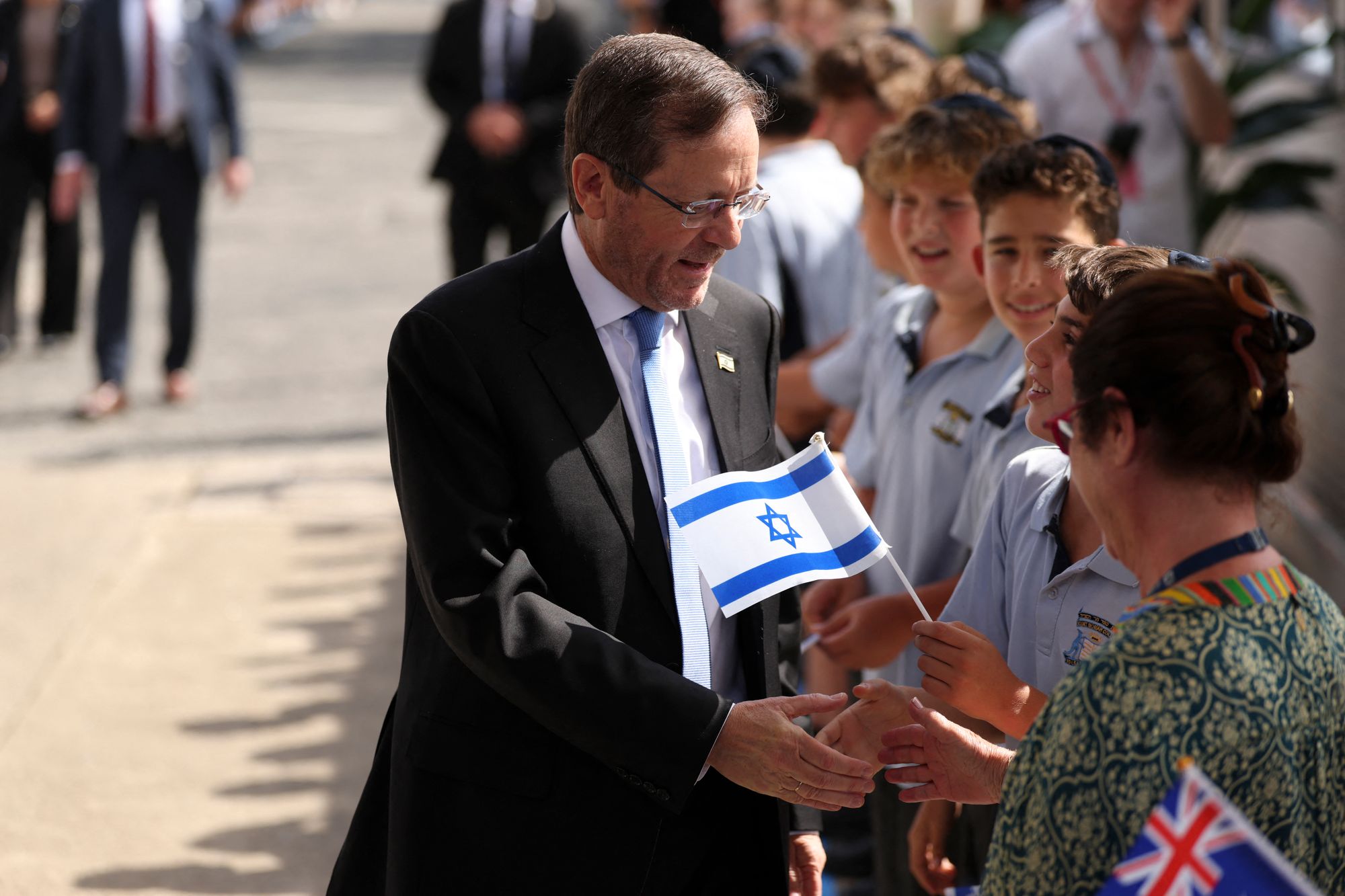
The protests came as Mr Herzog began a four-day state visit focused on commemorating victims of a December attack at a Jewish festival at Bondi Beach, where 15 people were killed in what authorities described as Australia’s worst mass shooting in 29 years.

He laid a wreath and two stones brought from Jerusalem at Bondi Pavilion and met survivors and families of those killed. “When one Jew is hurt, all Jews feel their pain,” he said, adding he was there to “embrace and console the bereaved families”.
“We were shaken to our core when we first heard about the Bondi Beach attack. Our heart missed a beat, like all Israelis and all Jews. And I’m here to express solidarity, friendship, and love,” Mr Herzog said.
“And I also believe that this is an opportunity to upgrade the relations between Israel and Australia because we are two democracies that share values together and we are confronting the roots of evil from all over the world. And we should do so together,” he added.

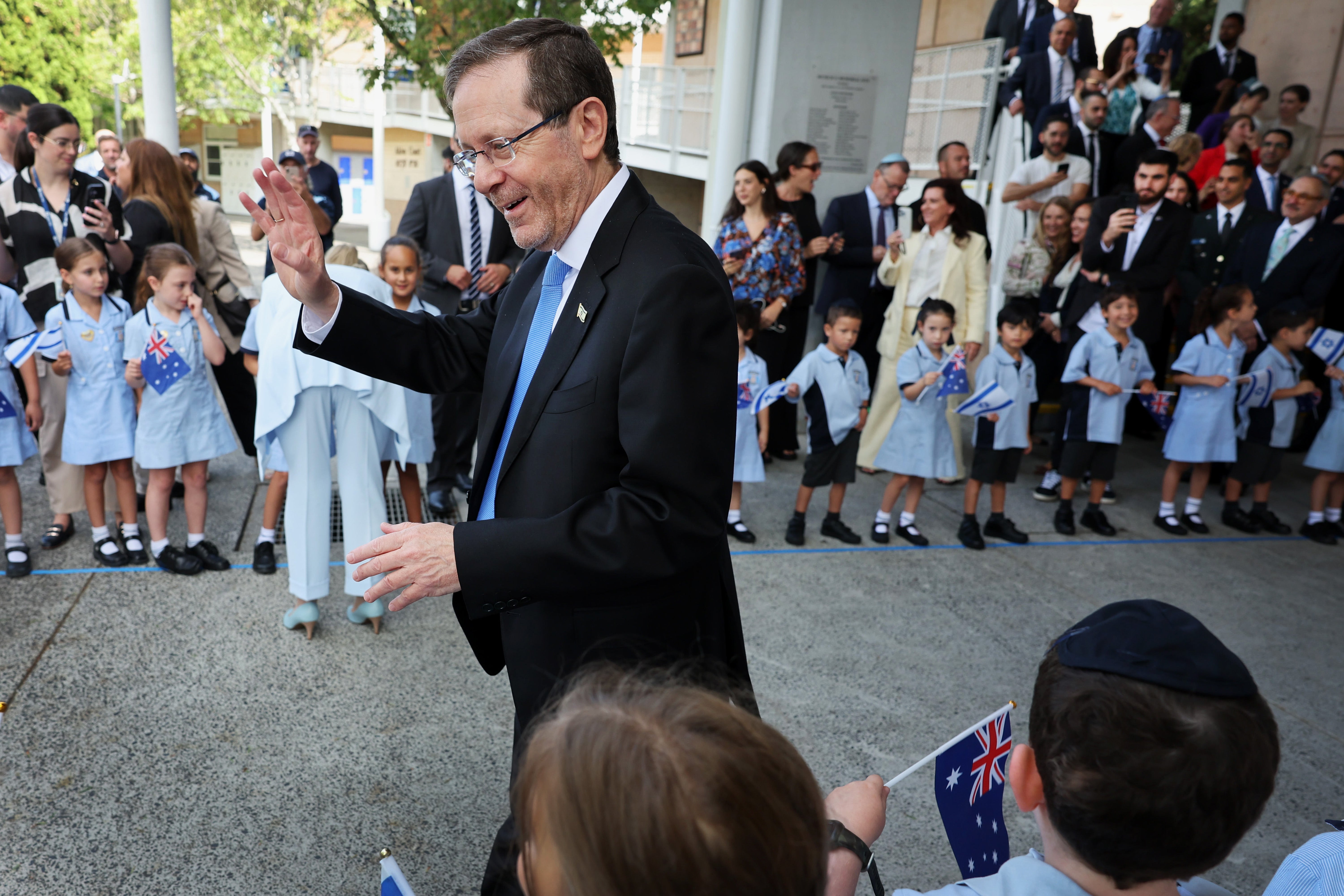
He said the stones would remain as a reminder that people of all faiths and nations “will continue to hold strong in the face of terror, violence and hatred, and that we shall overcome this evil together”.
Security was tight during the visit, with police snipers visible on rooftops. Mr Herzog is also due to visit Melbourne and Canberra before returning to Israel on Thursday.
Authorities had granted police rarely used powers during the Sydney protest, including directing crowds to move, restricting access to areas and searching vehicles.
A legal challenge by the Palestine Action Group against those restrictions was dismissed by a Sydney court on 9 February, preventing them from marching from the Town Hall to the New South Wales Parliament. Mr Herzog was not present at the protest site.
New South Wales premier Chris Minns defended police actions, saying officers were required to make rapid decisions in tense and volatile circumstances. “I understand there’s criticisms of New South Wales Police, I just want to make it clear they were caught in an impossible situation,” he said.
Police commissioner Mal Lanyon said officers had shown restraint.
“Police did what they needed to do, which was to hold the line and then form and move the protesters back with a view to dispersing them,” he said. “Having an angry and violent mob marching on police is not a situation that I want our officers in.”
Protest organisers and participants disputed that account. The Palestine Action Group Sydney said demonstrators were surrounded and unable to leave.
“The police began charging the crowd with horses, indiscriminately pepper spraying the crowd, punching and arresting people,” the group said.

Abigail Boyd, an opposition Green lawmaker in the state parliament, said she had been punched by officers while attempting to vacate the site.
“I have a very sore arm and shoulder where they punched me. I’m really in shock,” she told a press conference.
Protests were also held in Melbourne, where police said 5,000 people gathered before outside downtown Flinders Street Railway Station, then marched several blocks to the State Library, blocking evening peak-hour traffic. A 20-year-old woman was arrested after allegedly burning flags and damaging a tram stop.
The visit has drawn mixed reactions within Australia’s Jewish community. Mainstream Jewish organisations welcomed Mr Herzog’s presence, while the Jewish Council of Australia published open letters and newspaper advertisements signed by hundreds of Australian Jews stating: “Herzog does not speak for us and is NOT WELCOME HERE.”
“We refuse to let our collective grief be used to legitimise a leader whose rhetoric has been part of inciting a genocide against Palestinians in Gaza and has contributed to the illegal annexation of the West Bank,” said the council’s executive officer, Sarah Schwartz.
Mr Herzog rejected accusations that he had incited a genocide and said protests against him sought to “undermine and delegitimise” Israel’s right to exist. Jewish leaders initiated the invitation extended by governor-general Sam Mostyn, Australia’s equivalent of Israel’s president, at Mr Albanese’s request.
The Australian prime minister and his Israeli counterpart Benjamin Netanyahu have been openly hostile toward each other since the Australian announced six months ago that his government would recognise a Palestinian state.
He welcomed what he described as “positive steps” by the Australian government to address antisemitism following the Bondi beach attack, including new hate-speech legislation and the establishment of a royal commission to investigate antisemitism.
Amnesty International Australia condemned what it called the “unnecessary and disproportionate use of force” by police and called for an independent investigation.
“The right to protest is protected under international law. What we witnessed last night was a serious assault on those rights and a deeply troubling display of State-sanctioned violence,” said Mohamed Duar, the organisation’s Occupied Palestinian Territory spokesperson.
Police said further rallies were planned, including a demonstration outside police headquarters in Sydney on 10 February, as debate over the visit and the handling of protests continued.