

Warning: this review contains spoilers for The Odyssey.
Christopher Nolan’s US$250m (£187m), three-hour epic starring Matt Damon as the Greek king fighting his way home from Troy took more than $264m on its opening weekend – comfortably tripling the opening take of his Oscar-winning Oppenheimer in 2023.
It has earned Nolan the best reviews of his career. But crucially, it is the most ambitious attempt in a generation to put Homer’s 3,000-year-old poem back at the centre of popular culture. The heroism Nolan’s film depicts is far darker and far less triumphant than audiences might expect. It is also a film built for the biggest screen.
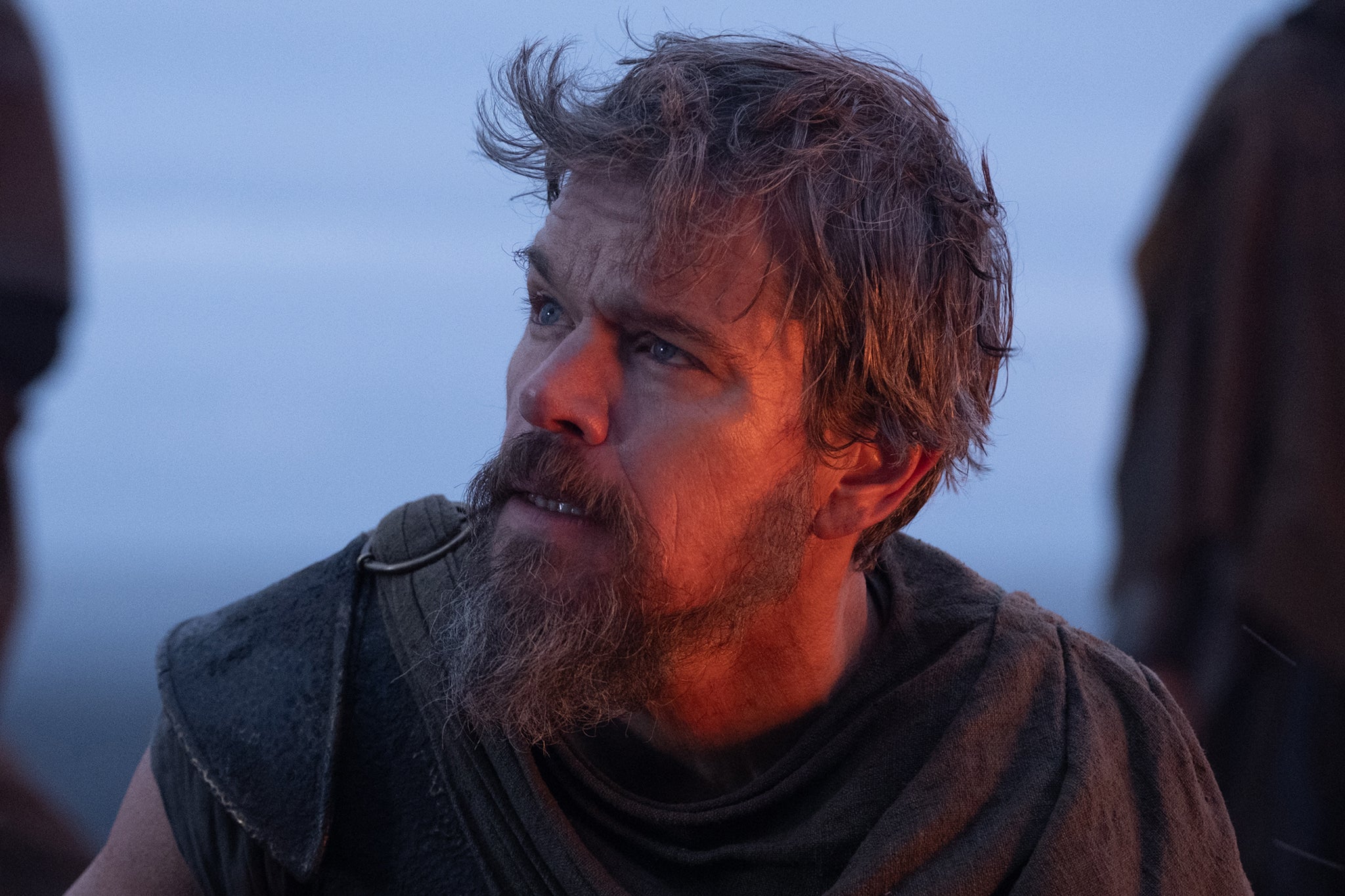
Nolan shot the film entirely on IMAX’s 70mm cameras, a first for any feature, carrying cast and crew across Morocco, Greece, Sicily, Iceland and the northeast of Scotland.
The result swings between extreme long shots of sea, stone and sky and extreme close-ups of faces, between monumental sets and claustrophobic caves and courtyards. It is unmistakably, a film in conversation with Nolan’s previous work. But also with a century of screen epics, from the blood and grandeur of Gladiator (2000) and Troy (2004), back to the forgotten silent versions of the Trojan story that German and Italian studios made more than a century ago.
Nolan borrows from other genres too: horror creeps into the Cyclops’ cave, supernatural elements into Circe’s hall, comic book action-adventures into Agamemnon’s armour, and literature and the visual arts supply their own echoes, from Dante’s and Virgil’s rival accounts of Ulysses (the Latin name for Odysseus) to Goya’s cannibal god Saturn, glimpsed in the Cyclops’ feast.
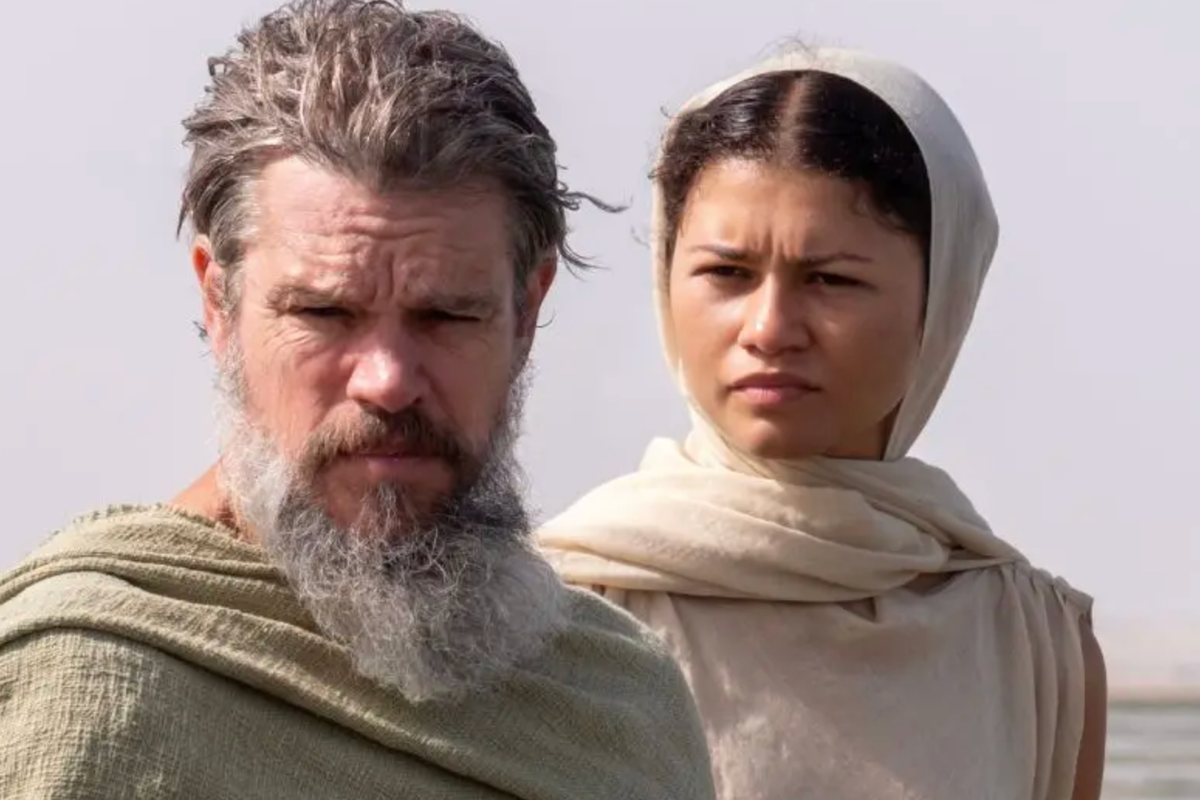
With Damon as his central character, Nolan has embraced the actor’s established image as a rugged, dutiful soldier to build a very different kind of Odysseus, defined less by guile and cunning than by determination and guilt.
Of an accomplished female cast – Anne Hathaway (Penelope), Zendaya (Athena), Lupita Nyong’o (Helen of Troy and Clytemnestra), Samantha Morton (Circe), Charlize Theron (Calypso) – only Hathaway’s Penelope is given the material to show real depth.
Robert Pattinson’s scheming suitor Antinous and John Leguizamo’s devoted swineherd Eumaeus are the strongest supporting performances. Tom Holland plays Odysseus’ son Telemachus – an actor coming of age playing a character coming of age. The jury is out on whether the maturity comes through.
Cutting the gods, doubling down on Troy

Watch Apple TV+ free for 7 day
New subscribers only. £9.99/mo. after free trial. Plan auto-renews until cancelled.
Try for free
ADVERTISEMENT. If you sign up to this service we will earn commission. This revenue helps to fund journalism across The Independent.
Watch Apple TV+ free for 7 day
New subscribers only. £9.99/mo. after free trial. Plan auto-renews until cancelled.
Try for free
ADVERTISEMENT. If you sign up to this service we will earn commission. This revenue helps to fund journalism across The Independent.
The film keeps Homer’s three-part shape – a son’s search for his father, Odysseus’s own account of his travels, the killing of his wife’s suitors – while reworking nearly everything inside it.
The gods are largely gone: there is no council on Olympus, Athena is reduced to a couple of coaching cameos, whereas Zeus and Poseidon become the elemental forces of thunder and sea storms.
Odysseus’ own father Laertes never reappears, the suitors’ souls never descend to the underworld, and Penelope’s test of the marriage bed vanishes along with much of the poem’s dialogue, including the Cyclops’ famous “Nobody” trick, replaced here by a wordless dash for the cave mouth.
The single biggest cut is the Phaeacians’ island, roughly a third of the poem, where Odysseus is welcomed, tells his story and is sent home in comfort. Nolan replaces it with a lotus-drugged, amnesiac Odysseus slowly recovering his own story for one listener, the goddess Calypso, and returning home a castaway.
The single biggest addition is Troy itself: the horse, the lie, the sack of the city, restaged again and again from different angles until a legendary victory starts to look like a crime scene.
A homecoming that resists closure
None of this feels indulgent; every spectacle is tied directly to the story Nolan is telling, and that story is a bleak one. Its subject is the price of action – what is owed to family, fellow citizens, strangers, animals, the natural world – and the unreliability of memory once survivors start shaping their ordeal into a story that flatters them.
The film’s own framing device makes the same point: Nolan casts the rapper Travis Scott as the bard who opens the action, explicitly linking Homer’s sung, oral tradition to hip-hop’s, a reminder that this poem took shape by being performed aloud.
It unfolds at the edge of a dark age, amid the terror of raiders “from the sea” and the film’s sharpest move is to let us notice, slowly, that its own heroes are those raiders.
Fittingly, the film refuses a happy ending. Odysseus reaches Ithaca, but then leaves again. But not as an adventurer this time (as is sometimes presented in modern versions of the myth) or to appease Poseidon (as foretold in Homer), but as a self-imposed exile doing penance for his unburied companions and the harm he caused in getting home.
Ridley Scott’s Gladiator relaunched the epic for cinemagoers a quarter of a century ago with an uncompromising hero saving a broken world. Now Nolan’s Odyssey does the same for a new generation with the opposite figure: a traumatised hero whose own violence helped break it. That makes it a braver film than its trailers suggest.
The more interesting question now is what comes next. Whether future screen epics keep chasing Gladiator’s model, where the hero pays with his own life and stays morally whole, or Nolan’s, where the hero survives and has to live with the cost he has made others pay.