



On 21 September 2021, when Chinese President Xi Jinping chose to address the 76th United Nations General Assembly only through a pre-recorded speech, expectations were modest. Yet when the leader of a global power speaks, as today’s headlines dramatically remind us, even an apparently minor remark can conceal ambitions capable of reshaping politics and influencing the lives of millions.
Within what appeared to be a largely ceremonial address, Xi announced that China would stop building new coal-fired power plants abroad and instead increase support for green and low-carbon energy projects in developing countries. The statement passed almost unnoticed amid the noise of international politics, but it confirmed the direction of a profound transformation that had already been quietly underway for some time. China had turned the energy transition from an industrial policy into a strategic diplomatic positioning tool.
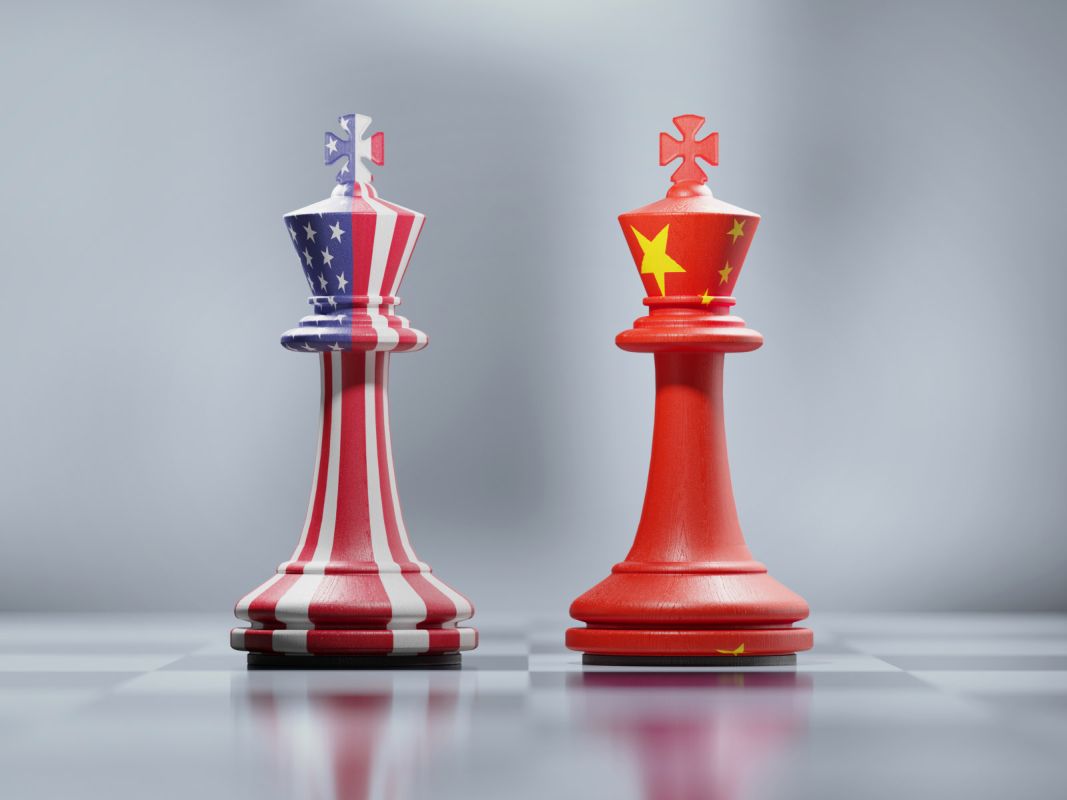
Four and a half years later, the closure of the Strait of Hormuz during the Middle East conflict has pushed that transformation into a new phase. The conflict involving the United States, Israel and Iran has disrupted roughly 20% of global oil and gas trade, triggering a major energy shock. Within this environment, two opposing models are emerging. On one side stands Donald Trump’s America, attempting to reinforce its position as a global oil superpower. On the other stands China which, despite remaining the world’s largest CO2 emitter, is seeking to transform its dependence on Gulf oil into an opportunity to cement its position as the global leader of the green transition. From an ESG (Environmental, Social and Governance) investment perspective, the Hormuz crisis has accelerated a dynamic that deserves close attention.
China from major polluter to “Green Great Power”
For decades, China was the principal target of international criticism on climate issues the world’s largest emitter of CO2, the leading financier of overseas coal-fired power plants through the Belt and Road Initiative (BRI), and a country seemingly willing to sacrifice environmental ambitions in pursuit of economic growth. That model has changed, at least in terms of strategic intentions and investment trajectories.
The turning point of 2021 was the result of a strategic reflection developed in Beijing over more than a decade. In 2017, Xi Jinping launched the Green Silk Road, the sustainable corridor of the Belt and Road Initiative. In 2021, he announced the end of overseas coal financing. In 2023, China published its second White Paper on green development. Alongside this, it built an unprecedented industrial ecosystem around clean technologies.
By the end of 2025, renewable energy accounted for more than 60% of China’s installed power capacity. The country reached its 2030 wind and solar targets six years ahead of schedule. In 2024 alone, China invested $615 billion in its energy transition – more than double any other economy and equal to 31% of the global total. These figures place the Dragon at the centre of an energy revolution that the rest of the world is still struggling to match.
Diplomatic moves Beijing fills the vacuum left by Washington
Against this backdrop, the Hormuz crisis has presented China with an extraordinary diplomatic opportunity. While the United States is increasingly perceived as partly responsible for the energy crisis, Beijing has been able to position itself as the “adult in the room”, offering partners an alternative solution. Regardless of the eventual outcome of the US-Iran conflict, China appears likely to emerge in a stronger position within the new global order, thanks not only to its leadership in renewables and batteries, but also in electricity infrastructure and energy innovation.
Take the Gulf states, historically tied to the United States through an implicit pact oil in exchange for security. Today, these monarchies have become collateral victims of a conflict they neither initiated nor fully anticipated. Kuwait, Iraq, Saudi Arabia and the United Arab Emirates saw their combined oil production fall by more than 10 million barrels per day. Regional economic growth forecasts collapsed from 3.7% to 1.8%. Saudi Arabia and the UAE absorbed 83% of Iranian missile and drone attacks during the conflict, while occupying only a secondary role in the deployment of American defensive capabilities. The economic diversification strategies many of these countries have pursued through tourism and non-oil sectors now risk delay or even derailment.
China, leveraging decades of oil-based relationships, has in recent years begun securing high-value renewable energy partnerships, establishing itself as an essential partner in the region’s energy transition. In 2024, Jinko Solar and TCL Zhonghuan announced more than $3 billion in investments for solar parks and semiconductor manufacturing facilities in Saudi Arabia, relocating part of the supply chain directly into the region. The Chinese Silk Road Fund had already acquired a 49% stake in the renewables portfolio of ACWA Power (the leading Saudi energy development company) in 2019, gaining exposure to projects across the UAE, South Africa, Jordan, Egypt and Morocco.
The Hormuz crisis opened a diplomatic window to deepen these ties. Chinese Foreign Minister Wang Yi conducted 26 phone calls between the outbreak of the conflict on 28 February and the ceasefire on 8 April, while Xi Jinping met the Crown Prince of Abu Dhabi and personally called Mohammed bin Salman. In parallel, Beijing is finalising a free trade agreement with the Gulf Cooperation Council (GCC) and preparing for the second China-Arab States Summit scheduled for 2026.
Yet China’s strategy extends far beyond the Persian Gulf. The Philippines, historically a close US ally, provides a striking example. With 98% of its oil imported from the Middle East, the country became the first to declare an energy emergency following the closure of Hormuz and adopted a four-day working week. It has now accelerated renewable infrastructure projects, deepening its technological dependence on China despite unresolved territorial disputes in the South China Sea.
Central Asia represents another key front. Following Russia’s invasion of Ukraine in 2022, China intensified renewable investments across the region, taking advantage of the vacuum created by Moscow’s isolation. In Kazakhstan, the leading recipient of BRI renewable financing in Central Asia with $4.6 billion in 2024 alone, China Power International Holding built the 100 MW Zhanatas wind farm, one of the largest in the country, alongside multiple solar plants in the Karaganda and Almaty regions. Both Astana and Tashkent aim to source 50% of their energy from renewables, with China positioned as the primary strategic partner behind that ambition.
The same pattern is visible in Latin America. China Development Bank financed the Cauchari solar plant in Argentina, the largest solar facility on the continent, as well as the Punta Sierra wind farm in Chile. Chinese direct investment in clean energy across the region tripled between 2018 and 2022, rising from $960 million to $3.8 billion. As a result, around 90% of all solar and wind technologies installed in Latin America now come from Chinese companies.
China’s structural advantage in green industry
For Beijing, supporting the energy transition is a way of aligning diplomatic influence with industrial interests. China controls more than 80% of every stage of solar panel production. It hosts four of the world’s ten largest wind turbine manufacturers. It holds 75% of global battery cell manufacturing capacity and controls between 85% and 95% of rare earth processing capacity, essential materials to nearly every transition technology.
This concentration creates technological dependence on China for countries seeking to accelerate the energy transition, allowing Beijing to capture a significant share of the economic value chain linked to this structural trend. The European Union is perhaps the clearest example. China supplies more than 95% of the solar panels used in Europe. Beijing is also strengthening its position in electricity grid management software and integrated power infrastructure Chinese state-owned companies are now building and operating national and regional electricity systems across parts of South America and Southern Europe, raising potential security concerns.
The American “petrostate” profits gained, alliances weakened
Will China therefore become the engine of the global green transition over the coming years? It would be simplistic to portray Beijing as a benevolent power safeguarding the future of the planet. China remains the world’s largest CO2 emitter and the gap between the ambitions of the Green Silk Road and reality on the ground remains substantial. Nonetheless, the convergence of strategic and economic incentives pushing Beijing towards green investment is, from a global sustainability perspective, a positive development – if only because it counterbalances the direction taken by the United States.
Washington has decisively chosen the opposite path. After decades as the world’s largest oil importer, the US has become its leading exporter. In numerical terms, the short-term success is undeniable the crisis drove oil prices sharply higher, yet Washington was able to manage the response through increased supply, while American liquefied natural gas (LNG) rapidly replaced Qatari exports across several markets.
But the geopolitical and environmental costs are significant pressure on Venezuela and Iran as energy leverage, the use of gas as a diplomatic weapon against European allies, cuts to renewable research funding, and the dismantling of tax incentives for solar, wind and electric vehicles are all emblematic examples.
Europe finds itself caught between these two competing models, without an obvious escape route. Renewables generated roughly half of Europe’s electricity in 2024 and 2025 – an extraordinary achievement. Yet the EU economy remains exposed to oil price volatility, its clean technology industry has been overtaken by China, and in March 2026 alone, 65% of Russian LNG shipments arriving globally were unloaded in EU member states. The bitter irony is that, in order to accelerate the green transition, Europe may need to purchase even more Chinese solar panels and batteries, deepening strategic dependence on Beijing just as it attempts to reduce reliance on Moscow and the Gulf.
Within this context, the dynamics described throughout this article reinforce the idea that the energy transition remains a defining long-term trend for the global economy and financial markets. Beijing is constructing a new model of global influence in which control over clean technologies replaces control over oil routes as the primary source of geopolitical leverage. Around this model, an entire ecosystem of companies is emerging, and we believe greater convergence is only a matter of time.
Washington, by contrast, is betting on an energy model dependent on hydrocarbon price volatility to remain competitive – a model that can sustain itself for a period, but which may ultimately prove structurally less resilient over the medium term.
Countries and businesses that invested early in renewables have demonstrated greater resilience to shocks. Those that delayed are now paying a higher price. For ESG investors, this environment reinforces the conviction that sustainability remains a fundamental long-term driver of portfolio performance.
Our ESG approach
Our ESG portfolios are designed for investors seeking long-term returns without compromising on sustainability values.
Since 2020, we have structured our portfolios according to strict criteria to reduce greenwashing risk, in line with our Responsible Investment Policy. Our objective is to mitigate sustainability risks, increase exposure to sustainable investments, and favour issuers with strong environmental and social practices.
At the same time, we carefully manage financial risk, including tracking error, ensuring that sustainability integration does not compromise portfolio efficiency.
Our investment process relies on continuous monitoring of ESG strategies, supported by data from providers such as MSCI and Bloomberg, and ongoing dialogue with ETF issuers. This allows us to select instruments with robust sustainability metrics and stable financial characteristics.
Active monitoring remains essential, as ESG methodologies can produce significantly different outcomes. This approach enables us to respond promptly to both financial and sustainability-related deviations.
Please remember that when investing, your capital is at risk. The value of your portfolio with Moneyfarm can go down as well as up and you may get back less than you invest. Past performance is not a reliable indicator of future performance. The views expressed here should not be taken as a recommendation, advice or forecast. If you are unsure investing is the right choice for you, please seek financial advice.
*As with all investing, financial instruments involve inherent risks, including loss of capital, market fluctuations and liquidity risk. Past performance is no guarantee of future results. It is important to consider your risk tolerance and investment objectives before proceeding.
