





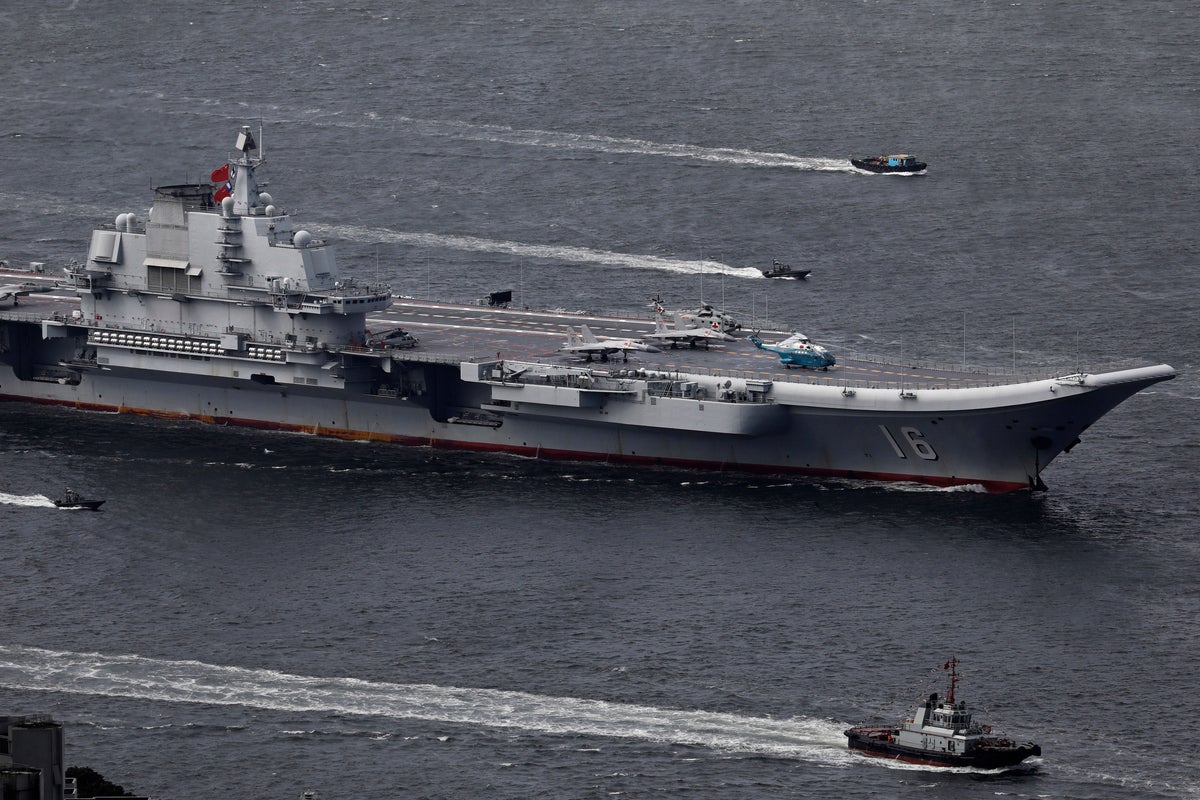
Tokyo says Chinese fighter jets repeatedly locked on to Japanese military aircraft with fire-control radar in an incident that represents one of the most serious military escalations between the two countries in years.
Directing fire-control radar at another aircraft is a threatening step because it signals a potential attack and may force the targeted plane to take evasive action.
Japanese defence minister Shinjiro Koizumi said two separate radar lock-on incidents took place on Saturday afternoon and evening, calling them “dangerous acts”. He said Japan had lodged a strong protest with China over Saturday’s “regrettable” incident.
Mr Koizumi said the Chinese aircraft involved were J-15 fighter jets that had taken off from the Chinese aircraft carrier Liaoning. He said they targeted Japanese F-15 fighter planes over international waters southeast of Japan’s Okinawa island chain.
“These radar illuminations went beyond what is necessary for the safe flight of aircraft,” Mr Koizumi posted on X.
The radar lock was detected by multiple different Japanese fighters that had scrambled to respond to a possible airspace violation by China, according to the Japanese defence ministry. There was no breach of Japanese airspace, and no injury or damage was reported from the incident.
China argued that Japan’s claims were inconsistent with facts and that a Japanese aircraft repeatedly approached and disrupted the Chinese navy as it was conducting previously announced carrier-based flight training.

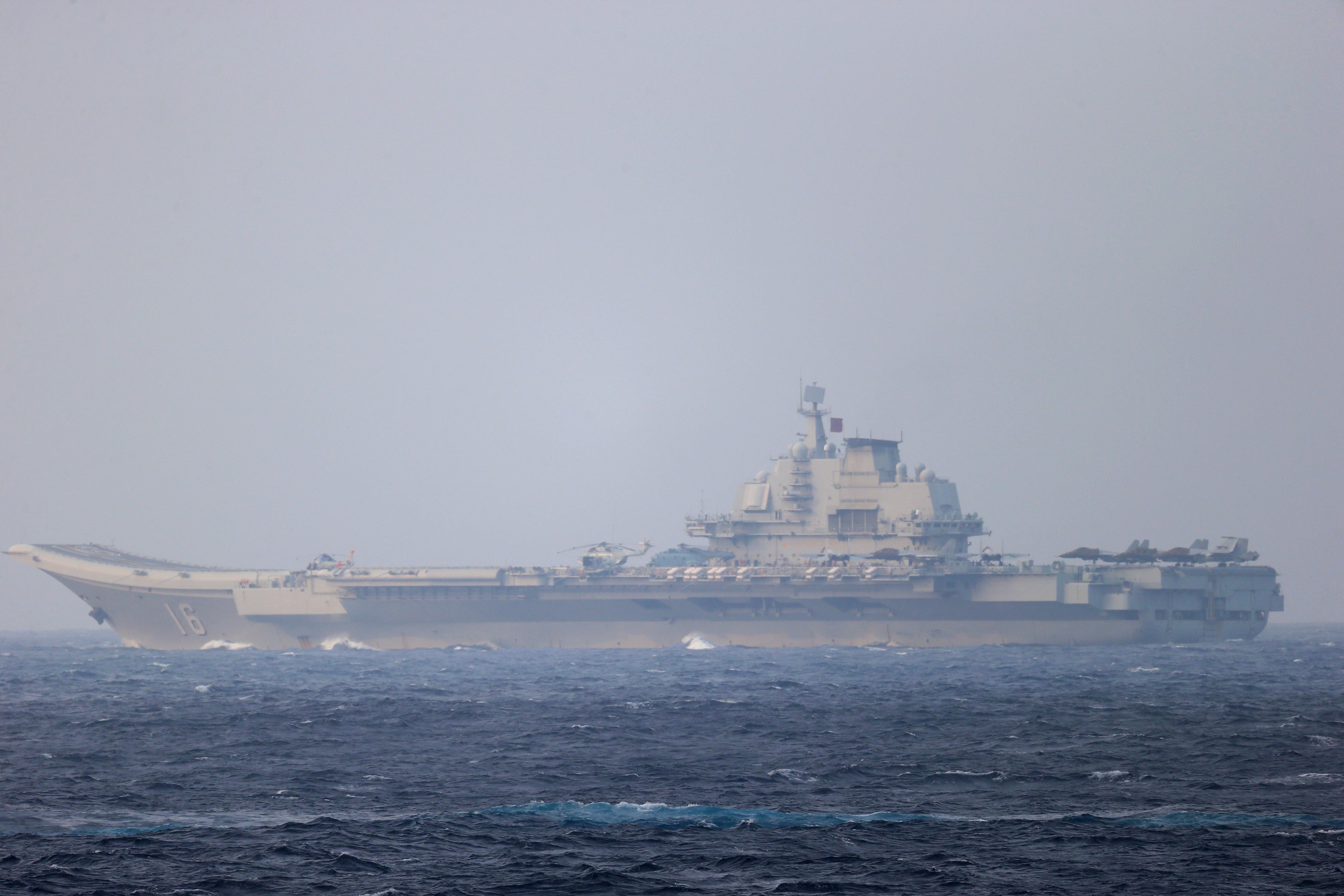
The incident near islands claimed by both Japan and China is the latest spat between the two countries, whose ties have plunged to the lowest level in decades over remarks Japanese prime minister Sanae Takaichi made about being willing to defend Taiwan against a hypothetical Chinese invasion.
It is believed to be the first instance of a radar lock involving Japanese and Chinese military aircraft.
“We solemnly demand that the Japanese side immediately stop slandering and smearing and strictly restrain front-line actions,” Chinese navy spokesperson Colonel Wang Xuemeng said. “The Chinese Navy will take necessary measures in accordance with the law to resolutely safeguard its own security and legitimate rights and interests.”
China’s carrier Liaoning on Saturday passed between the main island of Okinawa and nearby Miyako island as it conducted aircraft takeoff and landing exercises in the Pacific.
Japan claimed the first instance of the Chinese aircraft locking radar on a Japanese F-15 took place over a period of three minutes just after 4.30pm local time on Saturday. Two hours later, the aircraft targeted a different F-15 and locked radar for a period of 30 minutes, Tokyo said.
Japanese F-15 fighter jets were pursuing the Chinese aircraft at a safe distance and did not take actions that could be interpreted as provocation, the Kyodo News agency reported, quoting defence officials.
Australian defence minister Richard Marles, who is in Tokyo, told a joint news conference after holding talks with Koizumi: “We are deeply concerned by the actions of China in the last 24 hours. We expect those interactions to be safe and professional.
He said Australia would “continue to work with Japan and stand with Japan in upholding that rules-based order” while also noting that China is his country’s largest trade partner and he wants to have productive relations with Beijing. “We continue to advocate to China about these issues again, in a very calm, sensible and moderate way,” he said.
Since Ms Takaichi’s comment in defence of Taiwan, a self-governed island that Beijing claims as part of its territory, China has advised its citizens not to travel to Japan and paused plans to restart seafood imports. Ms Takaichi has refused to bow to pressure from China to take back her remarks and apologise, though she has told parliament she will refrain from making similar comments in future.


