




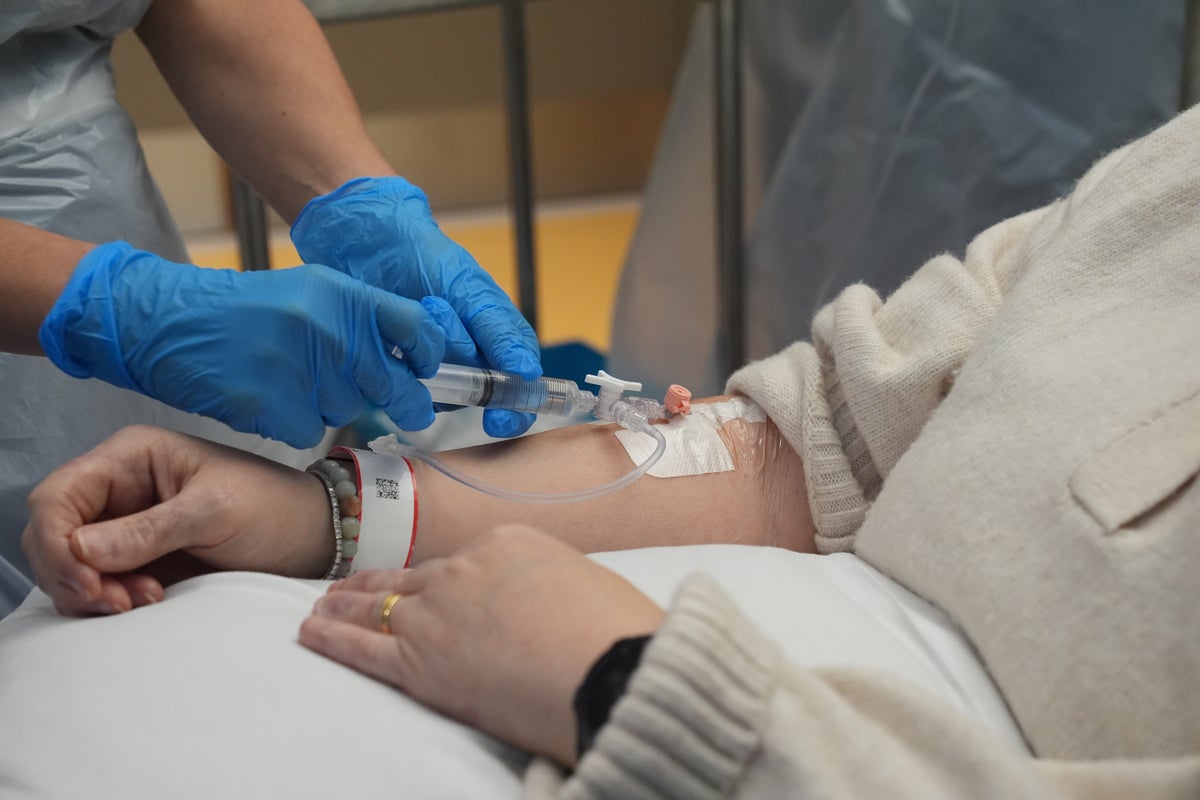
A woman who lived with three different life-threatening autoimmune diseases for more than a decade has made a “remarkable” recovery after a type of cell therapy reset her immune system.
The 47-year-old patient, who once required daily blood infusions and needed blood-thinning medication, tried nine different treatments before receiving the cell therapy last year at University Hospital Erlangen in Germany.
Within weeks, the autoimmune diseases responded to the treatment and for just over a year, she has been in treatment-free remission which has “significantly improved her quality of life”, according to doctors.
“The treatment was extremely efficient in getting rid of all three autoimmune conditions at once,” said corresponding author Fabian Müller, of the University Hospital of Erlangen in Germany.
She suffered from severe autoimmune haemolytic anaemia (AIHA), a disease in which the immune system mistakenly attacks and destroys red blood cells.

In addition, she had been diagnosed with two other autoimmune diseases with nearly opposing symptoms. She had immune thrombocytopenia (ITP) – a disorder that caused her dysregulated immune system to destroy her platelets, increasing the risk of bleeding – and antiphospholipid antibody syndrome, a disease that raises the risk of dangerous blood clots in her vessels.
But every treatment she tried made no lasting impact until she was offered CAR-T cell therapy, a type of “living drug” that uses a patient’s own immune cells to attack harmful cells. It is used to treat several cancers, including leukaemia, cancer of the blood, and lymphoma, cancer of the lymph nodes.
The team extracted the woman’s white blood cells and isolated her T-cells, which actively scan the body for infected or abnormal cells and destroy them. The doctors engineered the T-cells to recognise a protein called CD19 found on B-cells and re-infused them into the patient.
The therapy worked fast to destroy the rogue B-cells, according to details published in the journal Med. Just one week after the treatment, she had her final blood transfusion. Two weeks later, she was feeling stronger, and three weeks after the treatment ended, her levels of haemoglobin, a protein in red blood cells, doubled and returned to normal. This suggested her immune system was no longer destroying her red blood cells.
At the same time, the therapy improved her other autoimmune conditions. Her levels of antiphospholipid antibodies, associated with dangerous blood clots, gradually fell and remained negative. Her platelet counts also stabilised.
Although she still has lower white blood cell counts and mild elevations in liver enzymes, the team says these conditions may be related to years of prior treatments rather than the CAR-T therapy itself.
“The speed and depth of the response was remarkable,” Dr Müller said. “We believe that using CAR-T therapy earlier for patients with severe autoimmune disease could help prevent complications from years of ineffective treatments.
“If we can intervene sooner, we may be able to stop the disease process, avoid organ damage, and give patients their lives back.”

